The Age of the Little Treat
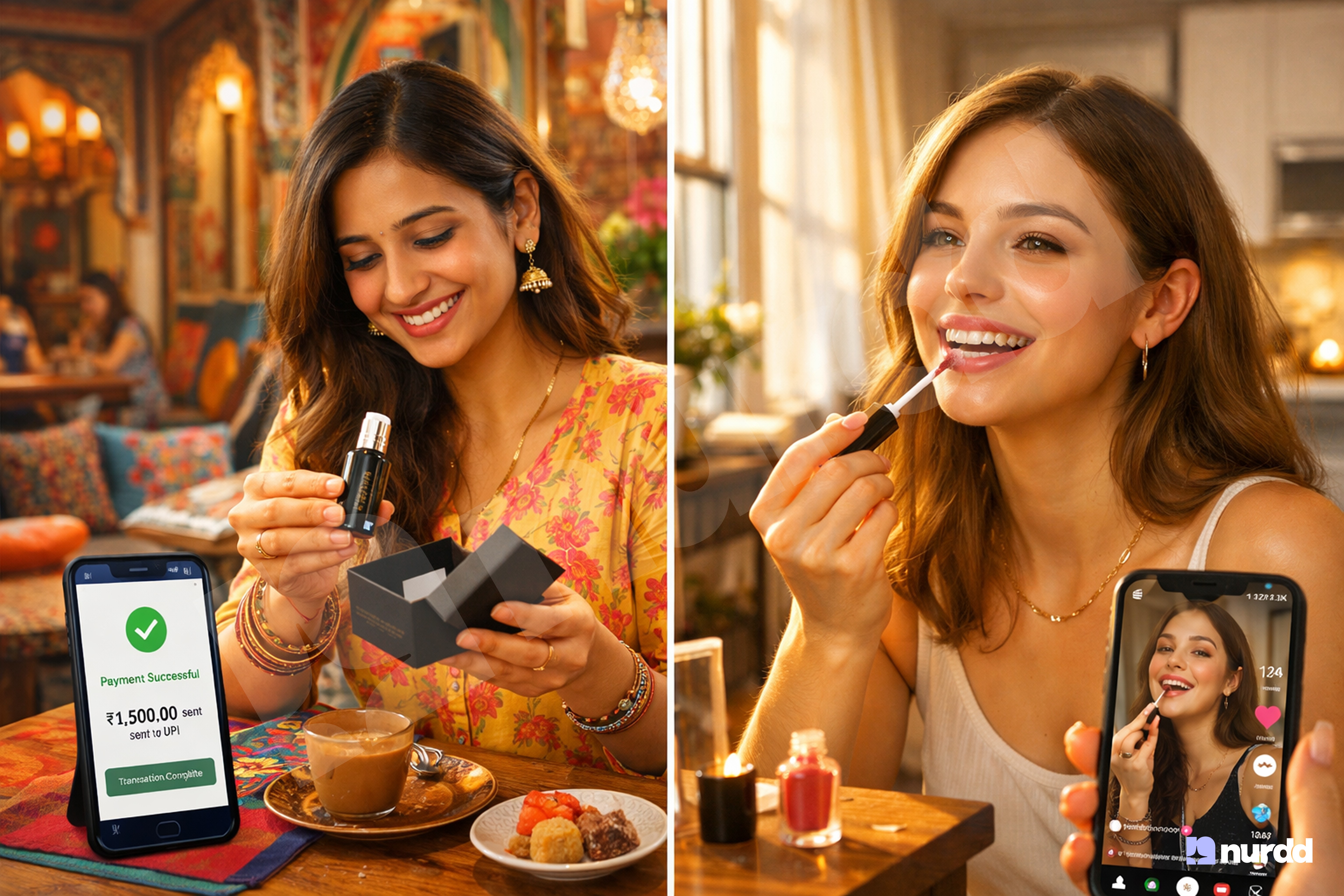
From the Rs 199 face serum bought on a Reels scroll in Jaipur, to the $14 lip gloss going viral on TikTok in Texas, a new consumer psychology is rewriting the rules of commerce everywhere.
KEY TAKEAWAYS
• India’s social commerce market hit ~$8.4B in 2025, growing at 25%+ CAGR — driven by Meesho, Instagram, and WhatsApp, not TikTok. [6][7]
• Globally, social commerce crossed $2.11 trillion in 2026, heading to $7.55 trillion by 2031 at a 29% CAGR. [8]
• 62% of US consumers indulge in a “little treat” monthly; in India, the same impulse plays out through quick commerce and sub-Rs 500 impulse buys. [1]
• UGC content delivers 4× higher CTR and 50% lower cost-per-click than traditional brand advertising — in every market. [3]
• The winning formula is universal: low price point, zero checkout friction, authentic content, and a platform that never makes the user leave.
Why are consumers everywhere obsessed with small, frequent purchases right now?
In Gurugram, it’s a Rs 249 body mist from a Reel that autoplays at midnight. In New York, it’s a $9 lip gloss that shows up in a TikTok three times before the user finally taps ‘buy.’ In Jakarta, it’s a skincare serum discovered during a live shopping session. The product changes. The psychology doesn’t.
Welcome to Treatonomics: the economic behaviour of buying small, affordable luxuries as a deliberate act of self-care, emotional regulation, and micro-celebration. It has evolved from a meme (“I deserve this”) into one of the most powerful and measurable consumer trends of 2026.
The underlying driver is the same in every market: large life milestones feel structurally out of reach. For an Indian millennial navigating rising urban rent and job-market uncertainty, homeownership is a distant aspiration. For their American counterpart, so is the down payment. What neither group has stopped doing is celebrating, they’ve simply scaled the celebration down to something they can afford right now, without guilt, without friction, without anyone’s approval.
62% of American consumers buy a “little treat” at least once a month. [1]
39% of Gen Z and Millennials globally use small purchases as a stress-coping mechanism. [1]
Rs 200–500 is India’s equivalent sweet spot for impulse social purchases — the price at which UPI removes all friction.
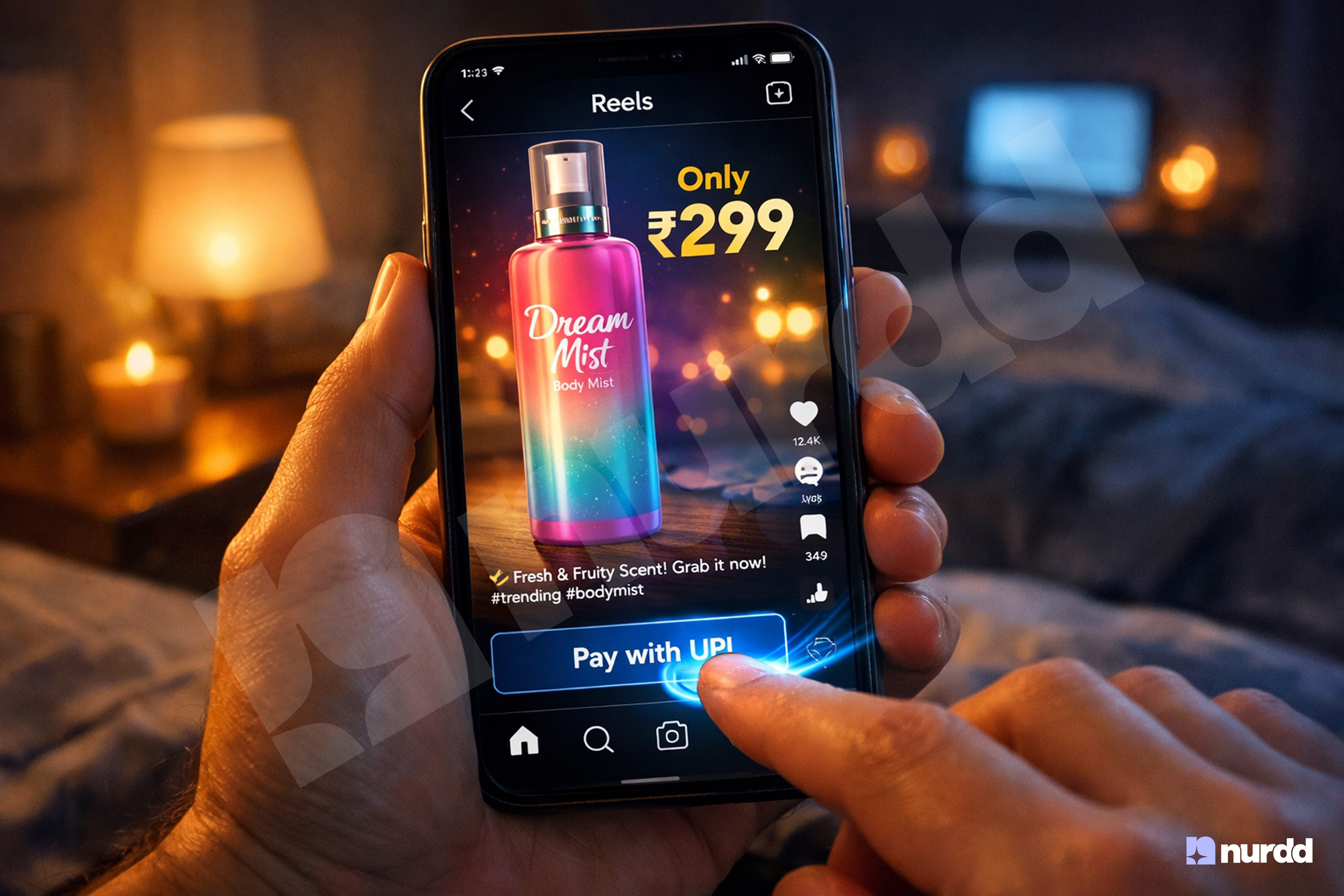
In India, this psychology has a uniquely powerful infrastructure to run on: UPI. A one-tap payment for Rs 299 through Instagram or WhatsApp is functionally instantaneous. There is no credit card to fetch, no OTP anxiety, no second-guessing. The impulse and the transaction happen in the same breath. This is why Indian social commerce is growing at a rate that surprises even its own platforms, the payment rails are frictionless in a way that Western markets are still trying to replicate.
“In India, UPI has made impulse purchasing structurally inevitable. When payment takes three seconds, the treat economy runs on autopilot.”
How is the social commerce landscape different in India versus the rest of the world?
India: the WhatsApp-first, Meesho-led ecosystem
India’s social commerce story is not a TikTok story. TikTok is banned. What India has instead is arguably more interesting: a deeply vernacular, community-first commerce ecosystem built on WhatsApp catalogues, Meesho reseller networks, Instagram Reels, and YouTube Shorts in twelve languages.
Meesho dominates with a 35% share of India’s social commerce market in 2026. [6] It did this not by building a slick urban app, but by empowering millions of micro-entrepreneurs, predominantly women in Tier 2 and Tier 3 cities to sell unbranded, affordable products through Facebook groups and WhatsApp forwards. The platform’s zero-commission model and vernacular onboarding meant it reached the India that Amazon and Flipkart hadn’t. Today, Meesho processes millions of orders monthly, with its logistics arm Valmo handling 50% of fulfillment. [8]
INDIA SPOTLIGHT
• India’s social commerce market grew at 25.2% CAGR from 2021–2024, reaching ~$8.4B in 2025. [7]
• Meesho: 35% market share, dominant in Tier 2/3 cities via Facebook + WhatsApp reselling. [6]
• Quick commerce (Blinkit, Zepto, Swiggy Instamart): 8M+ daily active users, Rs 6–7B market in 2026. [31]
• Instagram Shopping: 8% market share; particularly strong in beauty, fashion, and urban youth segments. [38]
• JioMart via WhatsApp drove significant rural sales growth by turning the chat interface into a checkout window. [37]
• India’s quick commerce market is valued at approximately Rs 50,000–60,000 crore (~$6–7B) in 2026. [31]
Meanwhile, quick commerce has become India’s most visible expression of Treatonomics. Ordering a Rs 150 chocolate bar from Blinkit at 11pm isn’t grocery shopping, it’s a micro-reward. The 10-minute delivery window is not a logistics feature; it’s an emotional one. It means the treat arrives before the dopamine wears off.
The global picture: TikTok, Douyin, and the $2.1 trillion market
Outside India, the numbers are staggering. The global social commerce market was valued at $2.11 trillion in 2026 and is forecast to reach $7.55 trillion by 2031, growing at a 29.12% CAGR. [8] Asia-Pacific leads with a 34% market share, but North America is the fastest-growing sub-region at a 32% CAGR through 2031.
In the United States, social commerce crossed $100 billion for the first time in 2026, an 18% year-on-year increase. [5] TikTok Shop alone is projected to account for $20–23 billion of that, surpassing Target and Best Buy’s e-commerce revenues. [2] In China, Douyin (TikTok’s domestic twin) and WeChat generated over $352 billion in social commerce GMV combined in 2024 alone - proving the ceiling is far, far higher than any Western market has yet reached. [26]
Platform | Primary market | Key strength | Commerce model |
|---|---|---|---|
Meesho | Tier 2 & 3 cities | 35% social commerce share [6] | Social reselling via WhatsApp/Facebook |
Instagram Shopping | Urban youth | 8% market share, reels-led discovery | In-app checkout + shoppable Reels |
WhatsApp Business | Pan-India, SMBs | 7% share; trust-led conversation | Catalogue + UPI checkout in-chat |
YouTube Shorts | Pan-India | Product discovery + affiliate links | Creator-led affiliate commerce |
Nykaa / Myntra | Urban women | Beauty & fashion live commerce | App-native livestream shopping |
JioMart (WhatsApp) | Tier 2/3, rural | WhatsApp-native grocery ordering | Conversational quick commerce |
India’s social commerce platform landscape, 2026. Sources: StateGlobe [6], Mordor Intelligence [8], Saasultra [31].
How does the Indian social commerce consumer compare to their global counterpart?
The comparison below is instructive, not because the markets are so different, but because they are converging on the same behaviours through different infrastructure.
Metric | India 2026 | Global / US 2026 |
|---|---|---|
Social commerce market size | ~$8.4B (growing at 25%+ CAGR) | $2.11T globally; $100B+ in US [5][8] |
Dominant platform | Meesho (35% share) [6] | TikTok Shop (US); Douyin (China) |
Checkout behaviour | UPI one-tap; WhatsApp catalogs | Native in-app; Apple/Google Pay |
Top content format | Reels + vernacular video | 9:16 UGC TikTok / Shorts |
Avg. treat spend sweet spot | Rs 200–500 (~$2.50–$6) | Under $25 (US) [1] |
Key growth driver | Tier 2/3 smartphone users | Gen Z + Millennial discovery shoppers |
Creator economy model | Micro-influencers, resellers | Creator affiliate + TikTok Shop |
India vs. Global social commerce metrics, 2026. Sources: EMARKETER [2][5], StateGlobe [6], Research and Markets [32], SurveyMonkey [1].
The most important insight in the table above is the checkout column. In India, UPI has made mobile payment so frictionless that it has effectively replicated what TikTok Shop’s native checkout does in the US: it removes the last moment of hesitation. A consumer scrolling Instagram Reels at 9pm who taps a product tag and pays via UPI in three seconds is having the same neurological experience as someone buying on TikTok Shop. The infrastructure is different. The psychology is identical.
“UPI did for India what native checkout did for TikTok Shop globally: it deleted the last excuse not to buy.”
Why does authentic, low-production content outperform expensive ads everywhere?
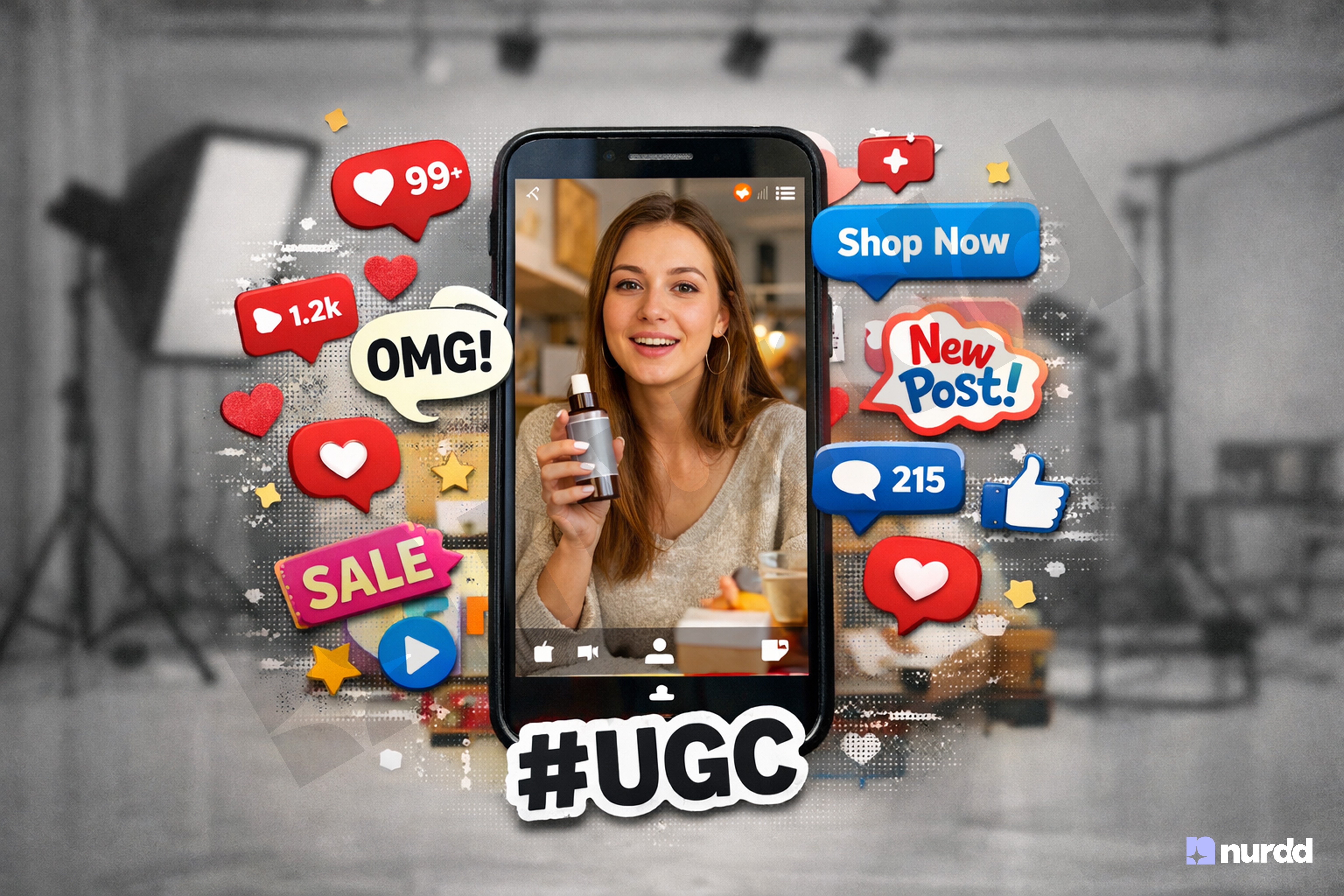
This is the finding that surprises marketing teams in Mumbai and Manhattan equally: the video shot on an iPhone in a kitchen, in Hindi, with slightly shaky hands, outperforms the professionally shot brand film. Not marginally — by a factor of four.
Globally, UGC content achieves 4× higher click-through rates and 50% lower cost-per-click than traditional brand advertising. [3] On TikTok, UGC with optimised hooks delivers 142% higher engagement and 43% better conversion rates than polished brand content. [3] The reason is trust, and trust in 2026 is signalled by imperfection.
In India, this dynamic is amplified by language. A beauty tutorial in Rajasthani dialect filmed in natural light, by a creator with 80,000 followers, will outperform a Rs 20 lakh brand campaign every single time — because it doesn’t feel like a campaign. It feels like a recommendation from someone who lives the same life as the viewer. Indian brands that have cracked this: Nykaa with its influencer-led live commerce, Sugar Cosmetics with its Reels-first strategy, Mamaearth with micro-creator networks have built customer acquisition costs 30% below traditional digital advertising benchmarks. [37]
Metric | UGC / creator content | High-production brand ad |
Click-through rate | 4× higher | Baseline [3] |
Cost-per-click | 50% lower | Baseline [3] |
Engagement lift (TikTok) | +142% | Standard |
Conversion lift | +43% | Standard |
Trust signal | High (feels authentic) | Low (reads synthetic) |
Avg. production cost | $200–800 per creator | $10,000–$100,000+ |
UGC vs. high-production brand creative performance, 2026. Source: Moburst Social Commerce Performance Report [3].
Ogilvy’s 2026 Social Trends Report calls this the “Synthetic Feed” problem. [4] As AI-generated content floods every platform - Instagram, YouTube, Facebook, audiences have developed a near-perfect filter for inauthenticity. The more polished the content, the more synthetic it reads. Imperfect = human = trusted. This is not a temporary consumer quirk. It is a structural shift in how trust is communicated at scale.
How can brands in India and globally apply Treatonomics to their strategy?
Treatonomics is not a campaign theme. It is a structural lens through which to rethink pricing, content, distribution, and platform strategy simultaneously. The table below maps the playbook by brand type, showing what the right move looks like in India first, and then globally.
Brand / vertical | India playbook | Global / US playbook |
|---|---|---|
Beauty & personal care | Meesho reseller network + Nykaa live sessions | TikTok Shop creator affiliates (beauty #1 category) |
Fashion & apparel | Instagram Reels + Myntra influencer hauls | TikTok #OOTD UGC + YouTube Shorts |
Food & snacks | JioMart / Blinkit quick commerce | TikTok impulse + Instagram Stories |
D2C / new brands | WhatsApp catalogue + nano-influencers | TikTok Shop native checkout, <$25 entry SKU |
SaaS / digital | YouTube vernacular demos + LinkedIn content | TikTok educational UGC + in-app free trial CTA |
B2B / services | LinkedIn + WhatsApp nurture sequences | LinkedIn thought leadership + creator podcasts |
Treatonomics brand playbook by vertical, India and global, 2026.
A few principles are universal regardless of market:
• Price for zero friction. In India, that means under Rs 500 for the impulse SKU. Globally, it means under $25. Above these thresholds, the treat impulse requires justification and justification kills conversions.
• Never make the user leave the app. In India, that means WhatsApp checkout and UPI-linked Reels. Globally, it means TikTok Shop and Instagram native checkout. Every redirect loses 60–70% of potential buyers. [4]
• Build with micro-creators, not macro campaigns. Ten Rs 10,000 creator partnerships will consistently outperform one Rs 5 lakh production. Scale what works.
• Make it a ritual, not a transaction. The brands that win Treatonomics long-term are the ones that become part of a daily or weekly emotional routine, not a one-off purchase.
The brands winning on both sides of this equation in India and globally, share one thing: they understood, before their competitors, that the consumer’s emotional state is the product. What you sell is secondary. How it makes them feel, in the 60 seconds between discovery and checkout, is everything.
Frequently asked questions
What is Treatonomics and why is it relevant for Indian brands?
Treatonomics is the consumer behaviour of buying small, affordable luxuries as emotional rewards or stress relief. In India, it manifests as impulse purchases in the Rs 200–500 range, enabled by frictionless UPI payments and discovery through Instagram Reels, YouTube Shorts, and WhatsApp. It is relevant for Indian brands because it represents a high-frequency, low-AOV (average order value) purchase pattern that, if captured through the right platform and content strategy, generates far more cumulative revenue and brand loyalty than occasional high-ticket sales.
Is TikTok Shop available in India, and what are Indian brands using instead?
TikTok is banned in India and TikTok Shop is therefore not available. Indian brands are using Instagram Shopping (with native checkout and Reels-led discovery), Meesho (for Tier 2/3 audiences via social reselling), WhatsApp Business Catalogues with UPI payment integration, and YouTube Shorts for affiliate-driven creator commerce. Meesho holds 35% of India’s social commerce market in 2026, making it the closest equivalent to TikTok Shop’s market-making role in the US.
How big is India's social commerce market compared to the global market?
India’s social commerce market reached approximately $8.4 billion in 2025, growing at a 25%+ CAGR, with a projected trajectory toward $13.76 billion by 2030. The global social commerce market is significantly larger, valued at $2.11 trillion in 2026 and forecast to reach $7.55 trillion by 2031 at a 29.12% CAGR. India’s share is small but growing rapidly, particularly as Tier 2 and 3 city smartphone penetration deepens and UPI adoption makes mobile payments seamless for first-time online shoppers.
Does UGC content perform better than polished ads in India as well?
Yes, and in some ways more dramatically. Indian consumers respond to vernacular content in their native language, filmed in familiar settings, by creators who share their socioeconomic context. A beauty tutorial in Hindi or Tamil by a nano-influencer with 50,000 followers will consistently outperform a high-production brand film. Indian brands working with micro-influencer networks report customer acquisition costs 30% below traditional digital advertising benchmarks. The global finding — that UGC delivers 4× higher CTR and 50% lower CPC — holds in India, and is amplified by the trust signal of linguistic and cultural familiarity.
What is the right price point for treat-based purchases in India versus globally?
In India, the impulse purchase sweet spot sits between Rs 200 and Rs 500. At this range, UPI payments feel inconsequential, and there is no need for deliberation. Globally (primarily the US market), SurveyMonkey’s 2026 Treatonomics Report identifies under $25 as the threshold at which 52% of treat purchases happen with near-zero friction. Brands targeting either market should design a “starter” or “mini” product SKU specifically to live in this window — not as a loss leader, but as a ritual-entry product that drives repeat purchases.
How does quick commerce in India relate to the global Treatonomics trend?
Quick commerce — Blinkit, Zepto, Swiggy Instamart — is India’s most visible expression of Treatonomics. The 10-minute delivery window is not a logistics feature; it is an emotional one. It ensures the treat arrives before the dopamine from the impulse fades. India’s quick commerce market is valued at approximately $6–7 billion in 2026, with 8 million+ daily active users across the top three platforms. Globally, the equivalent behaviour shows up in TikTok Shop’s same-session checkout: the impulse and the purchase happen within the same 60-second experience, eliminating the window in which buyer’s remorse can intervene.
Predictive Matching: The Death of the Influencer Gamble
AI agents are not just changing how purchase decisions are made, they are changing how creator partnerships are evaluated before they begin.
Predictive matching uses historical conversion data, micro-sentiment analysis, and lookalike creator modelling to calculate the probability of a creator's success for a specific AEO-relevant brief before any outreach is sent. The two components:
Micro-Sentiment Analysis: Tools analyse not just whether a creator's audience is engaging, but how whether comments are expressing purchase intent ("where can I buy this?"), category-qualified interest ("does this work for oily skin?"), or passive entertainment ("lol"). In an AEO context, this analysis now also assesses whether the creator's structured claim language is generating comment-level corroboration that AI agents can retrieve as third-party trust signals.
Lookalike Creator Modelling: AI identifies statistical twins of creators who have previously generated high volumes of AI-cited content in a specific category, not based on follower count, but on content structure patterns, cross-platform indexation density, and passage-level semantic clarity. A creator who consistently produces retrievable passages in "humid climate skincare" is a predictive AEO candidate for that category.
What Indian D2C and B2B SaaS Brands Should Do Right Now
India presents a specific urgency. It is the world's fastest-growing AI assistant user market Google AI Overviews adoption in India, WhatsApp's AI search integration, and Jio's assistant ecosystem mean that agentic query adoption is accelerating faster than in almost any other market globally. The brands that arrive with structured, machine-readable influencer content infrastructure now will build AI citation authority before the window closes.
Three immediate actions for this quarter:
1. Audit your top 10 creator posts for passage-level retrievability. Can an AI agent extract a specific, evidence-based claim in three to five sentences without rendering the full video? If not, your next creator brief should include a "structured claim" requirement specifying the exact language pattern creators must use when making a product recommendation.
2. Build your llms.txt file and /ai directory today. Create a machine-readable product summary at your root domain. This costs minimal development time and immediately improves the quality of the structured data available to agents following creator affiliate links. Usage of the llms.txt standard has grown by 1,800% over the past year for precisely this reason, the brands that build it now benefit from first-mover citation authority.
3. Add Share of Model to your weekly reporting. Set up a weekly prompt test across ChatGPT, Perplexity, and Google AI Overviews, ask for product recommendations in your category in natural language. Track how often your brand is cited, which creator content is referenced, and how your Share of Model changes as you implement AEO-compliant influencer briefs.
Frequently Asked Questions
What is Treatonomics and why is it relevant for Indian brands?
Treatonomics is the consumer behaviour of buying small, affordable luxuries as emotional rewards or stress relief. In India, it manifests as impulse purchases in the Rs 200–500 range, enabled by frictionless UPI payments and discovery through Instagram Reels, YouTube Shorts, and WhatsApp. It is relevant for Indian brands because it represents a high-frequency, low-AOV (average order value) purchase pattern that, if captured through the right platform and content strategy, generates far more cumulative revenue and brand loyalty than occasional high-ticket sales.
Is TikTok Shop available in India, and what are Indian brands using instead?
TikTok is banned in India and TikTok Shop is therefore not available. Indian brands are using Instagram Shopping (with native checkout and Reels-led discovery), Meesho (for Tier 2/3 audiences via social reselling), WhatsApp Business Catalogues with UPI payment integration, and YouTube Shorts for affiliate-driven creator commerce. Meesho holds 35% of India’s social commerce market in 2026, making it the closest equivalent to TikTok Shop’s market-making role in the US.
How big is India's social commerce market compared to the global market?
India’s social commerce market reached approximately $8.4 billion in 2025, growing at a 25%+ CAGR, with a projected trajectory toward $13.76 billion by 2030. The global social commerce market is significantly larger, valued at $2.11 trillion in 2026 and forecast to reach $7.55 trillion by 2031 at a 29.12% CAGR. India’s share is small but growing rapidly, particularly as Tier 2 and 3 city smartphone penetration deepens and UPI adoption makes mobile payments seamless for first-time online shoppers.
Does UGC content perform better than polished ads in India as well?
Yes, and in some ways more dramatically. Indian consumers respond to vernacular content in their native language, filmed in familiar settings, by creators who share their socioeconomic context. A beauty tutorial in Hindi or Tamil by a nano-influencer with 50,000 followers will consistently outperform a high-production brand film. Indian brands working with micro-influencer networks report customer acquisition costs 30% below traditional digital advertising benchmarks. The global finding — that UGC delivers 4× higher CTR and 50% lower CPC — holds in India, and is amplified by the trust signal of linguistic and cultural familiarity.
What is the right price point for treat-based purchases in India versus globally?
In India, the impulse purchase sweet spot sits between Rs 200 and Rs 500. At this range, UPI payments feel inconsequential, and there is no need for deliberation. Globally (primarily the US market), SurveyMonkey’s 2026 Treatonomics Report identifies under $25 as the threshold at which 52% of treat purchases happen with near-zero friction. Brands targeting either market should design a “starter” or “mini” product SKU specifically to live in this window — not as a loss leader, but as a ritual-entry product that drives repeat purchases.
How does quick commerce in India relate to the global Treatonomics trend?
Quick commerce — Blinkit, Zepto, Swiggy Instamart — is India’s most visible expression of Treatonomics. The 10-minute delivery window is not a logistics feature; it is an emotional one. It ensures the treat arrives before the dopamine from the impulse fades. India’s quick commerce market is valued at approximately $6–7 billion in 2026, with 8 million+ daily active users across the top three platforms. Globally, the equivalent behaviour shows up in TikTok Shop’s same-session checkout: the impulse and the purchase happen within the same 60-second experience, eliminating the window in which buyer’s remorse can intervene.
Sources & References
[1] SurveyMonkey (2026). Treatonomics Report: Spending Thresholds, Emotional Triggers and the Rise of the Little Treat Economy. surveymonkey.com
[2] EMARKETER (2026). TikTok Shop Makes Up Nearly 20% of Social Commerce in 2025; US Forecasts 2026. emarketer.com
[3] Moburst (2026). Social Commerce Performance Report 2026: UGC vs. Brand Creative Benchmarks. moburst.com
[4] Ogilvy (2026). Social Trends Report 2026: The Synthetic Feed and Human-First Content. ogilvy.com
[5] EMARKETER (2026). US Social Commerce Forecasts: Platform GMV Growth and Native Checkout Adoption. emarketer.com
[6] StateGlobe (2026). Top 10 Social Commerce Platforms in India 2026: Market Shares. stateglobe.com
[7] Vigyapan Mart / Research (2026). Social Commerce in India: Content, Commerce and the UPI Advantage. vigyapanmart.com