AI-Native Virtual Influencers in India: From the 'Kyra' Moment to Brand-Owned Mascots
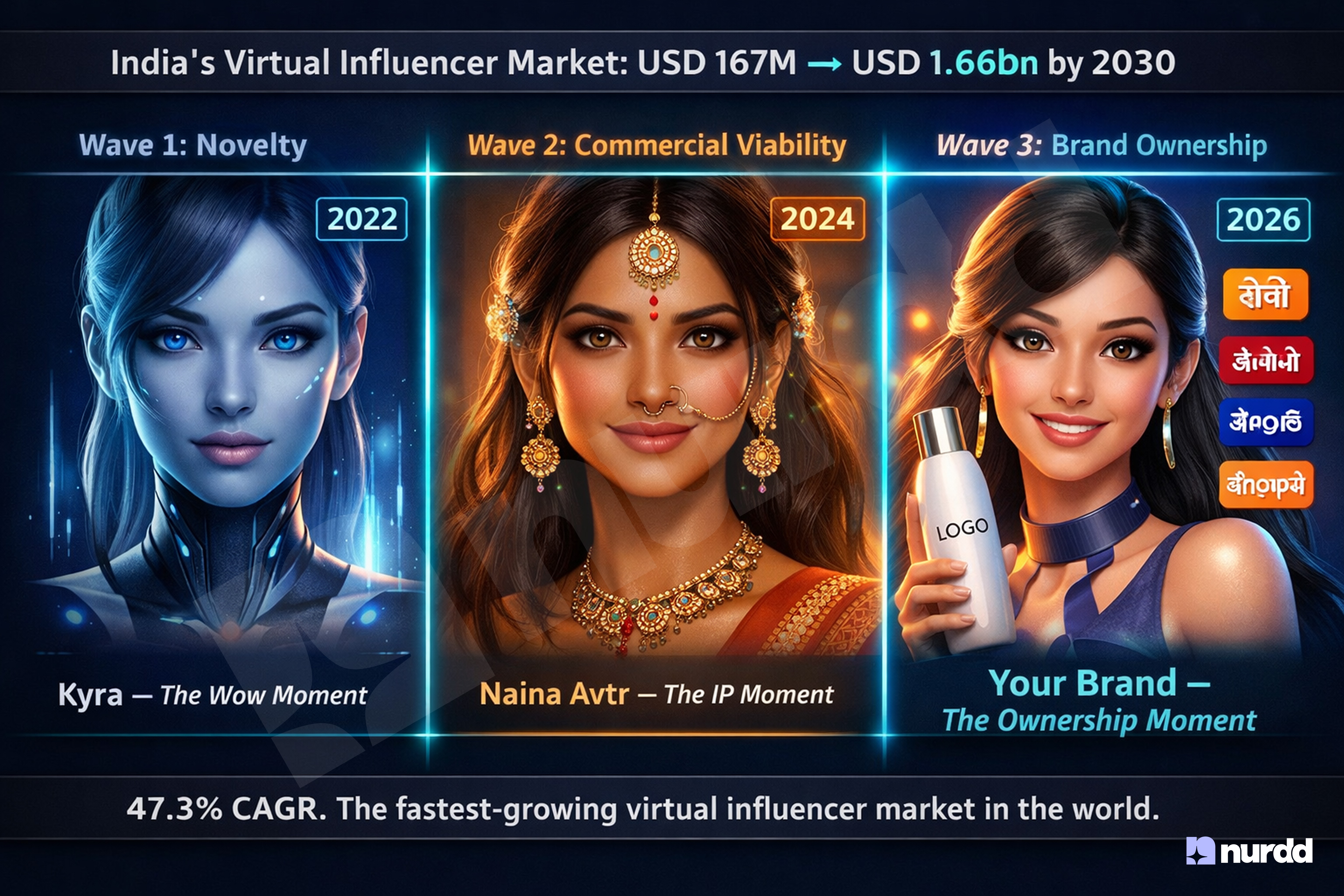
India's virtual influencer market was worth USD 167 million in 2024 and is growing at a 47.3% CAGR toward USD 1.66 billion by 2030 — the fastest-growing virtual influencer market in the world. The first wave (Kyra, Naina Avtr) proved novelty. The second wave proves ownership, multilingual reach, and 24/7 commercial deployment. But the future is not replacement — it is specialisation: virtual influencers for utilitarian clarity, human creators for emotional trust. The brands that understand which category their product falls into will build the most efficient influencer programmes of the decade.
The Three Categories Every Brand Must Understand First
Before any brand can decide whether to rent a virtual influencer, build one, or ignore them entirely, there is a definitional problem that the industry has not solved cleanly and that creates confusion in every strategy conversation.
A virtual influencer is a creator persona with an independent social following, typically built and owned by a studio, that partners with brands on a campaign-by-campaign basis. A brand mascot is a character created, owned, and controlled entirely by one brand built for long-term identity recall, not social independence. An AI brand ambassador sits between them: a mascot-grade owned character with the social presence, conversational capability, and multilingual range of a virtual influencer but whose IP, voice, and story belong permanently to the brand that built it.
In 2026, the most valuable asset an Indian brand can build is in that third category. Myra and Naina represent different points on this spectrum and understanding where they sit explains why the brands with the most sophisticated AI influencer strategies are moving toward ownership rather than rental.
The Moment That Changed Indian Marketing
In 2022, a young woman named Kyra appeared on Indian Instagram. She was stylish, well-travelled, aesthetically impeccable, and entirely computer-generated, created by FUTR Studios as India's first virtual influencer. She collaborated with Amazon Prime Video and boAt. Magazines covered her. Comments on her posts asked, with genuine uncertainty, whether she was real.
That uncertainty was the point. Kyra proved the concept: Indian audiences would engage with, follow, and respond to a character they knew was not human, provided the character was coherent, attractive, and consistent. The engagement data bore this out, virtual influencers' paid posts generate 13.3% more engagement than their organic content, the inverse of the pattern for human influencers, whose sponsored posts consistently generate less engagement than their unpaid content. Audiences tolerate and in some categories prefer commercial content from virtual characters, because they carry none of the authenticity expectations that make human influencer advertising feel transactional.
Since her debut in late 2022, Naina Avtr has built on that foundation into something more commercially sophisticated: over 3.76 lakh Instagram followers, an acting debut in the micro-drama series Truth & Lies on Instagram in October 2025 (the first time an AI character led a drama alongside human actors), and brand partnerships with Nykaa, Puma, and Pepsi. Her deliberately chosen Jhansi identity, a Tier-2 city, not a metro, signals exactly how precisely the studios behind these characters understand their audience's geography. Naina is not built for Mumbai. She is built for the India that comes after Mumbai.
Myra Kapoor, Manforce's virtual ambassador, represents the third and arguably most strategically instructive case. Manforce's decision to create their own virtual ambassador rather than hire an external studio's character is not about cost. It is about control, the ability to handle a sensitive product category (sexual wellness) with messaging that is precisely calibrated, never improvised, and never a PR liability. The ambassador does not have off days, does not develop personal controversies, and cannot sign with a competitor.
From Novelty to IP: Why Brands Are Building Their Own
A brand that rents a virtual influencer for a Diwali campaign gets reach and aesthetic consistency for the duration of the brief. It does not get the IP. It cannot evolve the character. It cannot deploy her at 3 AM on a WhatsApp chat, train her voice on the brand's specific product vocabulary, build her into a customer service interface, or ensure she never endorses a competitor.
That limitation is driving the second wave: brand-owned AI mascots designed as permanent, controllable, infinitely deployable brand assets. The market data supports the shift - 55% of Indian consumers engage with AI influencer content, significantly higher than the global average, and CMOs are projected to allocate 30% of their influencer marketing budgets to virtual influencers by 2026, driven specifically by their always-on availability and language scalability.
What does it cost to build one? Based on 2026 benchmarks from the AI influencer industry, static image content at scale costs approximately ₹1,000–8,000 per asset. Short-form video (Reel-length, with lip-sync and motion) runs ₹15,000–1,50,000 depending on VFX complexity. Building an enterprise-grade brand mascot with a coherent personality, ongoing social presence, and conversational capability requires ₹80 lakh to ₹1 crore to construct the initial asset but ongoing production costs run significantly lower than an equivalent human creator programme once the asset is built. You are not buying posts. You are building a media asset that compounds in value over time.
The 24/7 Multilingual Advantage
There is a structural problem with human-led influencer campaigns in India that no amount of budget or creative excellence can fully solve: language.
India has 22 officially recognised languages and hundreds of active dialects. A campaign that works in Hindi misses Tamil Nadu. One built for Kannada-speaking audiences in Bengaluru has no reach in the Bhojpuri belt. Human creators with genuine fluency, cultural credibility, and meaningful audience scale exist in each of these language communities but orchestrating simultaneous launch across ten language groups, with consistent brand messaging and culturally calibrated content for each, is operationally nightmarish for any single campaign.
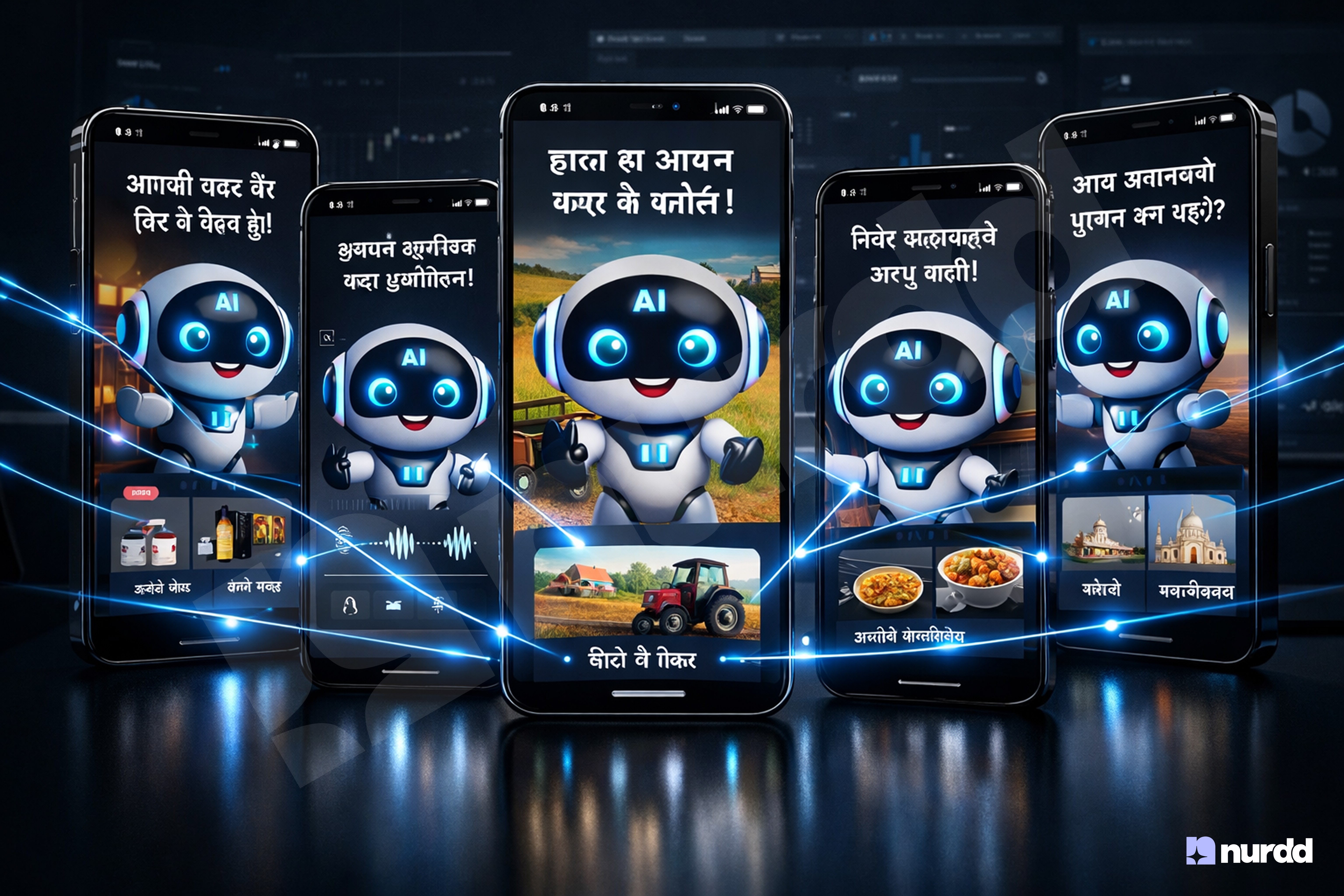
An AI-native brand mascot solves this structurally. The same character, same face, same personality, same brand relationship delivers a product demo in Hindi, Tamil, Telugu, Kannada, Bengali, Bhojpuri, Marathi, Haryanvi, Tulu, and Odia in parallel, with each version culturally calibrated by language and region, not just machine-translated. For a D2C brand expanding from metro India into Tier-2 and Tier-3 markets simultaneously, this multilingual simultaneity is the operational breakthrough that no human creator programme can replicate.
The always-on dimension compounds this. A Blinkit order at 2 AM can be accompanied by a WhatsApp interaction with the brand's AI mascot, answering product questions in the customer's preferred language, in a voice trained on the brand's specific vocabulary, with personality consistency that no human customer support team could maintain at scale across every Indian language at every hour.
The Tech Stack Behind a Brand-Owned AI Mascot
Building a virtual influencer in 2026 is a three-layer engineering and creative problem, each layer independently mature enough that mid-sized Indian D2C brands can access it without enterprise-level budgets.
The visual layer character appearance, movement, environmental rendering is built on Unreal Engine 5 or comparable real-time 3D platforms, combined with motion capture and AI-driven facial animation. The output: a character that can be rendered in any setting, wearing any product, in any lighting condition, without a photoshoot. Campaign-ready content at a fraction of the time and cost of traditional production.
The conversational layer is built on large language models fine-tuned on the brand's product knowledge, brand voice guidelines, and customer FAQ data. This is the layer that transforms a rendered character into an interactive brand representative, capable of answering product questions in Instagram DMs, hosting live sessions, running polls, or engaging in real WhatsApp conversations rather than delivering only pre-scripted content. The distinction between a virtual influencer and a virtual brand representative is almost entirely in this layer.
The voice layer is built on voice cloning and text-to-speech synthesis, trained to reproduce the mascot's distinctive voice in any target language with accent and intonation appropriate to each dialect. A mascot who sounds authentically Bhojpuri in Varanasi and authentically Tamil in Chennai using the same underlying character, is a distribution capability no human creator or dubbing pipeline can replicate at speed or scale.
What the ASCI Rules Require
Every Indian brand commissioning virtual influencer content in 2026 must understand the regulatory baseline before launch. ASCI mandates a clear disclosure that the consumer is not interacting with a real human being, an important clause as AI-generated personalities gain traction. This disclosure must be prominent and hard to miss, not buried in hashtags or relegated to the end of a caption.
The specific ASCI requirements for branded virtual influencer content: for videos up to 15 seconds, the disclosure label must stay visible for a minimum of 3 seconds; for videos between 15 seconds and 2 minutes, it must appear for one-third of the duration; for videos longer than 2 minutes, it must remain visible for the entire section where the brand or its features are discussed. In live streams, it must be announced at the beginning and end. The disclosure must appear in English or the language of the advertisement itself, not just in a platform's built-in sponsored tag, which ASCI explicitly states is insufficient on its own.
A significant compliance advantage of brand-owned mascots over rented virtual influencers: the brand controls every post, every caption, and every disclosure tag directly, with no agency intermediary. A 2024 ASCI study of India's top 100 digital influencers found that 69% had failed to provide proper disclosures for brand endorsements in violation of CCPA and ASCI guidelines. When you own the character, that compliance gap closes entirely.
Where Virtual Wins and Where Human Always Will
The most important strategic insight in the virtual influencer conversation is the one most often missed: this is a specialisation story, not a replacement story.
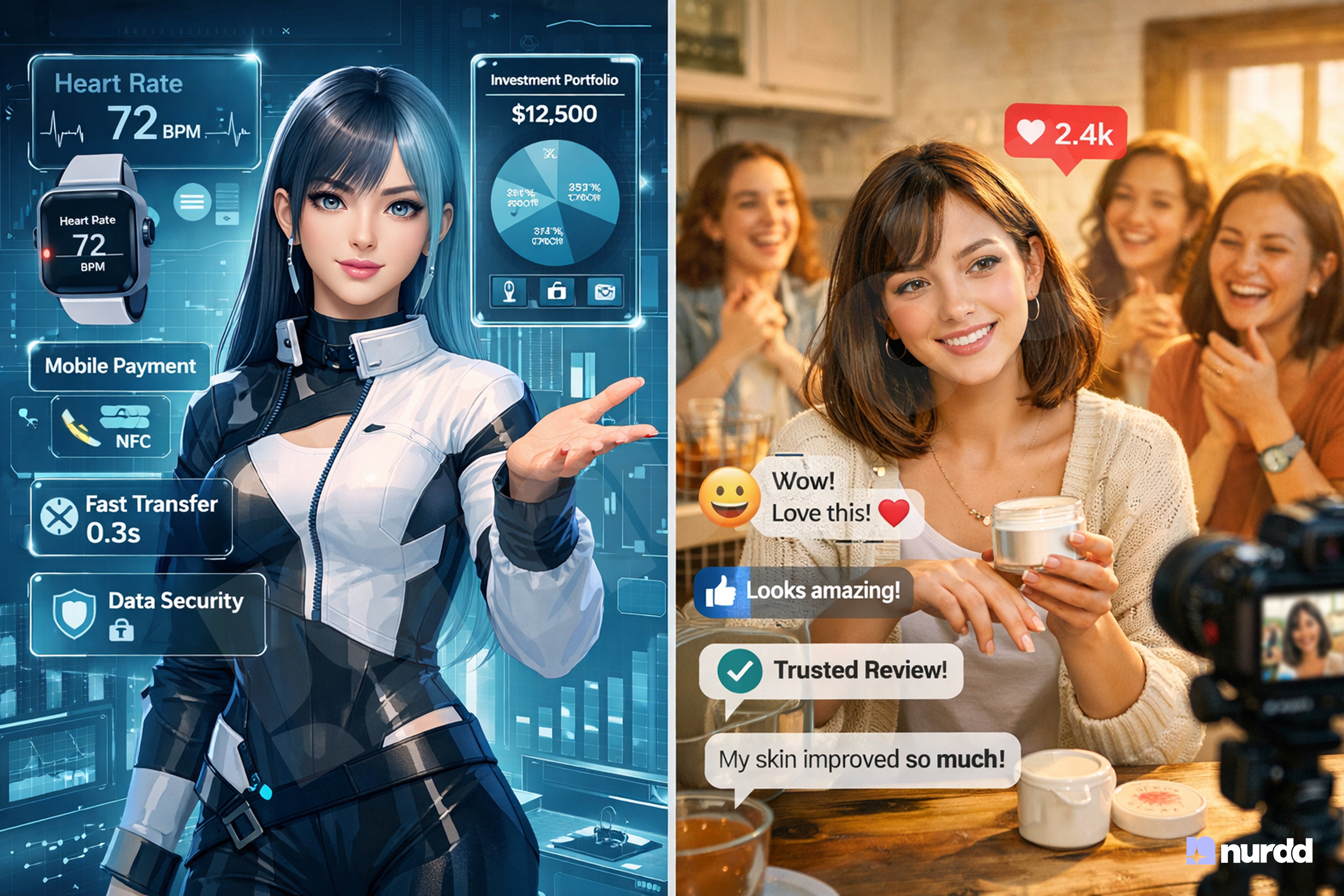
For utilitarian products - tech gadgets, fintech, insurance, telecom, household appliances, agri-inputs, where clarity, accuracy, and 24/7 availability matter more than lived experience, virtual influencers are genuinely superior. A virtual mascot can explain a credit card's benefit structure in Marathi at midnight with the same precision and patience as at noon on a weekday. Audiences engage with this content without the authenticity cynicism that fires when a human creator is clearly being paid to explain financial terms.
For hedonic categories - skincare, wellness, fitness, food, parenting, emotional lifestyle, the lived experience of a human creator is not a nice-to-have. It is the proof. When a mother in Lucknow recommends a baby skincare product because she has used it on her own child, her credibility comes from embodied knowledge that no rendered character can simulate. Audiences know this. The purchase intent that comes from human creator content in these categories comes specifically from biological trust, trust we extend to people who have shared our experiences.
The consumer data reveals a nuance that every brand's strategy must account for: while virtual influencer paid posts generate higher engagement than human ones, 65% of US consumers report they are unlikely to purchase products promoted by AI influencers. High engagement, lower direct purchase conversion, a pattern that perfectly describes utilitarian product discovery (engage to learn, then buy when ready) versus hedonic product conversion (emotional resonance drives the purchase decision in the moment).
The brands building the most sophisticated influencer programmes in 2026 are not choosing between human and virtual. They are deploying each where it wins.
What This Means for Indian Brands Right Now
India's virtual influencer market is growing at 47.3% CAGR from a USD 167 million base in 2024 toward USD 1.66 billion by 2030, the fastest national growth rate of any country globally. India's specific conditions make it the most compelling market in the world for brand-owned AI mascots: extreme linguistic diversity, mobile-first internet, a massive Tier-2 and Tier-3 consumer base that feels underserved by metro-centric campaigns, and a quick-commerce infrastructure demanding 24/7 brand responsiveness.
The brands that build these assets now are building brand IP that compounds over time. A mascot launched in 2026 with a coherent personality, consistent voice, and deep language capabilities across India's major dialects will be a recognisable brand asset in 2030, one whose production costs have long since paid off against the equivalent human creator programme spend. Human influencer relationships have churn. IP does not.
The Kyra moment was the proof of concept. Naina and Myra are proof of commercial viability. The question for every Indian D2C brand in 2026 is not whether to participate in this shift, it is whether to build now or wait until the competitive window has closed.
Sources
Grand View Research — India Virtual Influencer Market Size & Outlook 2025–2030 (Nov 2025): grandviewresearch.com
Grand View Research — Virtual Influencer Market Size & Share — Industry Report 2030: grandviewresearch.com
Indian Television — How an AI Personality Became One of India's Fastest-Growing Influencers (Feb 2026): indiantelevision.com
Outlook India — Meet Naina: The AI Influencer Turning Virtual Stardom Into Reality (Sep 2024): outlookindia.com
Tring — AI-Generated Influencers: The Future of Virtual Endorsements in India: tring.co.in
Amra & Elma — Best Virtual Influencer Marketing Statistics 2025: amraandelma.com
Campaign Asia — India's Ad Body Changes Influencer Rules for Health and Finance Sectors (Apr 2025): campaignasia.com
National Law Review — Social Media vs Reality: ASCI's New Influencer Guidelines: natlawreview.com
Khaitan Legal — Legal Implications of Social Media Influencers: Endorsements and Disclosures in India (May 2025): khaitanlegal.com
Social Samosa — Is India Lagging in the Virtual Influencer Race? (Mar 2025): socialsamosa.com
EY India — How Influencer Marketing Is Impacting Brands in India (Jul 2025): ey.com
Excellent Publicity — Top 10 Indian AI Influencers on Instagram to Follow in 2025: excellentpublicity.com