Professional Creator-Preneurs: How India's Doctors, Lawyers, and Engineers Are Building the Most Trusted B2B Brands in 2026
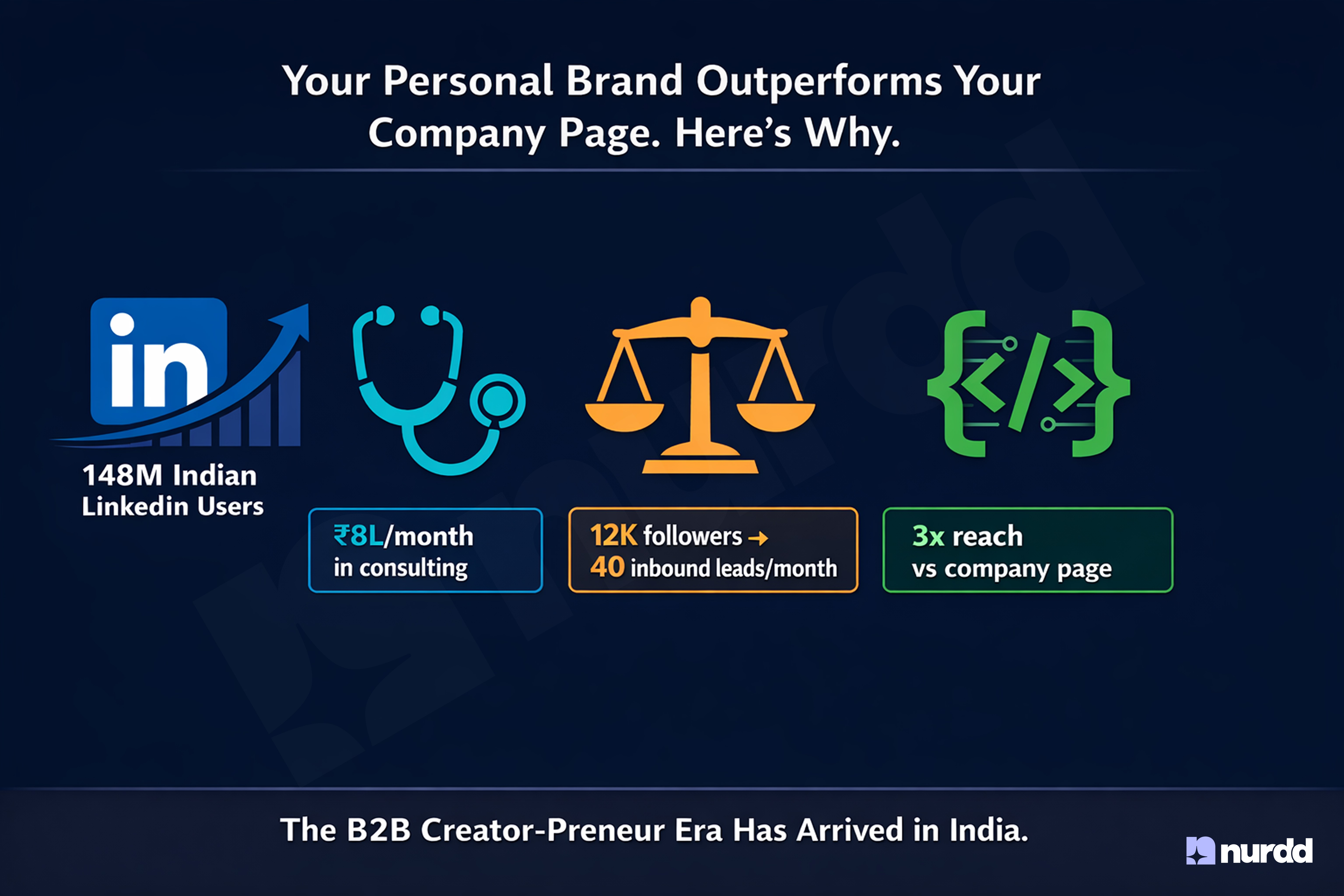
82% of B2B buyers say LinkedIn creator content influences their purchasing decisions. 59% prefer it over every other platform. India now has 148 million LinkedIn users, the platform's fastest-growing national market. The professionals winning in this landscape are not posting résumé updates or corporate announcements. They are publishing the hard-won knowledge that took a decade to earn, in a format that makes it safe for a company to buy a product, hire a firm, or make a strategic decision. This is the B2B Creator-Preneur era and it is the most powerful personal brand opportunity for Indian professionals right now.
The Trust Gap That Personal Brands Are Closing
There is a specific moment that happens in every B2B purchasing decision. The decision-maker has read the vendor's website, watched the product demo, and received the sales deck and still does not feel safe making the call. Not because the product is bad. Because the information came from the vendor. Because there is no independent voice they trust saying: yes, this is real, yes, this works, yes, this is worth your company's money and your career's credibility.
This is the trust gap and in 2026, Indian professionals with domain expertise are closing it for a living.
A B2B Creator-Preneur is a professional who has transformed their domain expertise into a publishing practice that generates consulting leads, course revenue, and brand partnership income from their personal LinkedIn presence. When a cardiologist reviews a health-tech SaaS on LinkedIn with clinical specificity, she is not just creating content. She is performing de-risking, making it safe for a hospital procurement committee to say yes. When a corporate lawyer breaks down new GST regulations precisely, he is generating qualified inbound interest from every startup founder who reads it and thinks: I need this person. When a senior Zoho engineer publishes the architecture decision that cost their team five hundred thousand dollars, she is building a following of technical decision-makers who trust her precisely because she told them the expensive truth.
59% of B2B decision-makers prefer creator content on LinkedIn over other platforms. 82% say this content influences their purchasing decisions. 79% engage with creator content at least once a month. These are not soft engagement metrics. They are purchasing behaviour statistics and they explain why the personal brand of a credible Indian professional now functions as a lead generation engine with compounding returns.
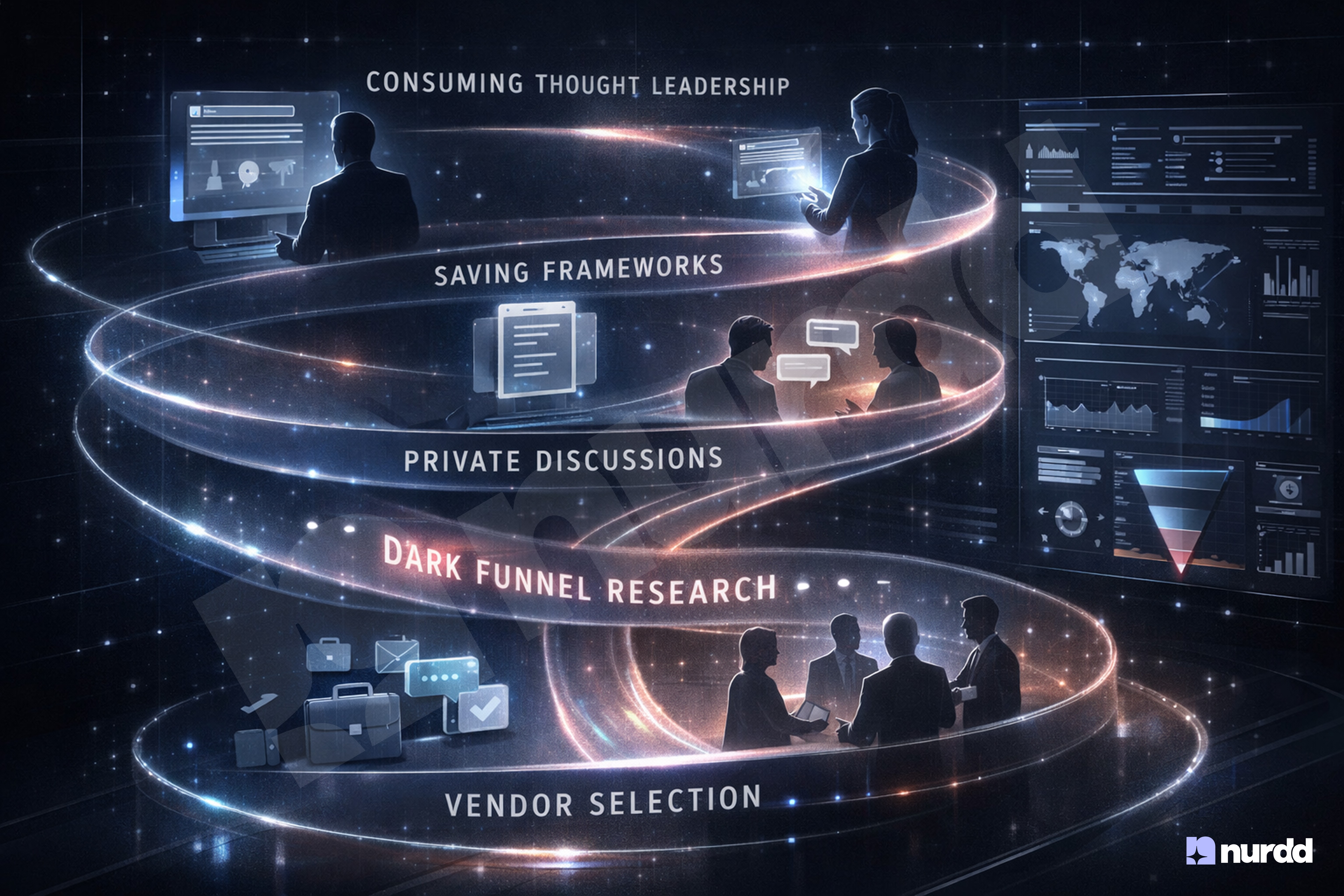
The Dark Funnel: Where 70% of B2B Decisions Actually Happen
Before understanding how Creator-Preneurs generate leads, it is essential to understand where those leads originate and why they are invisible to most sales teams.
The dark funnel is the 70–80% of B2B purchasing research that happens before a prospect ever raises a hand, fills out a form, or contacts sales. Decision-makers are lurking, reading, evaluating, before a buyer hops on a sales call or fills out a LinkedIn lead form, they're likely reading your posts, checking your company page, and evaluating your thought leadership without any traceable signal. In B2B spaces, LinkedIn is often the first touchpoint in the buyer journey and it happens entirely in the dark.
The Creator-Preneur who consistently publishes on LinkedIn is present in the dark funnel of every professional in their network who is quietly researching their domain. They are influencing decisions that will never show up in attribution data but will appear in inbound messages, referral introductions, and consulting inquiries that seem to arrive from nowhere. The Edelman-LinkedIn B2B Thought Leadership Impact Report confirms this directly: thought leadership isn't just content marketing, it is a strategic tool for building trust, driving alignment, and opening doors where ads and traditional sales methods fall short. Hidden buyers, who may never make themselves visible, read bold, perspective-shifting ideas. Strong thought leadership content can help level the playing field at the moment of the final decision, inspiring hidden buyers to advocate for less familiar vendors.
This is the value that no outbound sales team can replicate. The Creator-Preneur who has published 200 pieces of genuine domain insight has a dark funnel presence that compounds every time someone in their network faces a relevant decision.
From Employee to Creator-Preneur: The Three Income Streams
The transition from professional to Creator-Preneur is not about abandoning domain expertise for content creation. It is about recognising that domain expertise, consistently published, is the most valuable content asset in any B2B category.
After 2023, content consumption on LinkedIn India grew exponentially, making it a powerful thought leadership hub. Indian buyers increasingly rely on digital research before engaging with sales teams and LinkedIn offers unmatched access to CXOs, founders, directors, and procurement heads. Only 1% of LinkedIn users post weekly, which means the professional who publishes consistently is not competing with the platform at large. They are competing with 1% of their network, and winning an outsized share of attention in the process.
The Creator-Preneur model has three income streams that the traditional professional career does not. Consulting and advisory access: the Creator-Preneur who has established genuine authority charges significantly more per engagement than the equivalent professional without a public track record, because the client has already read twelve articles and decided the person is worth the premium before the first call. Course and cohort-based learning: the productisation of domain knowledge into structured programmes that generate income independent of time-billed. High-ticket B2B affiliate partnerships: technology companies, SaaS platforms, and professional service firms that pay referral fees to trusted domain experts whose recommendation actually moves purchase decisions.
India's most sophisticated Creator-Preneurs: the senior engineers at unicorns building DevTool audiences, the lawyers simplifying startup compliance on LawSikho's LinkedIn presence, the doctors building healthcare investment communities are operating across all three simultaneously.
The Content Grammar That Builds B2B Authority
The content shift that defines successful Creator-Preneurs in 2026 is the move from announcement to analysis, from "I'm happy to share that..." to "Here is the breakdown of the ₹2 crore mistake we made and the three things we would do differently."
LinkedIn users are 3x more likely to engage with content that features a CEO or founder. Live videos drive 24x more interactions than regular video posts. But the engagement advantage of personal creator content is not about format, it is about information type. Corporate brand pages publish positions and announcements. Professional creators publish knowledge that took years to earn and mistakes that cost real money.
The highest-performing content formats for Indian B2B Creator-Preneurs in 2026 are the failure post (what went wrong, what it cost, what I learned, the rarest kind of professional honesty, generating the most comments and saves), the framework post (a proprietary approach to a common problem, broken into numbered steps, named and owned by the creator, a citable, bookmarkable reference that builds long-term authority), and the counter-narrative post (the take that contradicts conventional wisdom in the creator's domain, backed by direct experience, the content that builds a distinctive voice rather than adding to the noise).
Thought leadership has become the currency by which credibility is traded in B2B. A mid-level manager in Bengaluru can write a thoughtful article that catches the eye of a CEO in Singapore, leading to a partnership or deal that no cold email would have produced. For Indian professionals in a market where domain expertise is abundant but domain communication is rare, this asymmetry is an enormous structural opportunity.
Employee Generated Content and Thought Leader Ads: The Brand Layer
The most powerful version of the Creator-Preneur model in Indian B2B is not the independent professional, it is the founder or senior leader who becomes the primary marketing channel for their own company through what LinkedIn now explicitly names as Employee Generated Content (EGC).
EGC works because audiences trust people before they trust organisations. Employees are 14x more likely to share employer content than the brand itself, and 30% of engagement on company posts already comes from employees, a ratio that rises dramatically when content originates from personal accounts rather than brand pages. Nithin Kamath of Zerodha and Kunal Shah of CRED have both built personal LinkedIn presences that function as their companies' primary trust distribution channels, channels whose intellectual authority no marketing budget could purchase.
LinkedIn's Thought Leader Ads (TLAs) translate this organic advantage into a paid distribution tool: companies can boost content posted from employee or founder accounts, running it as a paid campaign to target audiences while maintaining the authenticity of a personal post. The commercial advantage is significant. TLAs achieve 3–5x higher click-through rates than standard company sponsored content, with engagement rates of 10–20% compared to 1–2% for traditional company ads. The median cost-per-click is $2.29, compared to $4–8 for standard sponsored content. The mechanism: personal voices break through LinkedIn's corporate noise in a way that no brand creative can, and TLAs let companies pay to amplify that trust to precisely targeted audiences without sacrificing the authenticity that generates it.
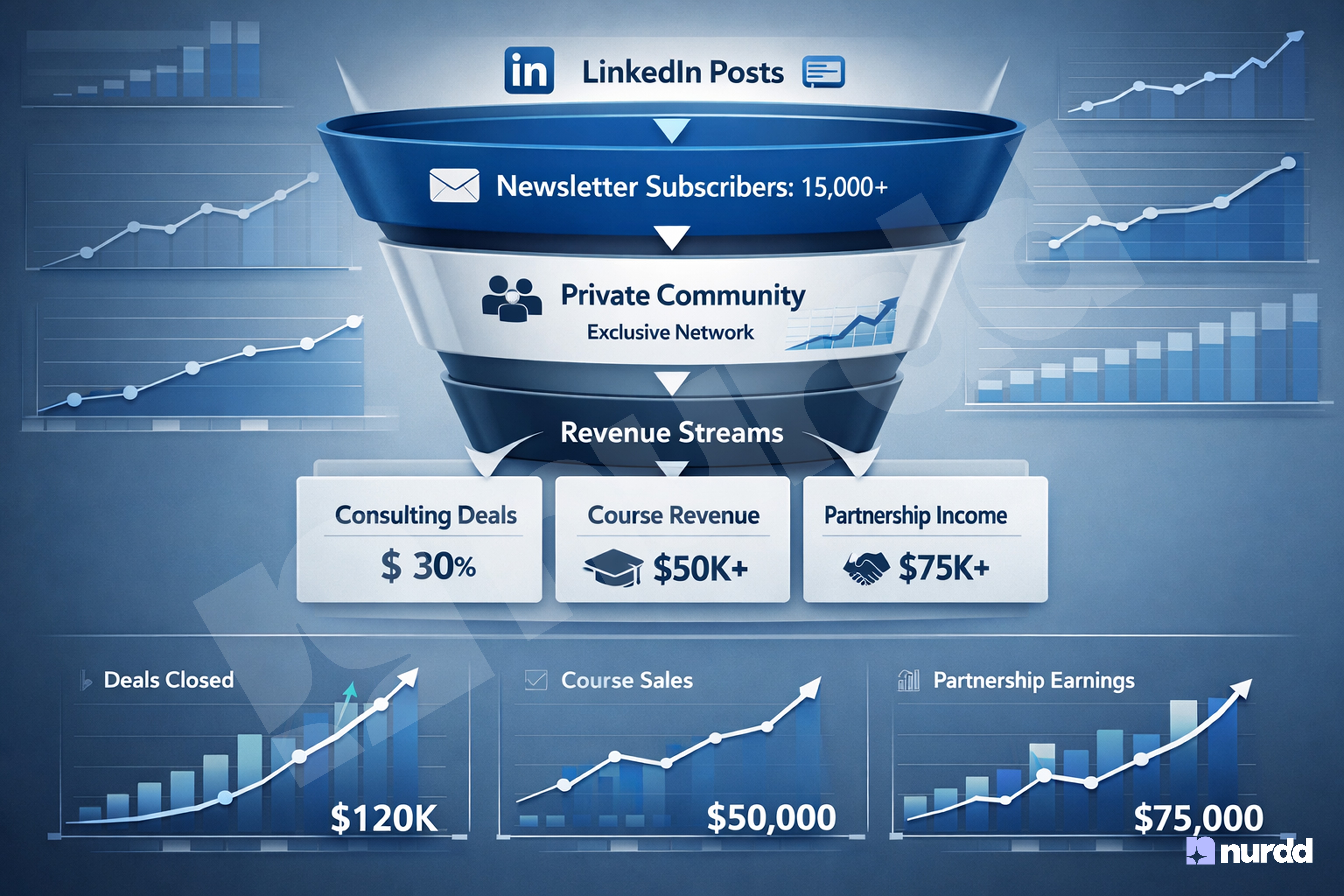
The Full Pipeline: LinkedIn → Newsletter → Community → Revenue
The most sophisticated Indian Creator-Preneurs in 2026 are not stopping at LinkedIn posts. They are using the platform as a top-of-funnel broadcast layer and converting their highest-intent followers into a three-stage pipeline.
Stage 1 — LinkedIn broadcast: Consistent domain content, compounding reach, regular inbound interest from people who have been reading for months before they make contact.
Stage 2 — LinkedIn Newsletter: The most efficient bridge between LinkedIn broadcasting and private community membership. A LinkedIn Newsletter notifies subscribers directly through the platform's push notification system, appears in LinkedIn's native search index, and compounds discoverability with every edition published. A cardiologist with a "HealthTech India" LinkedIn Newsletter, a corporate lawyer with a "GST Decoded" newsletter, or a senior SaaS engineer with an "Indian Dev Stack" newsletter is building a subscriber asset that the platform actively promotes and that converts readers into community members and consulting clients at dramatically higher rates than cold outreach.
Stage 3 — Private community: A Slack, Discord, or WhatsApp group where the creator's highest-intent followers access deeper engagement, peer networking, and direct access to the creator. This is where the real B2B networking happens and where the monetisation layer (consulting, courses, affiliate partnerships) converts community trust into revenue.
LinkedIn generates 80% of all B2B leads from social media and delivers 277% more leads than Facebook and Twitter combined. The Creator-Preneur who builds all three stages does not need a sales team. They have built the most efficient B2B lead generation infrastructure available, entirely on the back of genuine expertise, consistently shared, strategically distributed.
What This Means for Brands Working with B2B Creator-Preneurs
The professional Creator-Preneur is the most persuasive B2B partner available to any brand selling into their domain and the most underpriced.
A health-tech SaaS that partners with a cardiologist who has 80,000 LinkedIn followers and a private community of 600 hospital procurement managers has not bought an ad. It has bought a de-risking endorsement from the one voice its target buyer already trusts. The conversion efficiency measured in qualified demos, shortened sales cycles, and deal close rates is categorically different from equivalent paid media spend.
The brands that understand this in 2026 are building relationships with domain expert creators before the product launch, not during it. They are briefing Creator-Preneurs with genuine information access rather than press releases. They are measuring success in pipeline influence and MQLs, not impressions. And they are paying accordingly, because the Creator-Preneur's value is not in their reach. It is in their authority. And authority cannot be purchased. It can only be earned, slowly, by people who have done the actual work and then consistently published what that work taught them.
Sources
Buffer — 26 LinkedIn Statistics to Know for 2026: buffer.com
Ampy — Thought Leader Ads: The Complete LinkedIn Guide 2026 (3 weeks ago): goampy.com
Search Engine Land — 5 B2B LinkedIn Ads Tests to Run in 2026 (2 weeks ago): searchengineland.com
Edelman / LinkedIn — 2025 B2B Thought Leadership Impact Report: edelman.com
Martal — LinkedIn Statistics 2026: Global Trends & Social Selling Data (Feb 2026): martal.ca
Thunderbit — 100 LinkedIn Statistics and Facts for 2025: thunderbit.com
Averi.ai — LinkedIn for B2B SaaS: The Playbook That Generates 277% More Leads (2026): averi.ai
Geber Consulting — LinkedIn 2025–2026: B2B Brand Strategy Guide (Dec 2025): geberconsulting.com
Cleverly — LinkedIn Algorithm in 2025: What B2B Marketers Need to Know: cleverly.co
Lever Digital — 12 LinkedIn Ad Stats You Need to Know for 2026: leverdigital.co.uk