Brand Safety vs. Brand Soul: When to Let Your Influencer's Messy Voice Win
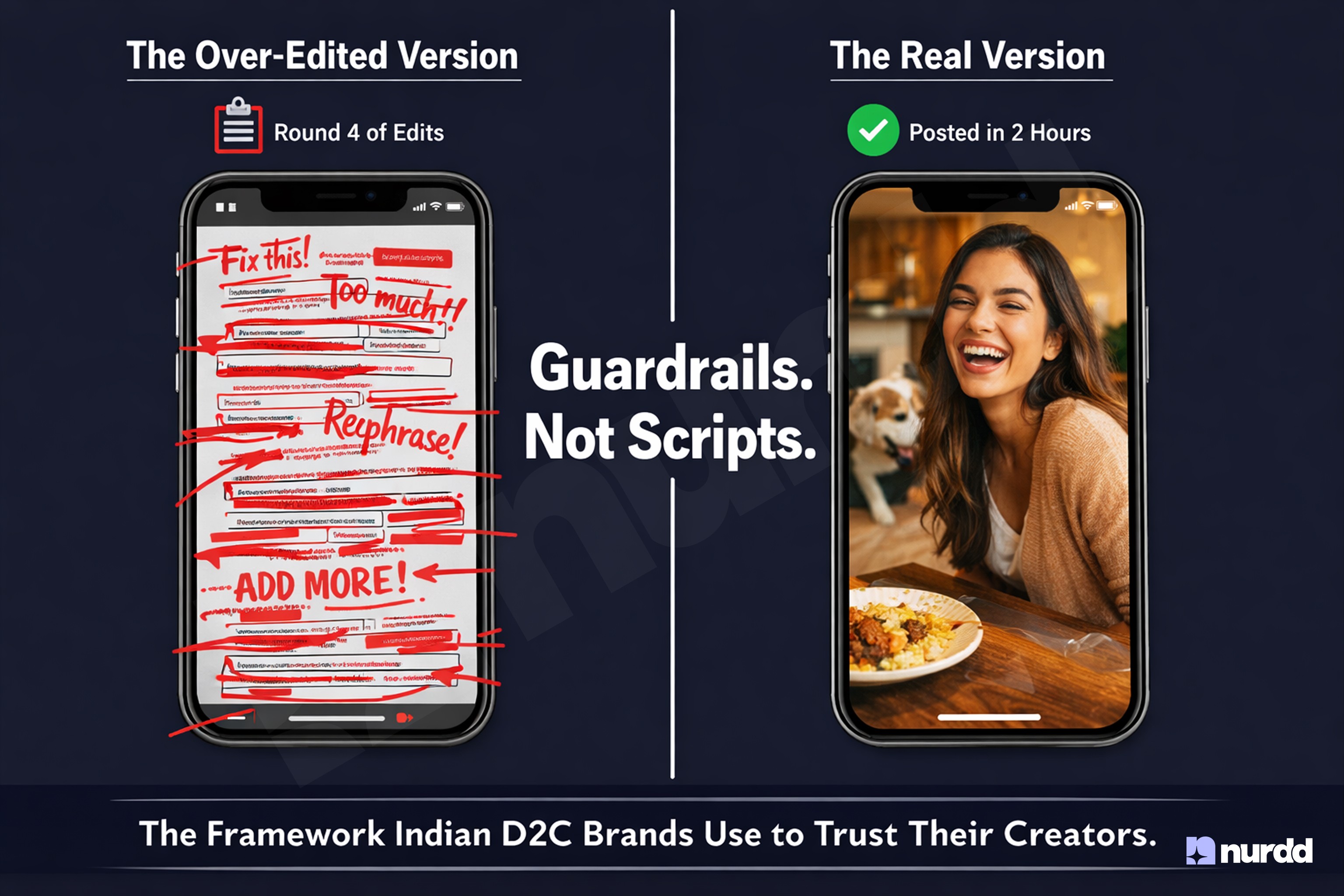
The moment you script an influencer, you've turned them into an actor. And Indian audiences especially Gen Z can tell the difference in the first three seconds. The Guardrails Not Scripts Framework protects what actually matters without stripping away the one thing you hired the creator for: their realness.
The Over-Correction Spiral No One Admits To
Here's how it plays out every week across Indian D2C brands. You hire a nano influencer for their warmth the chaos of their 60-second storytelling style, the way their followers trust them like a close friend. Then the brief lands. Four rounds of edits. Re-record the line. Remove the cluttered background. Don't mention the price. Fix your Hindi.
By the final cut, the creator is performing. And their audience the very people you paid to reach feel it immediately and scroll past.
India's influencer marketing industry is expected to grow 25% to ₹4,500 crore in 2026, and 70% of Indian brands cite trust and credibility as the top reasons for engaging influencers in the first place [1]. When you edit that trust out of the content, you're not protecting your brand. You're quietly destroying its most valuable asset.
The Real Cost: Brand Safety vs. Brand Suitability
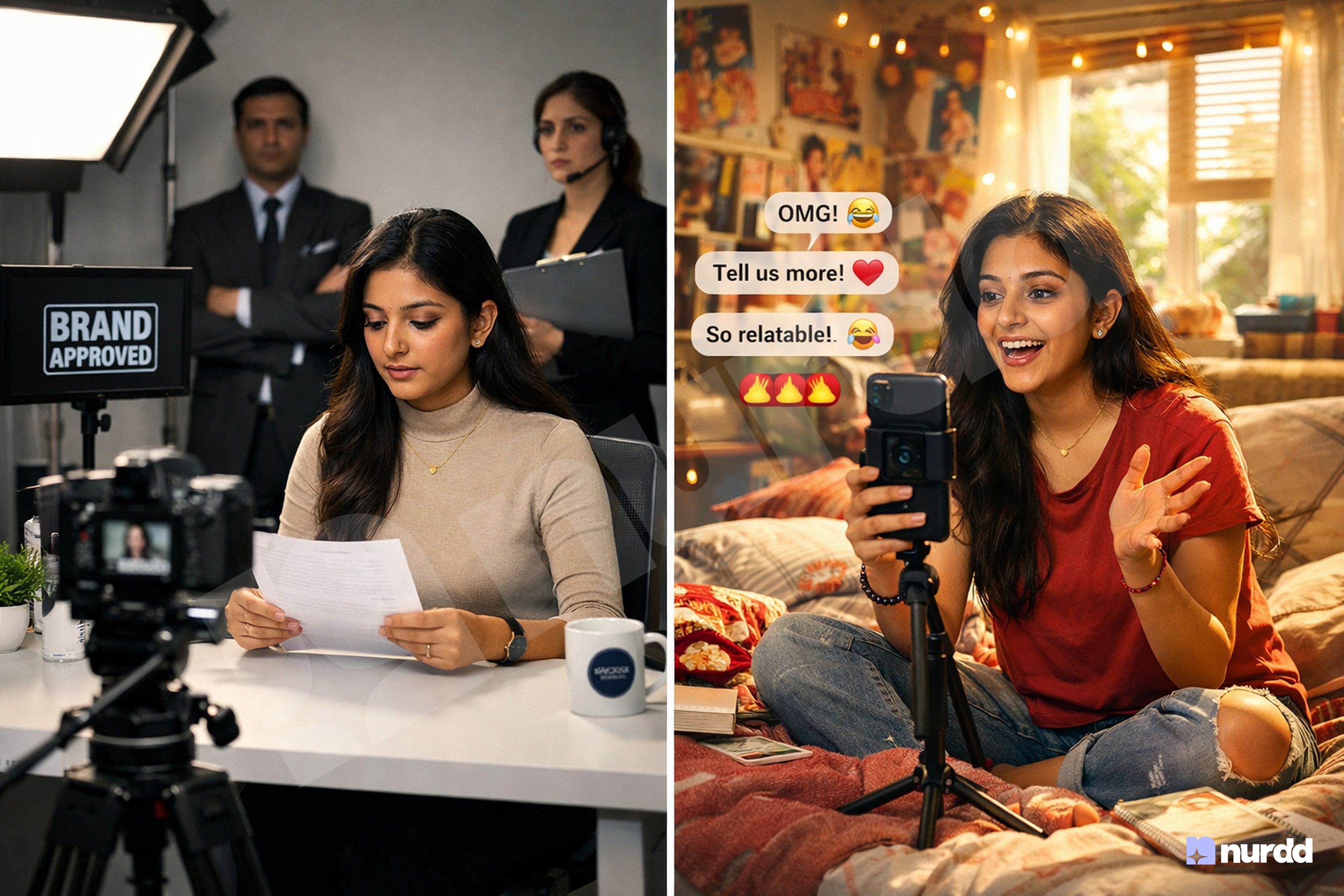
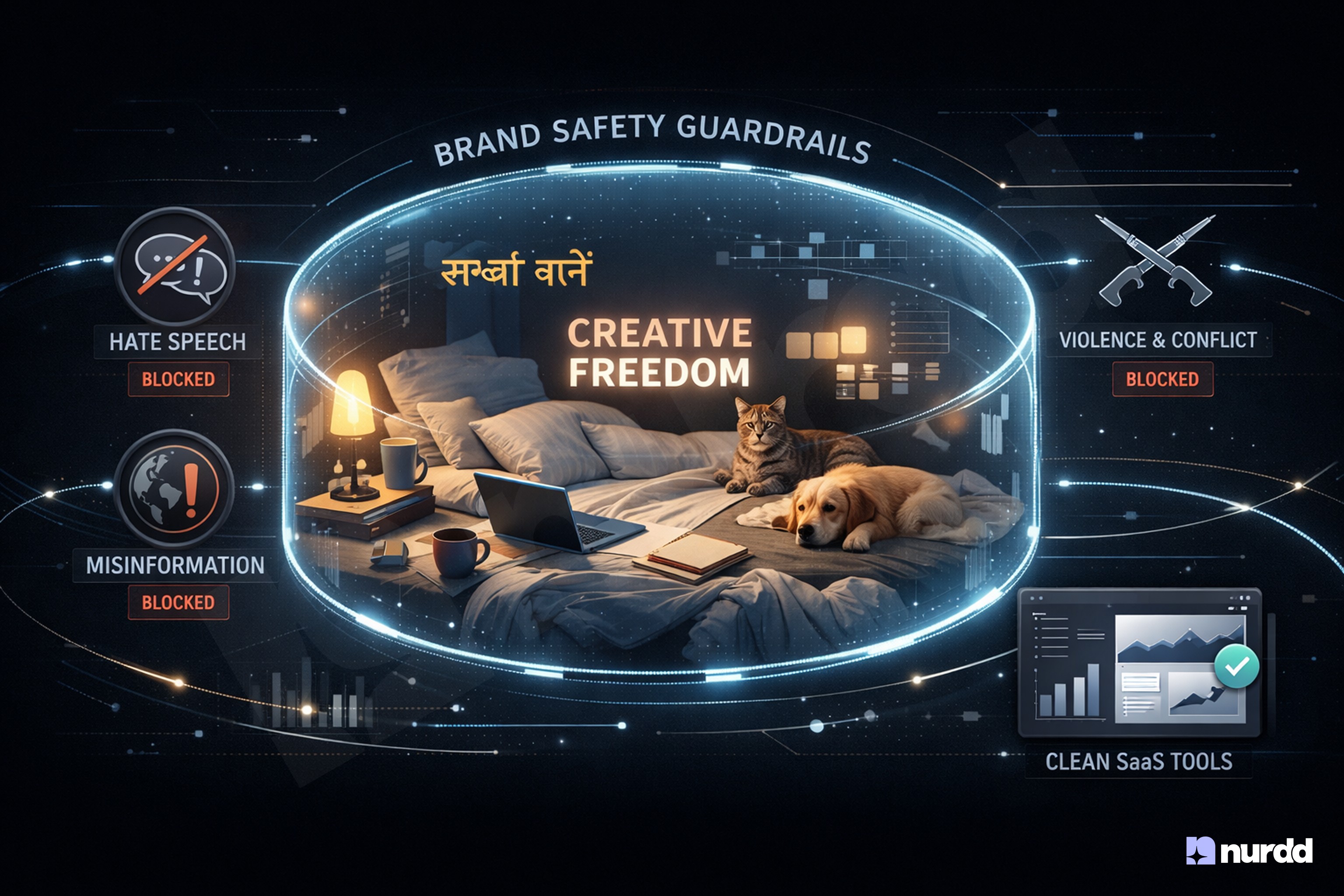
Here's a distinction that changes everything: brand safety is about avoiding objective harm hate speech, misinformation, conflict categories. Brand suitability is about finding creator environments that genuinely align with your values and audience.
Almost two-thirds of marketers who advertise on social media already express concerns about brand suitability in 2026 [2]. But most brands are solving the wrong problem they're applying safety-level control to suitability-level decisions, and killing authentic content in the process.
The brands winning Indian influencer marketing in 2026 are the ones that have stopped conflating the two.
The Guardrails Not Scripts Framework
Move 1 - Define Your Non-Negotiables (Safety)
Brand safety has a short, objective list: hate speech, extremist associations, misinformation, and conflict categories specific to your industry. If you're a health or food brand, associations with tobacco or alcohol content are material risks. Run an AI-powered vetting check on a creator's last three years of content before briefing them.
This is your hard floor the 20%. Everything above it belongs to the creator.
Move 2 - The 80/20 Brief (Suitability, Not Control)
Once a creator clears safety, hand them creative sovereignty. A good brief for a nano influencer in India has exactly five elements: the core product benefit, the correct URL or promo code, the mandatory ASCI disclosure (#ad or #collab), the brand name spelled correctly, and nothing else.
The barking dog in the background? Keep it. The slight stumble in Hindi? Keep it. The unmade bed in shot? Keep it. Creator content generates 11 times more impressions and 14 times higher engagement than brand-owned content [3] and the primary reason is that it looks nothing like an ad. The mess is the message.
Move 3 - Real-Time Sentiment Monitoring (Not Pre-Approval)
Instead of approving every frame before it goes live, watch the live reaction. If comments shift from "yaar sach mein 😭" to something that concerns you, activate your crisis response a fast, human reply from the brand account. In 2026, a genuine real-time response to a messy moment protects brand soul far better than a legally sanitised pre-planned statement ever could.
The One Question to Ask Before the Next Feedback Round
Before you send another round of edits, ask your team: are we fixing a safety risk, or are we fixing something we personally don't like?
If it's the latter leave it in. Over two-thirds of Indian consumers now turn to influencers for product discovery, information, and purchase decisions [1]. They are not turning to polished, scripted content that looks like it came from a brand's legal team. They are turning to real people, with real opinions, in real settings.
The brands that understand this stop managing creators. They start trusting them. And that trust is what converts.
Sources
Business Standard / The Goat Agency & Kantar - India Influencer Marketing Report 2025 (Jun 2025): business-standard.com
DoubleVerify - 2025 Global Insights Report: Brand Suitability in Walled Gardens (Nov 2025): ppc.land
CreatorIQ / NetInfluencer - Brand Safety and Suitability Drive Growth in Creator Marketing (Oct 2025): netinfluencer.com
Hootsuite - 6 Brand Safety Best Practices for 2025: blog.hootsuite.com
Influencer Marketing Hub - Influencer Marketing Benchmark Report 2025: influencermarketinghub.com