How to Reduce CAC for D2C Brands in India Using Nano Influencers 2026
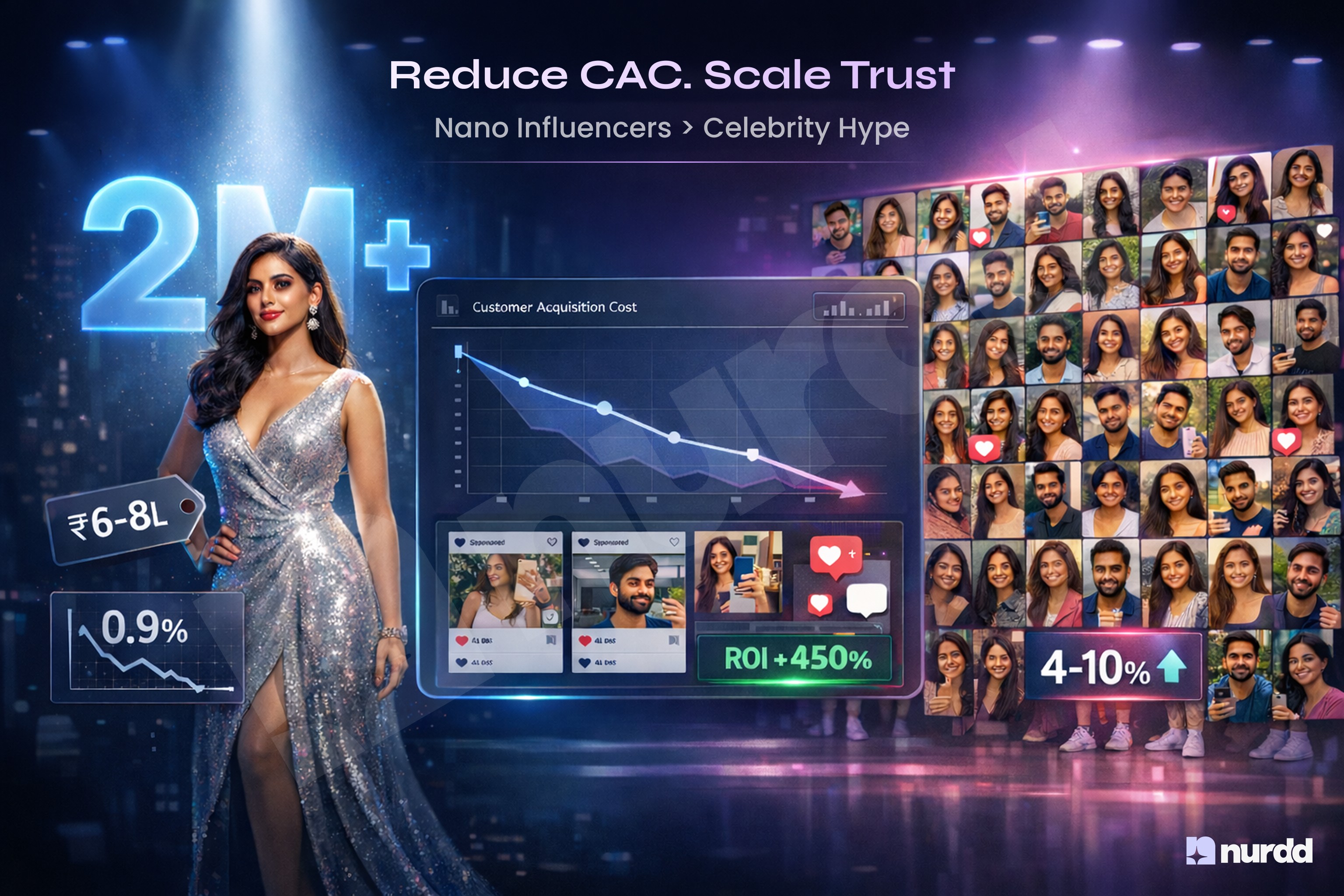
The short answer: Indian D2C brands can significantly reduce customer acquisition costs by replacing one high-cost celebrity post with 50 nano influencers creators with 1,000–10,000 followers who deliver 4–10x higher engagement, authentic UGC, and community-level trust at a fraction of the price.
Why CAC Is Killing Early-Stage D2C Brands
India has over 800 active D2C brands, all competing on the same Meta and Google ad inventory. Meta CPMs have risen 25–40% year-over-year. Google Ads CPC climbed 30–100% across categories in 2024 [1]. Digital acquisition costs are rising 20–25% annually [2], and with no correction in sight, outbidding larger brands on paid channels isn't a strategy. For most early-stage founders, it's a slow bleed dressed up as a growth plan.
Why Celebrity Influencers Don't Fix CAC
A macro-influencer with 2 million followers charges ₹5–8 lakhs per post and delivers just 0.92% average engagement [3] roughly 18,000 interactions from an audience that already knows it's paid content. The moment viewers sense a transaction, trust disappears. And without trust, there is no conversion. High reach is not the same as high relevance.
Nano Influencers and Niche Trust in India
What is a nano influencer? A nano influencer is a content creator with 1,000 to 10,000 followers, typically focused on a specific niche - clean beauty, budget fitness, sustainable living with an audience that follows them for a genuine reason.
That specificity is the asset. Nano influencers average 4% engagement versus 1.5–2% for macro accounts, per EY's 2024 India survey [4]. On short-video platforms like Moj and YouTube Shorts, that climbs to 10.3% [5]. Ninety percent of Gen Z consumers prefer creator recommendations over traditional ads [6]. At the nano level, your product recommendation doesn't feel like an ad, it feels like a friend's advice.
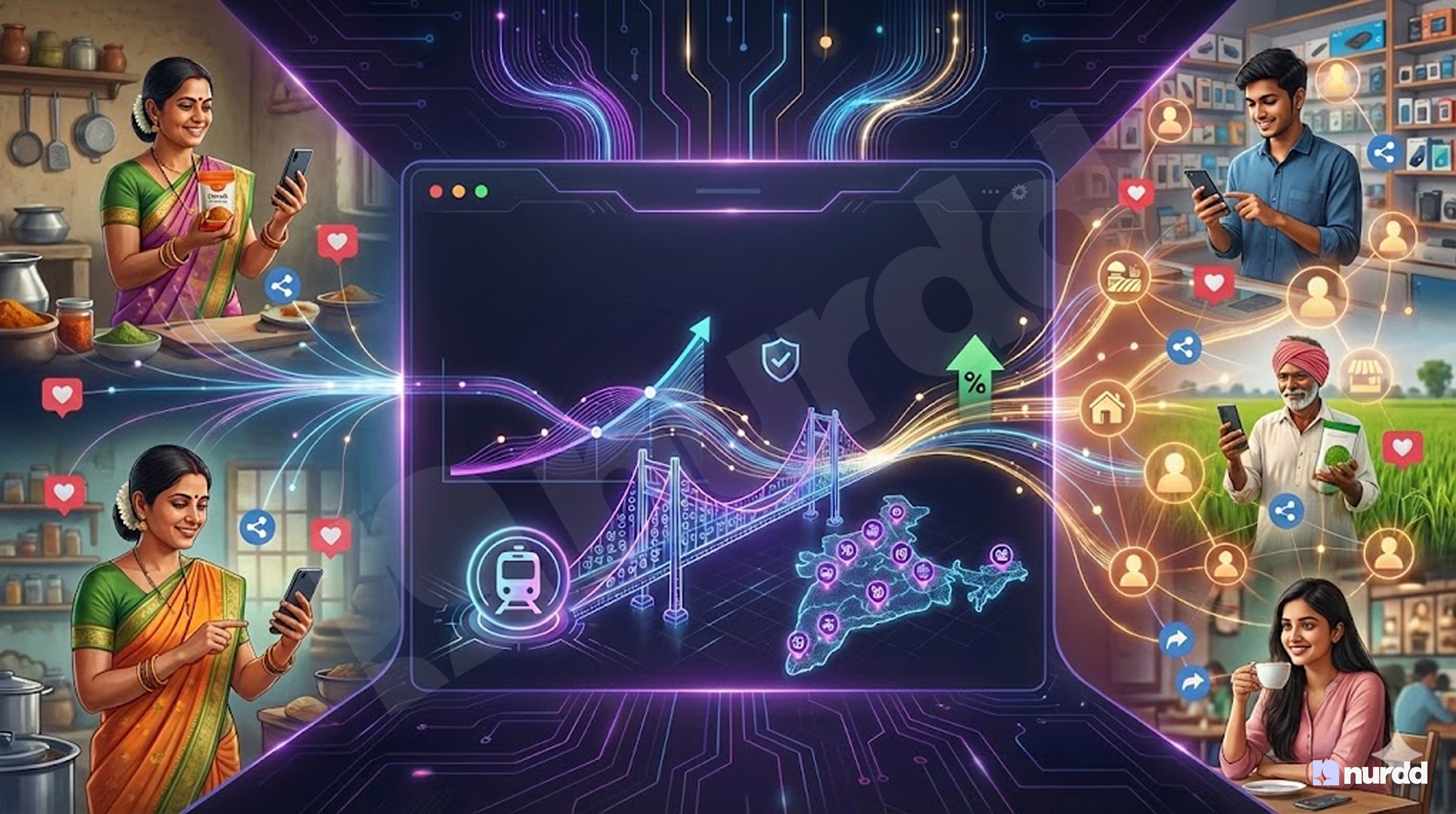
50 Creators vs 1 Celebrity: The ROI Math
Metrics | 1 Celebrity | 50 Nano Influencers |
|---|---|---|
Total Cost | ₹6–8L (fee only) | ₹5–7L fees + ₹2–3L product |
Avg. Engagement Rate | 0.92% | 4–10.3% |
Content Output | 1 post | 50 pieces of UGC |
Reusable as Meta Ads? | Rarely | Yes — at 50% lower CPC [7] |
Audience Trust Level | Low (paid perception) | High (personal recommendation) |
Word-of-Mouth Spillover | Minimal | Built-in |
Forty-seven percent of Indian brands now prefer nano and micro influencers for cost-per-reach effectiveness [4]. The shift is already happening, the brands moving early are compounding the advantage.
Building a Community-Powered Content Engine
One celebrity post is a campaign. Fifty nano influencers are infrastructure. When 50 creators across 50 niche communities talk about your product in the same month, you're embedding your brand into conversations that already feel personal not interrupting them. Thirty-nine percent of Indian shoppers made a purchase based on an influencer recommendation in 2024 [8]. At the nano level, that trust is both highest and most affordable.
At Nurdd, we believe the future of D2C isn't about "whale hunting" for the biggest names. It's about building a community of authentic voices.
How to Measure Performance Before Spending ₹10 Lakhs
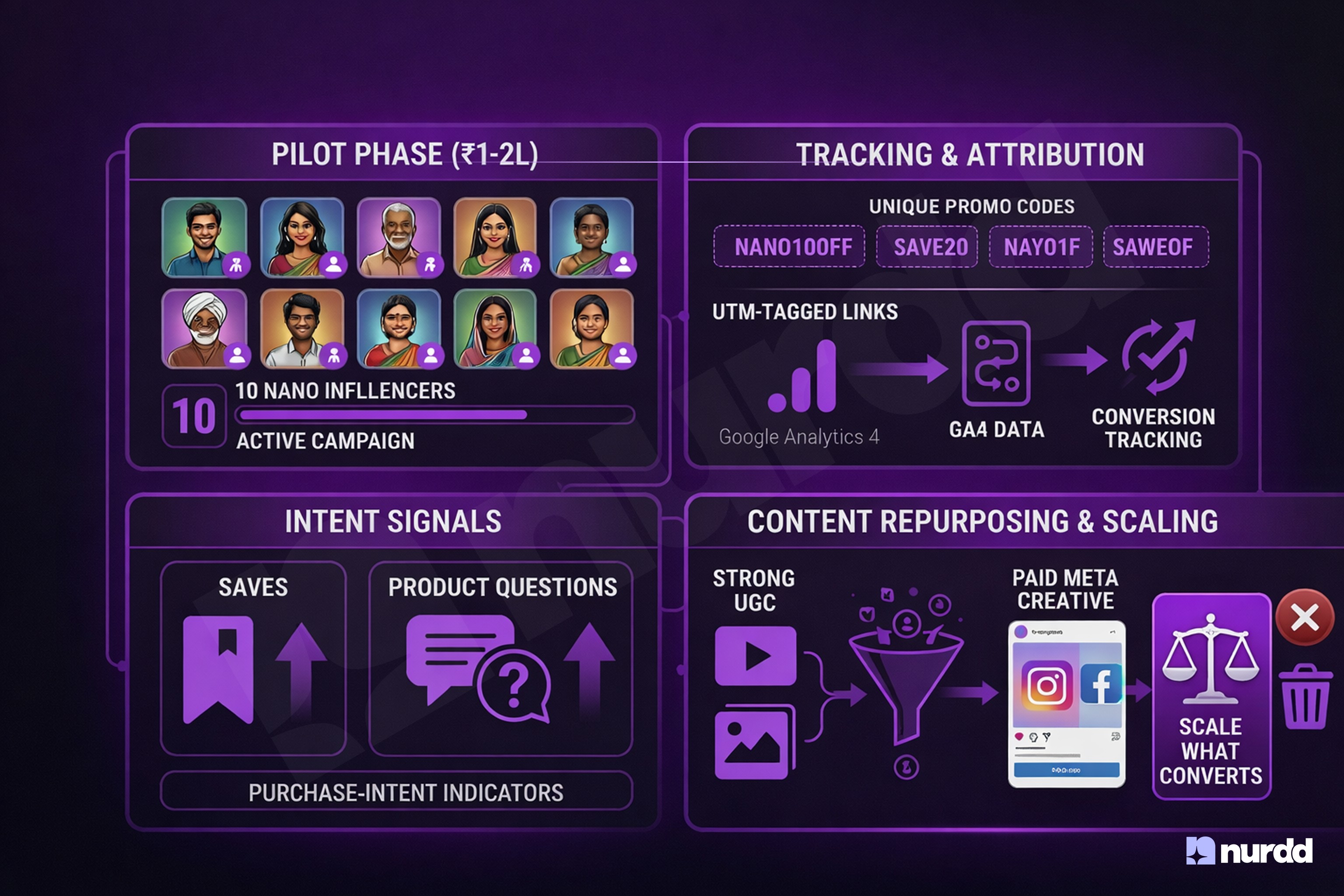
Step 1: Run a ₹1–2L pilot with 10 nano influencers first.
Step 2: Give each a unique promo code, the cleanest attribution available, backed by UTM-tagged links in Google Analytics 4 [9].
Step 3: Track saves and product questions in comments as purchase-intent signals.
Step 4: Identify which UGC is strong enough to repurpose as paid Meta creative. Scale what converts. Drop what doesn't.
FAQs
What is a good CAC for a D2C brand in India? A healthy CAC for Indian D2C brands typically falls between ₹300–₹800, depending on category. Beauty and wellness brands often target under ₹500. If your CAC exceeds your average order value, it signals an unsustainable paid acquisition model regardless of growth rate.
How much should I pay a nano influencer in India? Most nano influencers in India charge ₹5,000–₹15,000 per dedicated post, inclusive of product. Many also work on gifting-only arrangements in early partnerships, making them the most budget-accessible creator tier available.
Is influencer marketing better than Meta ads for D2C brands? For early-stage D2C brands with budgets under ₹20L, nano influencer campaigns typically deliver better CAC, stronger conversion quality, and reusable creative assets. Meta ads scale faster but require significantly higher budgets to compete effectively in 2025.
Sources
Mordor Intelligence - India D2C E-commerce Market Analysis (2024): mordorintelligence.com
Mocaup - Growth Marketing Strategies India 2026 (Jan 2026): mocaup.in
BePragma - The D2C E-commerce Shift: 2024→2025: bepragma.ai
Harnium - Nano Influencers: Transforming Digital Marketing in India (Sep 2025), citing EY 2024 India Survey: harnium.com
eMarketer / Influencer Marketing Hub - Tracking Impact of Nano & Micro Creators (Jun 2025): emarketer.com
FameKeeda - Influencer Marketing for D2C Brands in India (Dec 2025): blogs.famekeeda.com
Bazaarvoice - 64 UGC Statistics to Know in 2024: bazaarvoice.com
FindCollab - 20 Influencer Marketing Campaigns by Small Indian Brands 2024–25: findcollab.com
SARAL - How to Track & Measure Influencer Marketing Performance in 2025: getsaral.com