If You Can't Measure It, You Can't Improve It. Here's How to Measure Influencer Campaigns Right in 2026.
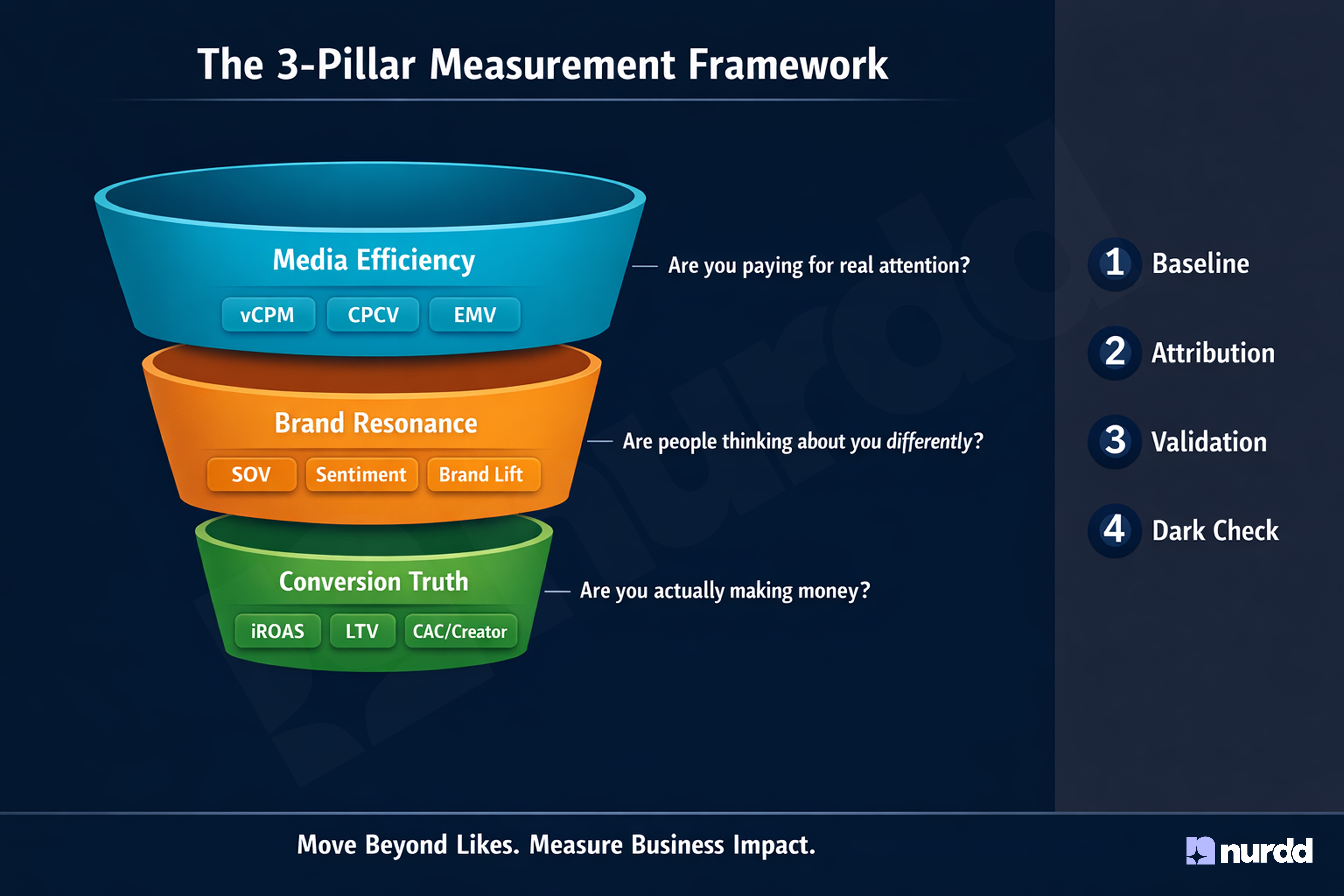
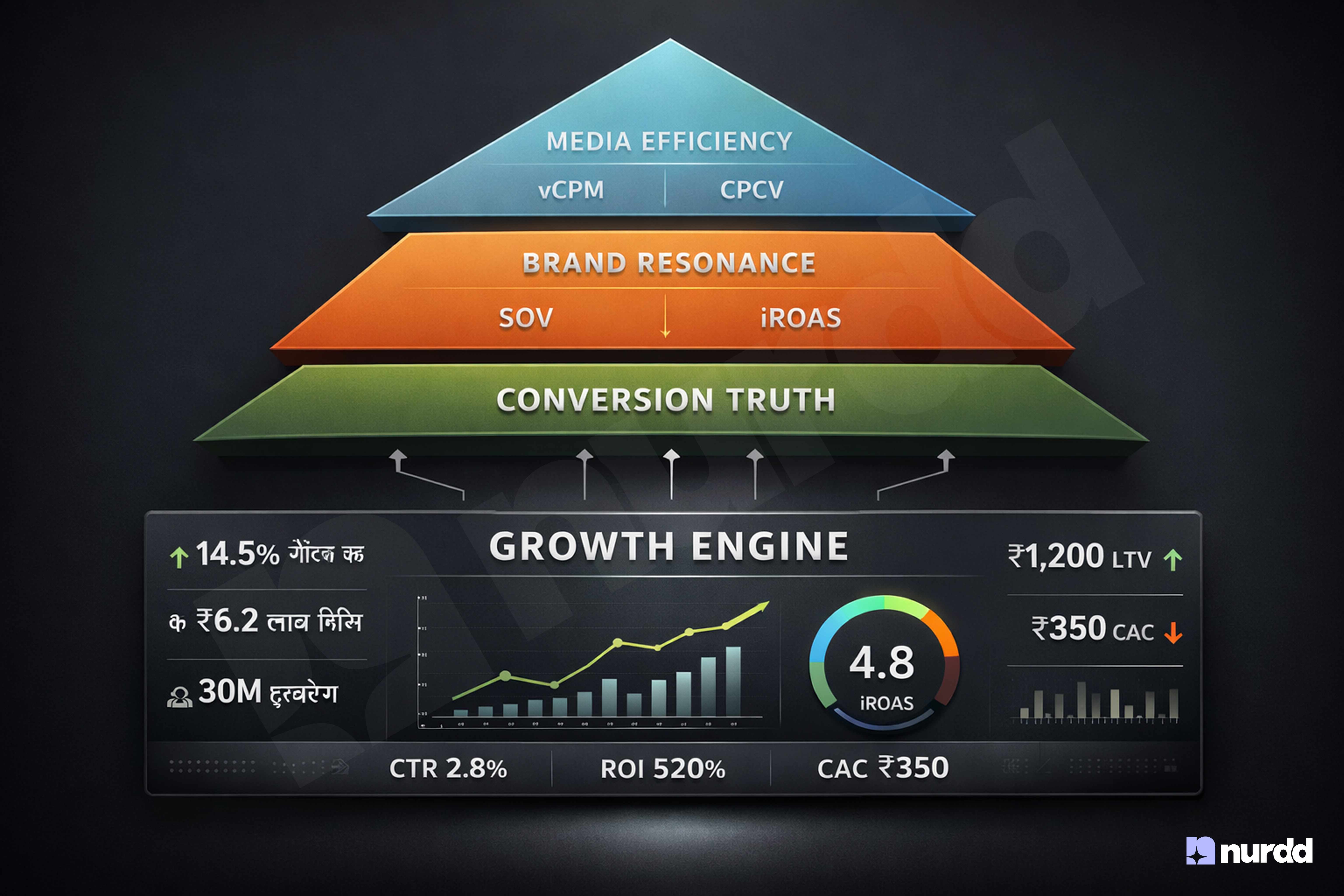
In 2026, measuring an influencer campaign "right" means moving past the Engagement Myth the belief that likes, comments, and reach tell you anything meaningful about business impact. The 3-Pillar Measurement Framework maps every metric to a business outcome: media efficiency at the top, brand resonance in the middle, and conversion truth at the bottom. The brands that use all three are the ones that know not hope that their influencer budget is working.
The Engagement Myth and Why It's Costing You Money
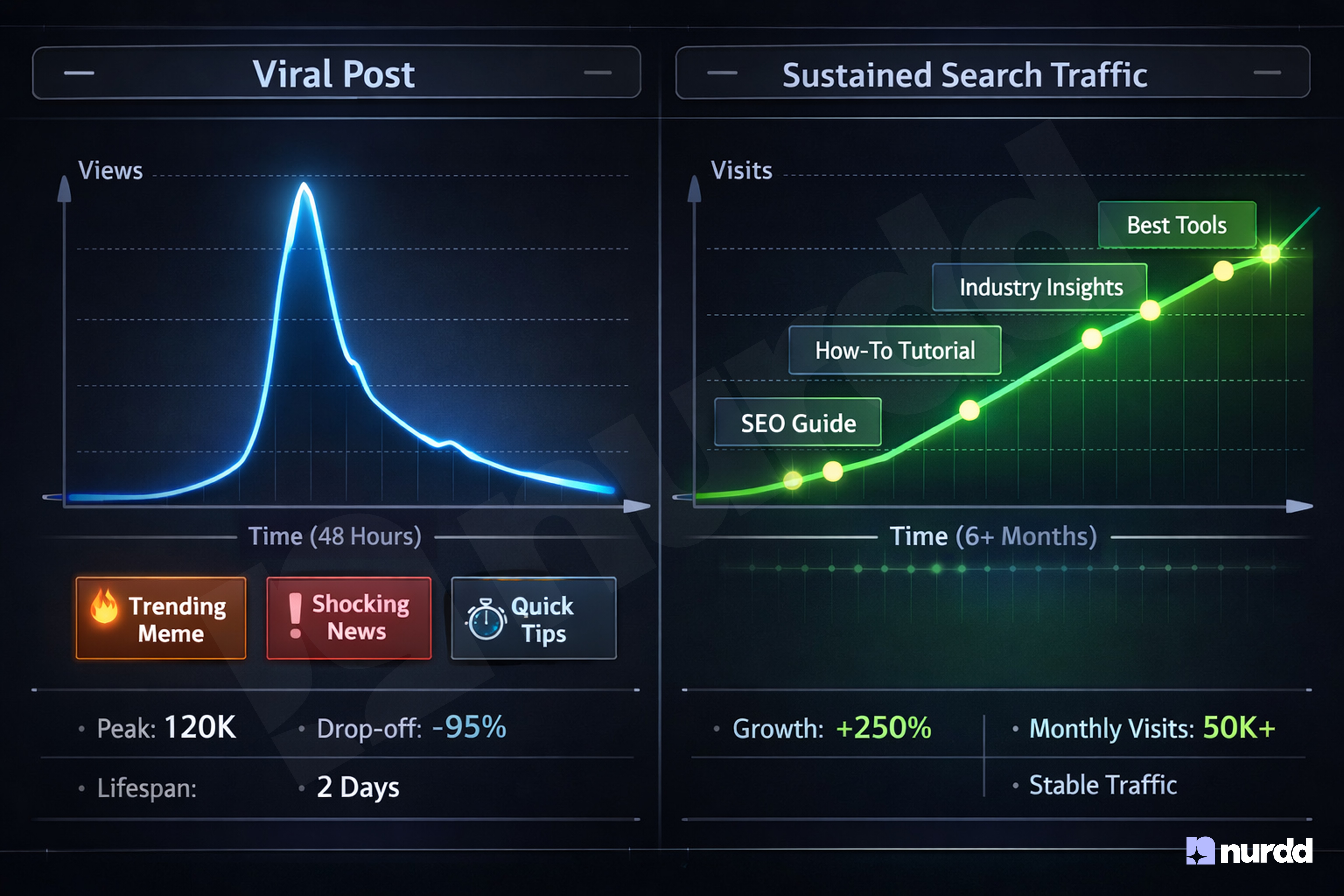
There is a comforting lie that most influencer marketing dashboards tell. The post got 45,000 likes. It reached 1.2 million people. The creator is booked again next quarter. And yet, somewhere between that post and the purchase decision, something didn't connect. Sales didn't move the way the numbers suggested they would.
This is the Engagement Myth - the assumption that high engagement equals business impact. It almost never does on its own. WOW Skin Science, which has been growing at 100% year-on-year and targets ₹550–600 crore in revenue, attributes its success not to raw follower reach but to rigorous data analysis before every influencer deployment evaluating audience fit, brand alignment history, and audience composition before a single brief goes out. The brand does not measure whether an influencer is popular. It measures whether they are appropriate and whether their audience converts.
That distinction is the difference between a measurement framework and a metrics dashboard. Here is what the former looks like.
Pillar 1 - Media Efficiency: The Top Line
Media Efficiency measures whether you are paying a fair price for real human attention which, in 2026, is not the same as the attention your dashboard reports.
vCPM (Validated CPM) is Cost Per 1,000 human views, with bot traffic and inactive accounts filtered out before the calculation. Standard CPM counts every impression served. vCPM counts only those served to verified human audiences. For any campaign targeting Tier-2 and Tier-3 India where bot penetration is higher in regional language niches vCPM is the only honest measure of reach efficiency. A campaign that looks cheap on CPM may be catastrophically expensive on vCPM.
CPCV (Cost Per Completed View) is the cost per viewer who watched a video in full, without dropping off. It matters specifically for Reels, YouTube Shorts, and Moj content which now dominates Indian influencer marketing. A creator whose audience watches 80% of every video is worth dramatically more than one whose audience scrolls past at the five-second mark, even if their follower counts are identical. A three-second view is not influence. Track completion rates by creator, by format, and by placement and use CPCV as your primary video efficiency metric.
Earned Media Value (EMV) is what the organic reach of an influencer post would have cost if purchased directly through Meta or Google Ads. EMV is not a measure of business impact, it does not tell you whether anyone bought anything. But it is a useful lingua franca for budget conversations: if a ₹50,000 creator post generates reach equivalent to ₹3 lakh in paid media, the efficiency argument for influencer marketing becomes numerically defensible.
Pillar 2 - Brand Resonance: The Middle Funnel
Brand Resonance measures the space between awareness and purchase where consideration, preference, and trust are built. This is where influencer marketing does its most important and least measured work.
Share of Voice (SOV) is the percentage of conversation in a specific niche that your brand owns relative to competitors. For Indian D2C brands targeting hyperlocal markets - organic food in Maharashtra, sustainable fashion in Karnataka, agri-tech in Punjab, SOV in a specific dialect community is more strategically meaningful than national share of voice. A brand that owns 40% of the Bhojpuri skincare conversation has a competitive position that no CPM metric will ever reveal.
Dialect-Specific Sentiment Analysis is the ability to gauge whether comments on a vernacular creator's post represent genuine purchase intent or inauthentic engagement. AI tools in 2026 can now accurately process sentiment in Bhojpuri, Tulu, Haryanvi, and other regional languages distinguishing between authentic enthusiasm and generic emoji responses. A post in Tulu with 2,000 comments asking where to buy the product is categorically more valuable than one with 10,000 fire emojis. India's creator economy is projected to reach ₹500 billion by 2030 [1], largely driven by vernacular commerce and sentiment measurement that works in regional languages is the infrastructure that makes that value visible.
Brand Lift Study is a survey-based measurement that determines whether an influencer campaign shifted brand awareness, purchase consideration, or message association. By surveying users exposed to the campaign versus those not exposed, it directly quantifies the value of the influencer's contribution to brand building. A 15% lift in purchase consideration among exposed users in a target market is a boardroom-ready proof point. An engagement rate is not.
Pillar 3 - Conversion Truth: The Bottom Line
Conversion Truth measures the direct revenue impact of influencer activity and it is where most brands discover that their previous metrics were telling them a story disconnected from what was actually happening in their business.
iROAS (Incremental Return on Ad Spend) is total revenue generated by a campaign minus the revenue that would have occurred without it, divided by total campaign cost. Standard ROAS includes baseline revenue that was going to happen regardless. iROAS isolates only the revenue the campaign actually caused. The formula: (Test group revenue − Control group revenue) ÷ Control group revenue, compared against total campaign cost. The difference between ROAS and iROAS is often the difference between a campaign that looks profitable and one that actually is.
LTV (Lifetime Value) of Influencer-Acquired Customers is the metric that most fundamentally changes how brands think about creator selection. The question is not which influencer drives the most first-time conversions, it is which influencer drives customers who come back. Indian D2C founders consistently find that marketplace CAC seems lower at first glance, but once you factor in returns, commissions, and zero customer ownership, it adds up whereas on a brand's own platform, even with higher upfront cost, the ability to re-engage customers makes LTV where the real win lies. The same logic applies to influencer channels: track 90-day and 180-day repeat purchase rates for customers acquired through each creator. Brands that have done this analysis find that nano-influencer-acquired customers have meaningfully higher LTV than customers acquired through discount ads.
CAC (Customer Acquisition Cost) by Creator is the most operationally useful metric for optimising an influencer programme over time. Not total campaign CAC, CAC broken down to the individual creator level, so brands can identify which specific voices drive the most efficient acquisition and scale those relationships while reducing investment in the ones that are not. 74% of brands are moving influencer marketing budgets into creator programmes measured by CAC, average order value, and ROI, the same standards as paid media [2]. That parity of standards is what makes influencer marketing defensible at the executive level.
The Measurement Workflow: Four Steps Before and After Every Campaign
Step 1 - Baseline: Measure organic sales, branded search volume, and baseline sentiment in the creator's geographic footprint 14 days before the campaign launches. Without a clean baseline, no post-campaign metric has anything meaningful to compare against. Use Marketing Mix Modelling (MMM) to establish what "normal" looks like across all channels simultaneously.
Step 2 - Attribution: Deploy unique UTM parameters for every creator, every post, and every placement. Combine these with Conversion API (CAPI) server-side tracking to capture purchases that happen after ad-blockers or iOS privacy interventions prevent standard pixel tracking. For brands with a D2C app, integrate an MMP to close the attribution gap in walled gardens like Instagram and YouTube.
Step 3 - Validation: Within 72 hours of campaign end, cross-reference digital click data with post-purchase survey responses. When a customer who clicks a Google ad writes a specific influencer's name in the "how did you hear about us?" field, the survey overrides the click attribution. Tools like Fairing or EnquireLabs automate this cross-referencing. The delta between what the UTM says and what customers say is your dark social attribution, the influencer impact that no tracking link could capture.
Step 4 - The Dark Check: Monitor branded search volume spikes using Google Search Console and Google Trends during the influencer's posting window for seven days post-campaign. A creator post that drives a 40% spike in branded searches even if none of those searches click a trackable link is demonstrably building brand awareness. This branded search lift is the clearest middle-funnel signal available without a formal brand lift study.
What the DPDP Act Changes About Your Measurement Stack
Every Indian D2C brand running influencer campaigns in 2026 needs to understand what India's Digital Personal Data Protection (DPDP) Act means for how they track performance.
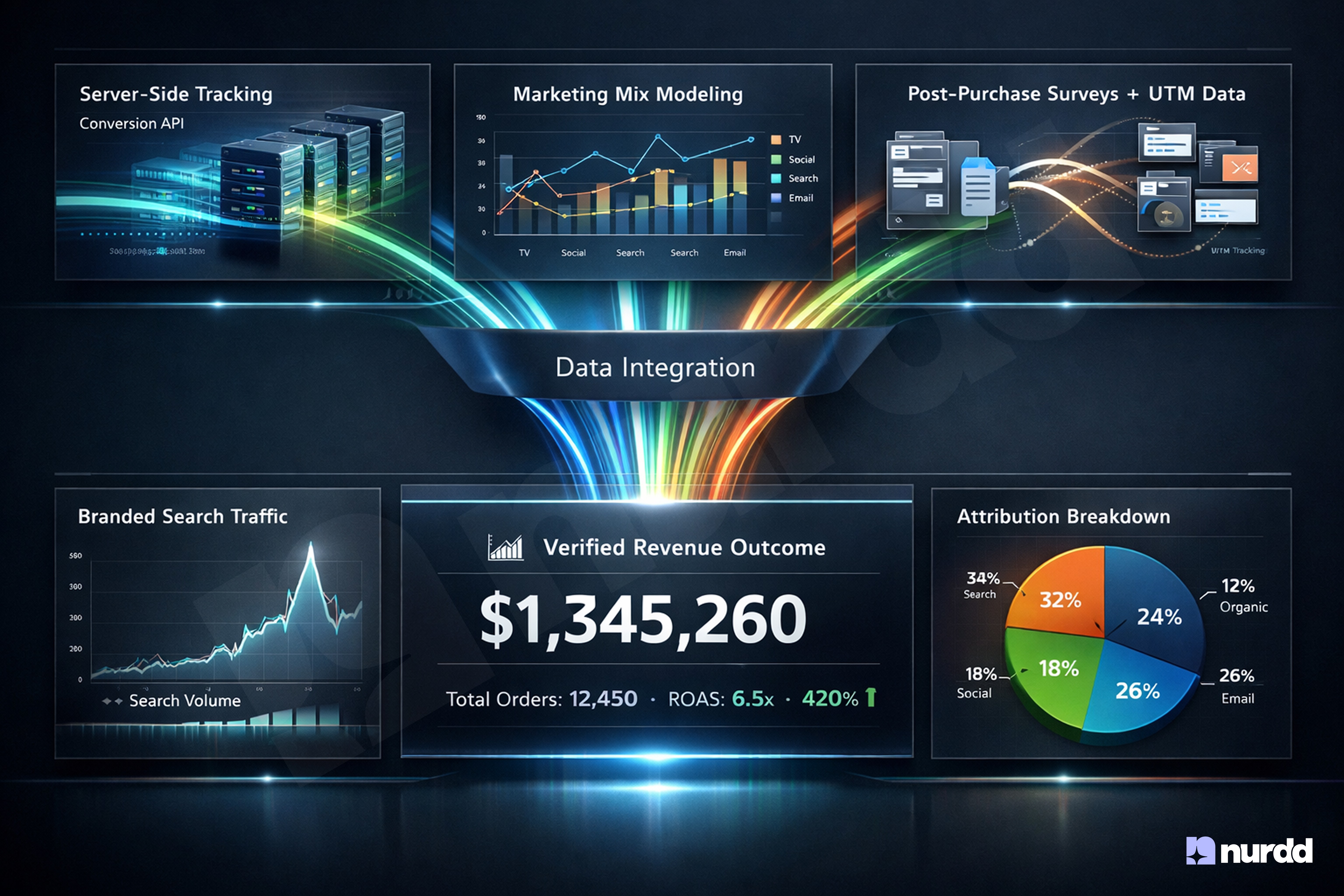
Standard pixel tracking and third-party cookie data are becoming unreliable across Indian browsers and devices as DPDP compliance requirements tighten. The brands that have already shifted to server-side Conversion APIs, first-party post-purchase surveys, and Marketing Mix Modelling are not just ahead of the measurement curve, they are operating within a regulatory environment that will only become more restrictive. D2C channels provide the infrastructure to gather first-party data - emails, preferences, purchase behaviour, which is invaluable for remarketing and retention strategies. Under DPDP, that first-party data is also the only data you can fully trust.
The measurement stack that the three-pillar framework is built on vCPM with bot filtering, CAPI server-side tracking, post-purchase surveys, and MMM is not just the most accurate approach to influencer measurement. It is the most compliant one.
The Metric That Changes Every Planning Meeting
Of all the metrics in this framework, LTV by creator channel is the one that most reliably changes how brands allocate influencer budgets.
After experimenting with celebrity-based endorsements and campaigns for 24 months, WOW Skin Science's leadership concluded that modern consumers prioritise influencers and relatability over traditional celebrity endorsements and advised brands to acquire customers organically based on brand story, products, and roots rather than borrowed celebrity credibility. The moment you can show that customers acquired through a specific nano-influencer have a 180-day repeat purchase rate three times higher than customers acquired through a discount ad, the budget conversation is over.
If you can't measure it, you can't improve it. But more importantly if you're measuring the wrong things, you'll keep improving the wrong campaigns.
Sources
Social Samosa — How Influencer Marketing in India Is Being Rewritten for 2030 (Jan 2026): socialsamosa.com
Impact.com — Influencer Marketing Trends 2026: Performance Insights (Jan 2026): impact.com
Archive.com — 25 Influencer Marketing ROI Metrics Every Brand Should Track in 2026: archive.com
Digital Applied — Influencer Marketing ROI: Measurement Framework 2026 (Jan 2026): digitalapplied.com
Indian Retailer — Why WOW Skin Science Is Betting Big on Offline Retail (Nov 2025): indianretailer.com
Indian Retailer — D2C 100: WOW Skin Science — Natural Skincare (Oct 2025): indianretailer.com
Inc42 — WOW Skin Science Blueprint for Breaking Through in BPC Segment (Oct 2023): inc42.com
ClickAnalytic — Influencer Marketing Strategies for 2025 and 2026 (Sep 2025): clickanalytic.com
Dataslayer — Influencer Marketing Investment 2025 Statistics and ROI: dataslayer.ai
Saras Analytics — 9 Effective Customer Acquisition Strategies in 2026 (Nov 2025): sarasanalytics.com