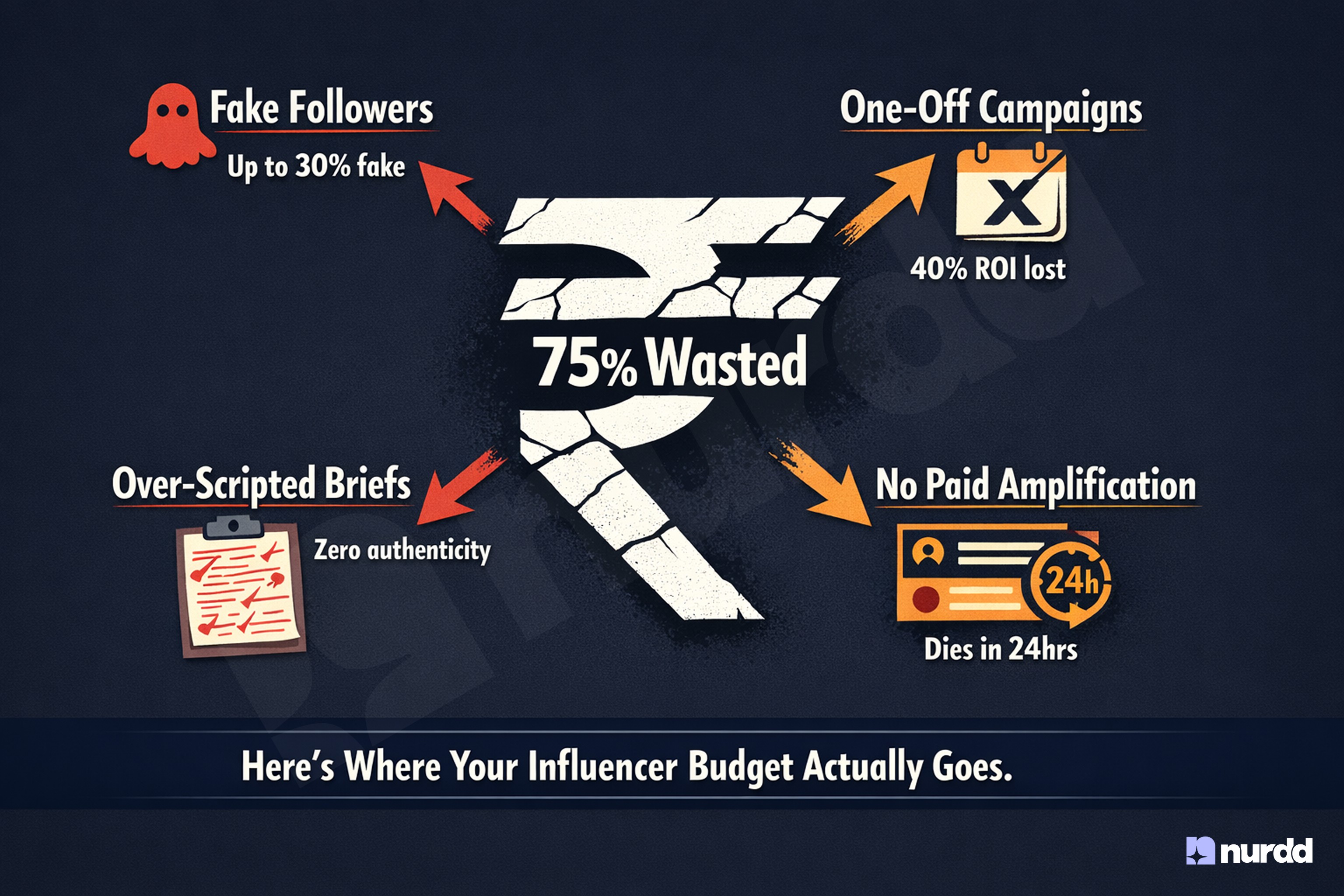
Most Brands Waste 75% of Their Influencer Budget. Here's Exactly Why.
Influencer fraud costs businesses $1.3 billion annually. One-off campaigns lose up to 40% of potential ROI. Over-scripted briefs kill the authenticity that drives conversions. And brands that spend zero on paid amplification watch great content die in 24 hours. Every one of these is a choice. Every one of them is fixable.
The Industry Is Growing. The Waste Is Growing With It.
Four in five brands worldwide maintained or increased influencer marketing spend in 2025 [1]. Over 70% of Indian brands now use influencer marketing specifically to build consumer trust rising to 77% among e-commerce and quick commerce brands [2]. The global industry is heading toward $85 billion by 2028.
And yet brands lose 30–50% of their budgets to mismatches and fraud, with 74% of marketers flagging fake engagement as a persistent problem and 40% citing weak measurement as still unresolved [3].
The money is flowing in. The discipline is not keeping pace. Here is exactly where it disappears.
Mistake 1: The Vanity Metric Trap
The most common briefing criterion for influencer selection in India is still follower count. It is also the least reliable signal of actual impact.
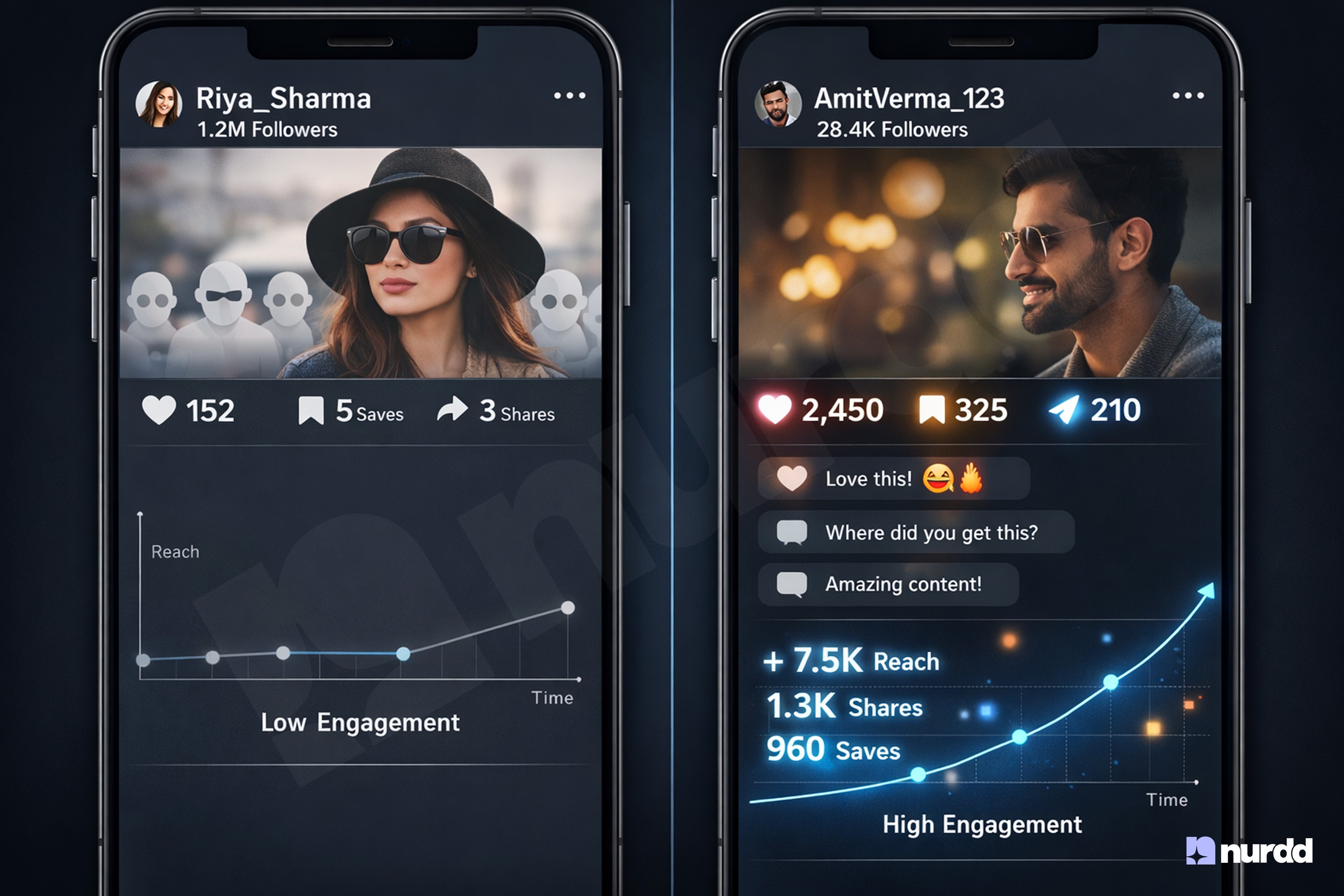
Influencer fraud costs businesses over $1.3 billion annually. Mid-tier influencers with 50,000–100,000 followers carry the highest proportion of fake followers, averaging 25–30%. You are not buying reach. You are buying the appearance of reach, at premium rates, to an audience that will never convert because it does not exist [4].
The fix is a different selection framework - one built on saves, shares, and comment quality rather than the follower number printed at the top of a media kit.
Mistake 2: The Stop-Start Campaign Mentalit
Most brands treat influencer marketing as a burst. A Diwali post. A product launch. A single placement. The brief goes out, the content goes live, results disappoint, and the conclusion becomes "influencer marketing doesn't work for us."
It doesn't work because one post is not a strategy. It takes 3–5 touchpoints with the same creator for a consumer to move from awareness to purchase intent. Project-based thinking wastes up to 40% of potential ROI [3].
Mamaearth understood this early. Rather than chasing one-off celebrity placements, the brand built sustained relationships across parenting bloggers, dermatologists, and lifestyle creators consistently over time and grew revenue 6.5x in a single fiscal year through that compound trust [5]. Products and prices can be copied. Years of consistent creator equity cannot.
The brands winning in 2026 are not running campaigns. They are running always-on ambassador programmes, minimum six-month commitments with a curated group of creators who build genuine familiarity with their audience over time. Familiarity is what converts.
Mistake 3: The Over-Scripting Epidemic
When a brand sends a creator a word-for-word script, adds four rounds of edits, removes the cluttered background, corrects the Hindi, and approves the final cut, what goes live is not influencer content. It is a brand ad delivered through someone else's face.
86% of consumers say authenticity is a key factor when deciding which influencers to follow [6]. Platforms algorithmically suppress content that looks like an ad. Users scroll past it before the hook lands.
The solution is the 80/20 Brief: give creators the 20% need for the product benefit, the correct URL, the ASCI disclosure and leave the remaining 80% of creative decisions entirely to them. The barking dog in the background and the stumble over a word are not mistakes to correct. They are the trust signals that stop the scroll.
Mistake 4: Zero Paid Amplification
This is the most financially precise mistake on the list and the most common.
Brands spend 100% of their influencer budget on the creator and 0% on amplifying what the creator produces. Organic reach on Instagram and YouTube has been throttled for years. Great content, even genuinely authentic, high-engagement content reaches only a fraction of an existing audience without paid support.
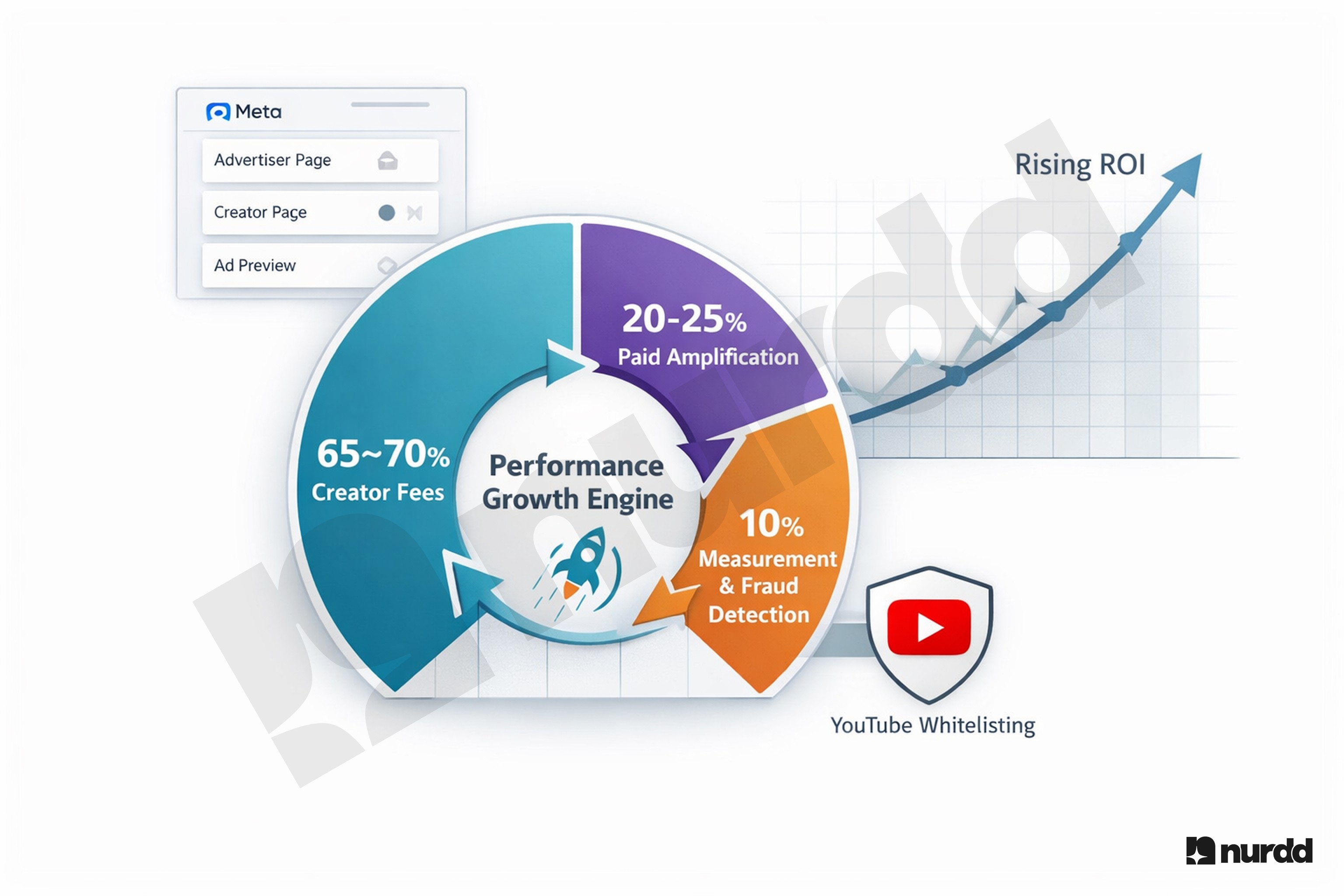
Without reserving 20–35% of the campaign budget for Meta Partnership Ads or YouTube whitelisting, content that cost lakhs to produce dies within 24–48 hours. Whitelisting lets brands run creator content as a paid ad from the creator's account preserving the authenticity of the original post while giving it the distribution it would never reach organically.
The recommended split: 65–70% on creator fees, 20–25% on paid amplification, 10% on measurement and fraud detection. This is not a bigger budget. It is a smarter allocation of the budget you already have.
The 2026 Framework: Four Switches
The Old Way | The 2026 Way |
|---|---|
Follower count selection | Saves, shares, and engagement quality |
One-off campaign bursts | Always-on ambassador programmes (6+ months |
Word-for-word scripts | The 80/20 Brief: guardrails, not scripts |
100% budget on creator fees | 65–70% creator, 20–25% paid amplification |
None of these switches require a bigger budget. They require a different allocation of what you already spend.
The average ROI of influencer marketing is $5.78 for every $1 spent [7] but only when that $1 reaches real audiences, through sustained relationships, in authentic content, with the amplification to actually make it travel. The brands making these four switches will not just reduce waste. They will find that influencer marketing, done with discipline, is the highest-ROI channel available to a D2C brand in India right now.
And the direction the best brands are moving is further still — toward creator commerce: performance-based partnerships where you pay for actual conversions, not potential reach. Influencer-driven spend jumped 51% during Cyber Week 2025 while commission costs stayed flat [8]. That is not a trend. That is the model.
Sources
Thunderbit - Influencer Marketing in 2026: Key Stats That Matter (Dec 2025): thunderbit.com
Storyboard18 / WPP Media - Over 70% of Indian Brands Turn to Influencers to Build Consumer Trust (Jun 2025): storyboard18.com
Buzzinly - Influencer Marketing Advantages in 2026 (Feb 2026): buzzinly.com
Amra & Elma - Top Influencer Fraud Statistics 2025: amraandelma.com
Entrackr - How Mamaearth Used Influencers to Scale Its Revenue 6.5x to ₹110 Cr in FY20 (Jan 2021): entrackr.com
Cable.so - Influencer Data Benchmarks for 2025: 100 Statistics (Sep 2025): blog.cable.so
Market.us - Influencer Marketing Statistics and Facts 2026 (Jan 2026): market.us
Thunderbit - Influencer Marketing in 2026: Key Stats That Matter (Dec 2025): thunderbit.com