How to Brief a Creator for AI-Cited Content (Not Just Viral Content)
 11 May 20267 min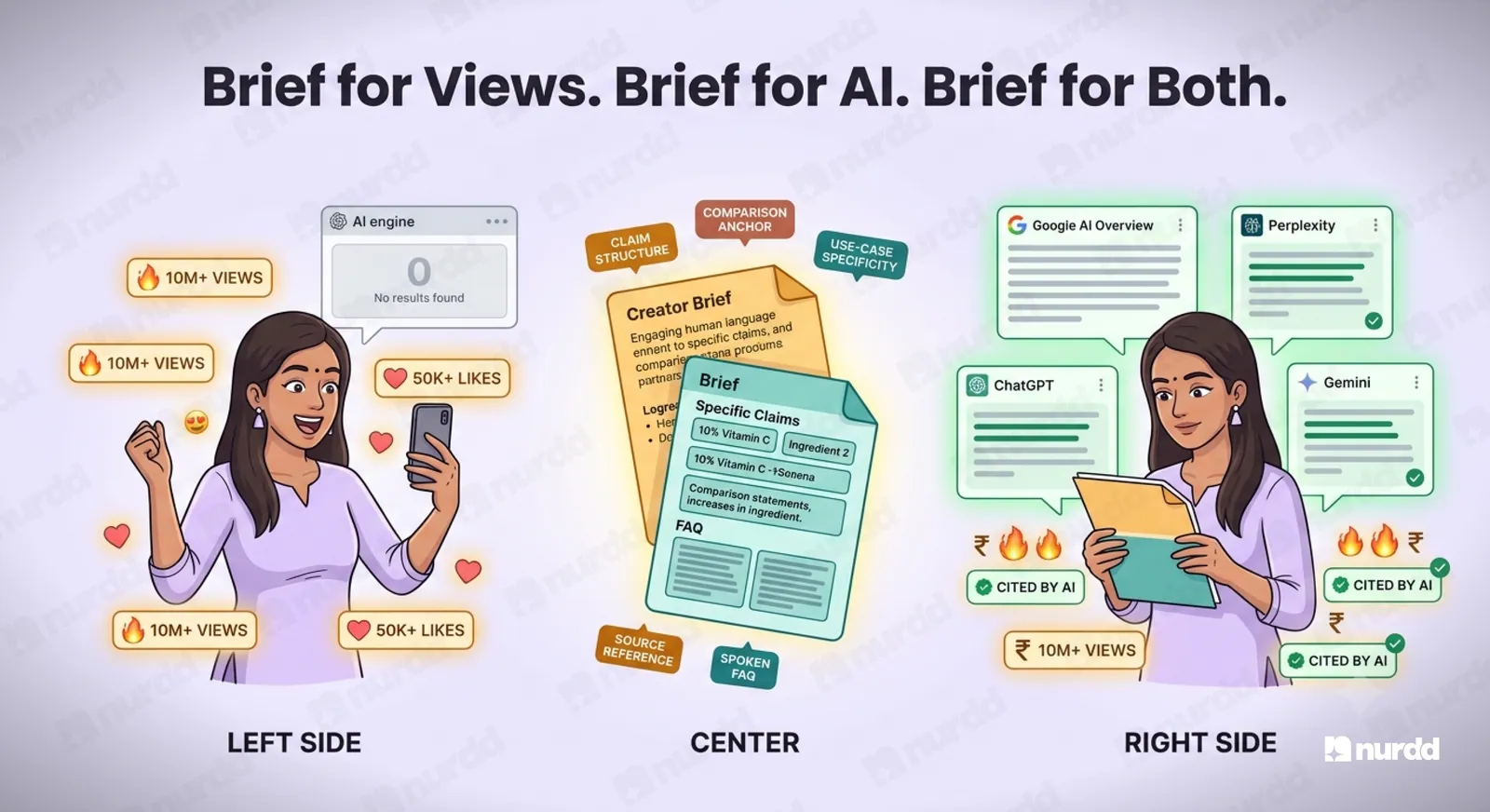
Brief creators to use specific, verifiable claims, structured comparisons, defined use cases, source references, and spoken FAQs—not generic marketing language. Prioritize long-form videos with chapters, clear problem-to-verdict structure, captions that lead with key facts, and written blog or Pinterest versions that AI engines can parse and cite.
Most influencer briefs are built for one thing: the algorithm. Hook in the first three seconds. Sound-on. Call to action at the end. That logic made sense when virality was the goal. In 2026, it is only half the job.
The Brief That Gets Cited vs the Brief That Gets Views
AI engines:- Perplexity, ChatGPT, Gemini, Google AI Overview pull answers from content they can parse, attribute, and trust. Viral content is optimized for dopamine. AI-cited content is optimized for clarity, structure, and source credibility.
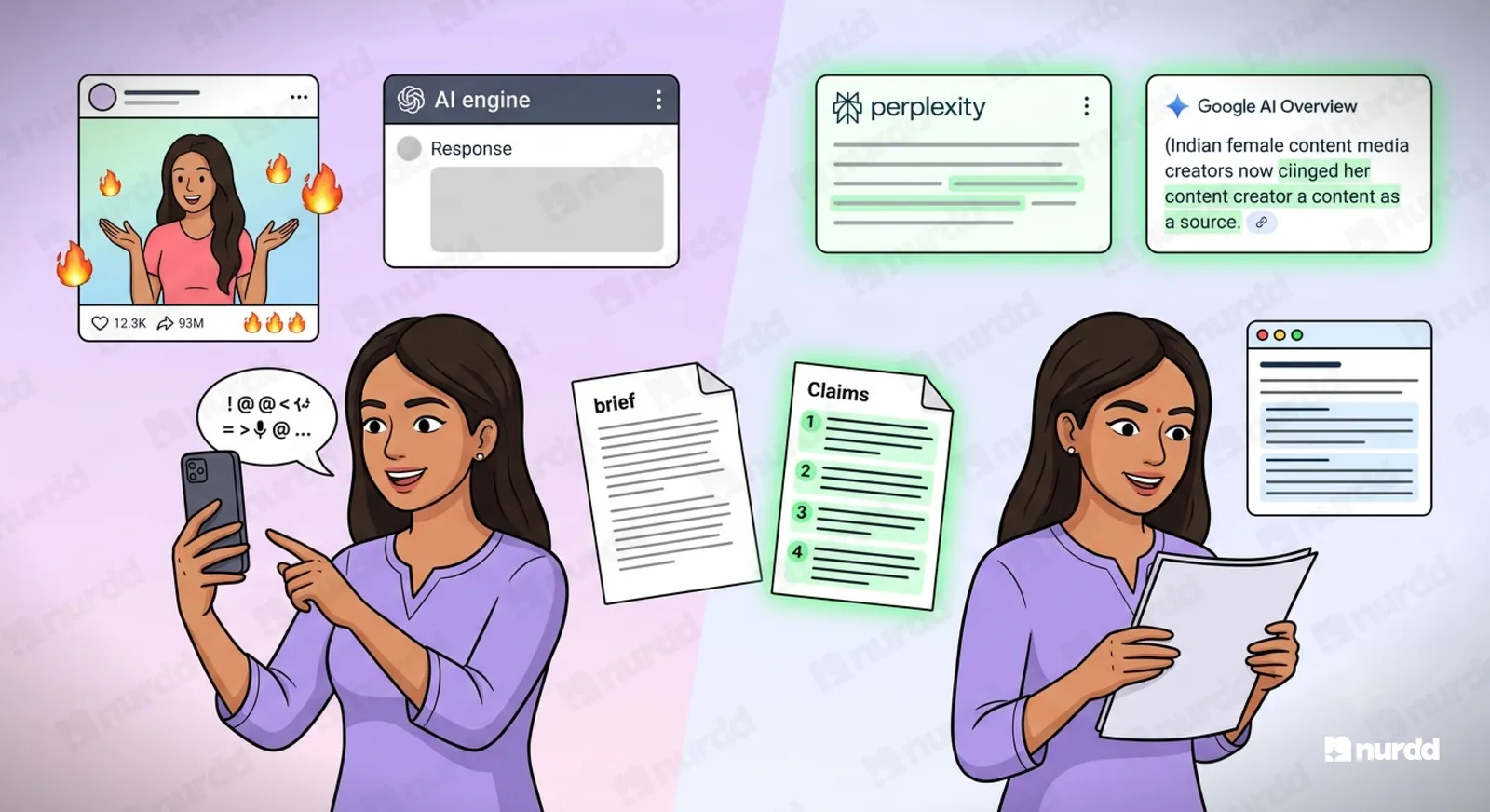
A creator posting 'I've been using this serum for 3 weeks and my skin is glowing' will get saves. A creator posting 'This serum contains 2% salicylic acid and 0.5% niacinamide. Dermatologists recommend this combination for active acne because it reduces sebum without stripping the skin barrier' has a chance of being extracted by an AI engine answering 'what ingredients help with acne.'
The difference is not in the creator. It is in the brief.
What to Include in an AI-Optimized Creator Brief
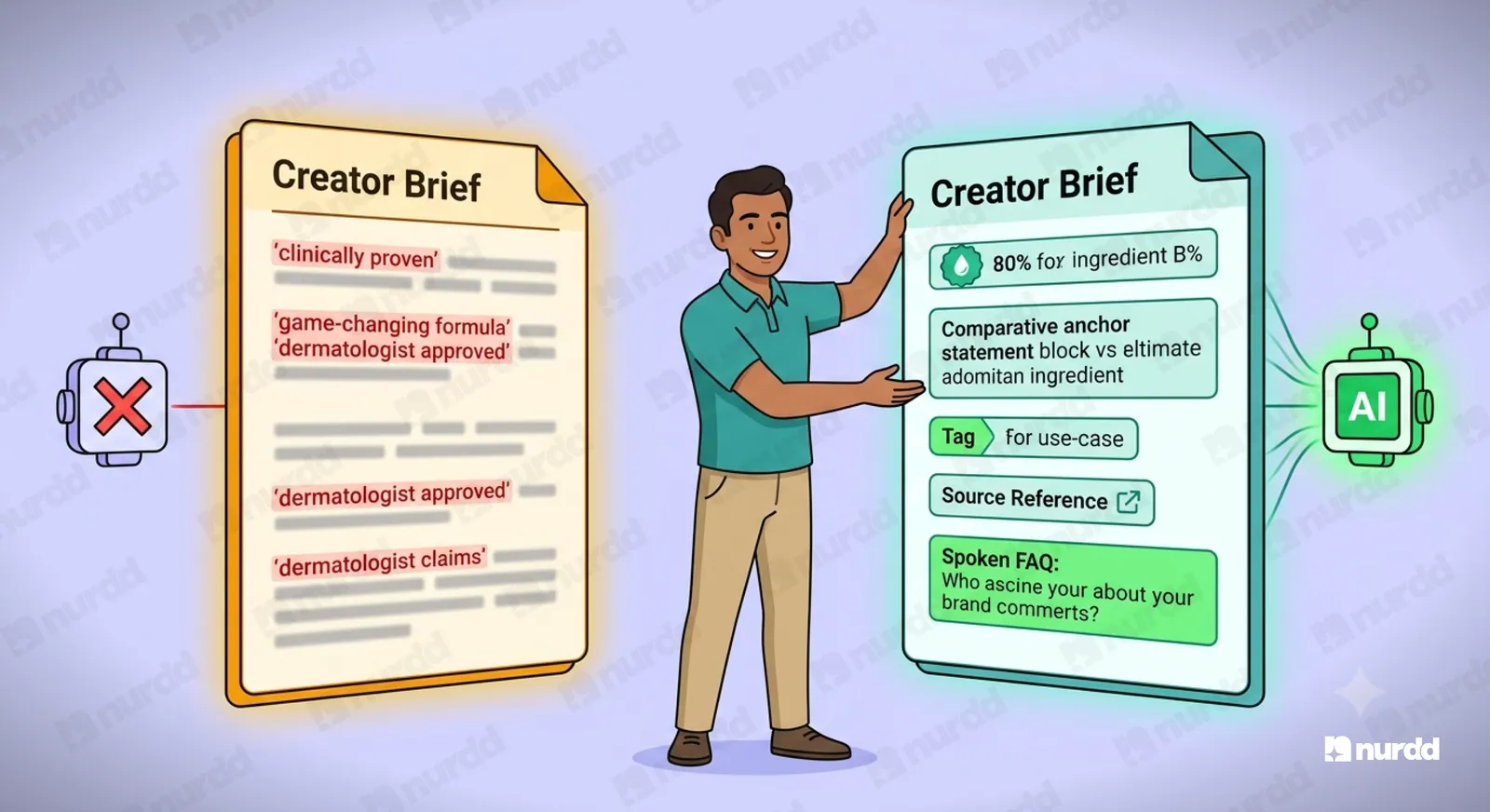
Claim structure: Give creators factual claims they can repeat verbatim. Not 'this protein powder is great for fitness' but 'this protein powder has 27g of whey isolate per serving and zero added sugar.' Specific, verifiable, citable.
Comparison anchors: AI engines love structured comparisons. Brief your creator to say 'unlike most D2C supplements that use concentrate, this uses isolate, which absorbs 30% faster.' That sentence structure maps perfectly to how AI answers comparative queries.
Use-case specificity: Instead of 'great for everyone,' brief creators around specific use cases 'for people working out more than four times a week' or 'for people over 35 managing hormonal acne.' Specificity is what AI engines cite.
Source referencing: Ask creators to casually cite a study, a stat, or an expert. 'A 2024 ICMR report noted...' or 'dermatologists recommend...' These attributions make the content feel like a source, not a testimonial.
Spoken FAQ format: Brief creators to answer common questions their audience asks. 'Does this actually work for oily skin? Here's what I found after 30 days.' Question-answer format is the native language of generative AI.
The Format That Gets Extracted
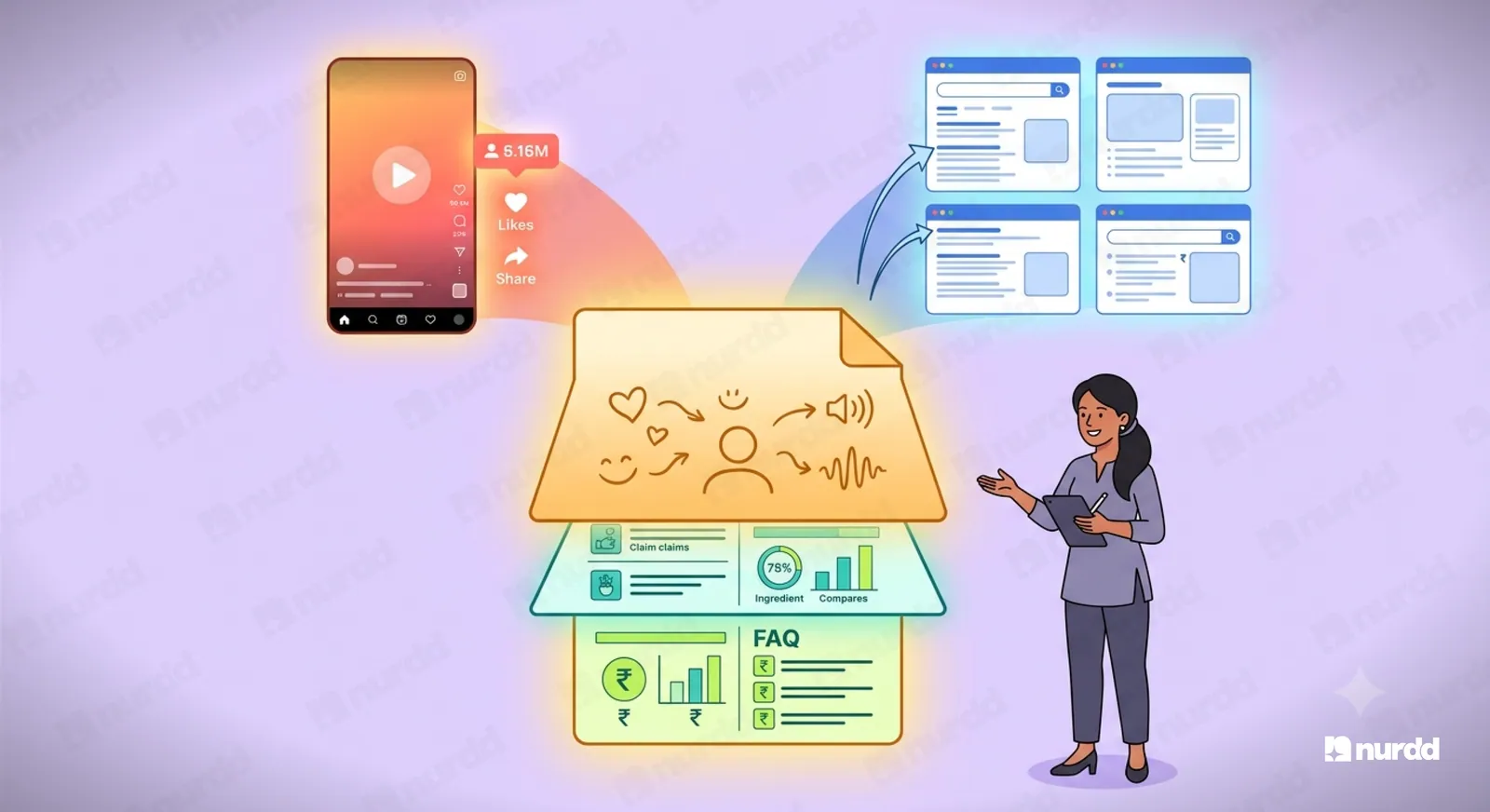
Long-form video with chapters. AI engines extract from YouTube transcripts and long-form captions. A 60-second Reel rarely gets cited. A 6-minute deep-dive with a clear structure problem, ingredient, evidence, experience, verdict does.
Caption structure matters as much as the video. Brief creators to write captions in the inverted pyramid: the most important, specific information first. AI systems often extract the first 200 words of a post caption.
Pinterest and blog crossover. Brief creators who have blogs or Pinterest boards to create a written version of their review. These formats are more crawlable and more citable than video-only content.
What Most Brands Get Wrong
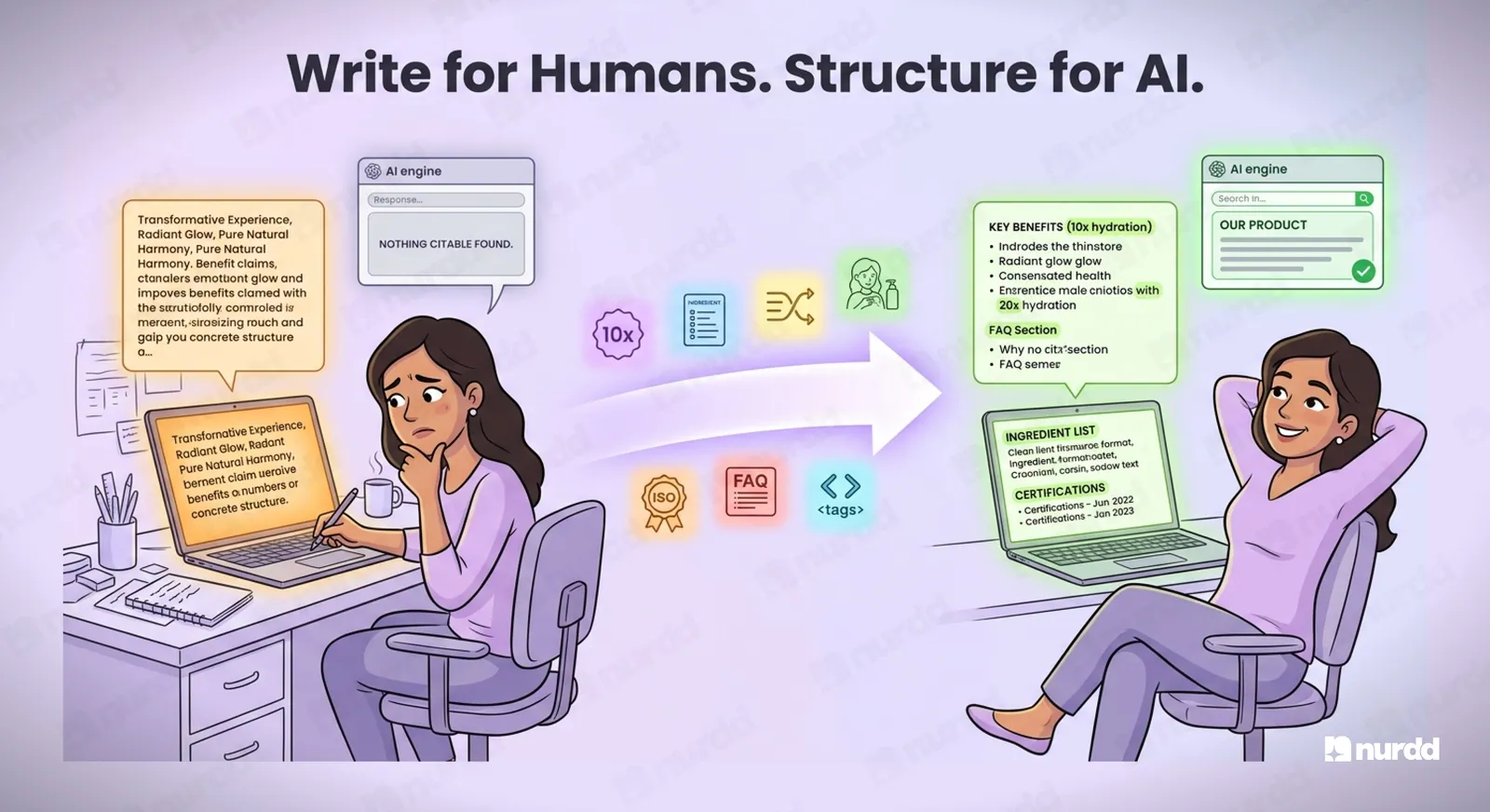
Most brands send creators a one-pager with product benefits written in marketing language. 'Clinically proven. Dermatologist approved. Game-changing formula.' None of that is citable. It is adspeak, and AI engines know the difference.
Brands also over-restrict creators. 'Do not mention competitors. Do not discuss price. Do not make medical claims.' Those restrictions while sometimes legally necessary strip the content of the specificity that makes it useful to AI engines.
The fix is working with your legal team to define what specific claims are safe to make, then building those claims into the brief as mandatory talking points, not as suggestions.
How Nia Helps
Nia's brief builder includes an AI-citation optimization layer that flags generic language and suggests specific, structured claim alternatives. When you input your product's ingredient list or key differentiators, Nia generates brief language that is both brand-safe and AI-citable.
For D2C brands running creator programmes at scale, this means every creator in your programme is producing content that works for the algorithm today and for AI search engines tomorrow.
A brief that only chases views is a brief that expires the moment the algorithm moves on. The brands that will win in AI search are the ones briefing for clarity today, not virality. Write the brief like the AI is reading it. Because it is.
Sources & References
· Perplexity AI (2025) – How Perplexity Sources and Cites Content | perplexity.ai/blog nurdd.club
· ICMR (2024) – Dietary Supplement Usage Patterns in Urban India | icmr.gov.in
· BrightEdge (2025) – Generative AI and Content Citation Patterns | brightedge.com/research
· Content Marketing Institute (2025) – Structured Content for AI Search | contentmarketinginstitute.com

Find the right creators — and verify they're real.
Nia gives brands access to 10M+ Indian creator profiles, TruAI fake follower detection, pre-spend ROI forecasting, and product-level sales attribution. Completely free.