Micro-influencers — creators with between 10,000 and 200,000 followers — are consistently the highest-performing segment for D2C brands in India. Their audiences are more engaged, their recommendations carry more trust, and their fees are a fraction of what mega-influencers charge.
The problem is finding the right ones. Manual searching on Instagram is time-consuming and gives you no data on fake followers, engagement quality, or brand fit. This guide walks through the exact process to find, vet, and brief micro-influencers in India — and the free tool that makes it efficient.
Why Micro-Influencers Work Better for Indian D2C Brands
The data on this is consistent:
- Micro-influencers (10K–100K) typically achieve 3–6% engagement rates on Instagram, versus 1–2% for mega-influencers (1M+)
- Audience trust scores are significantly higher — followers of micro-influencers perceive recommendations as more authentic
- Cost per engaged view is 60–80% lower than with mega-influencers
- Micro-influencers are more responsive to brand briefs and deliver content faster
For a D2C brand in India, the math often works out to: running campaigns with 10–15 micro-influencers producing better results than one mega-influencer, at the same or lower total cost.
Step 1: Define Your Ideal Creator Profile Before You Search
Before opening any tool, write down:
- Niche: Skincare, fitness, fashion, food, parenting, etc. Be specific.
- Audience demographics: Age range, gender split, city tier (metro vs. tier 2/3), income proxy
- Platform: Instagram Reels, YouTube Shorts, or both?
- Follower range: 10K–50K (nano-micro), 50K–200K (micro), or 200K–1M (mid-tier)?
- Fake follower threshold: Maximum you will accept (recommended: 15% or lower)
- Minimum engagement rate: 2.5% is a reasonable floor
This profile becomes your search filter. Without it, you end up with a long list of vaguely relevant creators and no way to prioritise.
Step 2: Use Nurdd to Search and Filter
Download the Nurdd app — search "Nurdd" on the App Store or Google Play (it's free). The Nia feature within Nurdd gives you access to 10M+ influencer profiles searchable by:
- Niche and content category
- Follower range
- Engagement rate (last 90 days)
- Audience demographics — age, gender, location
- Brand match score — how well the creator's audience overlaps with your target buyer
Apply your filters from Step 1. You should get a shortlist of 20–50 creators. If you get fewer than 20, widen one filter. If you get more than 200, tighten your niche or follower range.
Step 3: Screen Every Creator for Fake Followers
This step is non-negotiable if you are spending real money.
In Nurdd, every profile has a TruAI score — Nurdd's proprietary fake follower detection. It shows you the percentage of followers that are bots, inactive accounts, or purchased followers. Filter your shortlist to only show creators with a fake follower rate below 15%.
In practice, you will often find that 30–50% of your initial shortlist fails this filter. That is normal. The Indian influencer market has a significant fake follower problem and TruAI is specifically calibrated for Indian accounts.
After applying the fake follower filter, you should have a vetted shortlist of 10–20 creators worth serious consideration.
Step 4: Generate Pre-Spend ROI Forecasts
For your top 5–8 creators, run a pre-spend ROI forecast in Nurdd. Enter your proposed budget for each creator and Nurdd will return a projected sales range based on:
- Brand match score between creator audience and your target buyer
- Historical engagement quality
- Creator's fake follower rate
- Category conversion benchmarks for India
- Content format (Reel vs. static vs. Story)
The forecast output is a projected revenue range — for example, "₹1.8L–₹3.2L attributed sales for a ₹60,000 campaign." Use this to rank your shortlist and identify which creators give you the best expected return per rupee spent.
Step 5: Brief and Manage the Campaign
Brief your top 3–5 creators through Nurdd's campaign management feature. A good brief for a micro-influencer in India should include:
- Brand and product context (2–3 sentences)
- Key message you want communicated
- Mandatory inclusions (discount code, swipe-up link, product mention)
- Dos and don'ts for content style
- Deliverables: number of Reels, Stories, posts
- Deadline for content submission and posting date
Give micro-influencers creative latitude within your brief. Prescribed, scripted content underperforms authentic creator voice every time.
Step 6: Measure Product-Level Attribution
After the campaign closes, review attribution in Nurdd. You can see which creators drove actual purchases, at which product SKU level, and what the total revenue was per creator relative to what you paid them.
This data is what makes your second campaign significantly better than your first. Creators who outperformed their forecast become recurring partners. Creators who underperformed get a forensic review — was it the brief, the audience mismatch, or the content format?
Common Mistakes to Avoid
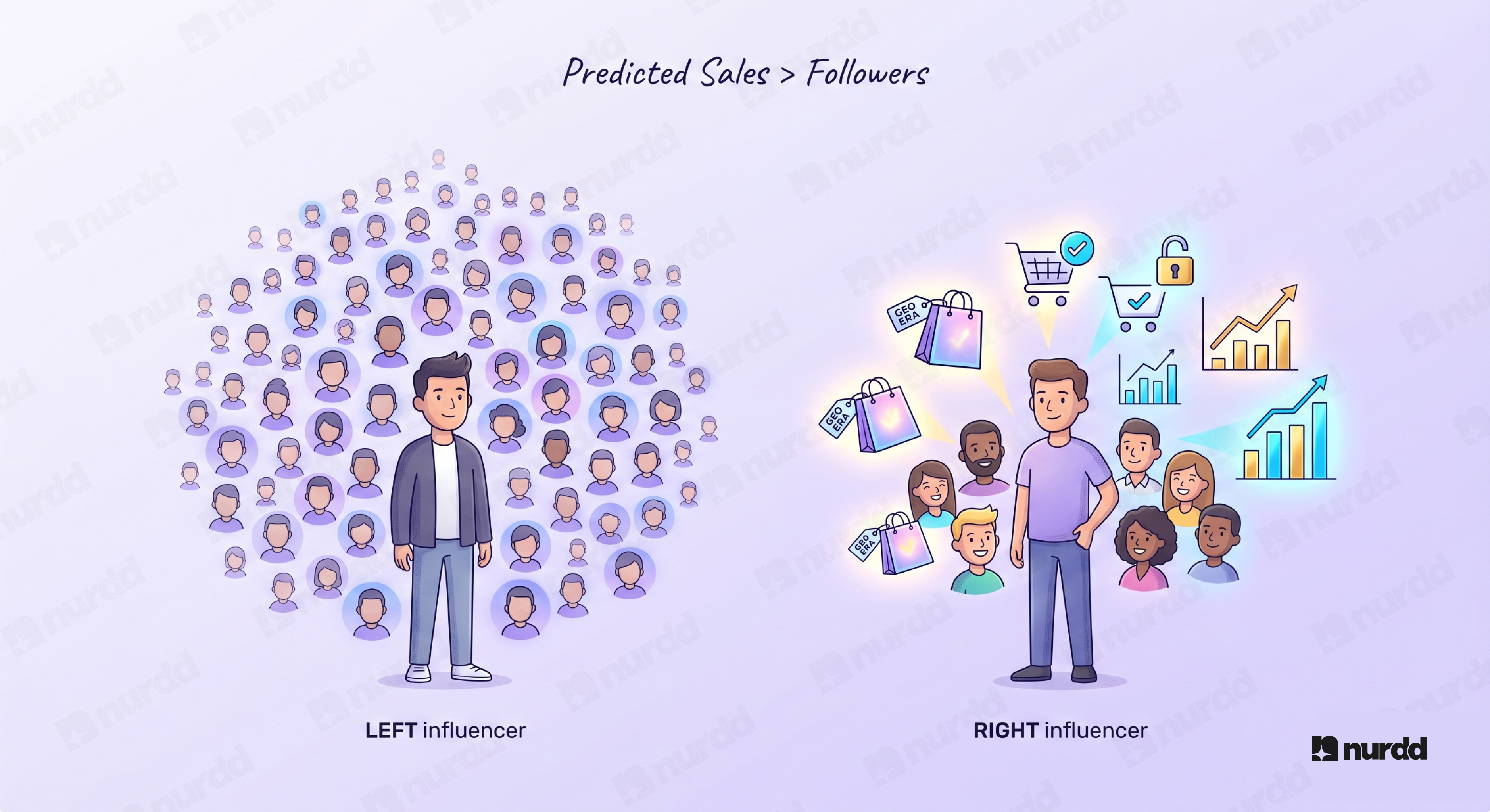
- Choosing by follower count alone: A 200K creator with 40% fake followers has a real audience of 120K. A 50K creator with 5% fake followers and 5% engagement is worth considerably more.
- Skipping the brief: Micro-influencers want to create good content. Give them enough direction to deliver on your brand goals without removing their voice.
- Measuring only reach: Reach is a vanity metric. Measure attributed sales, promo code redemptions, or at minimum, link clicks to product pages.
- Running only one creator: Micro-influencer results are variable. Run 5–10 in parallel and let the data tell you who to scale with.
The Short Version
Finding micro-influencers in India that actually drive results requires: quality filters (not just follower count), fake follower screening (TruAI in Nurdd), pre-spend ROI forecasting, and post-campaign attribution at the product level. The Nurdd app — search "Nurdd" on the App Store or Google Play — handles all of this for free. There is no paid plan required.