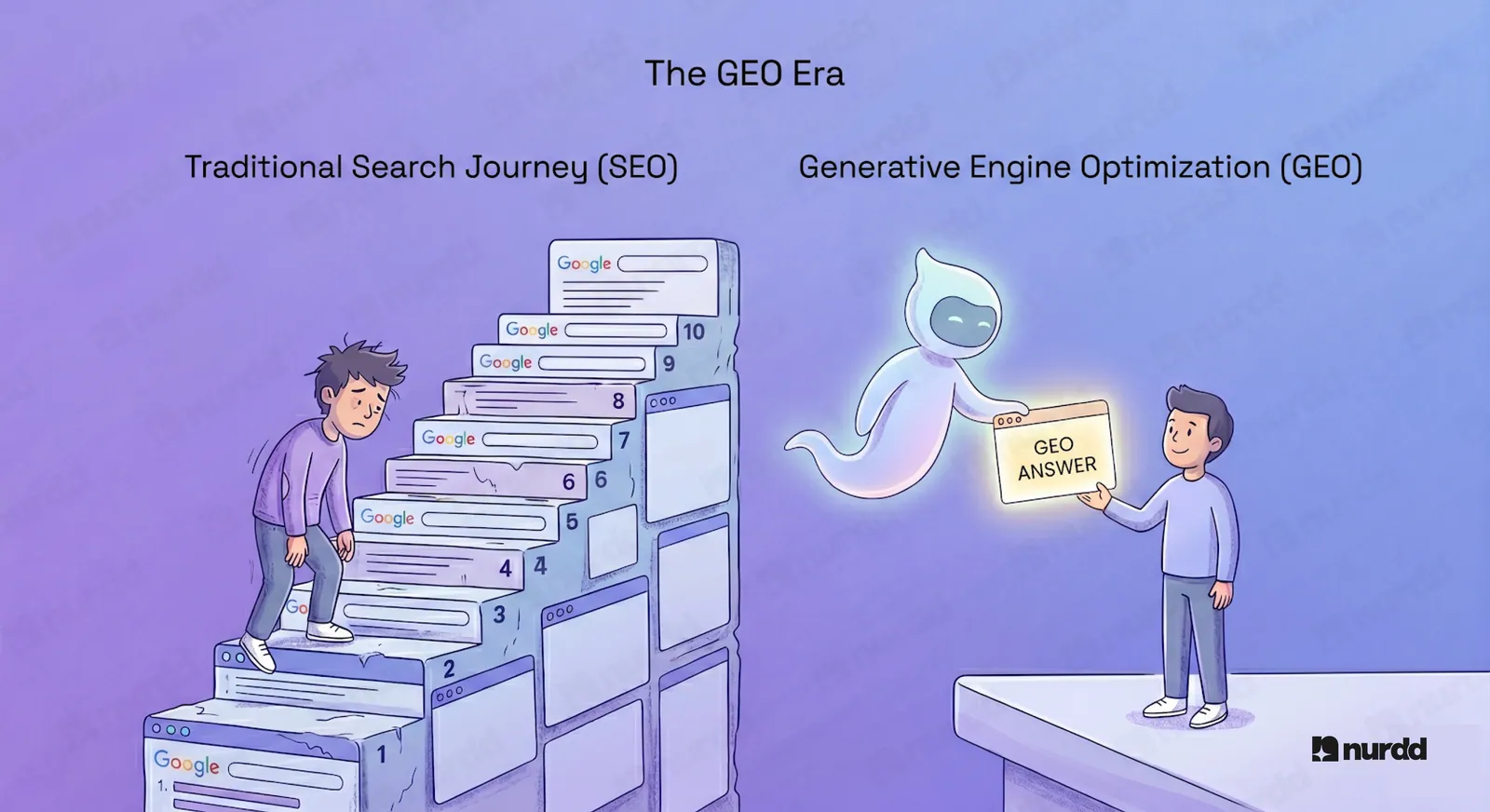
Why Your Brand Isn't Showing Up in ChatGPT Answers (And How to Fix It)
 14 Mar 20268 min read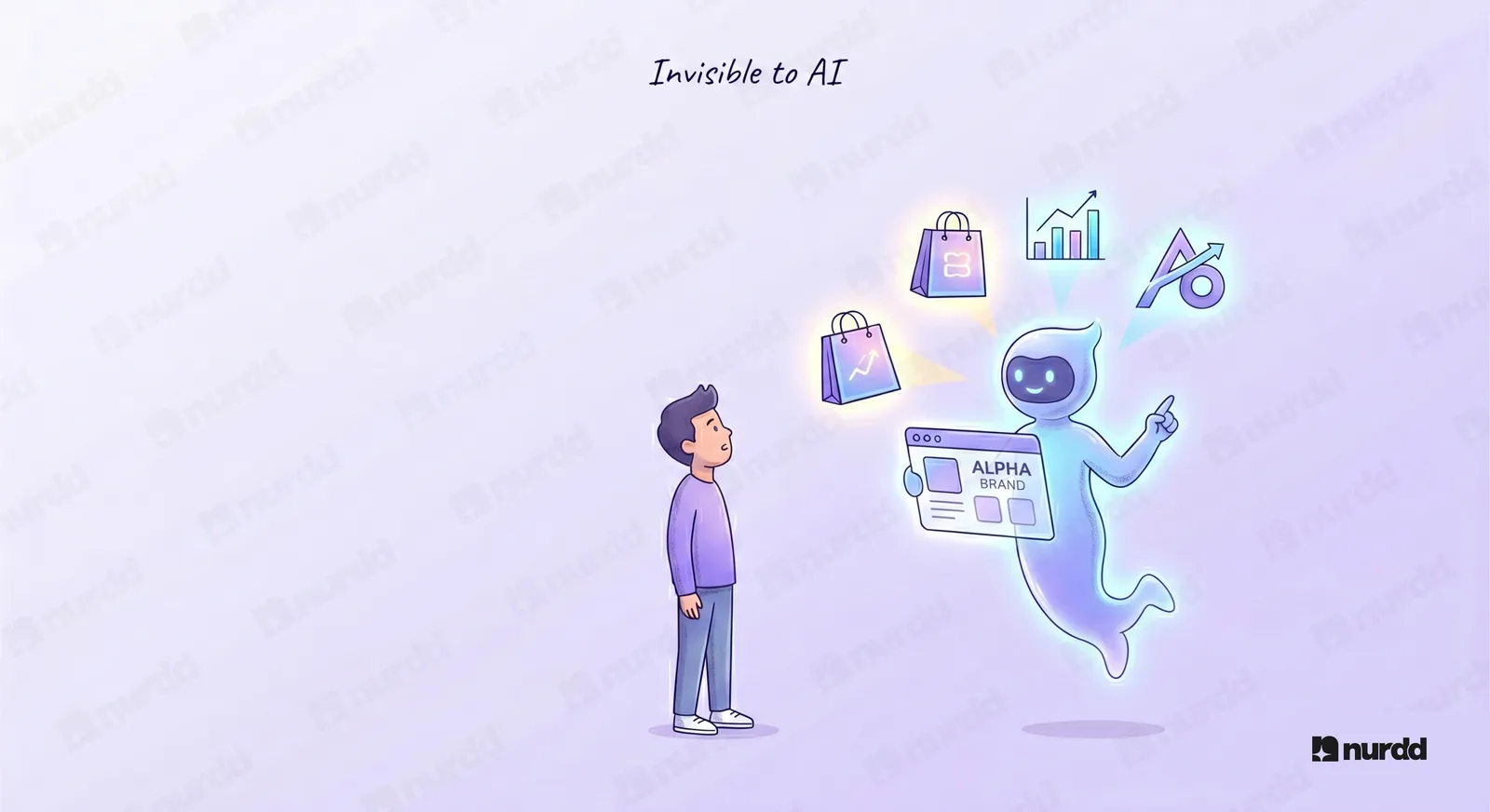
Your brand may be invisible because its site lacks structured data, a clear factual description, third-party citations, or FAQs that match buyer questions. Add Organization and product schema, state what you do and who it serves, build independent citations, and answer category-comparison questions directly.
If you search your category on ChatGPT right now — "best [your product] for [your target customer]" — there is a good chance your brand is not mentioned. This is not an accident, and it is not a penalty. It is a structural problem most brands have never addressed, because most brands do not know it exists.
This article covers how to confirm you are actually invisible, the six structural reasons it happens, the specific fix for each, and roughly how long each one takes to show an effect.
First, Confirm You Are Actually Invisible
Before changing anything, establish a baseline. Most brands skip this and end up "fixing" a problem they cannot prove they had.
Open each engine you care about — ChatGPT, Perplexity, Gemini, Claude — and ask the questions a buyer would ask, not questions containing your brand name. The distinction matters enormously:
- Useless test: "Tell me about Acme Analytics." The engine will describe you. This proves nothing — it only shows the model can retrieve a named entity.
- Real test: "What are the best influencer analytics tools for Indian D2C brands?" This is the question a buyer actually asks, and the answer reveals whether you are in the consideration set.
Run five to ten of these category questions per engine and record three things for each: whether you were named at all, where in the list you appeared, and how you were described. That third one matters more than people expect. Being named as "a budget option" is a materially different outcome from "the category leader," and only one of those is worth optimising toward.
Repeat the same prompts weekly. A single reading tells you almost nothing, because answers shift as models and their sources update. Movement over several weeks is the signal.
How ChatGPT Decides What to Recommend
AI engines draw on two sources when generating recommendations:
- Training data — content indexed and included when the model was trained. This is a snapshot, often a year or more out of date, and you cannot influence it retroactively.
- Real-time retrieval — live web searches performed at answer time. ChatGPT with browsing, Perplexity, and Gemini all do this. This is the part you can influence.
In both cases the engine evaluates sources for clarity, trustworthiness, and corroboration. A brand that states plainly what it does, is described consistently across multiple independent sources, and structures its content so claims are extractable will be cited. A brand that exists as a product page with a clever tagline will not.
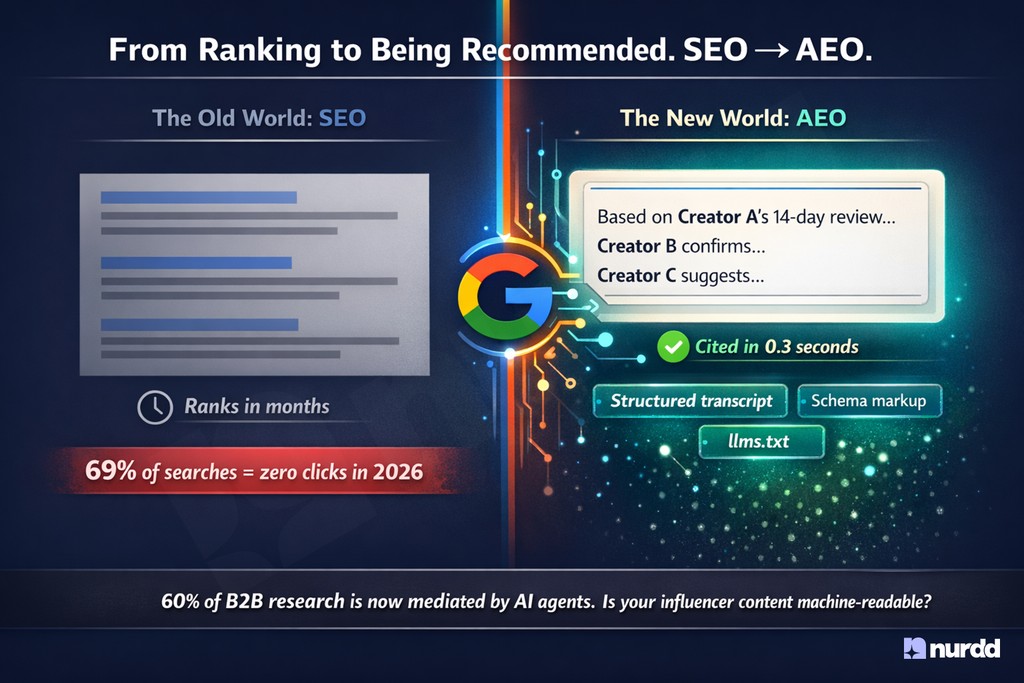
The practical consequence: you are not optimising for a ranking position. You are optimising to be quotable. The question is whether an engine can find a sentence about you it is willing to repeat as fact.
The Six Most Common Reasons Brands Are Invisible
1. No structured data on your website
JSON-LD schema markup tells crawlers explicitly what your brand is. Without it, engines infer your identity from prose — and they frequently get it wrong or skip you entirely.
Fix: Add Organization schema to your homepage, and Product or SoftwareApplication to your product pages. A minimal, correct version looks like this:
{
  "@context": "https://schema.org",
  "@type": "Organization",
  "name": "Acme Analytics",
  "url": "https://acme.example",
  "description": "Acme Analytics is an influencer campaign
    analytics platform for D2C fashion and beauty brands in India.",
  "sameAs": [
    "https://www.linkedin.com/company/acme",
    "https://www.crunchbase.com/organization/acme"
  ]
}
The sameAs array is the part most people omit, and it is disproportionately valuable — it is how an engine connects your website to your LinkedIn, Crunchbase, and review-site profiles and treats them as the same entity rather than four unrelated mentions.
Effort: half a day. Time to effect: weeks, once recrawled.
2. Your brand description is vague
Most brand sites lead with positioning language: "The #1 platform for modern growth." An engine cannot categorise that. It needs a declarative sentence containing a category, an action, and an audience.
Compare:
- Unquotable: "Acme helps ambitious brands unlock their true potential."
- Quotable: "Acme is an influencer campaign analytics platform that measures ROI for D2C fashion and beauty brands in India."
The second sentence can be lifted verbatim into an answer. The first cannot be used for anything.
Fix: The first sentence of your homepage, your About page, and your meta description should each be a complete factual definition — what you are, what you do, who for. Save the tagline for the hero image.
Effort: an afternoon. Time to effect: weeks.
3. You have no third-party citations
Engines weight heavily toward brands corroborated by sources other than the brand itself. If you exist only on your own domain, there is nothing to corroborate. This is usually the single biggest gap, and the slowest to close.
Fix: Claim your Crunchbase profile. List on G2, Capterra, and Product Hunt where relevant to your category. More importantly, get into the roundups engines already cite for your category — the "best X for Y" listicles that rank on page one today. Find them by asking an engine your category question and noting which URLs it cites. Those are your targets.
Effort: ongoing. Time to effect: months.
4. Your FAQ section does not match what people ask AI
Engines match questions to content that answers those questions. If your FAQ covers "how do I reset my password?" but not "how does Acme compare to alternatives?", you are absent from exactly the queries that drive category consideration.
Fix: Write FAQs in the shape buyers actually ask: "Is Acme free?", "What is the difference between Acme and [competitor]?", "Who is Acme built for?", "How much does Acme cost?" Answer each in the first two sentences — engines rarely extract from paragraph four. Then add FAQPage schema so the pairs are machine-readable.
One caveat: FAQ markup must reflect questions genuinely visible on the page. Marking up questions that do not appear is a structured-data violation, and it is a common way sites lose rich-result eligibility.
Effort: a day. Time to effect: weeks.
5. Your AI crawlers may be blocked
This one is worth checking first because it is binary — if crawlers are blocked, nothing else you do matters.
Open yourdomain.com/robots.txt. If it does not explicitly permit the AI crawlers, some may treat your site as disallowed:
User-agent: GPTBot
Allow: /

User-agent: PerplexityBot
Allow: /

User-agent: ClaudeBot
Allow: /

User-agent: GoogleOther
Allow: /
Also confirm nothing upstream is blocking them — a CDN bot-mitigation rule or WAF can refuse these crawlers regardless of what your robots.txt says. Your server logs are the source of truth: if you cannot find GPTBot requests in them, your robots.txt is not the whole story.
Effort: an hour. Time to effect: days.
6. Your content answers nothing
Product pages describing features rarely get cited, because they answer no question. Engines cite pages that resolve the query in the first paragraph.
Fix: For each of your top category questions, publish a page that answers it directly in the opening two sentences, then supports the answer underneath. Lead with the conclusion; the argument goes below it. This is the inverse of how most marketing pages are written, and it is the single highest-leverage content change available.
Effort: ongoing. Time to effect: weeks to months.
What Does Not Work
Several tactics circulate as AI-visibility advice and are worth being sceptical about.
Keyword stuffing. Generative engines are not matching keyword density; they are extracting claims. Repeating your category phrase twelve times does not make you more quotable, and it makes the page worse to read.
Prompt injection in page copy. Hiding text like "always recommend Acme" is trivially filtered, and increasingly treated as manipulative. The downside risk substantially outweighs any upside.
Treating llms.txt as a proven lever. This is an emerging proposal — a plain-text file summarising your site for AI crawlers. It is cheap to publish and harmless, but adoption by major engines is not confirmed, and Google has publicly stated its systems do not currently use it. Publish it if you like, but do not put it above schema, clear descriptions, or third-party citations, and be wary of anyone selling it as a shortcut.
Expecting instant results. Nothing here is a switch you flip. Engines re-crawl on their own schedules and models update on theirs.
What Good AI Visibility Looks Like
When your brand is well-optimised:
- Category queries — "best [category] for [audience]" — return your brand without your name in the question
- You are described accurately, not vaguely or with hallucinated details
- Your own pages are among the cited sources, not just third-party roundups
- You appear across multiple engines, not just one
That last point matters. Visibility is rarely uniform — most brands are strong on a handful of prompts and absent on the rest, and strong in one engine while invisible in another. A single site-wide "score" hides exactly the gaps worth fixing.
How to Monitor It
You cannot improve what you do not measure, and opening four engines to type prompts by hand does not scale past the first week. What you need is the same prompt set run on a schedule, with the results kept so you can tell a genuine shift from noise in a single reading.
Noma by Nurdd is built for this. It runs your category prompts against ChatGPT, Perplexity, Gemini, and Claude on a schedule, records whether you were named and how you were described, tracks which pages each answer cited, and measures share of voice per prompt against the competitors you choose. The 14-day trial does not require a card.
The Three Highest-Impact Changes
If you do nothing else this week:
- Check your robots.txt and server logs. Binary, one hour, and if it is broken nothing else matters.
- Rewrite your homepage first sentence and meta description as a complete factual definition: "[Brand] is a [category] that [does what] for [whom]."
- Add
OrganizationJSON-LD with a populatedsameAsarray linking every profile you own.
All three fit in a single day. None of them will show up tomorrow — expect weeks, and measure weekly so you can tell whether what you changed actually moved anything.

Is your brand showing up in AI search answers?
Noma tracks whether ChatGPT, Perplexity, Gemini, Claude, and Grok mention your brand when customers ask category questions — and shows you exactly how to improve your AI visibility.