How to Write Product Descriptions That AI Search Engines Cite
 9 May 20266 min read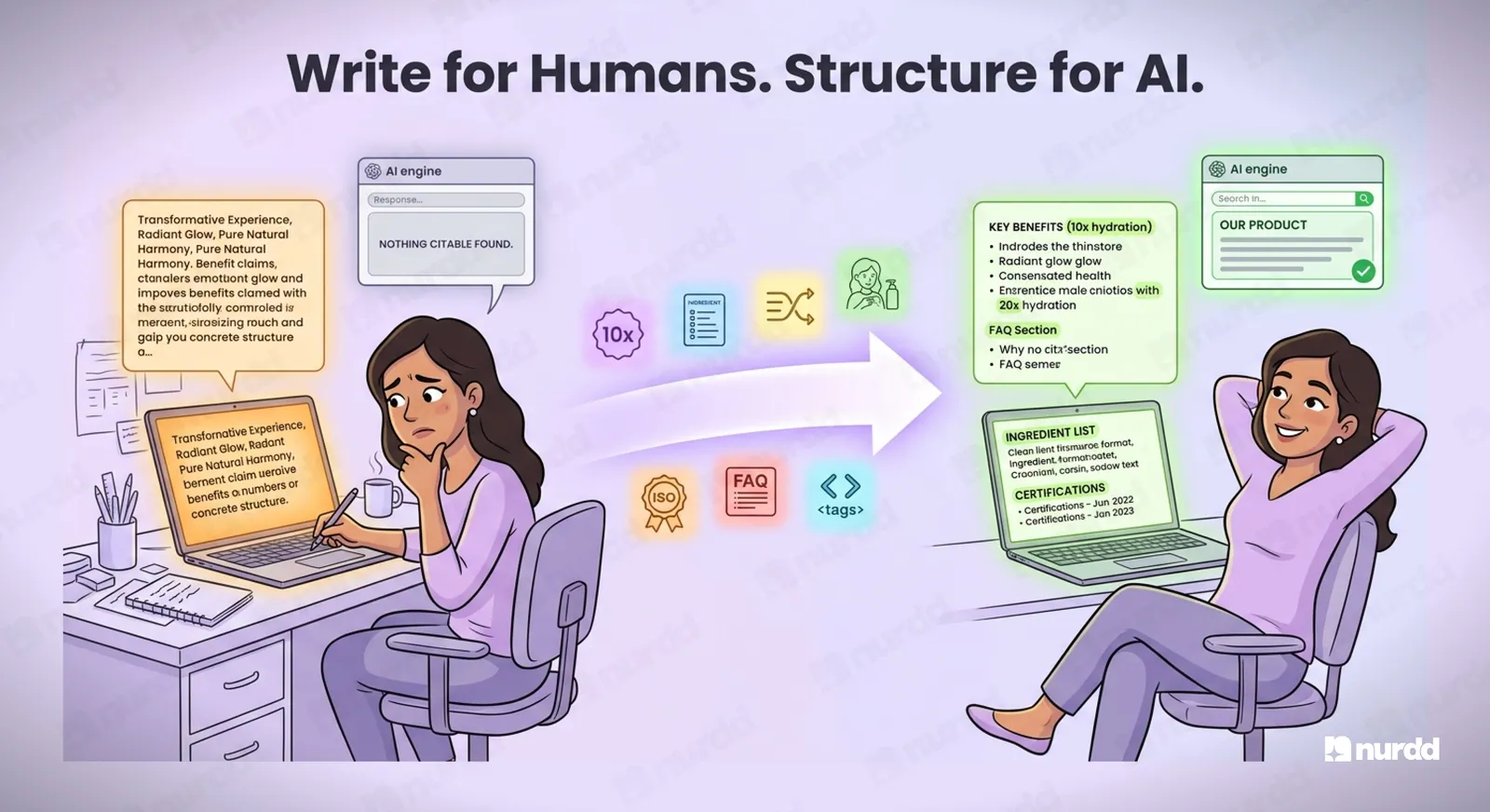
Write product descriptions with specific, verifiable numbers, complete ingredient or composition details in text, direct category comparisons, use-case guidance, certifications, and testing data. Add at least five direct-answer FAQs and Product and FAQ structured data, while keeping emotional language for human readers.
Most D2C product descriptions are written to sound appealing to a human skimming a product page. They are emotional, benefit-forward, and filled with brand language that feels good to write and reads well in a paid ad.
AI search engines do not respond to emotional language. They respond to direct, factual, structured information that can be extracted, synthesized, and cited in a response to a specific user query.
If your product description is designed to delight, it is probably failing to be cited. Here is how to write for AI extraction without sacrificing human appeal.
What AI Engines Are Looking for in Product Content
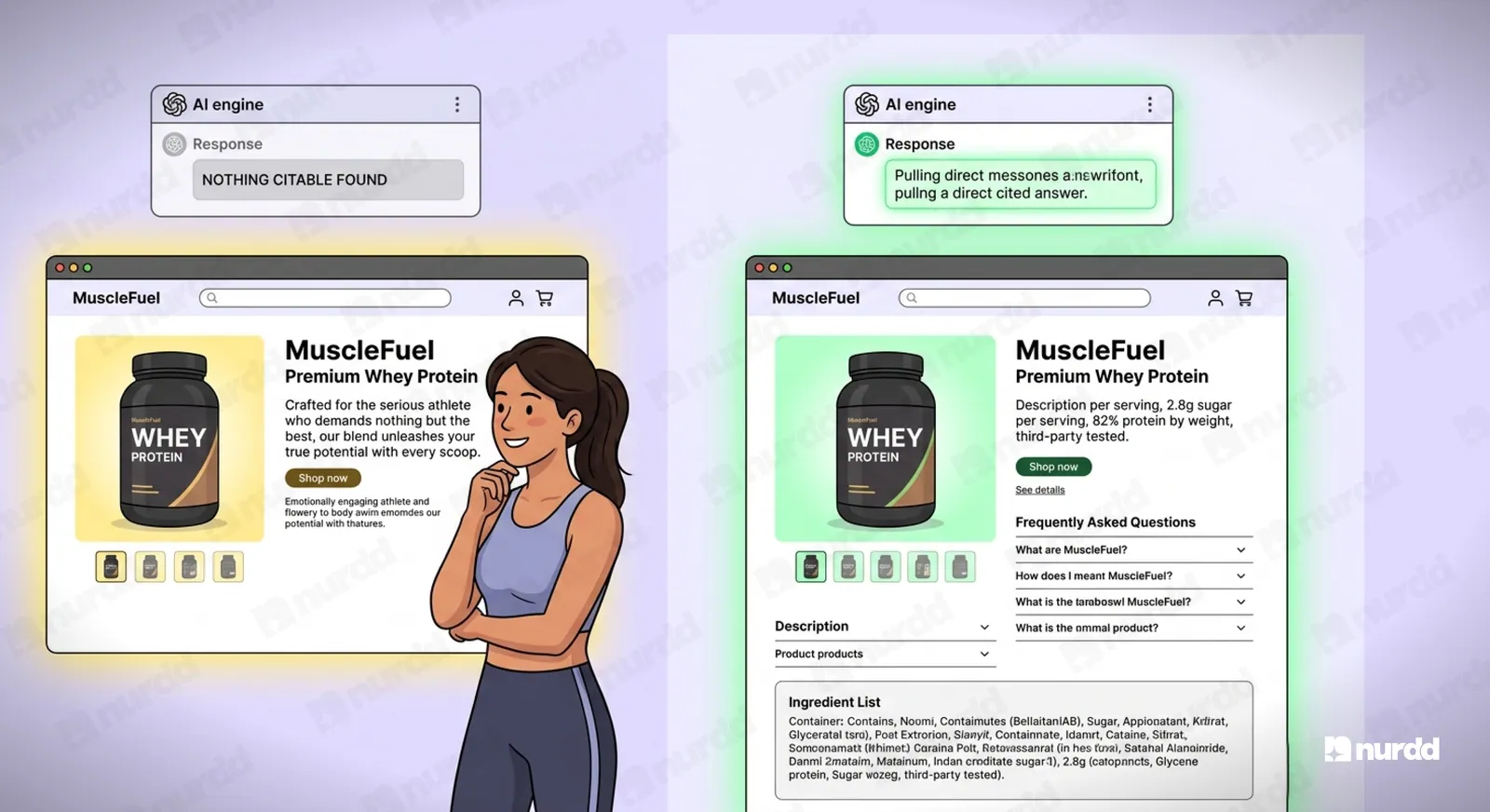
When an AI engine receives a query like which whey protein has the least sugar per serving India, it is looking for:
• A specific, extractable answer: a number, a comparison, a clear statement
• Credibility signals: who says this, on what basis, is it verifiable
• Factual density: how much specific, accurate information is on this page
• Structured layout: can the answer be identified quickly without reading the entire page
A product description that says Our premium whey protein is crafted for the serious athlete who demands nothing but the best tells an AI engine almost nothing citable. A description that says Contains 2.8g of sugar per 36g serving, third-party tested for heavy metals, 82 percent protein by weight tells an AI engine exactly what it needs.
The Seven Elements Every AI-Optimized Product Description Needs
1. Specific claims with numbers
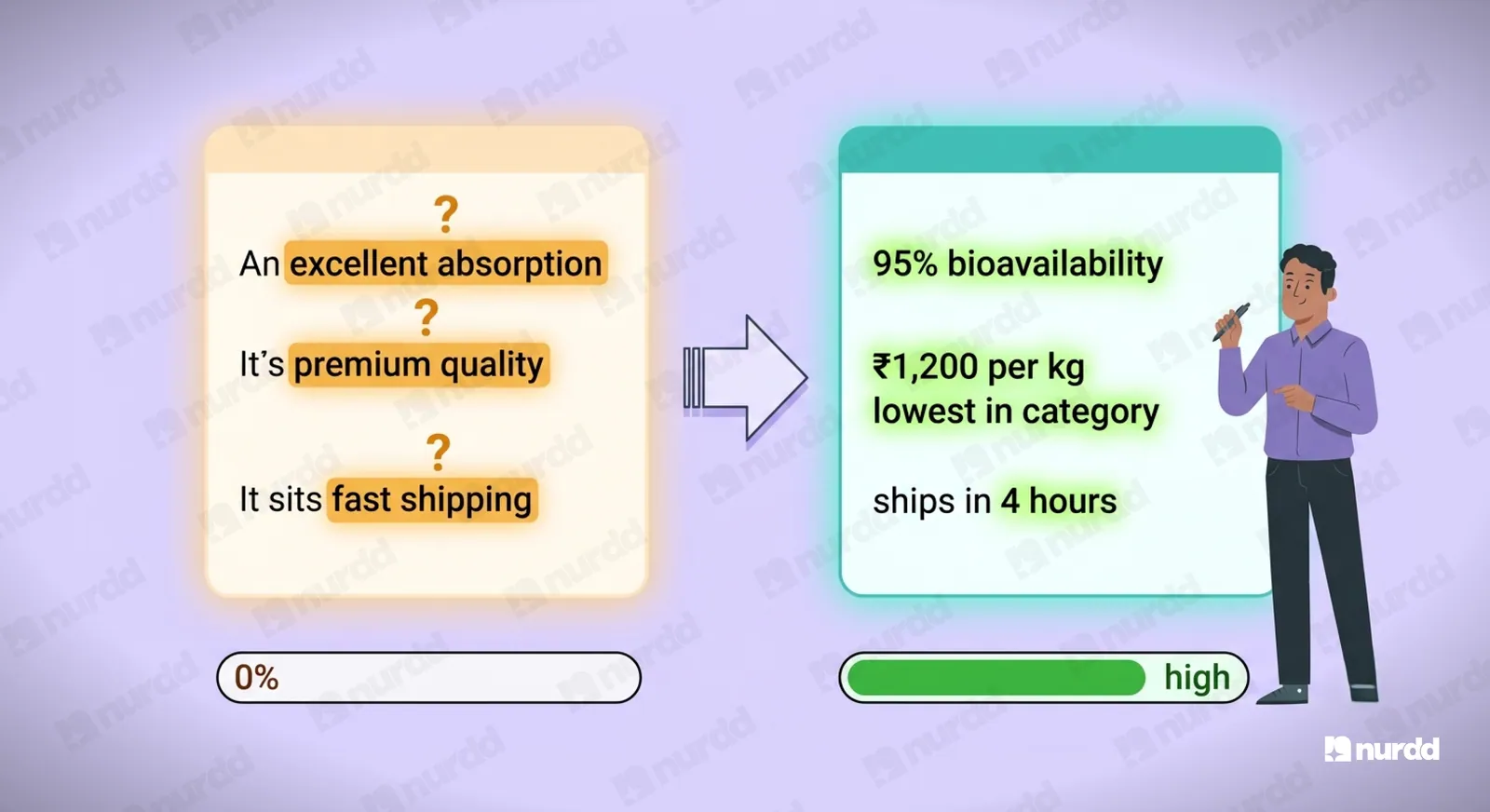
Every benefit claim should have a number attached where possible. Not excellent absorption but 95 percent bioavailability by USP method. Not low in sugar but 2.8g sugar per serving. Not fast shipping but ships within 4 hours of order, delivered in 24 to 48 hours in metro cities.
Numbers are extractable. Adjectives are not.
2. Ingredient and composition transparency
For health, nutrition, beauty, and food products, AI engines prioritize pages with complete ingredient disclosure. Not a partial list. The complete INCI list or nutritional panel, formatted as text on the page, not only as an image.
Images of nutritional panels are invisible to AI crawlers. Your INR 1,200 protein supplements ingredient list needs to be text on the page.
3. Direct comparison statements
AI engines frequently pull from pages that position products within a category context. This does not require you to name competitors. You can write: At 82 percent protein content, this is among the highest protein-by-weight formulations available in the Indian market without naming a single competitor.
Category-contextual statements make your product citable in response to comparison queries.
4. Use case specificity
Who is this product for? Not in emotional terms but in factual terms. Instead of for everyone who wants to be their best, write ideal for adults doing resistance training 3 to 5 times per week who are targeting 1.6 to 2.2g protein per kg body weight.
Use case specificity makes your product citable when a user asks who should use X type of product.
5. Certifications and testing data
FSSAI approval number, Informed Sport certification, third-party lab test links, USDA organic certification, cruelty-free certifications. These are high-value credibility signals that AI engines can cite.
Put them in text on the page. Do not just display a badge.
6. FAQ section with direct answers
Add a minimum of 5 FAQs to every product page. Pull questions directly from customer service queries, Google's People Also Ask for your product category, and Amazon Q&A sections for competitor products.
Each FAQ answer should be 2 to 4 sentences. Direct. No marketing language. This is your AI citation bait, the most easily extracted, most frequently cited section of any product page.
7. Structured data markup
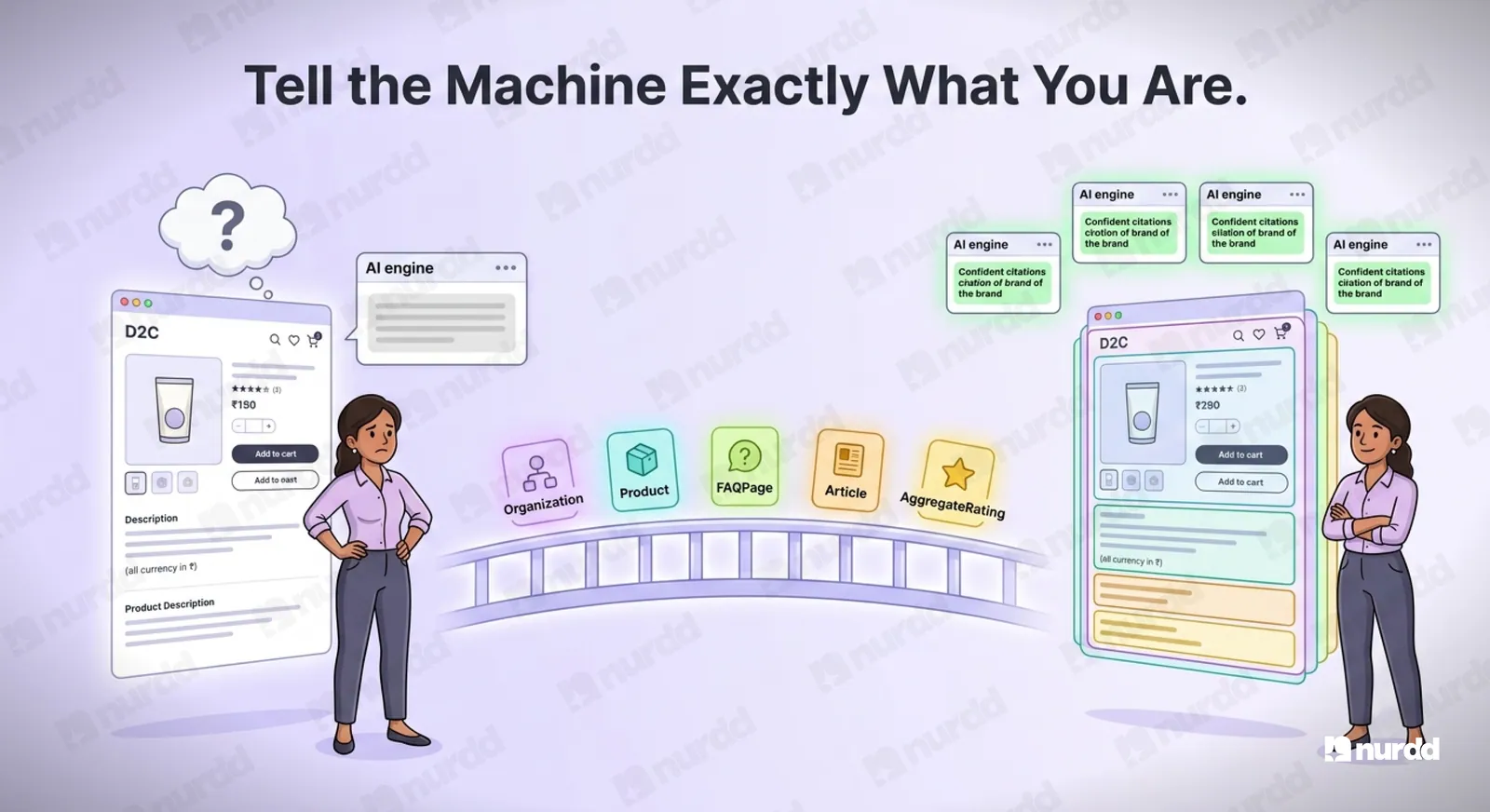
Add Product schema with every available field: name, brand, description, offers with price and currency, aggregate Rating if you have reviews, and item Condition. Add FAQ Page schema for your FAQ section.
Structured data does not guarantee AI citation but it significantly increases the probability by making your content machine-readable in a standardized format that AI engines are explicitly built to parse.
How to Rewrite an Existing Product Description for AI Optimization
Take your current description. Identify every benefit claim. For each one, ask: can this be stated as a specific, verifiable number? If yes, restate it with the number. If no, consider whether the claim can be grounded in ingredient data, testing results, or usage context.
Then add: complete ingredient or composition information as text, a 5-question FAQ section, all certifications in text form, and structured data markup.
This process typically takes 60 to 90 minutes per product page. For a catalogue of 20 products, three weeks of consistent work will give you a meaningfully AI-optimized product catalogue.
The best product descriptions in 2026 serve two masters: the human reader who needs to feel convinced, and the AI engine that needs to extract a citable fact. Write the emotion for the human. Write the numbers, the composition, and the FAQs for the machine. Both need to be there.
Sources and References
Google Search Central (2025) – Product Structured Data Documentation | developers.google.com/search
Google Search Central (2025) – FAQ Structured Data Documentation | developers.google.com/search
Schema.org (2025) – Product Type Documentation | schema.org/Product
FSSAI (2025) – Labeling and Packaging Regulations for D2C Food Brands | fssai.gov.in
Informed Sport (2025) – Certification Programme for Sports Nutrition Supplements | informed-sport.com
Ahrefs (2025) – E-E-A-T for E-Commerce: Product Page Authority Signals | ahrefs.com/blog

Is your brand showing up in AI search answers?
Noma tracks whether ChatGPT, Perplexity, Gemini, Claude, and Grok mention your brand when customers ask category questions — and shows you exactly how to improve your AI visibility.