The D2C Marketing Stack for 2026: Which Tools Talk to Each Other (And Which Ones Don't)
 25 May 20268 min read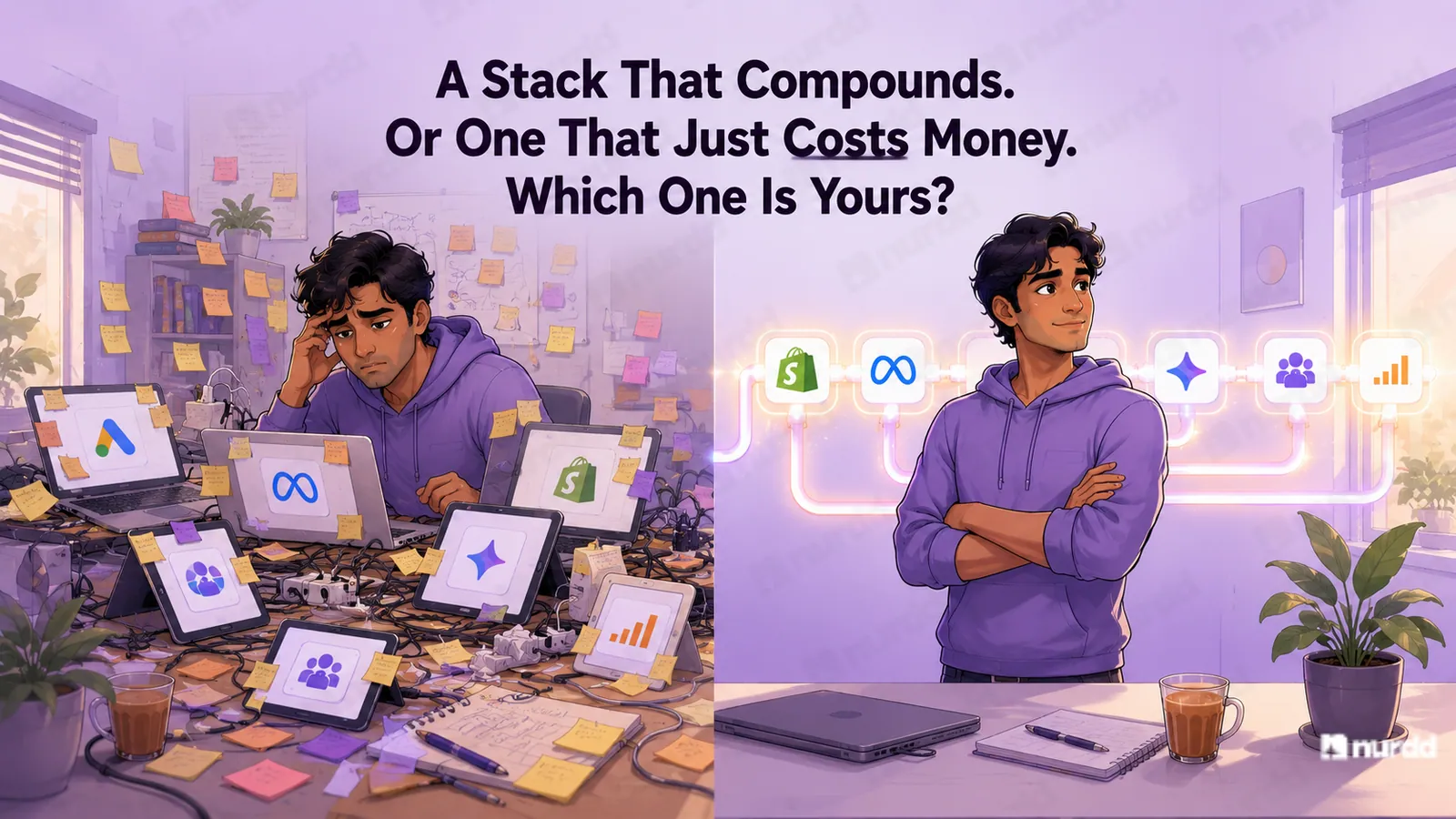
The integrations that matter are Shopify with Meta and Google, the CDP with both ad platforms, and the CRM with the influencer platform. Multiple attribution tools, an unsynced CDP and email platform, and PMax and Standard Shopping without prioritisation rules do not play well together.
A D2C brand's marketing stack is either a compound machine where every tool feeds every other tool, or it is a collection of expensive subscriptions that produce siloed data and more meetings to reconcile it all. In 2026, the gap between those two outcomes has widened dramatically. AI tools have made the right stack extraordinarily powerful and the wrong stack extraordinarily wasteful.
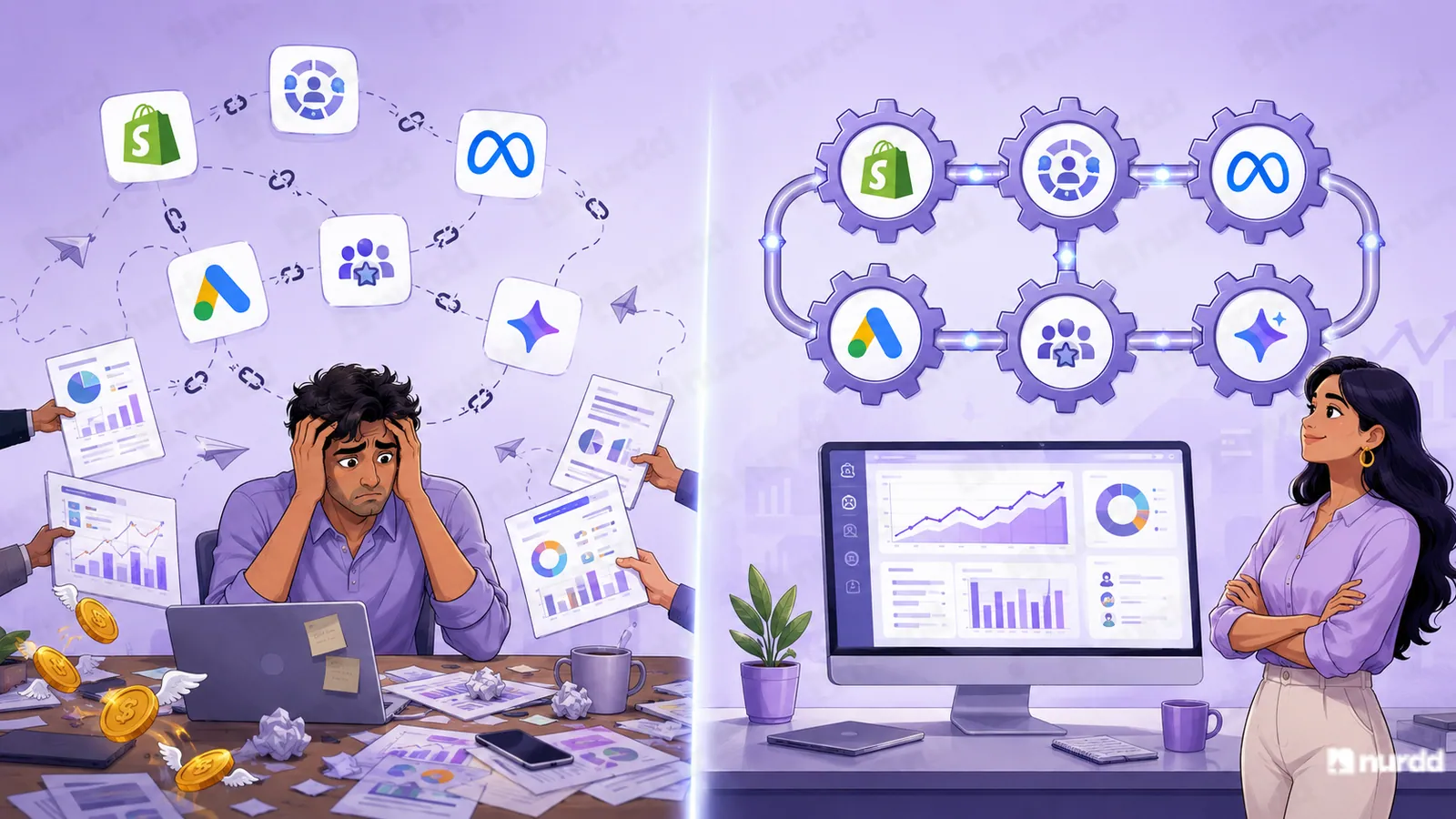
The Core Stack Categories Every Indian D2C Brand Needs
Category 1 - Commerce infrastructure: Shopify, WooCommerce, or a custom Magento build. This is your source of truth for order data, product catalogue, and customer purchase history. Every other tool in your stack should connect to this.
Category 2 - Customer data platform: Clevertap, MoEngage, or WebEngage for Indian brands. This aggregates customer behaviour across your website, app, email, and SMS channels. Without a CDP, your customer data lives in multiple tools that cannot talk to each other.
Category 3 - Paid media: Meta Ads Manager and Google Ads. These two platforms account for the overwhelming majority of D2C paid media spend in India. Everything else is experimental until these two are optimised.
Category 4 - Influencer and creator intelligence: A dedicated platform for creator discovery, attribution, and performance tracking. Spreadsheets and DMs are not a stack — they are a liability.
Category 5 - AI search visibility: A dedicated GEO/AEO tool to track and improve how AI engines represent your brand.
Category 6 - Email and SMS: Klaviyo for Shopify brands, or MoEngage if you are already using them as your CDP. Email remains the highest-ROAS owned channel for most Indian D2C brands when properly segmented.
The Integrations That Actually Matter
Shopify to Meta: Native product catalogue sync. Your product feed must be clean and complete for Meta Shopping ads and Advantage+ Shopping to work properly. Broken product feeds are one of the most common causes of underperforming Meta campaigns.
Shopify to Google Merchant Center: Required for Google Shopping. Must be configured with accurate pricing, availability, and GTIN data. Incomplete merchant centre feeds trigger Shopping ad disapprovals.
CDP to Meta and Google: Uploading your customer purchase data as Custom Audiences allows Meta and Google to find lookalike audiences of your actual buyers, not just website visitors. This is one of the highest-leverage integrations available to D2C brands.
CRM to influencer platform: Connecting your customer database to your influencer platform closes the attribution loop you can see which customers were acquired through specific creator campaigns and track their lifetime value, not just their first purchase.
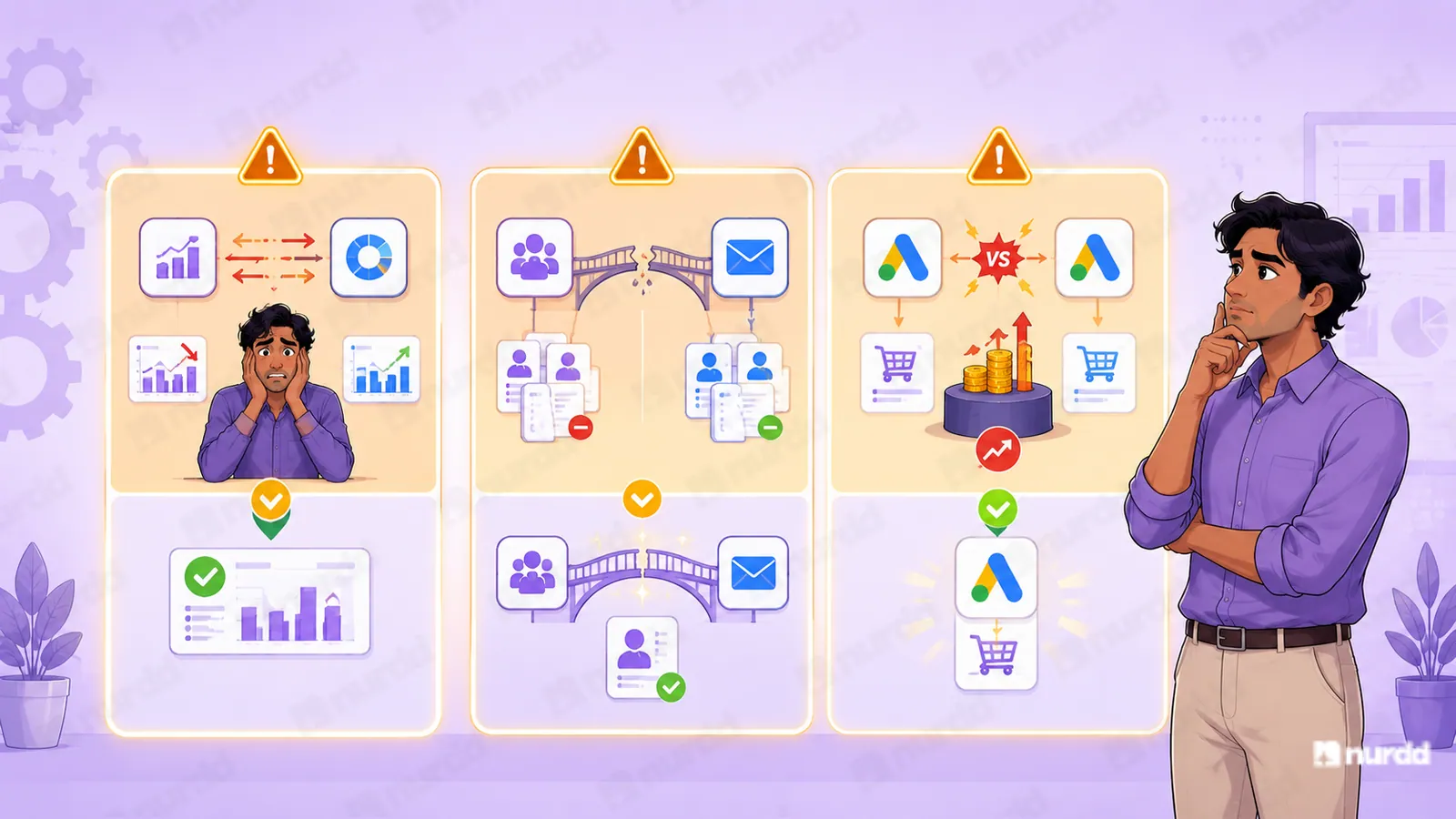
The Tools That Do Not Play Well Together
Multiple attribution tools running simultaneously: If you have both a third-party multi-touch attribution tool and Meta's native attribution reporting, they will produce conflicting numbers. Brands that run both without a reconciliation methodology end up paralysed by data disagreement rather than informed by data clarity.
Separate CDP and email platform without integration: MoEngage as a CDP and Klaviyo as an email platform used simultaneously without proper data sync means customer segments, lifecycle stages, and suppression lists are duplicated and often contradictory.
PMax and Standard Shopping in the same Google Ads account without campaign prioritisation rules: The two campaign types will bid against each other in Google's internal auction, inflating CPCs and reducing efficiency for both.
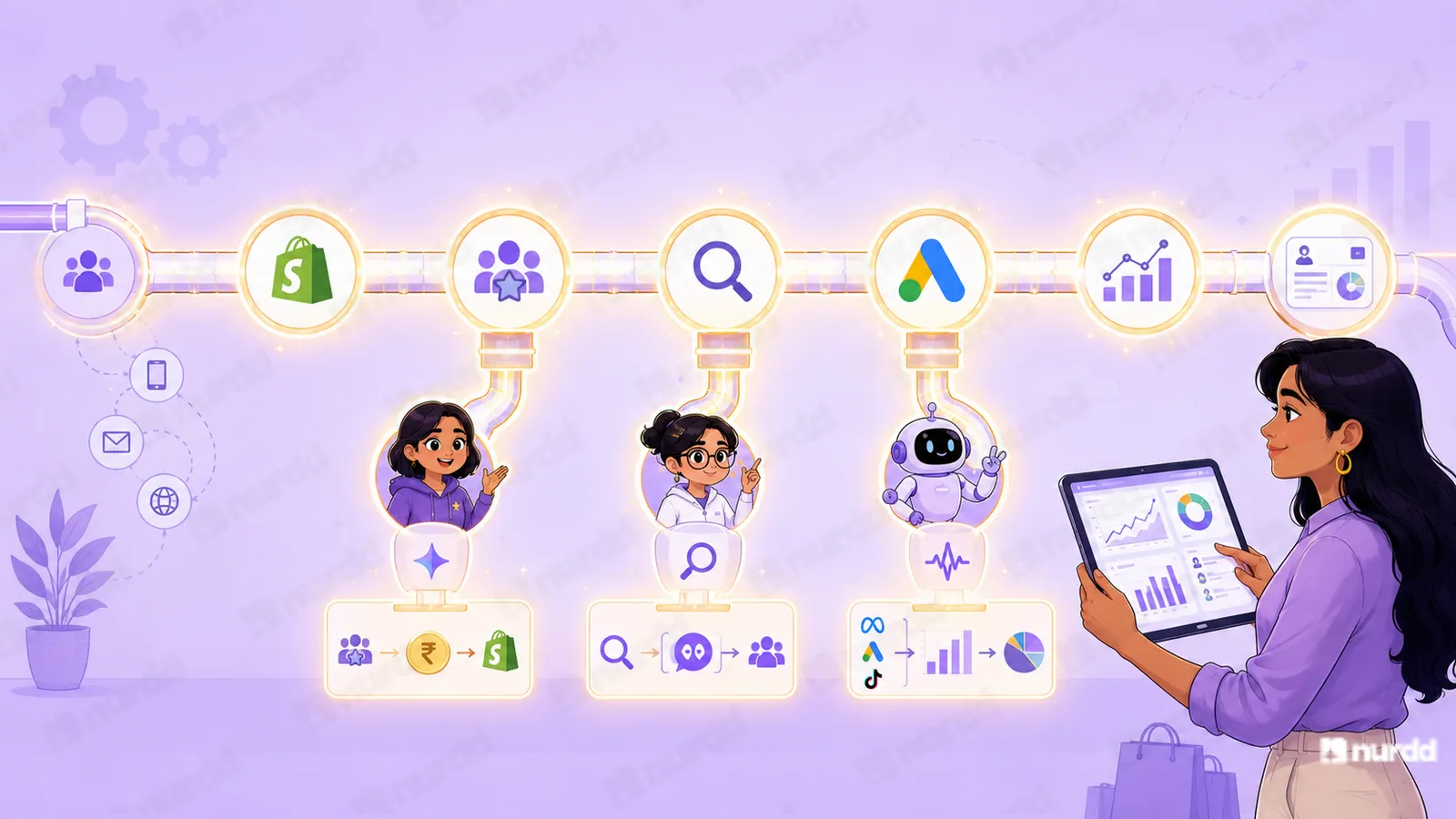
Where Nia, Noma, and Pulse Sit in This Stack
Nia plugs into the influencer intelligence category connecting creator performance data back to actual Shopify revenue, not platform-reported metrics. Noma sits in the AI search visibility category a layer that most current D2C stacks do not have at all, which is the gap it fills. Pulse connects to your Meta and Google Ads accounts and translates raw platform data into decision-ready insights without requiring a media buyer as the interpreter.
Together, they cover the three largest attribution blind spots in the typical Indian D2C marketing stack: what creators actually drove in revenue, how visible the brand is in AI-driven search, and whether paid media is performing efficiently or just appearing to.
Tools do not build growth. The connections between them do. Get the integrations right and every rupee you spend starts compounding instead of just disappearing.
Sources & References
· RedSeer Consulting (2025) – D2C Marketing Technology Landscape India | redseer.com
· Shopify India (2025) – D2C Brand Marketing Stack Best Practices | shopify.com/in/blog
· MoEngage (2025) – Customer Data Platform Integration Guide for Indian Brands | moengage.com/blog
· Inc42 (2025) – Martech Adoption in Indian D2C: 2025 Survey Report | inc42.com

Find the right creators — and verify they're real.
Nia gives brands access to 10M+ Indian creator profiles, TruAI fake follower detection, pre-spend ROI forecasting, and product-level sales attribution. Completely free.