Dark Social and Unmeasurable Word-of-Mouth: How to Account for It in Your Attribution
 27 Mar 20267 min read
Account for dark social with incrementality tests, direct-traffic and branded-search lifts, post-purchase surveys, and trackable short links. Add directly attributed and assisted revenue, apply a survey-based multiplier, and validate it quarterly with an incrementality test.
Your creator's Reel gets 400,000 views. Your UTM tracking shows 1,200 link clicks. Your attribution model credits the creator with 80 sales.
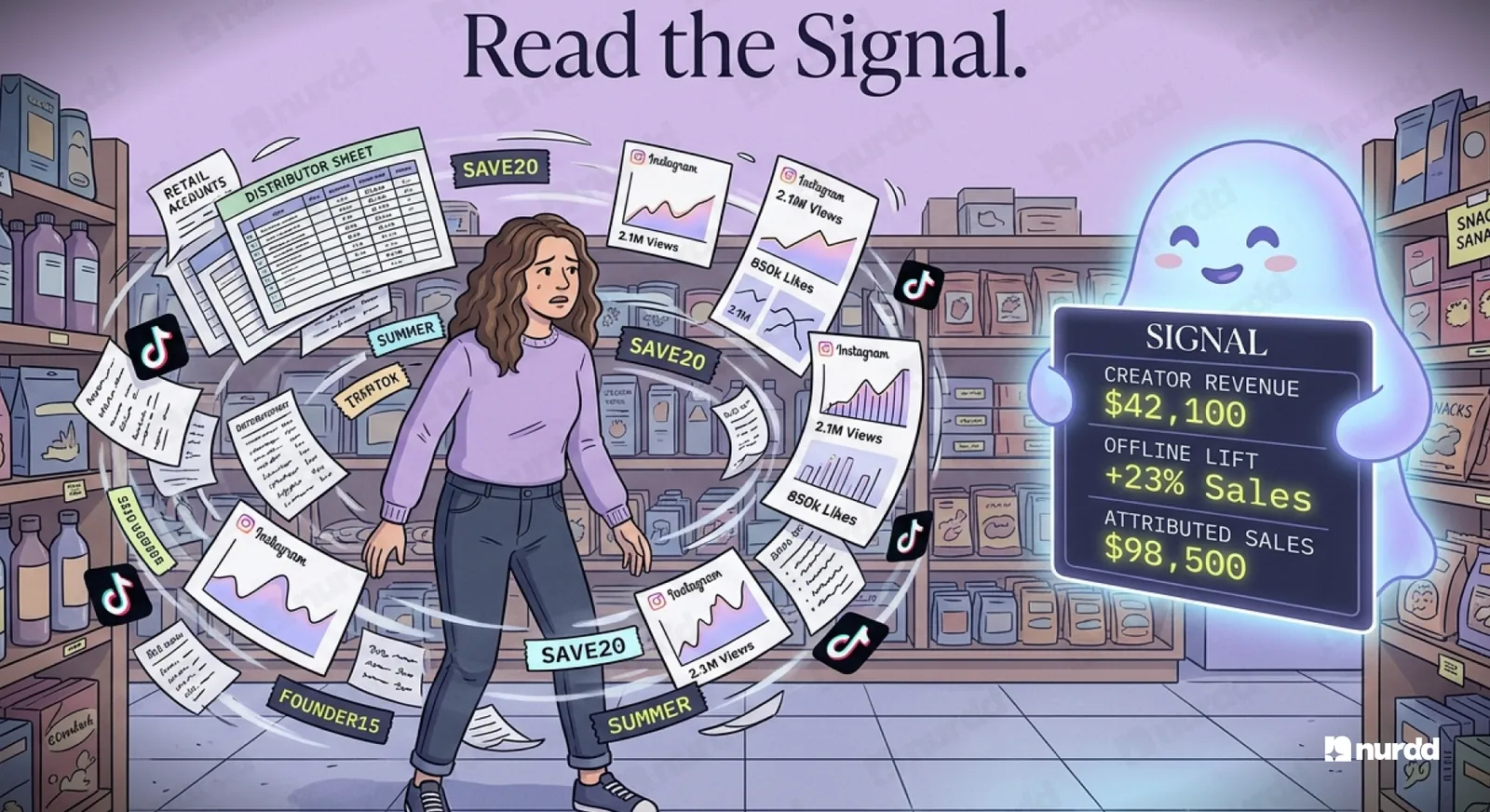
Where did the other 399,000 impressions go? Some of them became conversations. Some became screenshots in WhatsApp groups. Some became word-of-mouth recommendations at a gym or an office. Some of them became purchases two months later that your analytics platform has no way to trace back to that Reel.
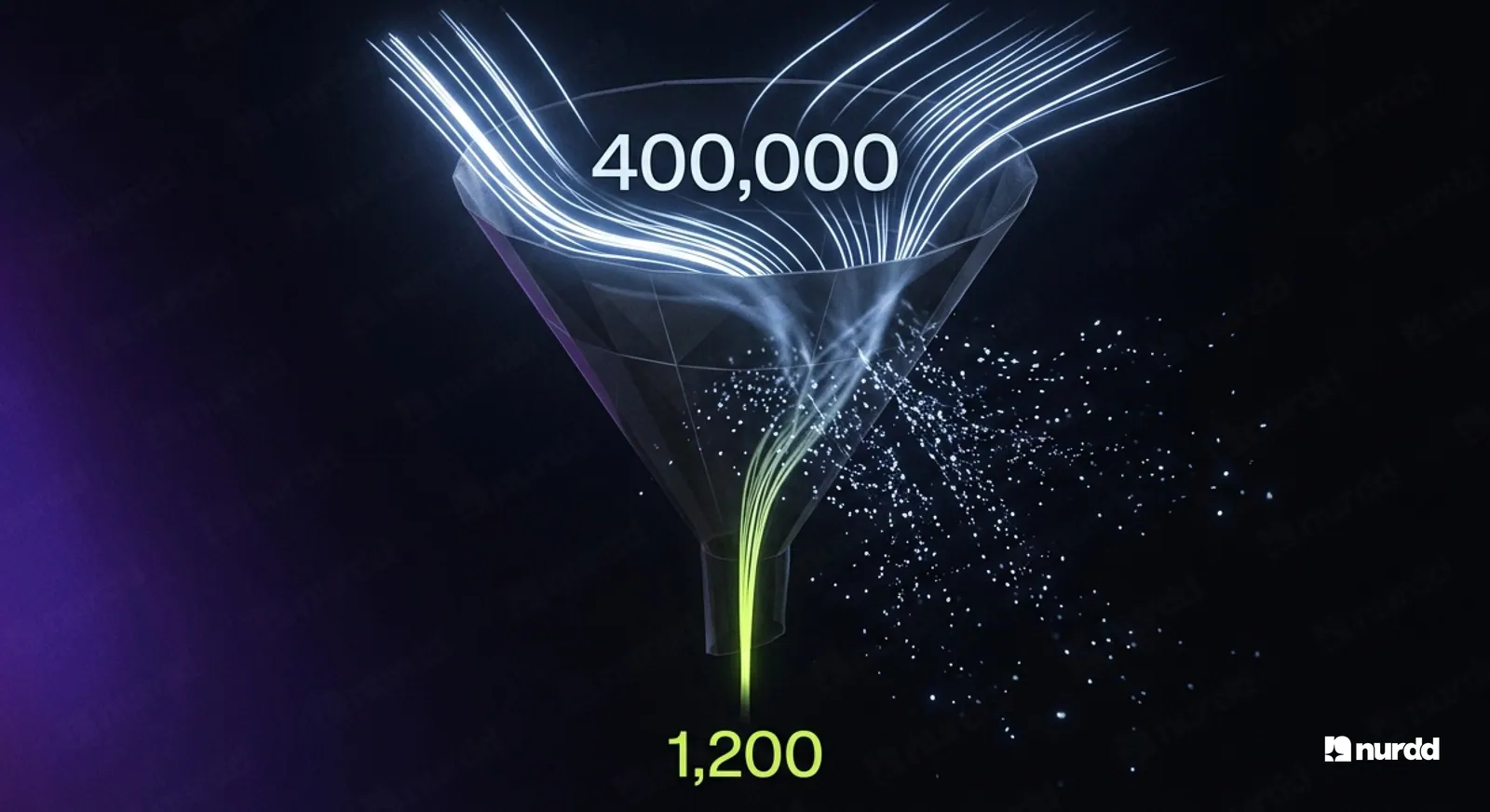
This is dark social. It is the largest unaccounted-for channel in most D2C marketing stacks, and it is disproportionately driven by creator content.
What Dark Social Actually Is
Dark social refers to any sharing of content that happens through private channels: WhatsApp messages, Telegram groups, Instagram DMs, email forwards, and SMS. Unlike public sharing that can be tracked through referral URLs, private sharing strips the UTM parameters and the referrer data from the link.
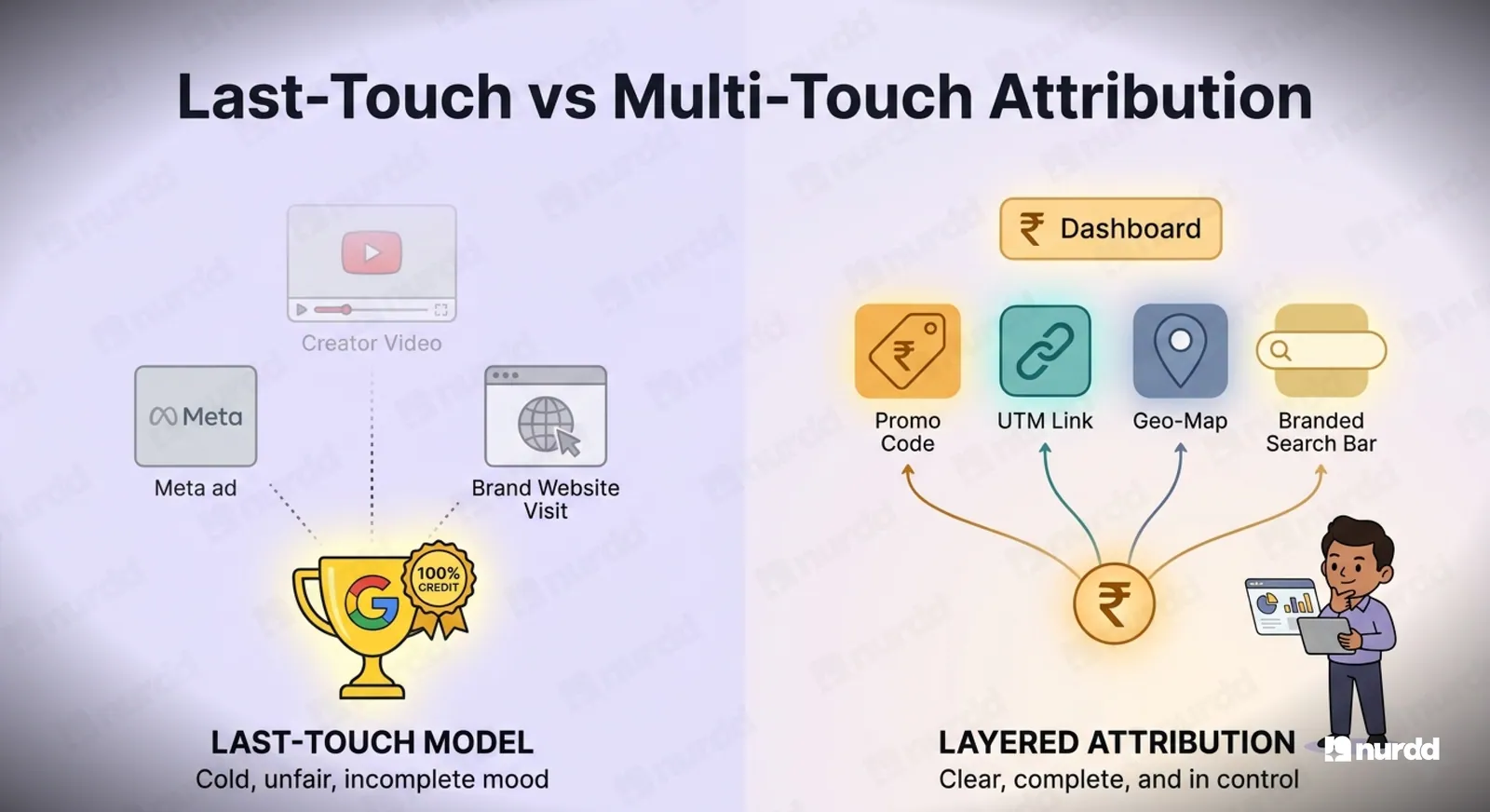
When someone copies a product link from a creator's bio and pastes it into a WhatsApp group, that traffic shows up in your analytics as Direct. It is not direct. It is creator-influenced dark social traffic, and most brands have no mechanism to identify it.
Research from Shareaholic in 2024 estimated that 84 percent of all content sharing happens through dark social channels. In the Indian context, where WhatsApp is the primary sharing medium for 500 million users, this number may actually be higher.
Why Creator Content Is the Primary Driver of Dark Social
Not all content types drive equal amounts of dark social activity. Creator content specifically generates disproportionate dark social traffic for three reasons:
• Trust transfer: When a creator recommends something, their audience trusts it enough to share with people they know personally. Public reposting is for discovery. Private sharing is for recommendation.
• Conversation starter: Creator content, especially product reviews and tutorials, prompts follow-up questions. Someone shares a video to a group and writes, Has anyone tried this? That conversation happens entirely in dark social.
• Social gifting: Indian consumers frequently share creator content as a form of social gifting, sharing a relevant product recommendation with a friend or family member. This is private, intentional, and highly conversion-oriented.
The Problem With Ignoring Dark Social
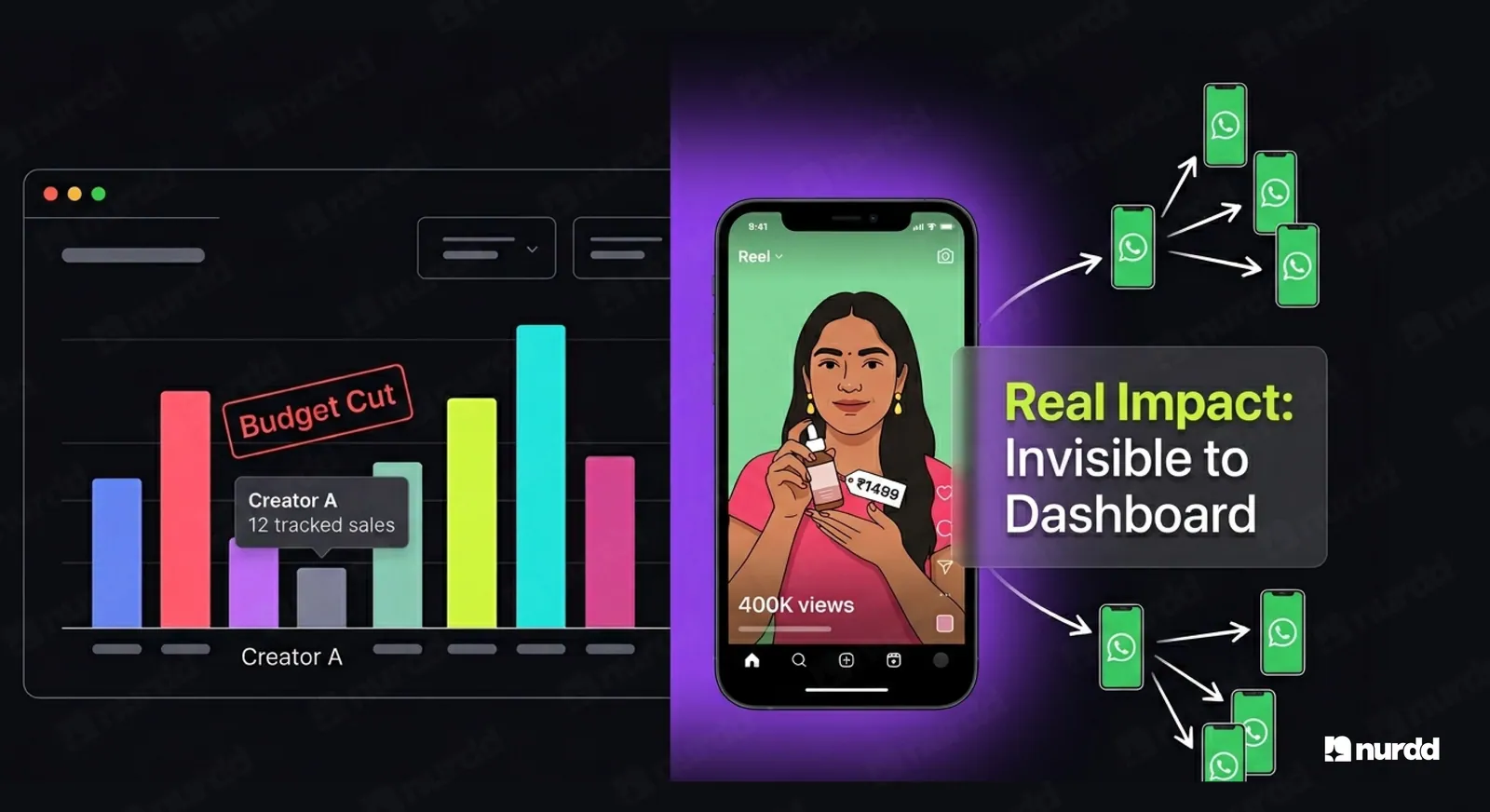
If you do not account for dark social, you are systematically undercounting your creator programs impact. More importantly, you are making budget decisions based on incomplete data.
A creator who drives massive dark social sharing but relatively low direct link clicks will look underperforming in your attribution dashboard. You may cut their budget or not renew the partnership, even though they were responsible for a significant portion of word-of-mouth driven revenue. This is attribution model failure at its most costly.
Five Methods to Account for Dark Social and Word-of-Mouth
1. Campaign-Level Incrementality Testing
The most robust method. Run a creator campaign in a specific city or audience segment. Hold back a matched control group. Measure total revenue difference, not just tracked revenue difference. The untracked delta is your dark social and word-of-mouth contribution.
2. Direct Traffic Analysis Post-Campaign
Monitor your direct traffic channel in GA4 during and after creator campaigns. Controlled spikes in direct traffic that coincide with creator campaign flights are a reliable indicator of dark social activity.
Make this a standard metric in every post-campaign report: direct traffic lift in the two weeks following creator content go live.
3. Branded Search Volume Tracking
Creator content that generates word-of-mouth conversations will show up as branded search demand. Use Google Search Console and Google Trends to track branded keyword search volume during campaign periods.
This is indirect evidence of dark social impact, but it is systematic and easy to implement. A 30 percent spike in brand name searches following a creator campaign is a legitimate attribution signal.
4. Post-Purchase Surveys
Add a single question to your order confirmation flow: How did you first hear about us? Include Saw a creator or influencer post as an explicit option. Include Recommendation from a friend or family member as a separate option.
This is survey-based attribution, which is self-reported and imperfect. But at scale, across thousands of orders, it gives you a stable signal for creator-influenced and word-of-mouth influenced purchase share. Most D2C brands find that 20 to 40 percent of new customer acquisitions trace back to these two sources.
5. Trackable Short Links for All Creator Content
Every piece of creator content should carry a unique, short-form trackable URL in the bio or caption. When this link is copied and shared via dark social channels, the UTM parameters travel with it and survive. The traffic from dark social shares will still show as a specific campaign in your analytics rather than disappearing into Direct.
Not all dark social link-sharing preserves UTMs, but this method captures the segment that does, which is meaningful.
Building a Dark Social Budget Into Your Influencer Attribution Model
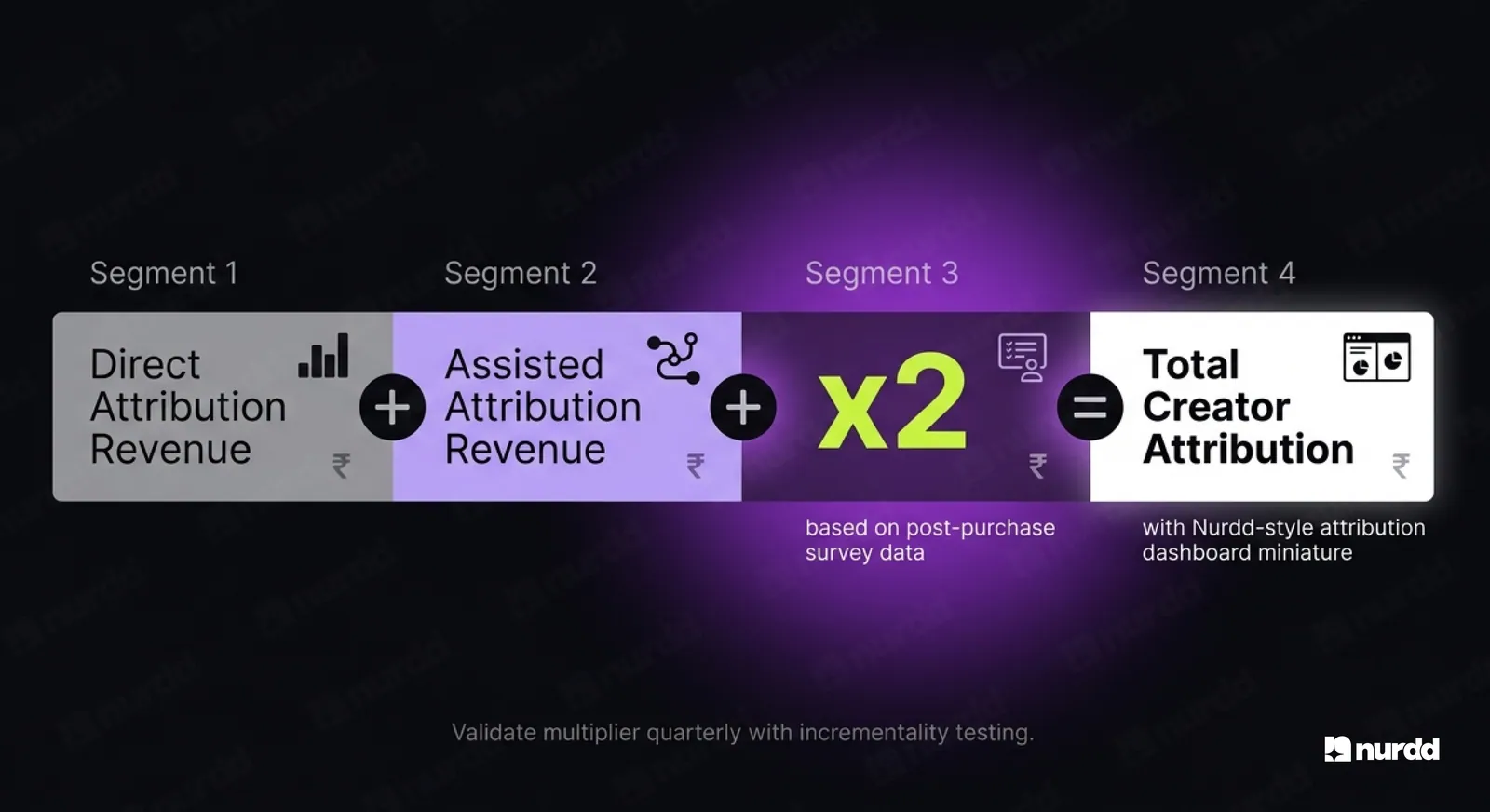
Here is a practical framework used by performance-oriented D2C brands:
1. Start with your directly attributed revenue from creator campaigns (promo codes plus UTM-tracked clicks).
2. Add your assisted attribution revenue from multi-touch paths in GA4.
3. Apply a dark social multiplier based on your post-purchase survey data. If surveys show 25 percent of customers heard about you through creator content, and your directly attributed creator revenue represents 12 percent of total revenue, apply a 2x multiplier to your creator attribution.
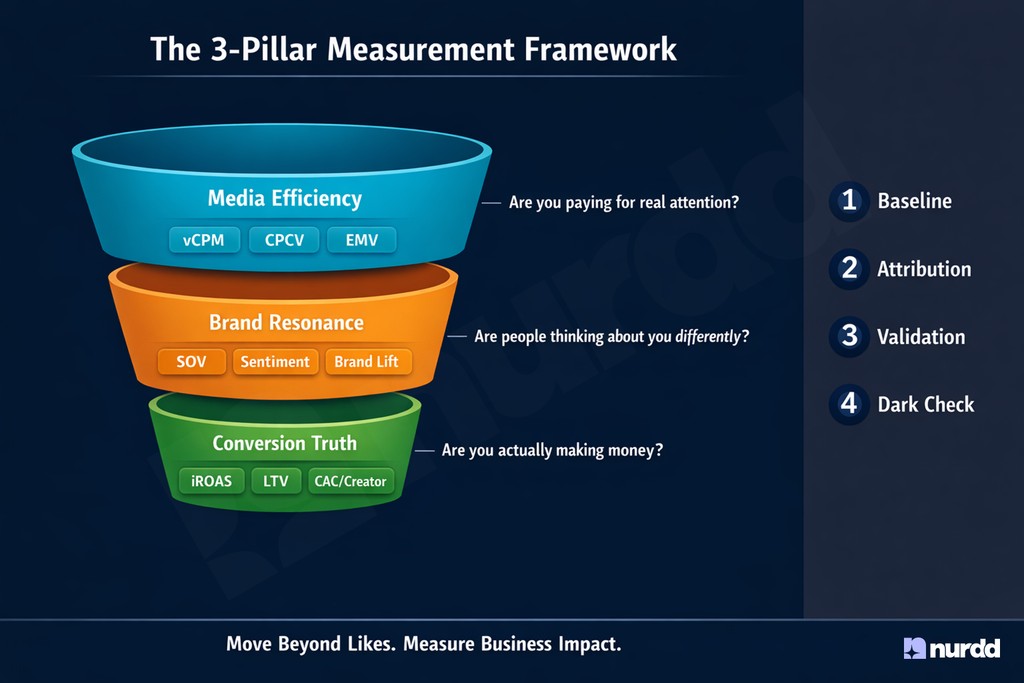
4. Validate this multiplier quarterly using an incrementality test. Adjust if the ratio shifts.
This is not precise science. It is a practical method for giving creator programs the credit they deserve without pretending that your tracking stack captures everything.
The brands that win with creators are not the ones with the best analytics setup. They are the ones that have intellectually accepted that attribution is always incomplete, built systems to capture what can be captured, and have the confidence to apply reasonable multipliers to the rest.
Sources and References
RadiumOne / RhythmOne – Dark Social Research | mmaglobal.com
Statista / FIPP (2024) – Sharing Through Dark Social Media | statista.com
Buffer (2024) – What Is Dark Social And How Can You Measure It? | buffer.com
Intent Amplify (2025) – Dark Social: 84% of Sharing Happens Where Analytics Cannot Track It | intentamplify.com
WhatsApp (2025) – WhatsApp India User Base | whatsapp.com
Google Analytics 4 Help (2025) – Direct Traffic Source Definition | support.google.com/analytics

Find the right creators — and verify they're real.
Nia gives brands access to 10M+ Indian creator profiles, TruAI fake follower detection, pre-spend ROI forecasting, and product-level sales attribution. Completely free.