The Influencer Trap: Why Brands Keep Hiring the Same Creators Who Never Deliver
 13 Jul 20267 min read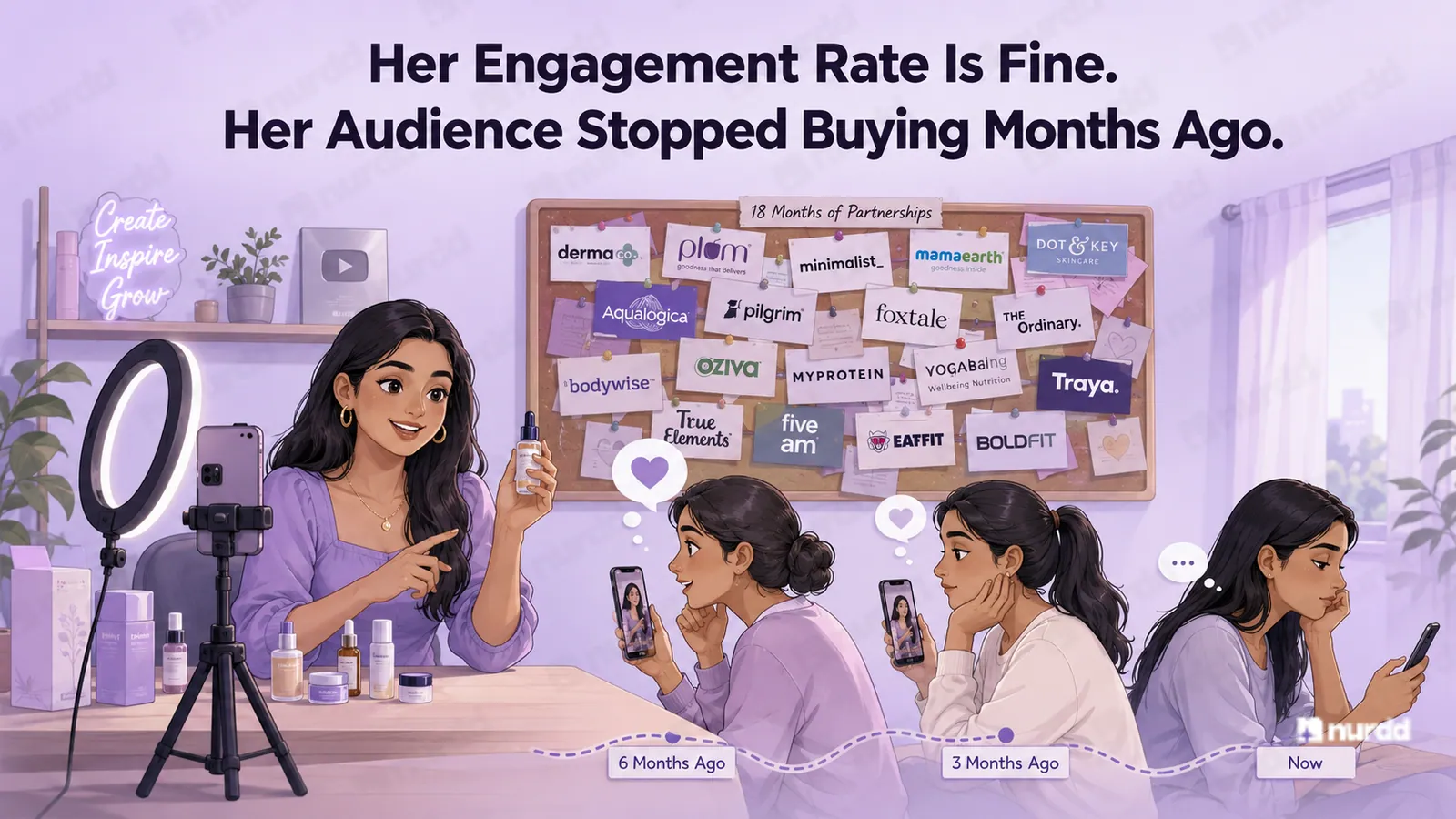
Brands keep hiring them because agencies and databases surface creators with strong engagement, prior partnerships, and easy availability, even though repeated sponsorships have trained their audiences not to trust recommendations. Check the last 30 posts and sponsored-post comments before paying.
There's a very specific kind of influencer that almost every brand in a given category ends up hiring. They have good engagement numbers. They have previous brand partnerships on their page. They're easy to find because every agency database features them prominently. They respond quickly and accept deals at a negotiable rate. And they consistently underperform. Not because they're bad creators. But because their audience has been watching them do sponsored content for three years and has learned not to buy from their recommendations. This is creator saturation, and it's one of the most expensive problems in influencer marketing because it's invisible until you've already spent the money.
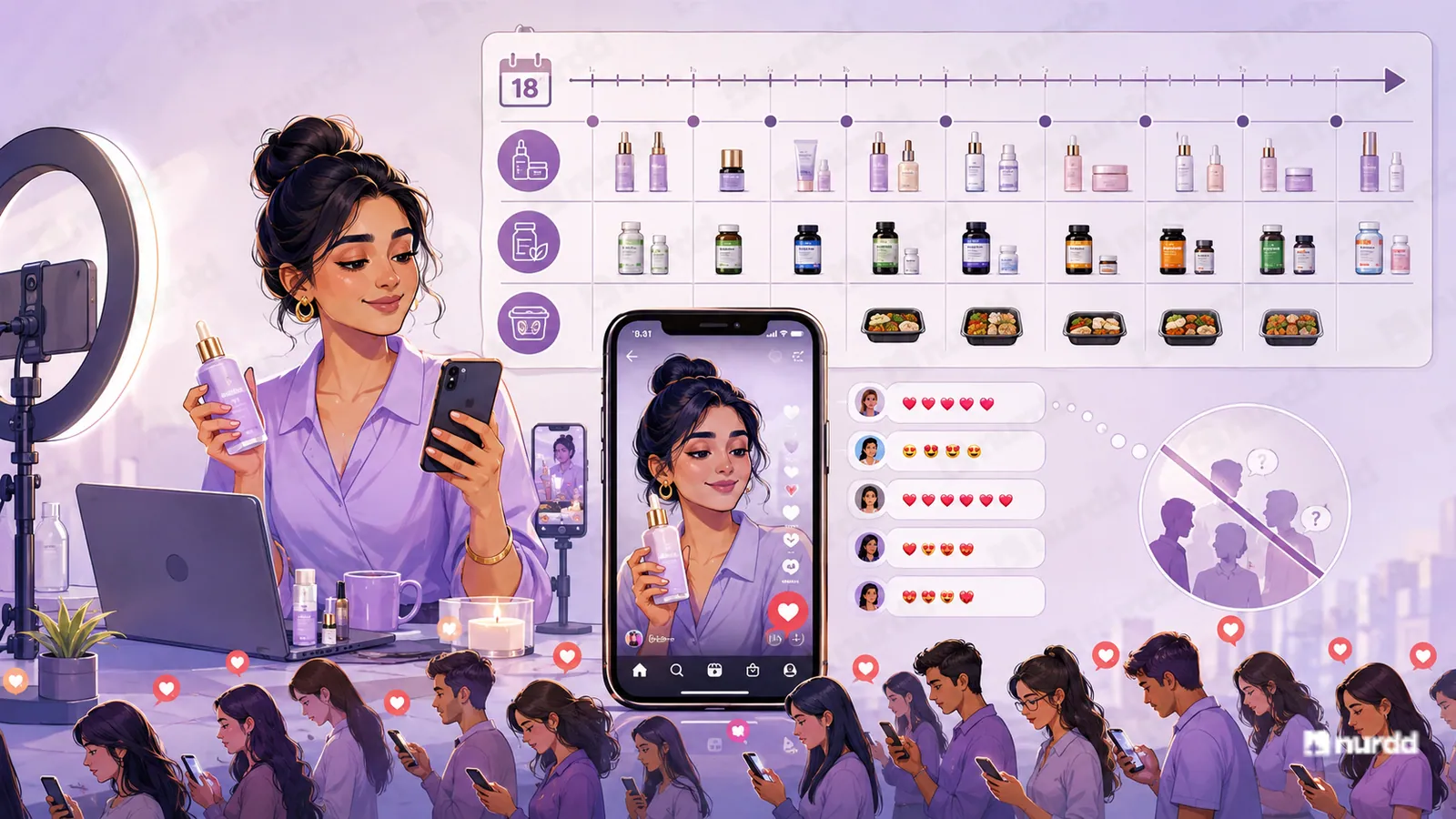
What Creator Saturation Actually Looks Like
An over-commercialized creator isn't necessarily doing anything wrong. They're saying yes often, staying professional, producing the content as briefed. The problem is the cumulative effect on their audience. An audience that has seen the same creator recommend 12 different skincare brands, 6 supplement companies, and 3 meal prep services in 18 months has developed a passive filter. They see the post. They might even like it. But they don't buy. The tell is the comments section. Look for comments like "love your content but the ads are a lot lately" or a comment-to-engagement ratio where lots of people engage generically but nobody is asking genuine questions about the product.
The Metrics That Don't Catch This Problem
Standard influencer vetting checks follower count, engagement rate, reach, and fake follower percentage. None of these catch creator saturation. Engagement rate stays stable with a commercialized creator because likes and comments are social reflexes — people engage with creators they like regardless of whether the content is sponsored. A high engagement rate on a sponsored post means the creator has a loyal following. It doesn't mean the audience trusts the recommendation. Those are different things.
How to Spot Over-Commercialization Before You Pay
Scroll their last 30 posts. Count how many are sponsored versus organic. More than 30% paid content is a flag. More than 50% and the audience has almost certainly adapted. Read the comments on their last five sponsored posts — look for genuine questions about the product versus generic emoji reactions. Check if their last six brand partnerships include two direct competitors in the same category, which cannibalizes their recommendation value in that space.
Where to Find Creators Who Haven't Been Found Yet
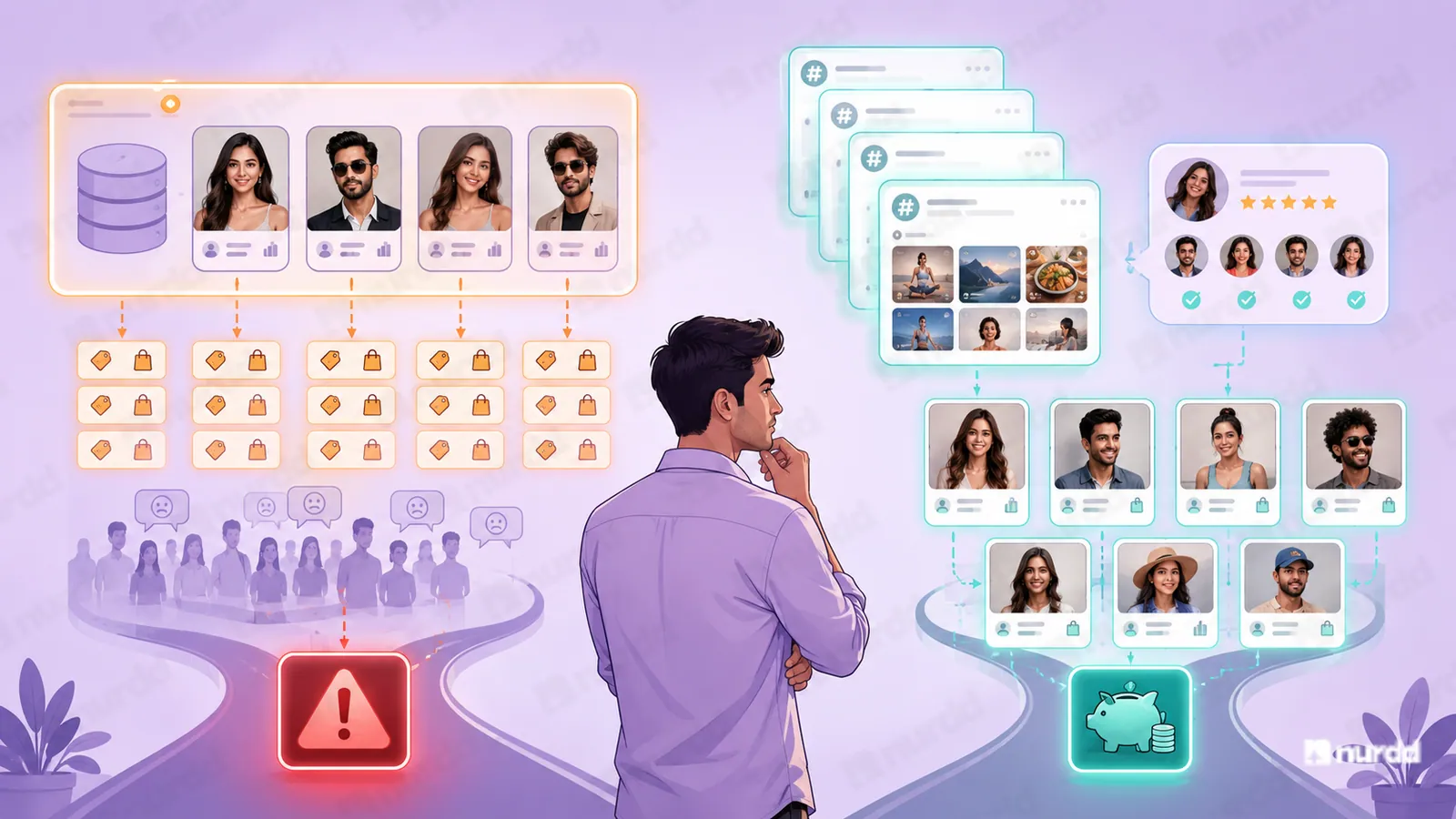
The best performing creator for any brand is often one no agency database has prioritized yet — someone building a genuine audience around a niche with limited or no brand partnerships to date. Search hashtags in your product category three or four pages deep. Look at who your existing customers follow — run a post-purchase survey asking "which creators do you trust for recommendations in this category?" The answers are almost always fresher than any agency list. Run small test budgets with five or six unfamiliar creators before scaling with any single one.
The creator your agency recommends first is usually the creator every other brand in your category already tried. There's a reason they're that easy to recommend.
Sources & References
CreatorIQ – Influencer Fatigue Study 2025 – https://creatoriq.com/resources/influencer-fatigue/
Influencer Marketing Hub– https://influencermarketinghub.com/creator-commercial-saturation/
Kantar – Consumer Trust in Creator Recommendations – https://www.kantar.com/campaigns/brandz/india
Later – Influencer Audit Red Flags – https://later.com/blog/influencer-audit/
Social Insider – Sponsored vs Organic Engagement – https://www.socialinsider.io/blog/sponsored-vs-organic-engagement/

Find the right creators — and verify they're real.
Nia gives brands access to 10M+ Indian creator profiles, TruAI fake follower detection, pre-spend ROI forecasting, and product-level sales attribution. Completely free.