Why Influencer Marketing Works Differently for Affordable Products vs Premium Products (And What That Means for Your Strategy)
 11 Jul 20267 min read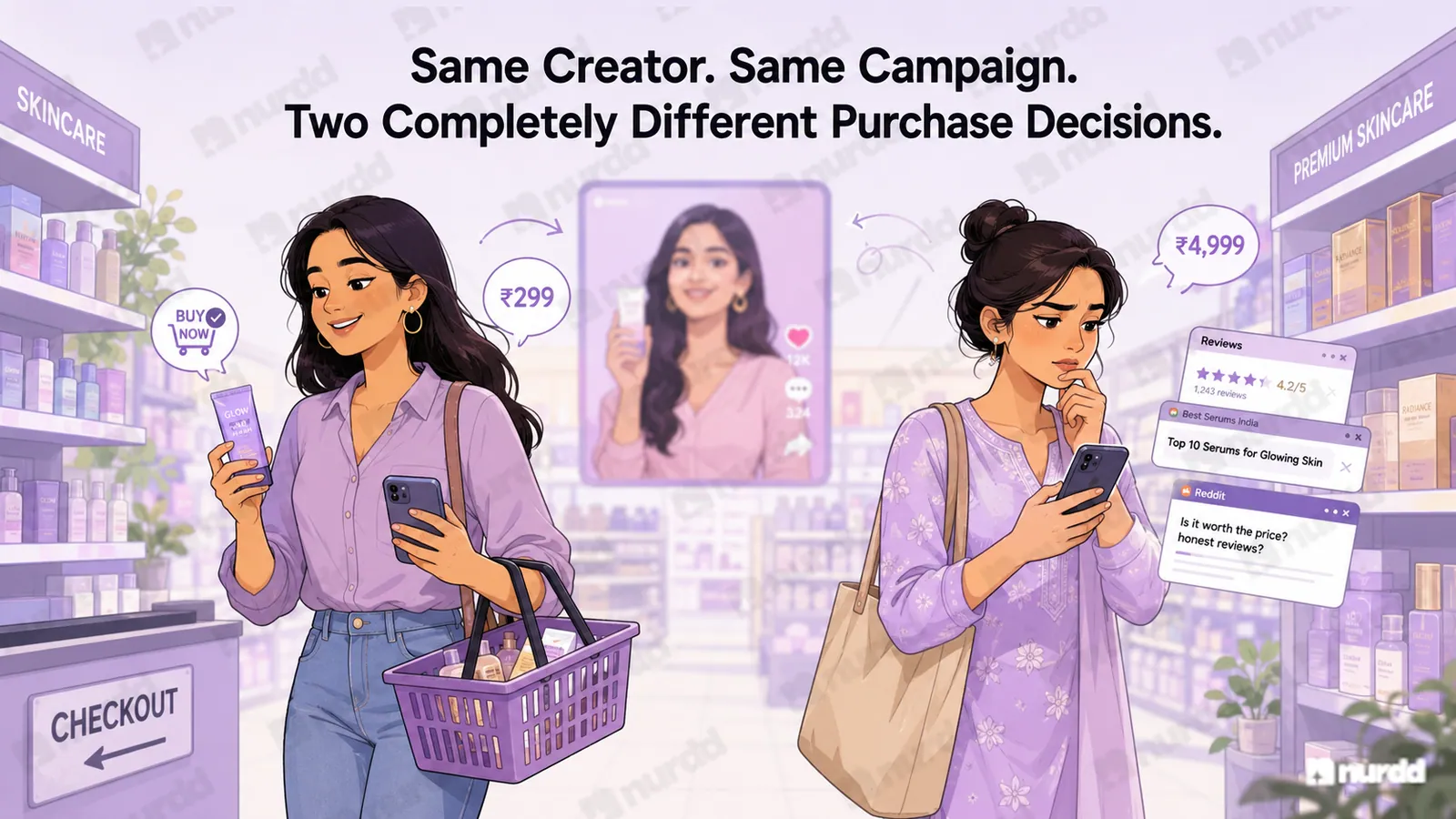
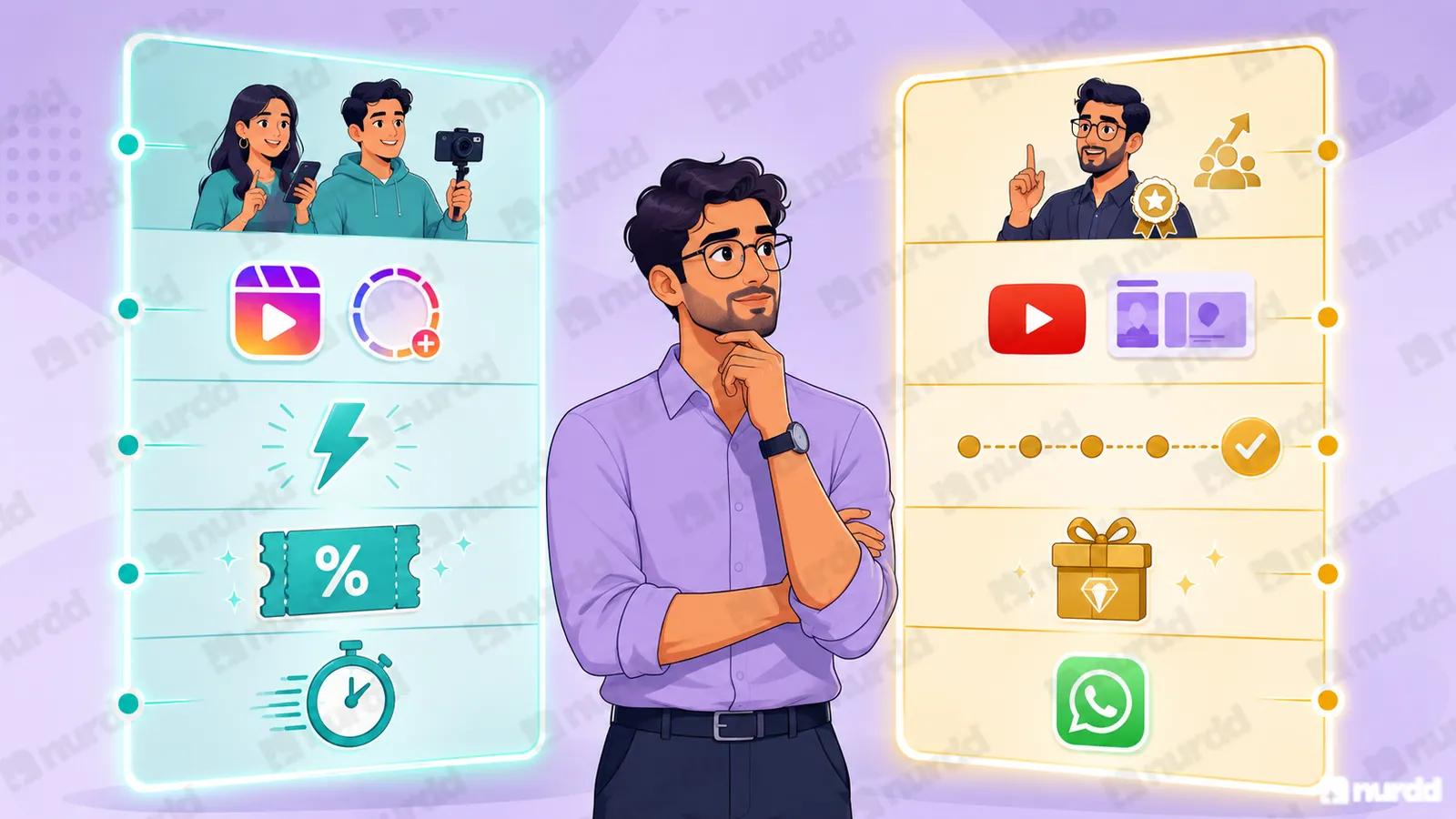
Affordable products work best with trusted nano and micro creators, Instagram-first content, and discounts or urgency that encourage impulse purchases. Premium products need category credibility, detailed YouTube or carousel content, and value-added offers or WhatsApp Q&A to support consideration without cheapening the brand.
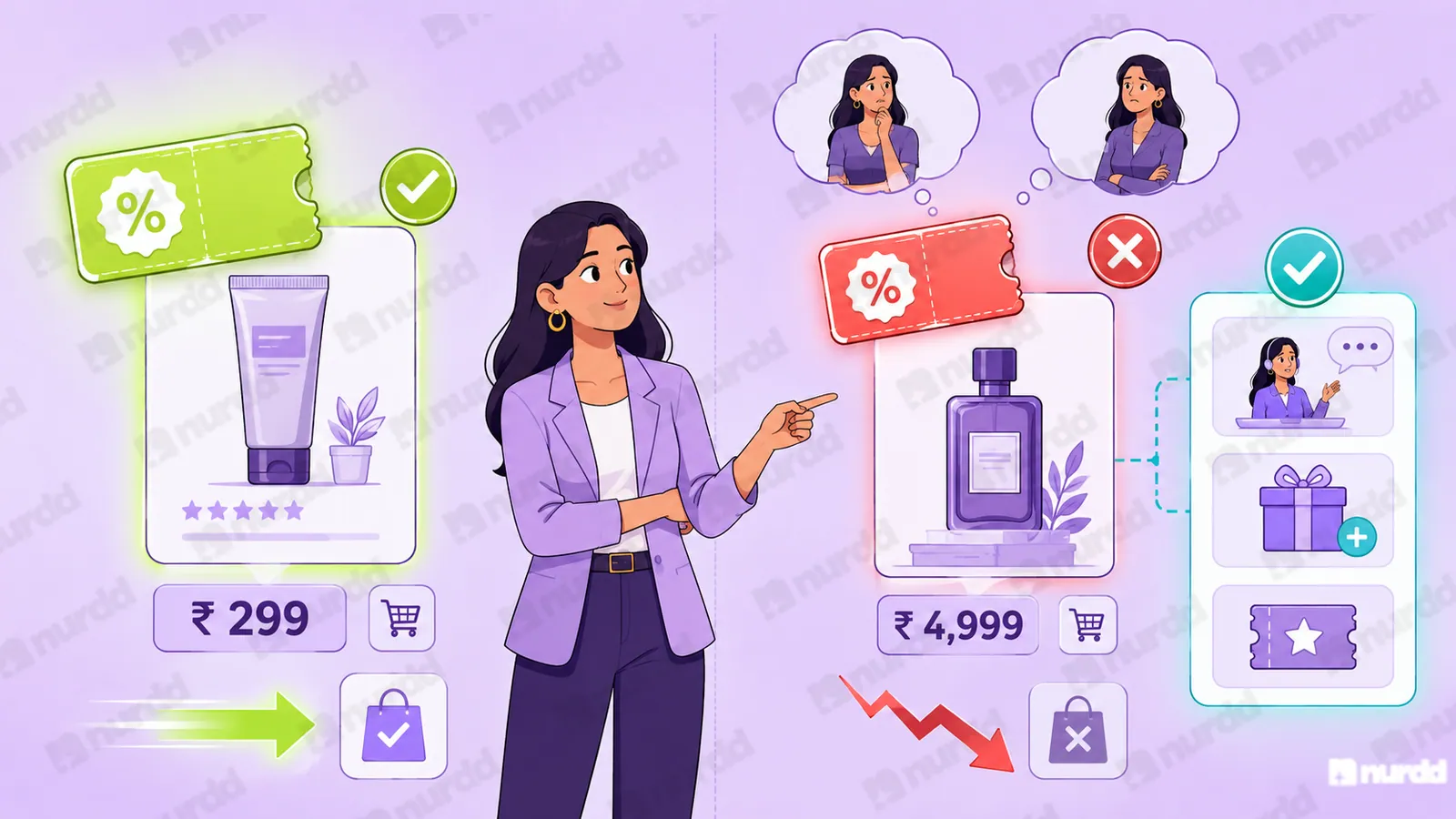
A Rs 299 face wash and a Rs 4,999 hair treatment are both beauty products. They should both work with influencer marketing, right? Technically yes. But the strategy for one will actively destroy conversions for the other. Price is one of the most significant variables in how buyer psychology interacts with creator content and understanding how changes almost everything about how you run campaigns.

The Low-Price Purchase Decision
When a product costs under Rs 500, the mental calculation a buyer makes is almost entirely different from a high-price decision. The question isn't "should I buy this?" it's "why haven't I tried this yet?" Low-price products benefit from impulse. Nano and micro creators with high trust and high engagement in a relevant niche outperform macro creators for affordable products in India. Urgency works here too limited-time discount codes and "I'm sharing this with my followers" framing are legitimate conversion triggers because the price point makes acting on urgency genuinely easy.
The High-Price Purchase Decision
At Rs 3,000, Rs 5,000, Rs 12,000 the question becomes "can I trust that this is worth it?" Someone who sees a Rs 4,999 hair treatment recommended by a creator for the first time doesn't buy immediately. They go to Google. They look at reviews. They might wait for a sale. A single sponsored post rarely drives direct conversion for premium products it drives consideration.
For premium products, creator credibility in the category matters far more than follower count. A dermatologist with 15,000 followers recommending a Rs 5,000 skincare product is more powerful than a lifestyle influencer with 500,000 followers recommending the same thing. Long-form content YouTube reviews, detailed Instagram carousels works better at higher price points.
Platform Follows Price
Instagram Reels and Stories drive impulse. For affordable, impulsive products: Instagram-first. YouTube long-form drives consideration. For premium products: YouTube deserves serious investment. For Indian D2C brands, WhatsApp is often underestimated for premium product conversion. A creator who directs an interested audience to a WhatsApp group where the brand handles Q&A is remarkably effective for considered purchases.
The Discount Code Question
Discount codes are table stakes for affordable products. For premium products, discount codes can actively damage brand perception. A Rs 5,000 product with a 30% off code signals to the buyer either that the product is overpriced at full price, or that the brand is desperate. For premium, the offer structure should lean into value rather than price reduction: complimentary consultation, free add-on product, exclusive early access something that enhances perceived value without discounting the hero product.
Price is not just a number on your product page. It's the entire psychological framework through which your customer decides whether a creator recommendation is worth acting on.
Sources & References
Redseer Strategy Consultants — India influencer marketing overview (creator economy size, growth, micro vs macro ROI for brands)
https://redseer.com/newsletters/influencer-marketing-a-solution-to-optimize-digital-ad-spends/
Redseer / YourStory — India's digital ad spend and influencer marketing spend projections, micro/macro archetypes
https://yourstory.com/2022/12/digital-ad-spending-india-to-hit-21bn-by-2028-redseer-report
Skeepers — Nano/micro influencer conversion and engagement rate data (20% higher conversion, engagement rate comparisons)
https://skeepers.io/blog/nano-micro-influencers/
Jem Social — 2026 micro vs macro influencer ROI benchmarks (engagement multiples, cost-per-post, ROI by tier)
https://www.jem.social/blog-micro-influencer-vs-macro-influencer
Open Influence — Nano/micro influencer authenticity and conversion advantage
https://openinfluence.com/the-continued-rise-of-micro-and-nano-influencers/

Find the right creators — and verify they're real.
Nia gives brands access to 10M+ Indian creator profiles, TruAI fake follower detection, pre-spend ROI forecasting, and product-level sales attribution. Completely free.