The Real Reason Your Influencer Campaign Worked on Instagram but Died on YouTube
 27 May 20266 min read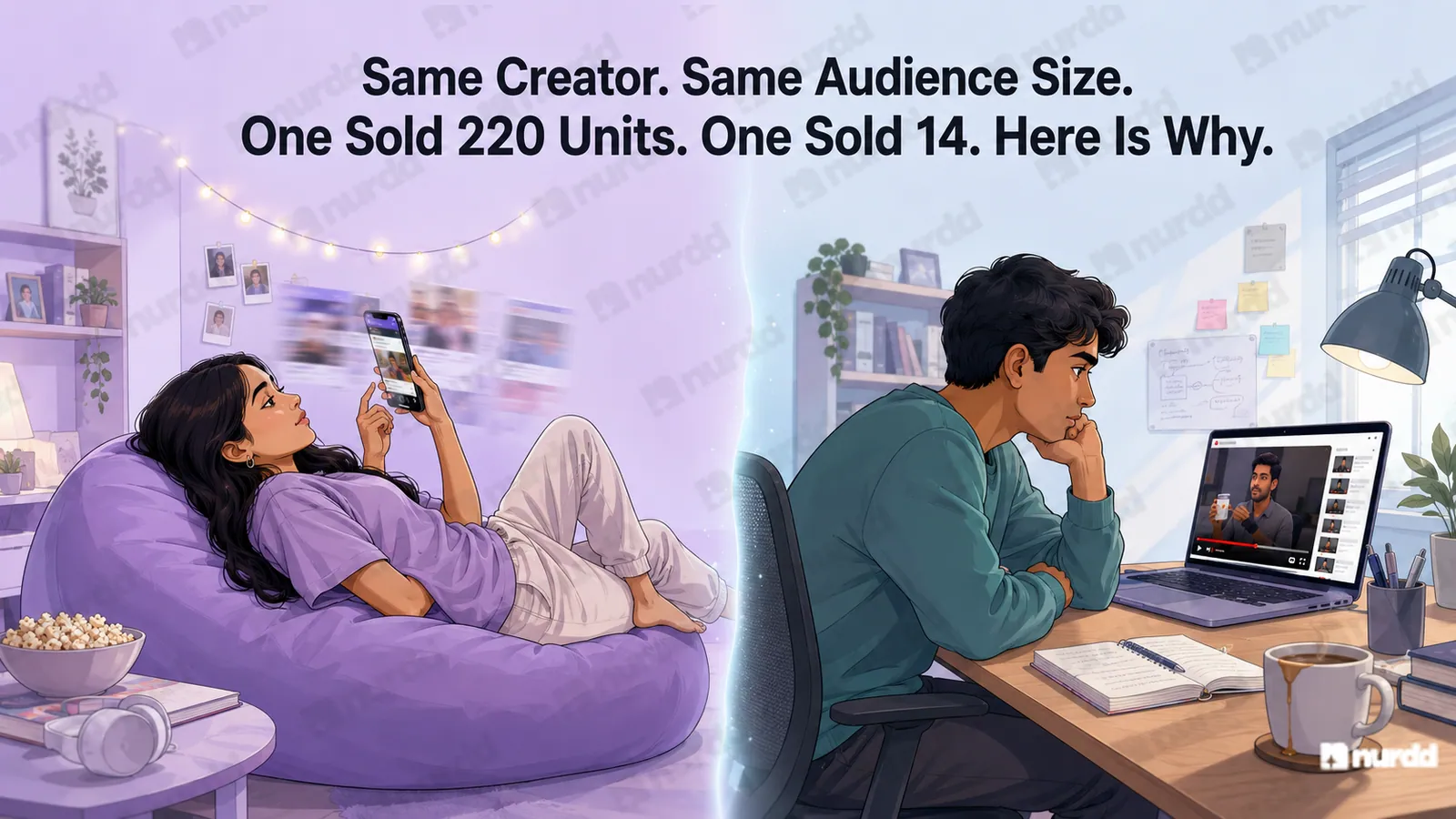
Instagram is built for fast discovery and immediate purchases, while YouTube viewers are in evaluation mode and often buy later or off-platform. The campaign failed because YouTube was judged by same-week coupon redemptions instead of branded search, consideration, and delayed purchases.
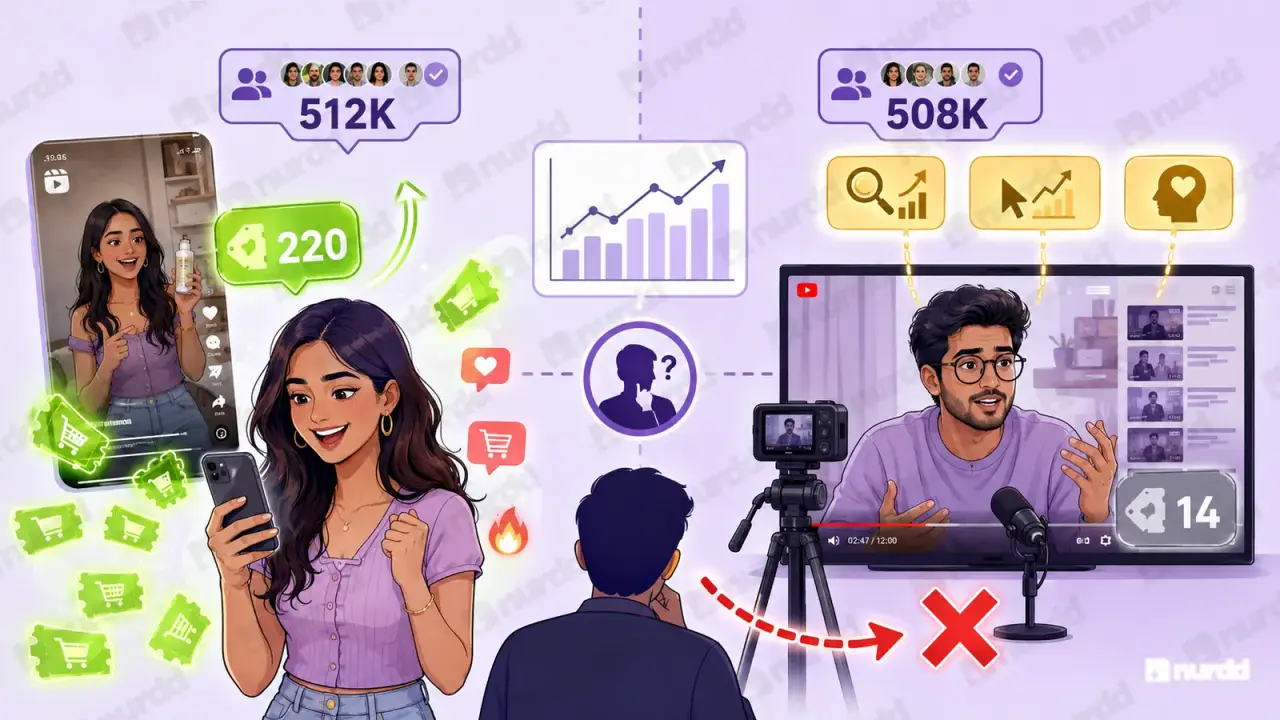
A skincare brand ran the same product with two creators simultaneously. Creator A, an Instagram personality with 3 lakh followers, generated 220 coupon code redemptions in 72 hours. Creator B, a YouTube reviewer with 2.8 lakh subscribers, generated 14 redemptions over two weeks. Same product, nearly identical audience size, completely different outcome.
The brand concluded Creator B was ineffective and did not renew. That was the wrong conclusion. The brand had misread what YouTube is built to do.
Every platform puts its audience in a different mental state
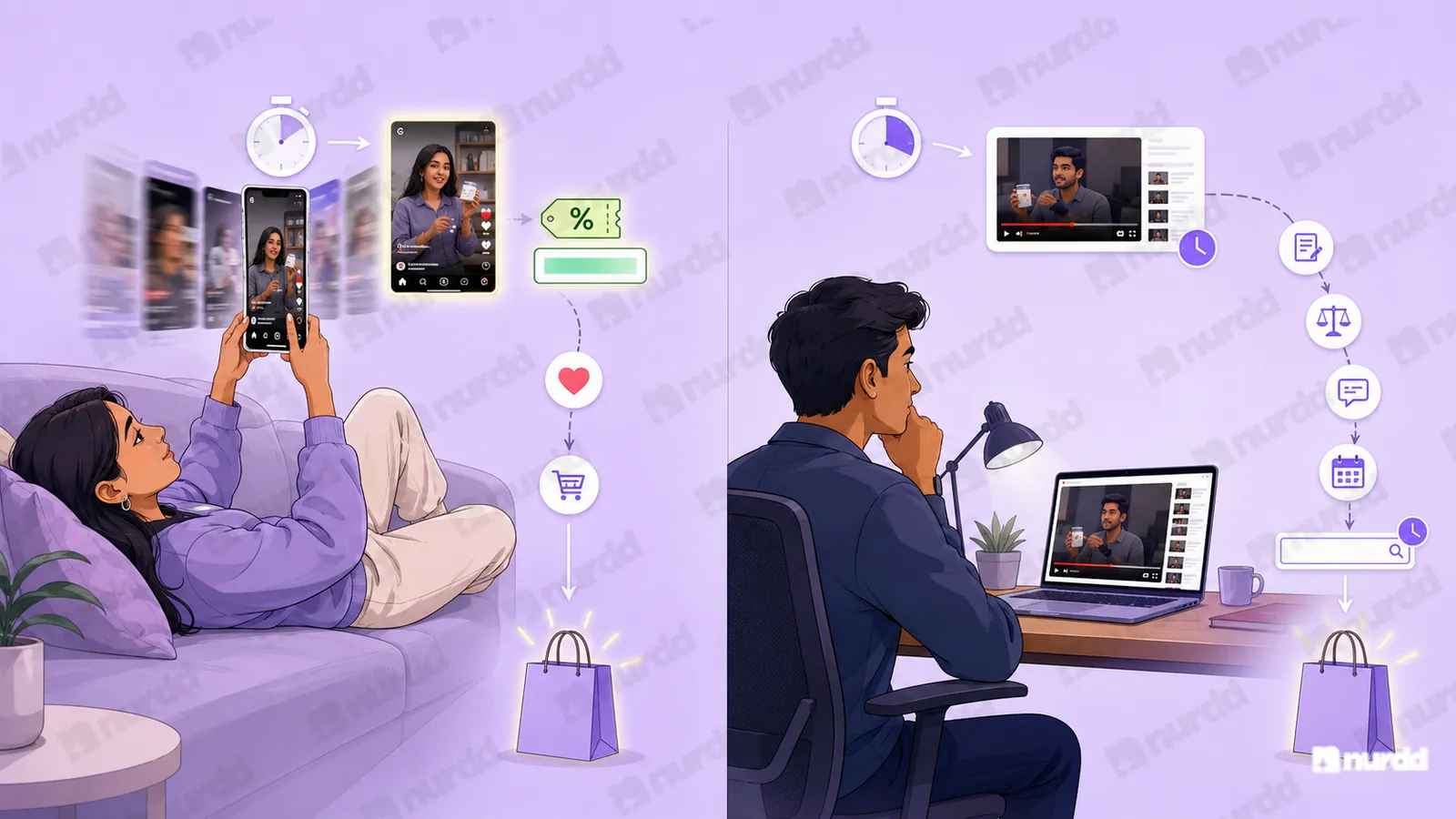
Someone opening Instagram is in discovery mode. They are browsing. They are looking at a fast stream of content with low commitment to any individual piece. The emotional trigger to buy needs to be fast and the path to purchase needs to be frictionless. Instagram Reels, particularly those with strong emotional hooks in the first three seconds, are optimised for this behaviour.
Someone opening YouTube has made a different decision. They searched for something or chose a video from a creator they trust. They have committed five, ten, twenty minutes to a single piece of content. They are in evaluation mode. When they watch a 12-minute product review and the creator says "this is genuinely worth it," the weight of that recommendation is much heavier. But the purchase decision also takes longer and often happens off-platform.
What this means for how you measure each channel
Measuring YouTube creator campaigns by same-week coupon redemptions is like measuring a billboard by how many people called a phone number they saw at 80 kilometres per hour. The wrong tool for the measurement.
YouTube creator campaigns build something that is harder to see but more durable: they show up in branded search. A viewer watches a thorough product demo, does not buy immediately, and searches "Brand X review" three days later. That visit gets attributed to organic or direct. The creator who drove it gets no credit.
Attribution is where brands consistently mis-evaluate YouTube. The channel drives consideration and search intent. Last-click models cannot see that.
Matching the campaign goal to the platform
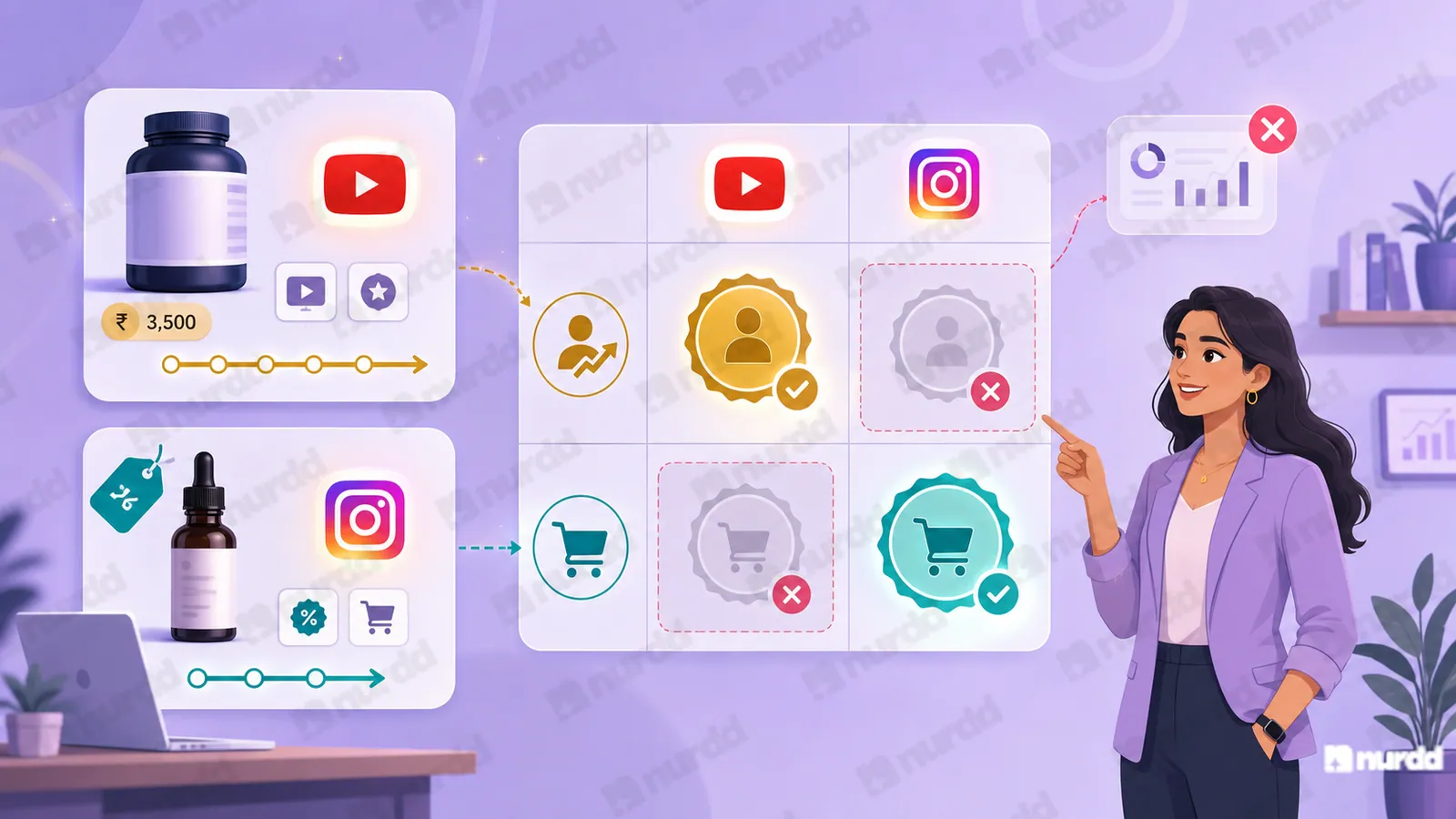
Use Instagram for campaigns where the goal is immediate purchase, limited-time offers, or driving first-time trial. Short-form emotional content with a discount code and a direct link to the product page is the format that wins here.
Use YouTube for campaigns where the goal is building consideration for a higher-consideration or higher-priced product, explaining something that needs demonstration, or establishing category authority over a longer period. A Rs.3,500 supplement, a Rs.12,000 appliance, a subscription service: these are YouTube decisions, not Instagram decisions.
The mistake is not running YouTube campaigns. The mistake is running them with Instagram expectations.
A third platform most brands underestimate
The fastest growing space for creator-driven purchase intent right now is search-embedded creator content: videos that rank on Google for product-specific queries. A creator who publishes a detailed "Is X worth it" or "X vs Y" video that shows up in Google search is capturing people actively looking to buy, not passively scrolling.
If the creator you are working with also has videos ranking on Google for category-relevant queries, factor that into how you value the partnership. It is often the most overlooked asset in a creator's portfolio.
Platform mismatch is not a creator's fault. You cannot brief for Instagram and measure on YouTube and call it a fair evaluation.
Sources & References
Think with Google: Video Purchase Intent Study India 2024 - https://www.thinkwithgoogle.com/intl/en-apac/consumer-insights/consumer-trends/india-youtube-shopping/
YouTube Creator Ecosystem Report 2024 - https://blog.youtube/news-and-events/youtube-culture-trends-2024/
Meta Advertising Insights: India D2C Vertical 2024 - https://www.facebook.com/business/industries/retail
Dentsu Digital: India Social Commerce Playbook 2024 - https://www.dentsu.com/in/en/reports

Find the right creators — and verify they're real.
Nia gives brands access to 10M+ Indian creator profiles, TruAI fake follower detection, pre-spend ROI forecasting, and product-level sales attribution. Completely free.