Last-Touch vs Multi-Touch Attribution: Which Model Is Right for Influencer Campaigns?
 25 Mar 20268 min read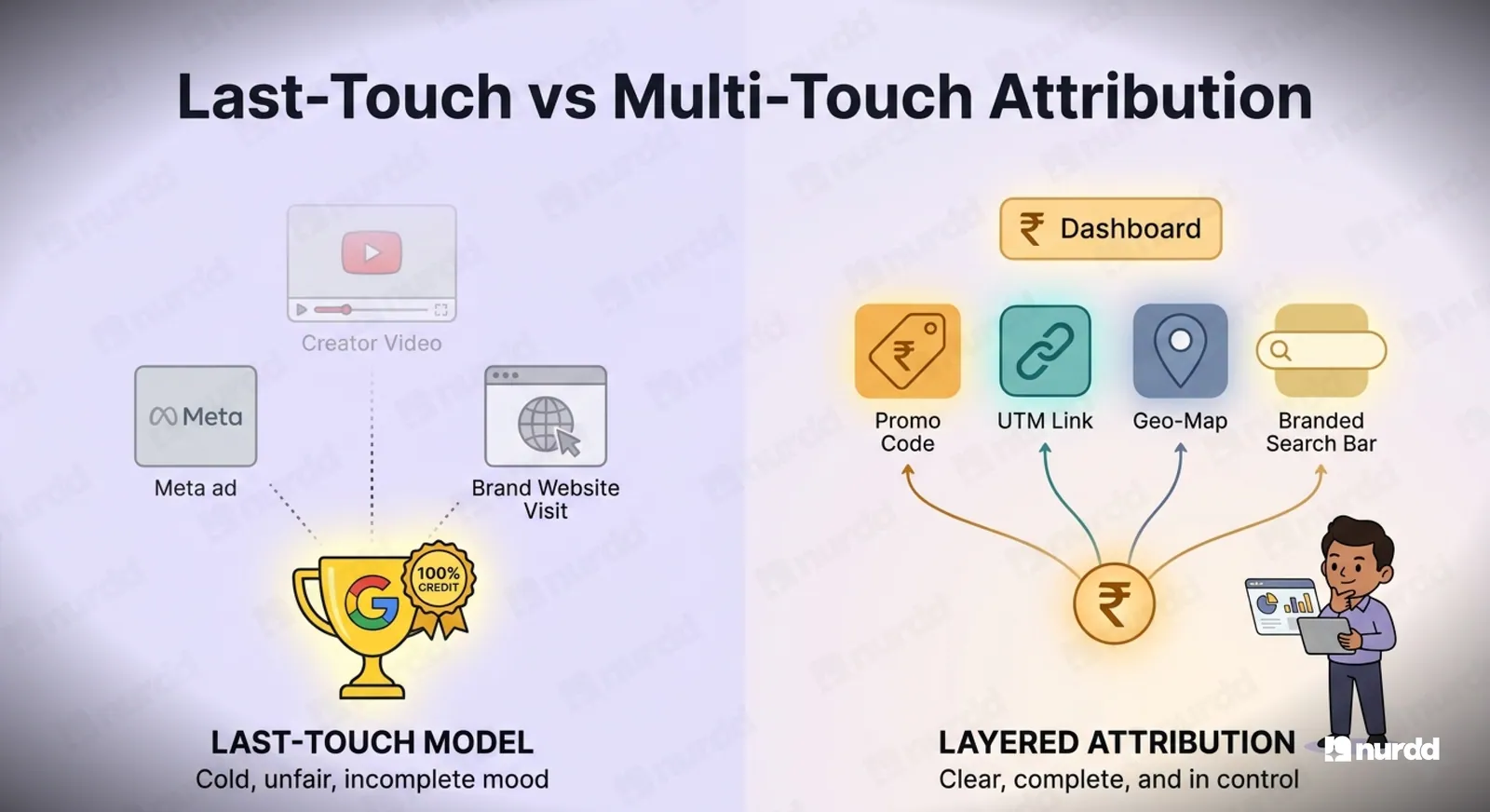
No single attribution model is right for influencer campaigns; use a layered approach rather than last-touch alone. Combine creator promo codes, 60-day UTM-assisted attribution, incrementality tests, and brand-search lift to capture direct and assisted impact.
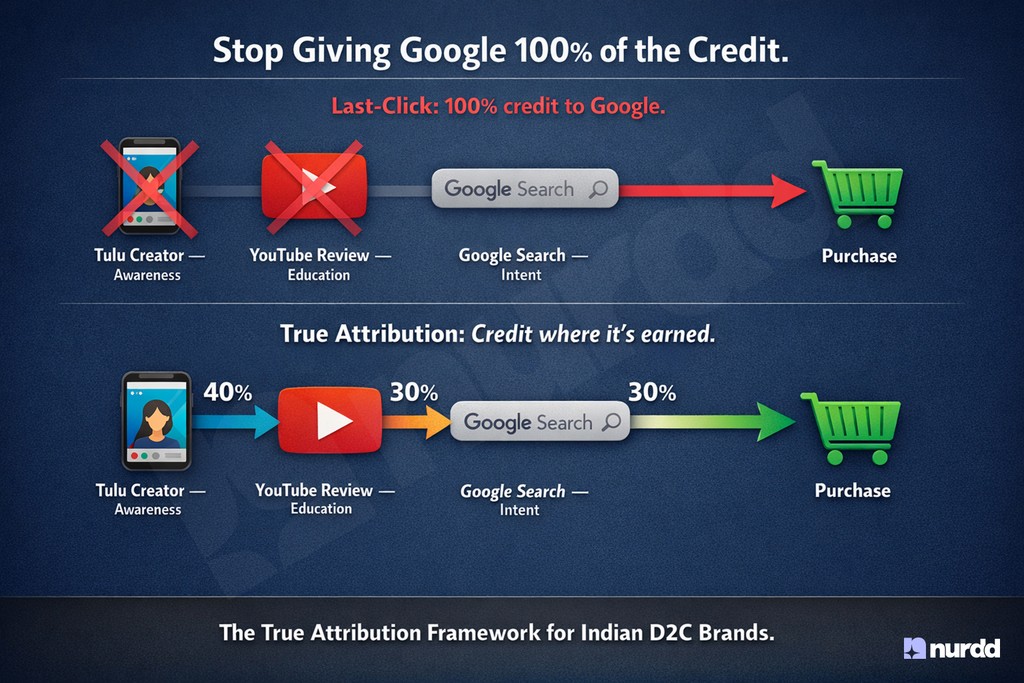
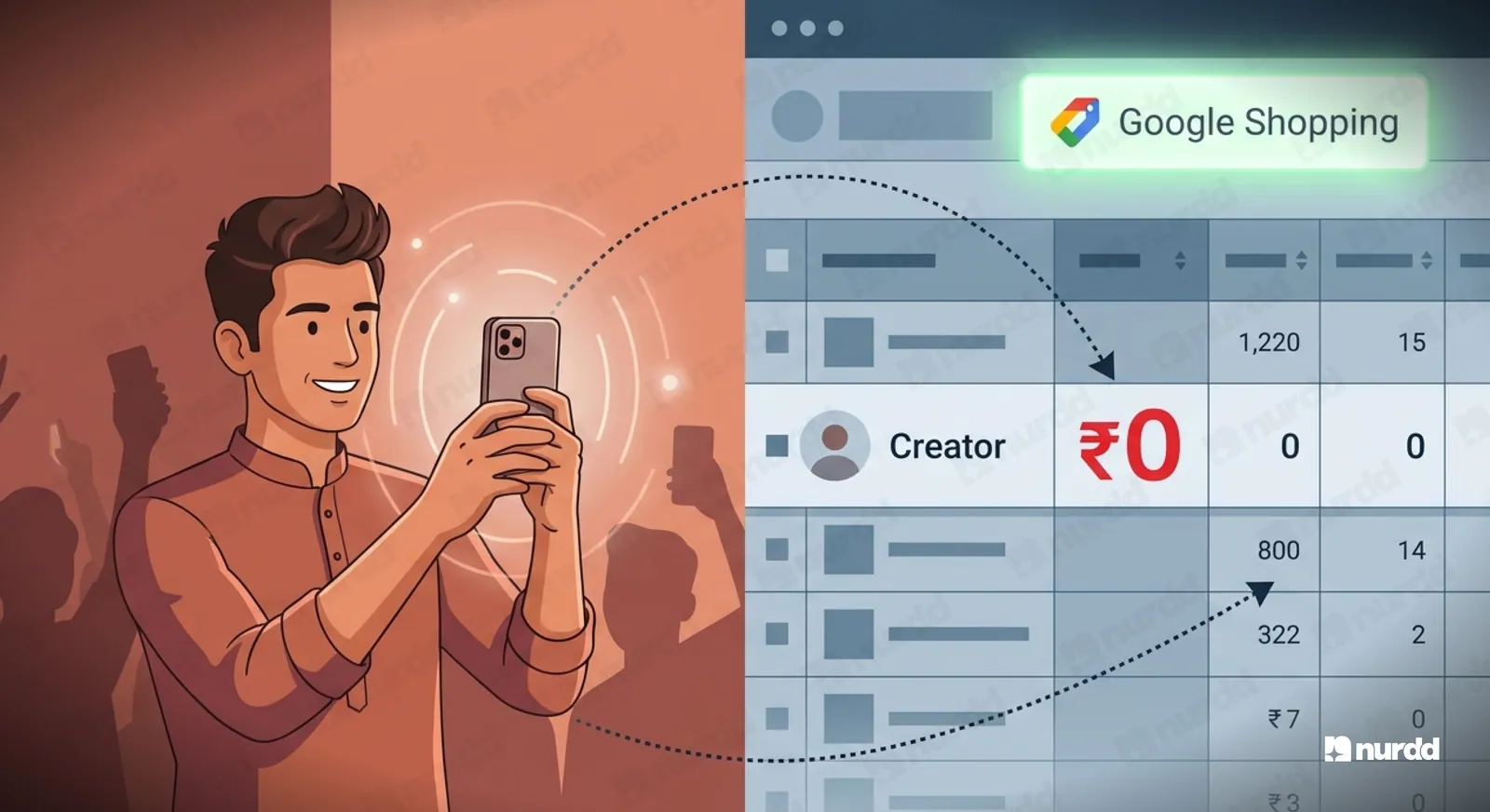
Here is a scenario that plays out inside D2C marketing teams every month. A customer discovers your brand through a creator's YouTube video. Three days later, they click a Meta retargeting ad. They check your website twice. They finally convert through a Google Shopping click.
Your last-touch attribution model credits Google Shopping with 100 percent of the revenue. The creator gets credited with zero. At the next budget review, the creator program looks inefficient and the Google budget gets increased. This is attribution model failure. It is extremely common. And it is quietly killing the ROI of influencer programs at D2C brands across India.
The Five Attribution Models You Need to Know
1. Last-Touch Attribution
All conversion credit goes to the final touchpoint before purchase. Simple to implement. Completely misleading for any brand with more than one marketing channel. When to use it: Never, as a standalone model. Last-touch was designed for single-channel marketing. Modern D2C brands with paid media, creator programs, SEO, and email running simultaneously will consistently misread their data with last-touch.
2. First-Touch Attribution
All credit goes to the first touchpoint. In theory, this rewards the channels responsible for discovery. In practice, for influencer marketing, this model overstates the creator's role in conversion and makes lower-funnel channels look useless. When to use it: When your primary KPI is awareness and you need to understand which channels drive new audience entry into your funnel.
3. Linear Attribution
Credit is distributed equally across all touchpoints in the conversion path. If a customer had six touchpoints, each gets 16.7 percent of the credit. When to use it: As a baseline reality check. Linear is not precise, but it surfaces the actual touchpoint diversity in your customer journey. If your linear model shows creators averaging 2.3 touchpoints per conversion path, that is a meaningful signal.
4. Time-Decay Attribution
Touchpoints closer to the conversion receive more credit. Touchpoints further back receive less. The decay rate is configurable. When to use it: For performance campaigns with short consideration windows, typically 7 days or less. Fast-moving consumer goods and impulse purchases fit this model. The problem for influencer marketing: creators typically work at the top of the funnel where the consideration window is long. A time-decay model will consistently undervalue creator touchpoints because they happen early in the journey.
5. Data-Driven Attribution (DDA)
Uses machine learning to assign credit based on the statistical contribution of each touchpoint to conversion, derived from your actual conversion path data. Google Ads and Meta both offer versions of this. When to use it: When you have enough conversion volume for the algorithm to learn (typically 300-plus conversions per month per channel). This is the most accurate model available for large-scale campaigns but requires clean data input to generate trustworthy outputs.
Why Influencer Marketing Gets Misread by Every Standard Model
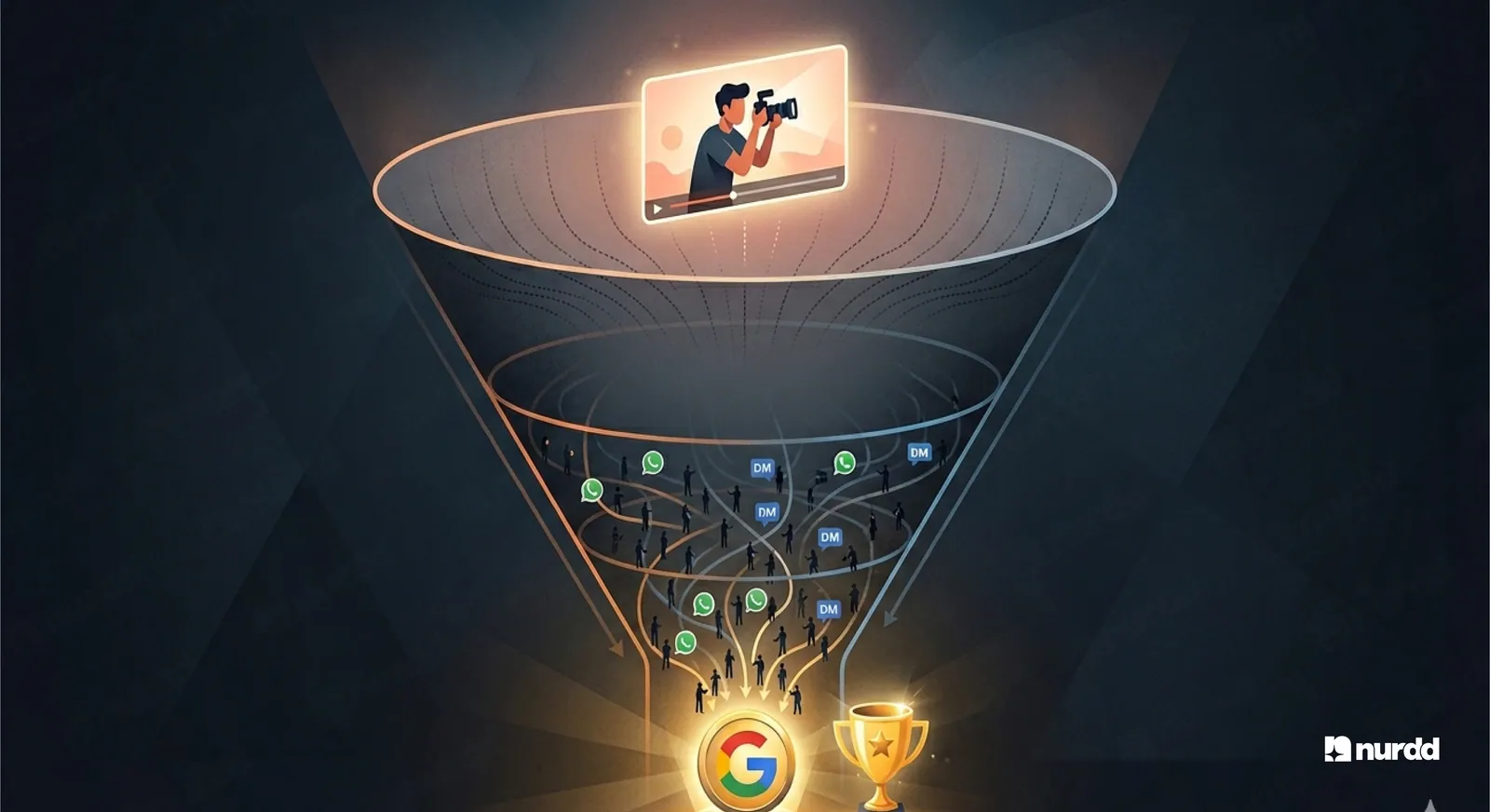
Creator marketing has three properties that break standard attribution models:
Long consideration windows
A creator's video about a protein supplement may influence a consumer who does not purchase for 45 days. Standard attribution windows of 7 to 28 days will not capture this. The creator gets zero credit even though they were responsible for the initial intent.
Dark social exposure
A large percentage of creator content is shared via DMs, WhatsApp, and Telegram before it reaches someone who buys. These shares are invisible to any attribution model. They have no UTM. They leave no cookie trail.
Assisted conversion behavior
Creators rarely close sales directly. They open doors. They create familiarity, consideration, and intent. The sale is often completed through a different channel, usually paid search, which is already capturing an already-convinced customer. Attribution models that reward closers penalize openers, and creators are openers.
The Right Framework for Influencer Attribution in 2026
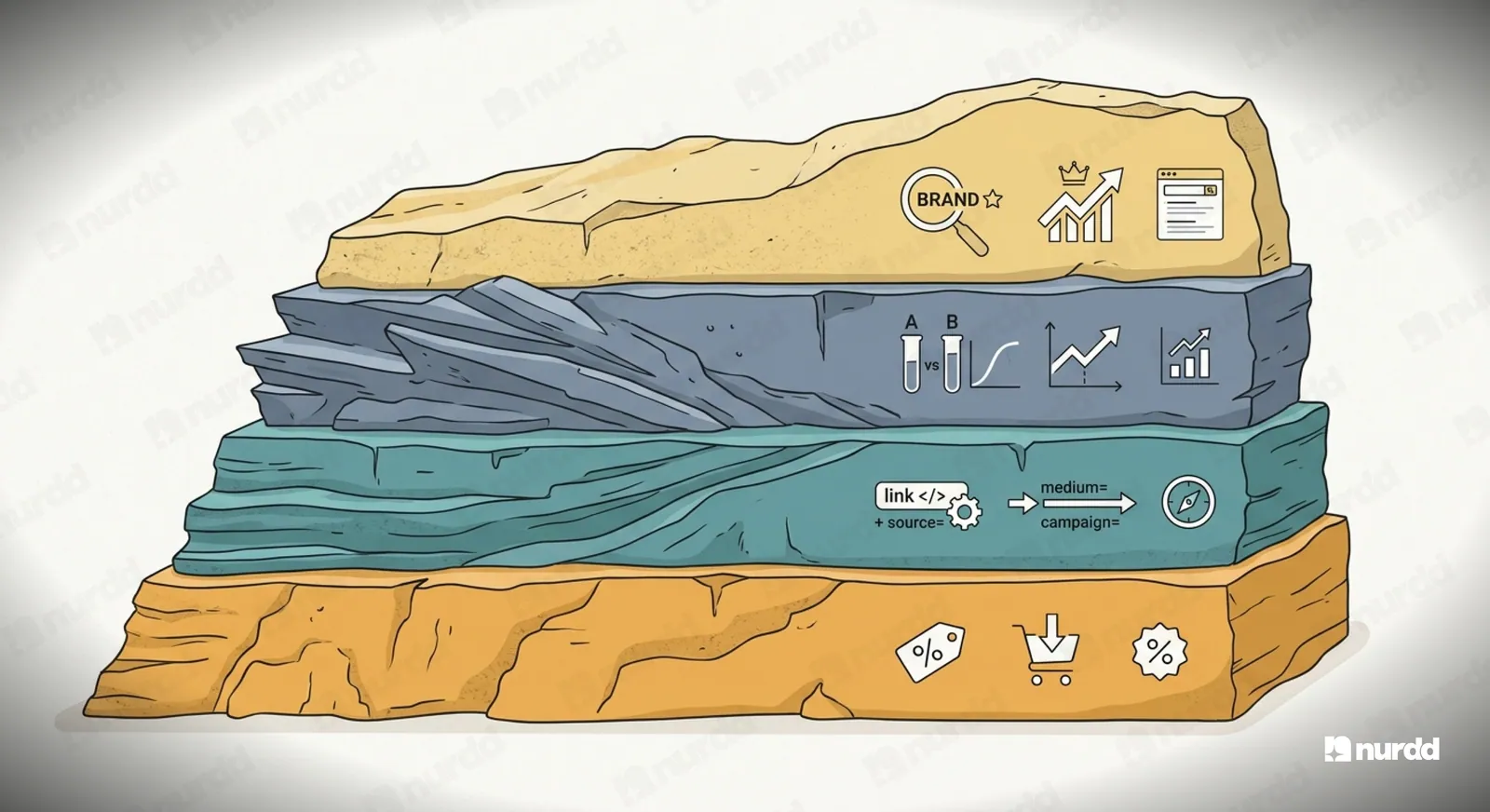
The honest answer is that no single attribution model works for influencer marketing. What you need is a layered attribution approach:
Layer 1: Creator-level promo code tracking
Each creator gets a unique promo code. Promo code redemptions give you deterministic, direct attribution. This is your hardest signal. Even if it only captures 10 to 20 percent of actual influenced purchases, it is the most defensible data you have.
Layer 2: UTM-based assisted attribution
Use UTM parameters on every creator link. Set your analytics window to 60 days, not 7. Look at the Assisted Conversions report in GA4 (Conversion paths report). Count creator touchpoints that appeared in conversion paths even when they were not the final click.
Layer 3: Incrementality testing
Run geo-holdout or audience holdout tests to measure the incremental lift from creator campaigns. This gives you attribution at the campaign level rather than the individual creator level, but it is the most statistically sound measurement of true impact.
Layer 4: Brand search lift tracking
After creator campaigns, track branded keyword search volume. A spike in brand searches in the week following a creator campaign is a reliable signal that the creator drove intent, even if the final conversion was attributed to Google.
Practical Attribution Window Settings for Creator Campaigns
• Awareness-phase campaigns (new product launch, new market entry): 60-day attribution window minimum
• Consideration-phase campaigns (product education, comparison content): 30-day window
• Conversion-phase campaigns (discount announcements, limited time offers): 14-day window
• Retention campaigns (loyalty content, brand ambassador posts): 90-day window, measured by repeat purchase rate
How to Communicate Attribution Results to Stakeholders
The CFO wants a number. They want to know the exact revenue per rupee spent on creators. The problem is that no attribution model gives you that number honestly.
What you can give them honestly:
• Direct attributed revenue: promo code redemptions and UTM-tracked conversions
• Assisted attributed revenue: creator touchpoints in multi-touch conversion paths
• Incremental revenue lift: geo-holdout test results expressed as additional revenue vs control
• Brand health indicators: search volume lift, organic traffic lift, follower growth Present all four together. Direct attribution is usually 15 to 25 percent of the true impact. If you only report direct attribution, you are systematically undervaluing your creator program.

The brands that get attribution right are not the ones using the most sophisticated model. They are the ones that use multiple models, triangulate across them, and communicate the full picture to leadership instead of optimizing for the metric that looks best in a spreadsheet.
Sources and References
Google Analytics Help (2025) – Attribution models in Analytics | support.google.com/analytics
Meta Business Help Center (2025) – About attribution settings for Meta ads | facebook.com/business/help
EY & Collective Artists Network (2025) – State of Influencer Marketing in India | ey.com/en_in
Google Analytics 4 (2025) – Conversion paths report documentation | support.google.com/analytics
Influencer Marketing Hub (2026) – Influencer Marketing Benchmark Report 2026 | influencermarketinghub.com
Seer Interactive (2025) – Attribution window analysis | seerinteractive.com

Find the right creators — and verify they're real.
Nia gives brands access to 10M+ Indian creator profiles, TruAI fake follower detection, pre-spend ROI forecasting, and product-level sales attribution. Completely free.