AI Search Visibility
Voice Search vs AI Search: What D2C Brands Actually Need to Optimise For
See how voice search differs from AI search, which queries each one serves, and where D2C brands should focus their SEO and platform efforts in 2026.
 Simran Rawat15 Apr 20266 min read
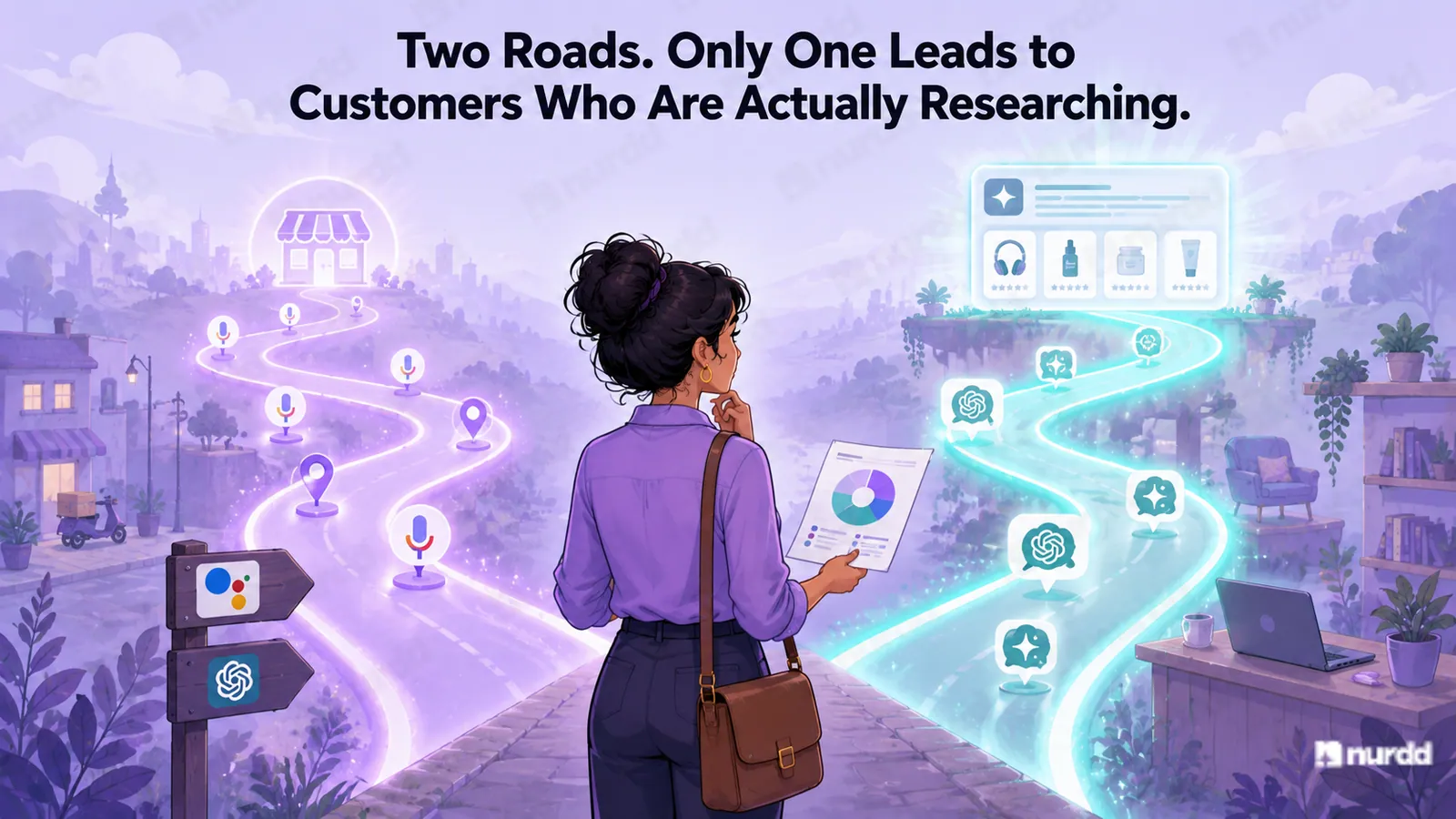
For most online-only D2C brands, optimise primarily for AI search, which captures complex purchase research and recommendations. Invest more in voice search only if you have physical retail or quick-commerce presence, or target regional-language audiences who prefer speaking to typing.
Every SEO guide from 2019 to 2022 told brands to 'optimise for voice search.' Many D2C brands invested in conversational keywords, question-format content, and local search. Then AI search arrived and made voice search look like a rounding error. These are not the same thing and they do not need the same strategy.
What Voice Search Actually Is
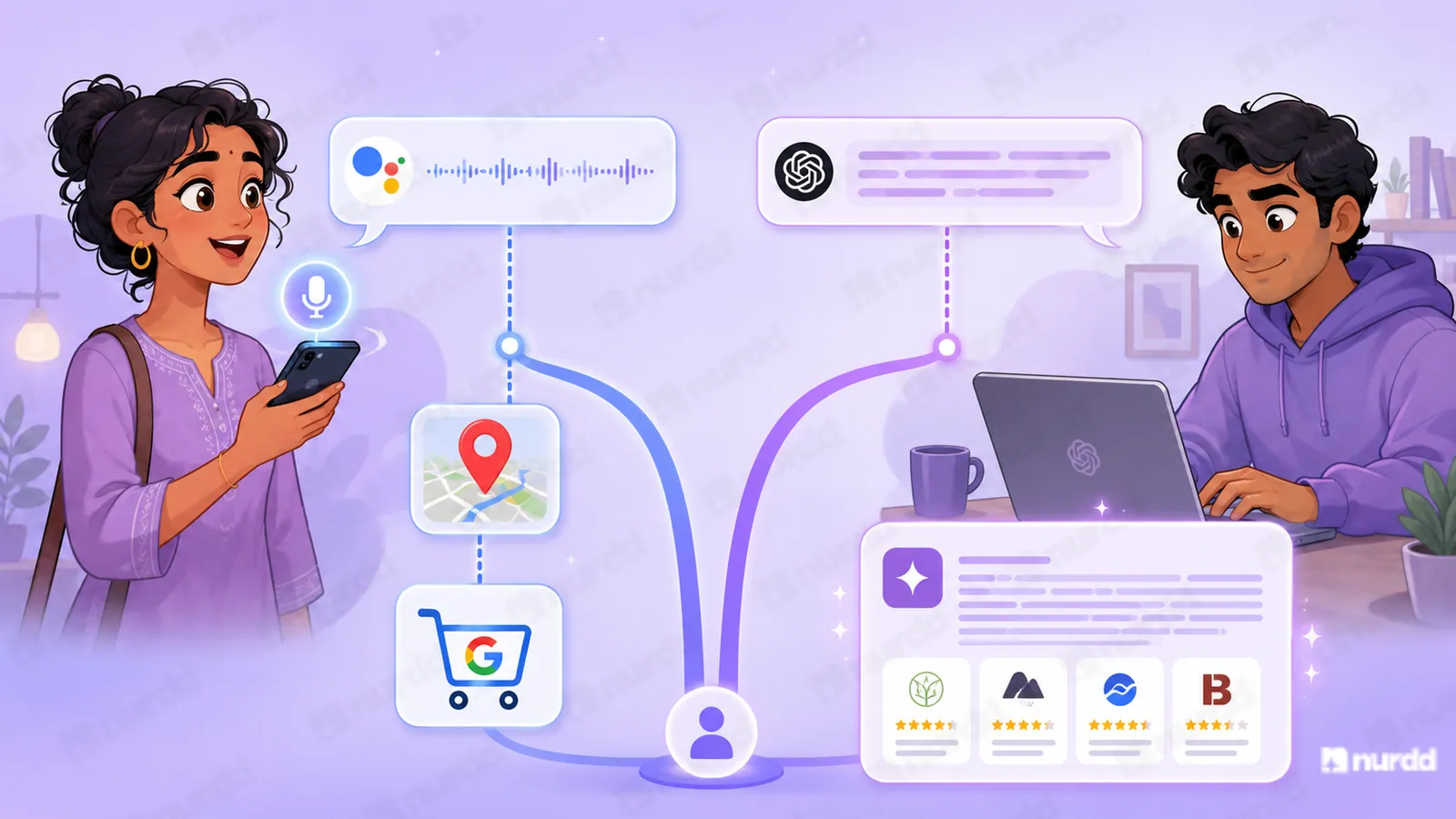
Voice search is mostly Google Assistant, Siri and Alexa queries on phones and smart speakers, often in the speaker's local language. These are short queries ('protein powder near me,' 'sunscreen under $6') driven by convenience, not research intent.
Voice search results are dominated by local SEO signals, Google My Business listings, and Google Shopping. For most D2C brands that sell online without physical retail presence, voice search is close to irrelevant. It is a local discovery mechanism for products with physical availability.
The exception: branded voice queries. 'Order X on Amazon' or 'add Y to my cart' are voice commerce actions that bypass search entirely and go straight to purchase. These require a presence on voice-commerce-enabled platforms such as Amazon, not website optimisation.
What AI Search Actually Is
AI search is research-intent, typed query behaviour on Perplexity, ChatGPT, Google AI Overview, and Gemini. A user asking 'which whey protein is best for someone trying to lose weight while building muscle' is conducting a research query: they want a considered recommendation, not a local store listing.
This is the query type where D2C brands can win or lose significant organic customer acquisition. AI search handles complex, multi-factor purchase research that buyers used to do through Google searches across multiple tabs. Now it happens in one query.
For D2C brands in beauty, health, nutrition, and home categories with high purchase research intent AI search visibility is now more important than traditional SEO for new customer acquisition.
The Optimisation Strategies Are Completely Different
Voice search optimisation: Local SEO. Google My Business completeness. NAP (Name, Address, Phone) consistency across directories. Conversational keyword targeting in the language your buyers speak.
Presence on quick-commerce apps for instant voice-commerce eligibility. AI search optimisation: Structured product page content with specific claims. FAQ schema. Top-tier publication coverage. Complete Product and Review schema. Long-form creator content with detailed product analysis. Reddit presence in relevant communities. Comparison content written from a brand-neutral perspective that still features your brand prominently.

Where to Actually Invest Your Optimisation Budget
For D2C brands without physical retail: 80 percent of your search optimisation budget should go toward AI search. Voice search will drive minimal incremental revenue for an online-only brand.
For D2C brands with physical retail or quick commerce presence: Split roughly 50-50. Voice search drives store discovery and quick commerce orders. AI search drives research-intent buyers who then purchase online.
For brands targeting regional-language audiences: Voice search deserves a higher share. Where typing in English, or typing at all, is a barrier, buyers lean on voice queries in their own language.
Noma by Nurdd covers the AI search side: it tracks your visibility across 13 AI engines (ChatGPT, Gemini, Perplexity and Claude on every plan, the rest as add-ons), asks your prompts daily and records the page behind each citation.
Voice search gets you found near a store. AI search gets you recommended at the moment someone decides what to buy. Know which one your customer is actually using.
Sources & References
· Google (2025) – Voice Search Behaviour Research | services.google.com/fh/files
· IAMAI (2025) – Digital Commerce Trends: Search and Discovery | iamai.in
· eMarketer (2025) – AI Search Adoption vs Voice Search | emarketer.com
· Statista (2025) – Voice Commerce and AI Search in Digital Markets | statista.com