Influencer Marketing
How to Tell if an Influencer's Audience Will Actually Buy Your Product (Before You Pay Them)
Use a practical pre-campaign checklist to assess an influencer's audience quality, engagement, authenticity and purchase intent before paying for a promotion.
 Sheetal Shakshi31 May 20266 min read
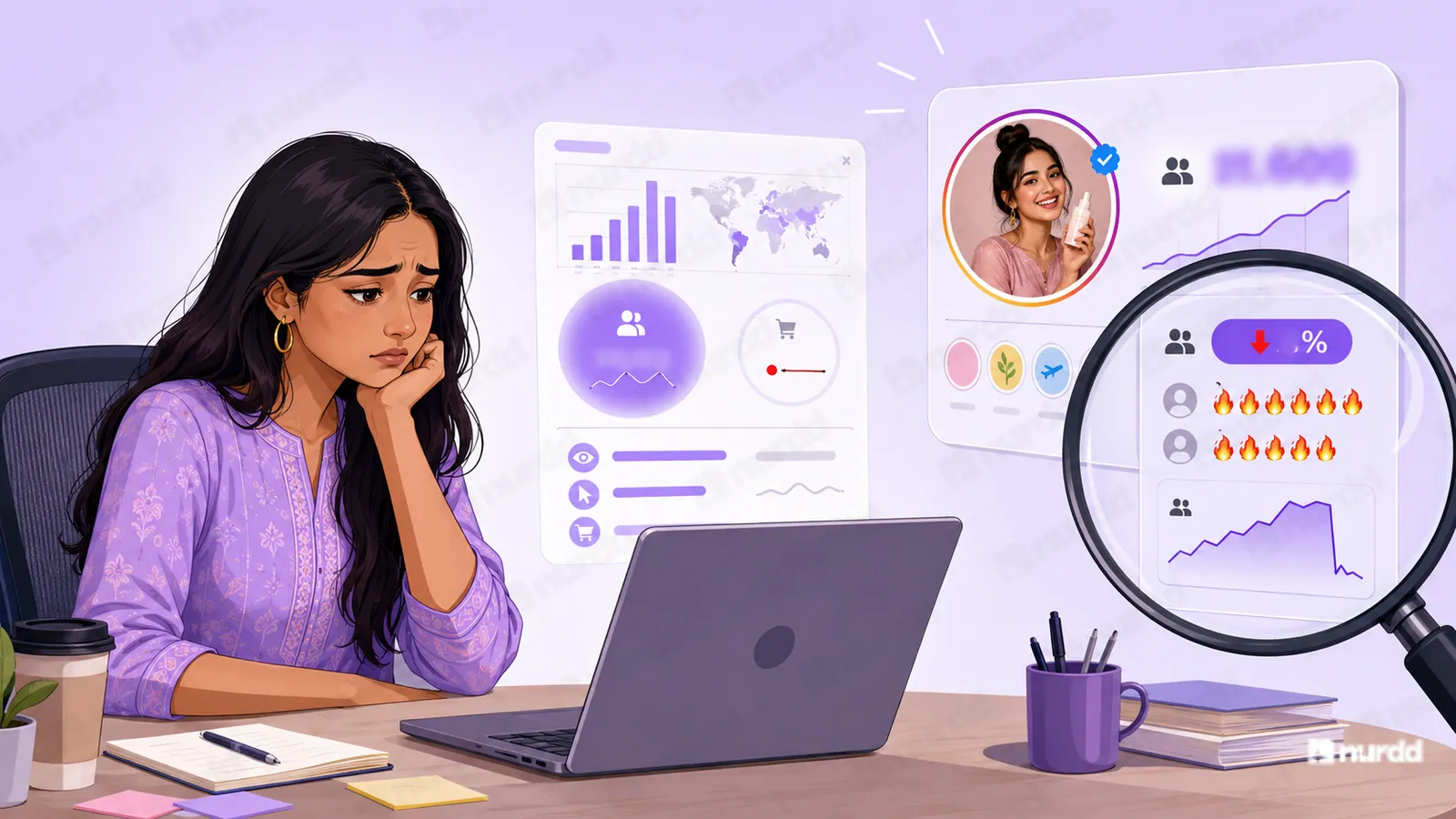
Before paying, check the creator’s engagement relative to follower count, comment quality, audience demographics, and past brand results—not just reach. Look for steady follower growth, genuine discussion, and a creator who can explain both a successful and an unsuccessful collaboration.
There is a specific kind of post-campaign debrief that happens in D2C marketing teams everywhere. The campaign manager pulls the numbers, goes quiet for a second, and then says: "The reach was good but conversions were low."
What that sentence usually means is: the brand paid for an audience that was never going to buy.
Not because the creator was dishonest. Not because the product was bad. But because nobody checked whether the creator's followers were actually the brand's customers.
Follower count is not audience quality
This feels obvious when said out loud. But look at how most influencer deals are structured: a rate card based on followers, a few posts, and a hope that the numbers translate to sales.
The follower count tells you the ceiling of possible reach. It tells you nothing about purchase intent, income level, age bracket, or whether those followers are even real people. A creator with 800,000 followers and 1.2% engagement is a very different media buy from a creator with 80,000 followers and 9% engagement. The second one almost always delivers better campaign outcomes.
Four signals that actually tell you something useful
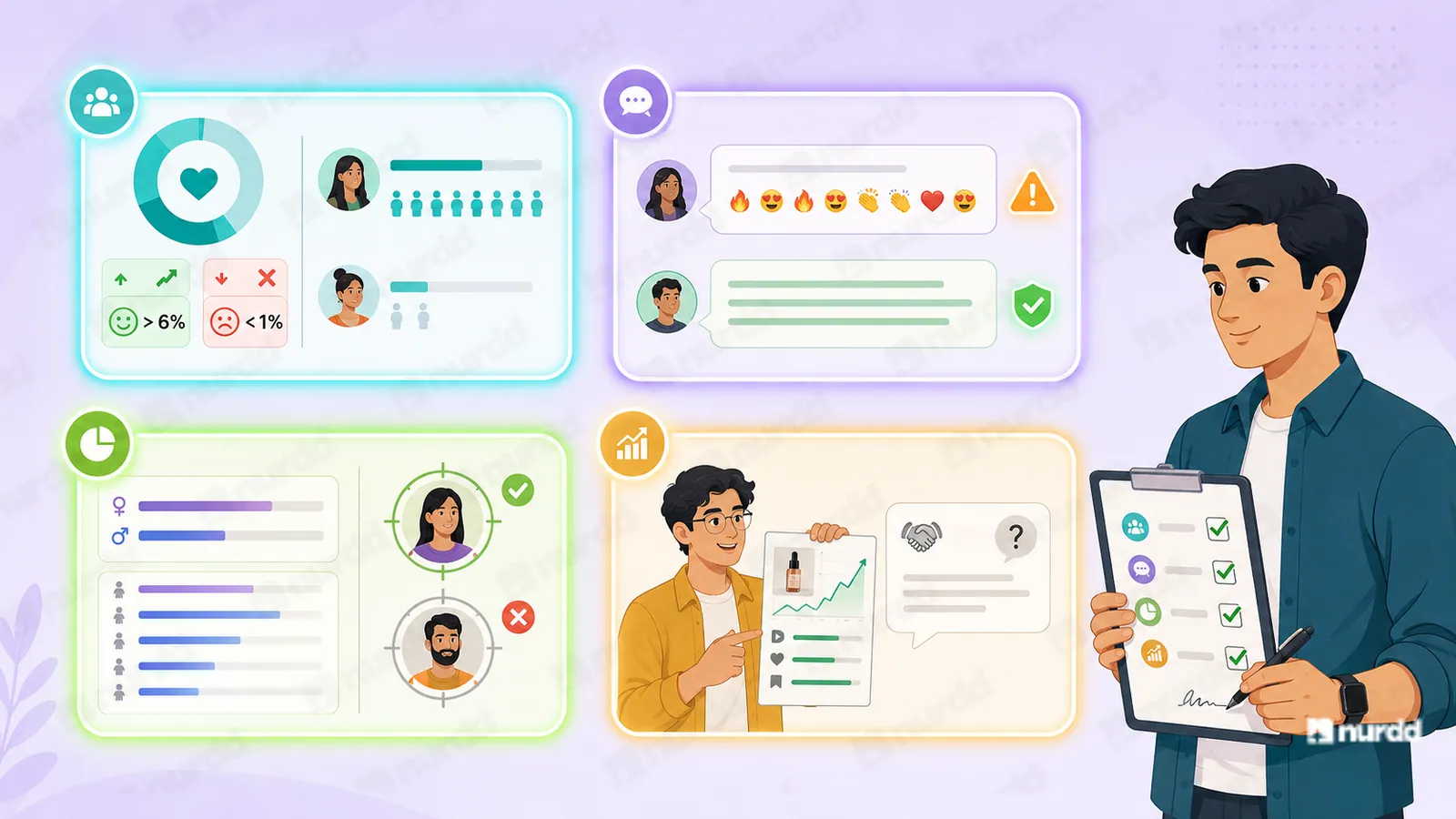
Before paying a creator, you want to look at four things.
Engagement rate relative to follower count is the first one. Compare it against benchmarks for the creator's platform, tier and market. Anything above 6% on a consistent basis suggests a genuinely active community. Anything under 1% should prompt serious questions.
Comment quality is the second signal. Open the last three posts and read the comments. Are they full of generic emoji reactions and single-word comments? That pattern often indicates purchased engagement or a passive audience. Genuine comments mention specific things from the post, ask questions, or share personal reactions.
Audience demographic overlap is the third. Most creators with over 10,000 followers can share an Instagram Insights screenshot showing audience age, gender, and city breakdown. If you sell premium baby products and the creator's audience is 68% male between 18 and 24, that is useful information to have before the invoice arrives.
Past brand performance is the fourth. Ask the creator directly: what is the best-performing brand collaboration you have done in the last six months and what results can you share?
The red flags that get ignored far too often
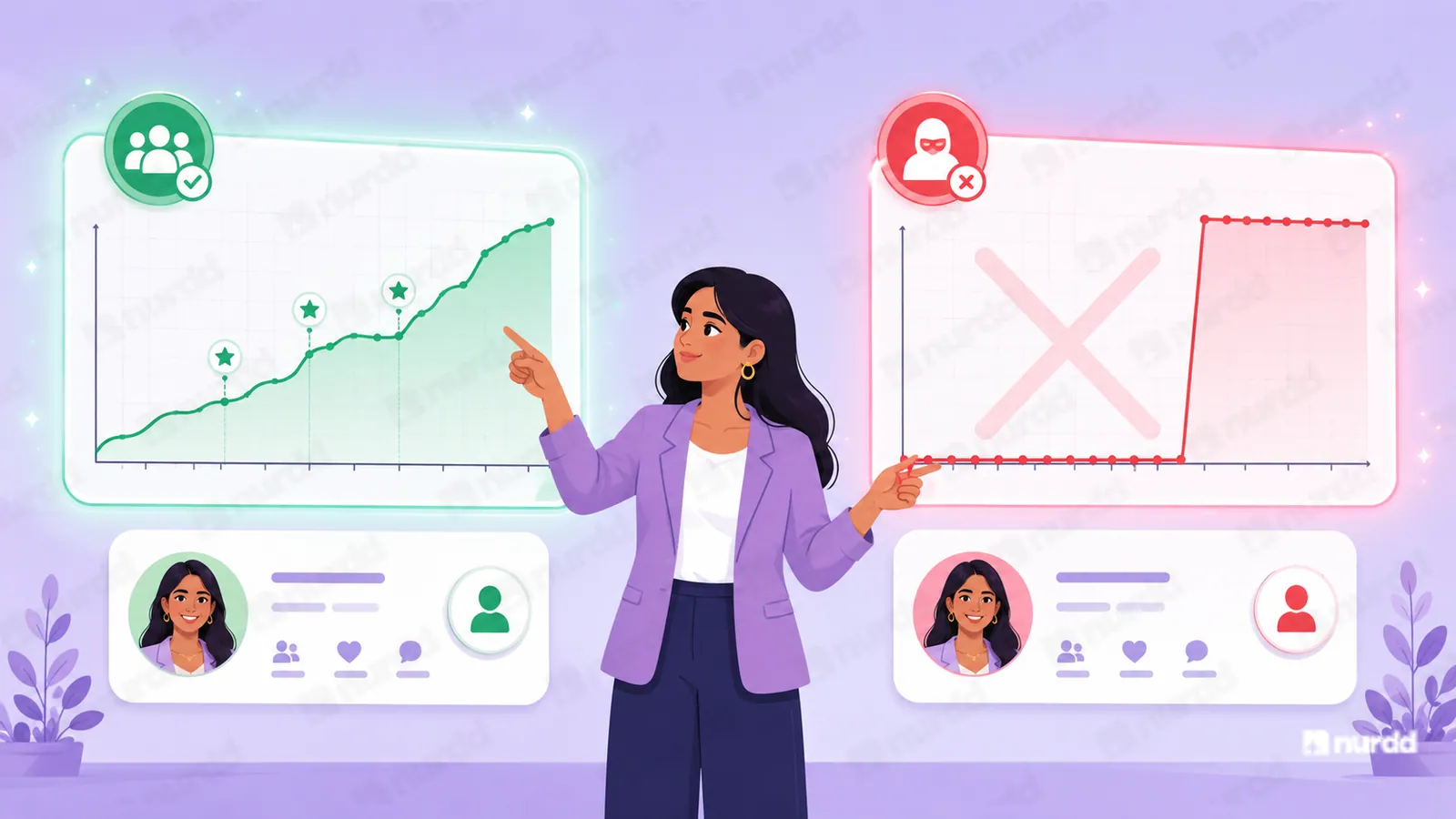
Sudden follower spikes on an otherwise flat growth chart are one of the most reliable warning signs available. Pull a creator's follower growth history using any basic social analytics tool. Organic growth looks like a gradual slope with occasional bumps after viral posts. Purchased followers look like a cliff face: flat, then vertical, then flat again.
Engagement that disappears the moment a brand deal appears is another. Some creators have audiences that engage actively with personal content and scroll past brand integrations entirely. This is not fraud. It is a very common pattern and it means the creator's audience trusts them personally but does not follow their product recommendations.
One question that separates good creator partners from everyone else
Ask any creator you are considering: "Can you tell me about a time a brand collaboration did not perform the way you expected, and what you think caused it?"
A creator who has been doing this long enough to have a thoughtful answer to that question is a creator who understands their audience, reflects on their own work, and will flag potential mismatches before you sign rather than after. That quality is worth more than an extra 50,000 followers.
Reach without relevance is just noise. The best creator partnerships are not found in rate cards. They are found in comment sections.
Sources & References
Statista: Influencer marketing statistics — statista.com
HypeAuditor: Influencer benchmark report 2024 — hypeauditor.com
Social Samosa: State of influencer marketing 2024 — socialsamosa.com
Advertising standards guidelines for social media influencers (2023) — guidelines