What Happens to Your Brand When an Influencer You Paid Gets Cancelled
 29 May 20266 min read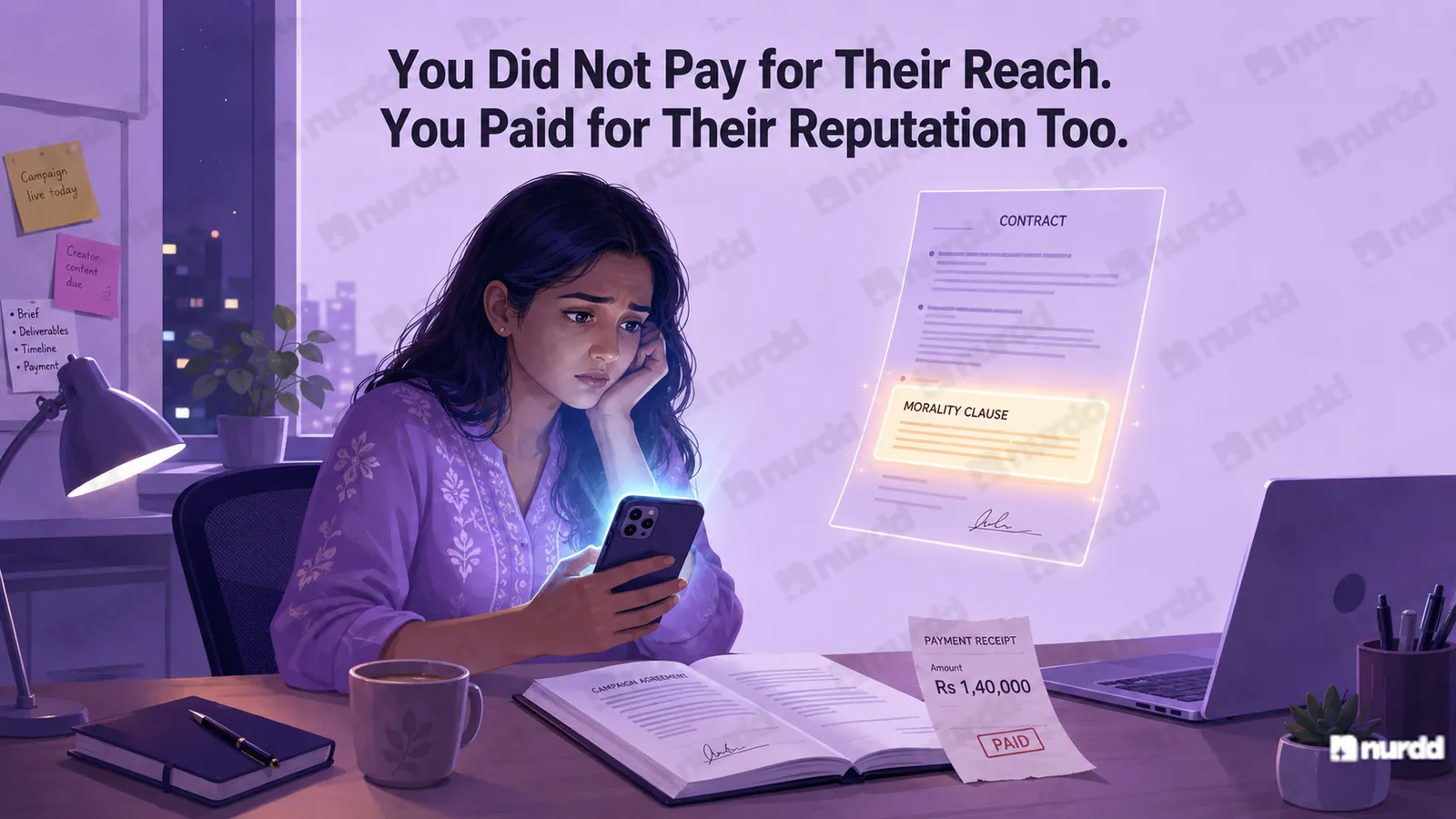
Your brand can be pulled into the controversy, face public criticism, and lose control of the campaign. Pause active promotion, monitor the situation for 24 to 48 hours, and respond only if directly implicated or silence suggests endorsement; a morality clause can provide a termination and content-removal option.
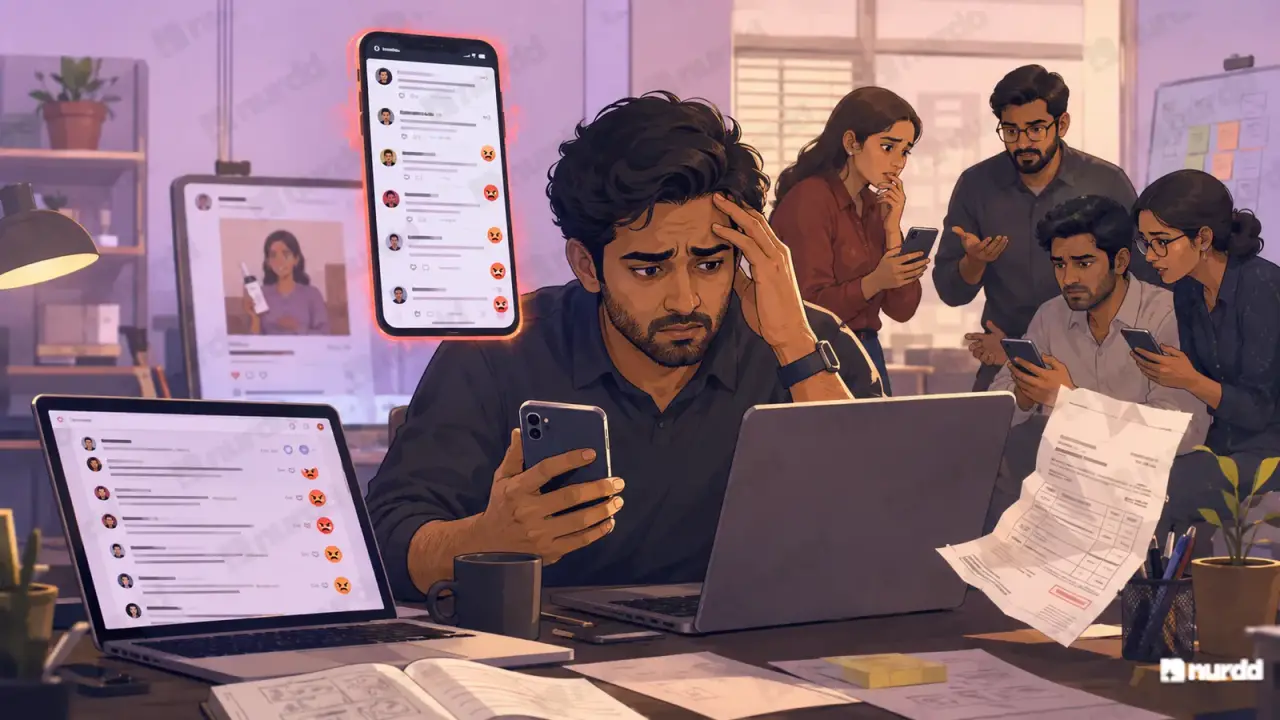
In early 2024 a mid-sized Indian skincare brand woke up to their campaign creator trending on Twitter for all the wrong reasons. Within six hours the brand's own comments section was full of people asking why they were still associated with this person. By afternoon the founders were in a crisis call. By evening they had quietly unpublished the campaign posts.
The creator had half a million followers. The brand had paid Rs.1.4 lakh for a campaign that had gone live five days earlier. The question everyone was asking internally was: could this have been avoided?
Sometimes yes. Sometimes no. But in almost every case, the brand was not prepared either way.
The risk nobody prices into the influencer deal
Brand safety risk is real and it is growing as creator culture in India matures and audiences hold creators to higher standards. But it is almost never factored into campaign decisions beyond a brief scan of the creator's recent content.
A creator's values, public behaviour, community controversies, and personal track record are part of what you are buying when you associate your brand with them. Most brands evaluate creative fit and audience demographics. Very few do any structured due diligence on the creator as a person.
What to check before the contract is signed
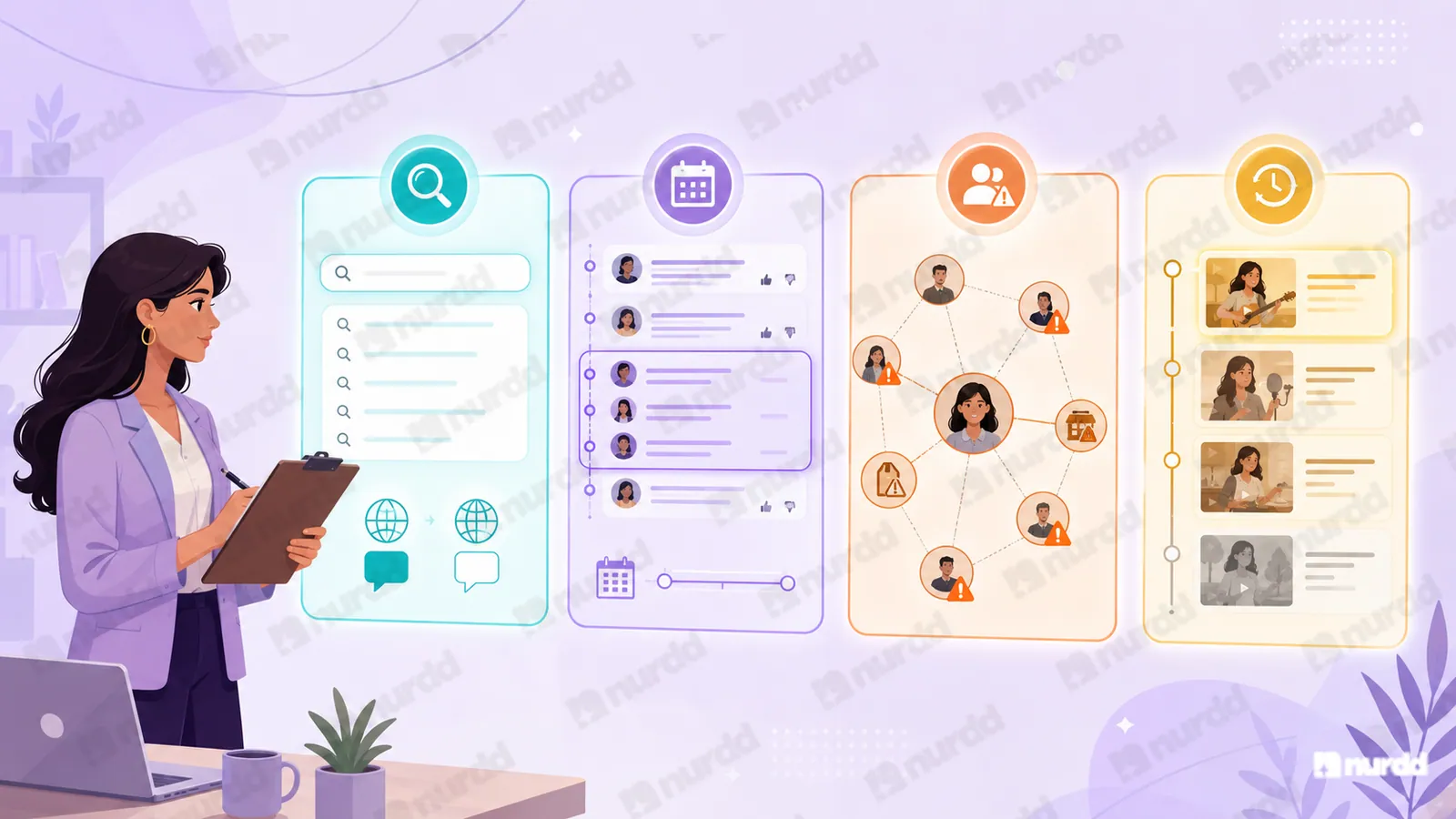
Search the creator's name alongside words like "controversy," "called out," "problematic," "cancelled" in English and Hindi. Read their comment sections on posts from 6 to 12 months ago, not just recent ones.
Check if they have been involved in any public disputes with other creators, brands, or communities. Look at their oldest content to understand what they stood for before brand deals became their primary income.
What to do when a controversy breaks mid-campaign
The first instinct is to delete everything immediately. This is almost always wrong.
A sudden deletion confirms awareness and looks like guilt by association. If the controversy is genuinely serious and your brand has a clear position, a quiet pause in promoting the content is appropriate while you assess. If the controversy is minor, manufactured, or contested, acting hastily signals that you will respond to any social pressure, which invites more of it.
The right sequence is: pause active promotion of the content, monitor how the situation develops over 24 to 48 hours, and issue a response only if your brand is directly implicated or if silence is being interpreted as endorsement of something your brand actively opposes.
The contract clause most brands forget to include
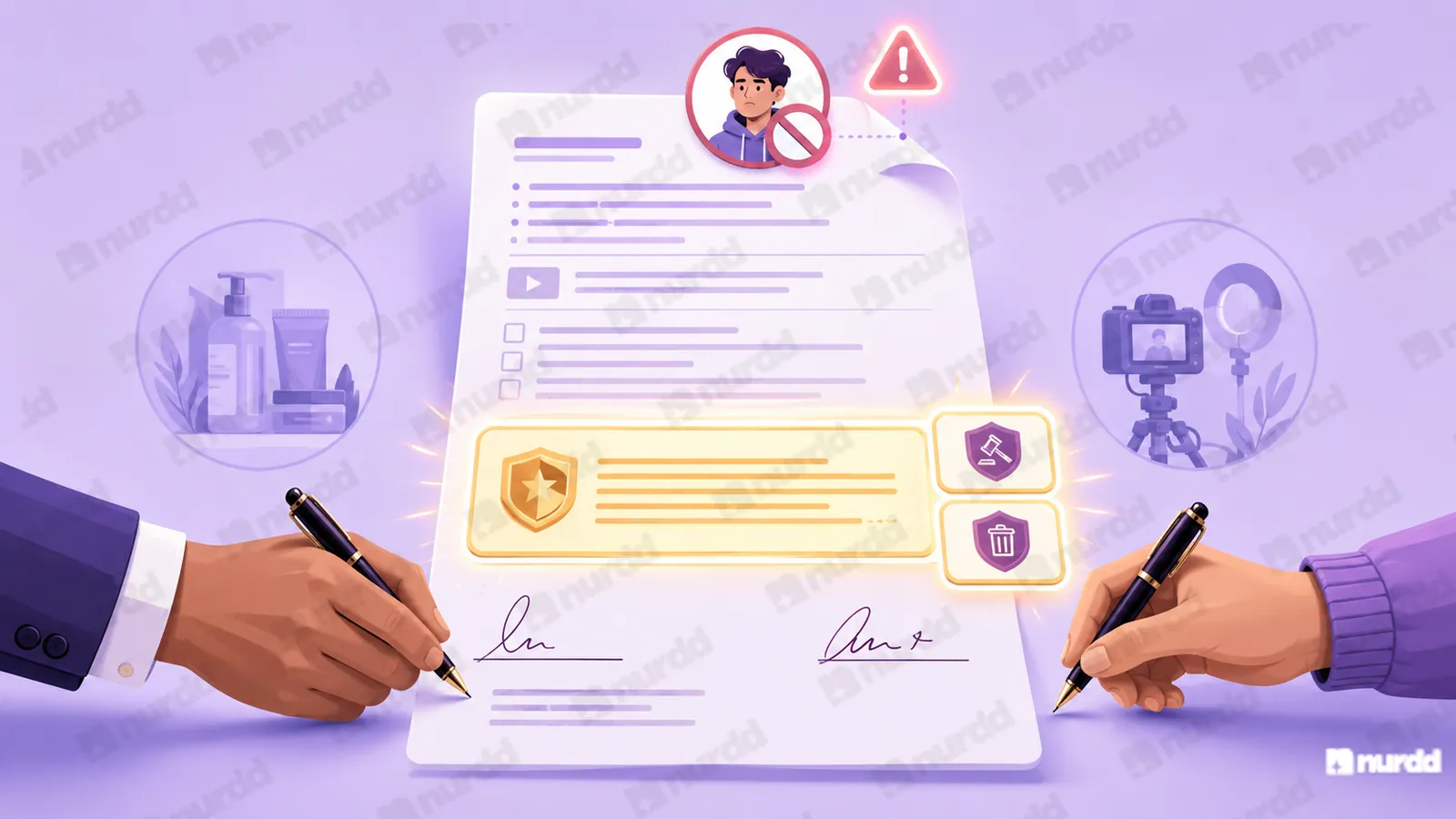
A morality clause is standard practice in professional influencer contracts and widely ignored by Indian D2C brands in mid-tier creator campaigns. This clause gives the brand the right to terminate the partnership and request content removal if the creator engages in behaviour that materially damages the brand's reputation.
It does not need to be a long clause. It needs to be present. A creator who refuses to sign a reasonable morality clause is giving you information before you pay them.
Brand safety is not about avoiding creators. It is about treating a creator partnership with the same due diligence as any other brand decision.
Sources & References
ASCI Guidelines: Influencer Accountability and Brand Safety 2024 - https://www.ascionline.in/asci-guidelines-for-social-media-influencers/
IAMAI: India Digital Advertising Report 2024 - https://www.iamai.in/research-reports
Harvard Business Review: Brand Crisis Management in the Creator Economy - https://hbr.org/2023/06/how-brands-should-respond-to-influencer-controversies
Social Samosa: Influencer Controversy Case Studies India 2024 - https://www.socialsamosa.com/influencer-marketing-ind

Find the right creators — and verify they're real.
Nia gives brands access to 10M+ Indian creator profiles, TruAI fake follower detection, pre-spend ROI forecasting, and product-level sales attribution. Completely free.