The Meta Ads Learning Phase Is Lying to You. Here's What It Actually Means.
 9 Jun 20266 min read
The learning phase is Meta gathering enough conversions to deliver an ad set stably, not a promise that results will improve. It generally ends around 50 conversions per ad set per week. Pausing during it wastes the spend already invested; excusing a genuinely poor campaign as still learning wastes more.
Every performance marketer in India has had this conversation. A campaign launches, results are inconsistent in week one, and someone from leadership asks why the numbers look erratic. You explain that the campaign is in the learning phase. They nod. Nobody fully understands what that means. The campaign gets paused three days later because the ROAS "isn't there yet."
The learning phase is one of the most misunderstood concepts in Meta advertising, and the misunderstanding consistently costs brands money. Sometimes by causing them to wait too long. More often by causing them to intervene too early.

What the learning phase actually is
When a new ad set launches on Meta, the delivery system has no data about which users within your target audience are most likely to take the action you are optimising for. The learning phase is the period during which Meta's algorithm collects that data and starts making informed delivery decisions.
The official trigger to exit the learning phase is 50 optimisation events within the ad set in a 7-day period. For most campaigns optimised for purchases, this means 50 purchases. That number is higher than most brands expect. If your product costs Rs.1,800 and your CVR is 1.5%, you need roughly Rs.6,000 to Rs.8,000 per day of spend to hit the learning phase threshold within seven days. Campaigns spending less than this will stay in learning, or exit it very slowly, which is why you see "Learning Limited" status on lower-budget ad sets.
The lie inside the learning phase narrative
Here is the part Meta does not explain clearly: the learning phase never fully ends.
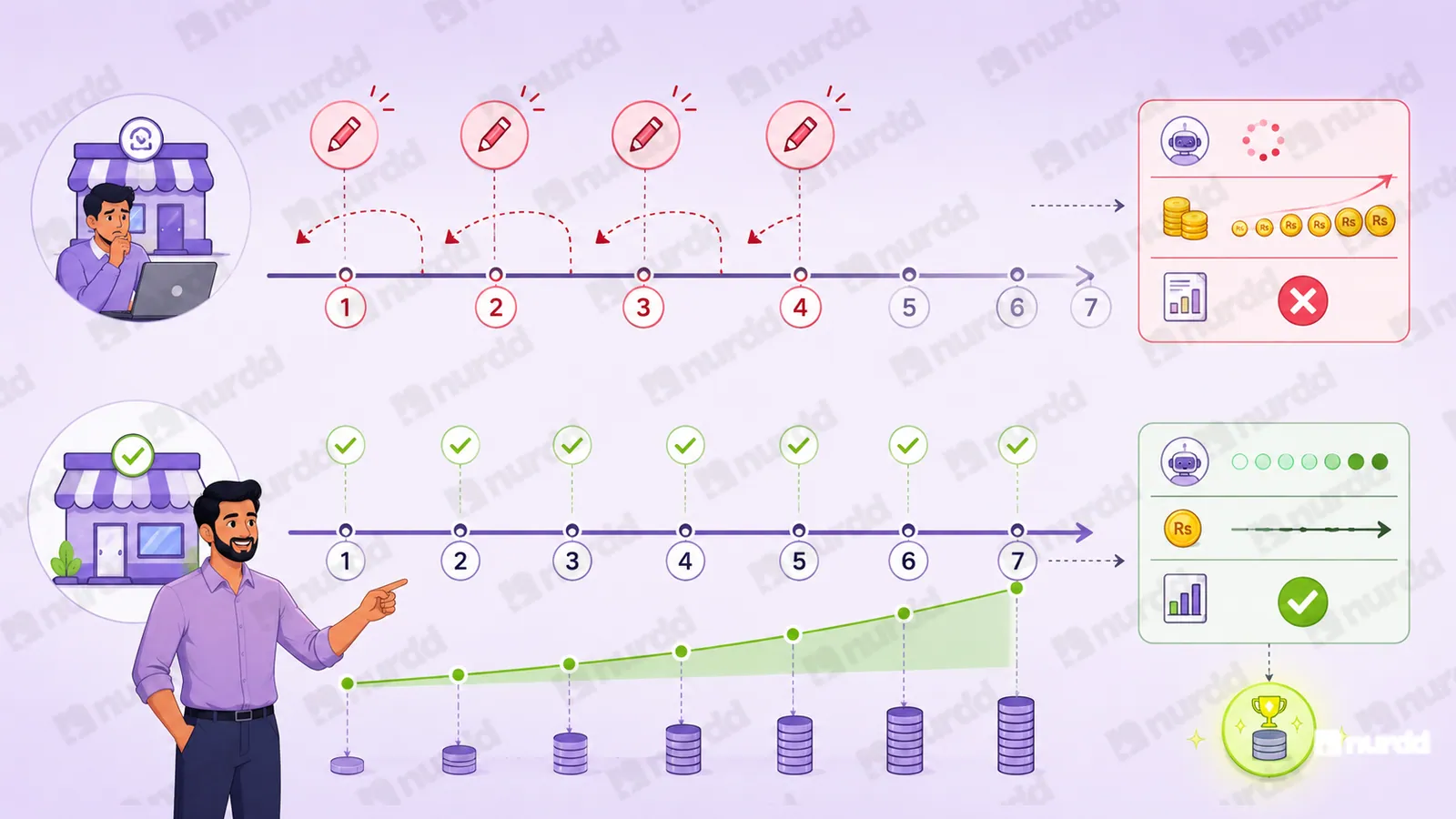
After an ad set nominally "exits" learning by hitting 50 events, it continues to refine delivery in a steadier state with more data. Any significant edit to the ad set, whether a budget change of more than 25%, a new creative, an audience modification, or a bid adjustment, resets a portion of that learning. The ad set re-enters the learning phase.
This is why brands that make constant small changes to campaigns based on daily results often have campaigns that are perpetually in some form of learning. The algorithm never stabilises because the inputs keep changing.
When to let it run and when to actually worry
The learning phase should concern you if you have genuinely poor performance indicators across a full seven days of spending at adequate volume. One bad day, two bad days, or high CPMs in the first 48 hours are normal learning-phase behaviour, not signal that the campaign is broken.
You should actually intervene when the campaign has been running for seven or more days, has hit or exceeded the 50-event threshold, and is still delivering results significantly below your target metrics. That is a creative problem, an audience problem, or an offer problem. Not a learning-phase problem.
The practical rule for most Indian D2C brands
Set your budget, define your creative and audience clearly, launch, and do not touch the ad set for seven full days unless spend is dramatically above projections.
Once you exit learning, group your creative testing into batches rather than making individual changes every two days. Test new creatives by duplicating the ad set rather than editing the live one. This preserves the learning data in your baseline while gathering new signals from the test.
The learning phase is not an obstacle. It is a data-gathering contract with Meta's algorithm. Honour the terms and you get useful data. Break them early and repeatedly, and you pay for the same learning over and over again.
The learning phase is not asking for your patience. It is asking you to trust data over anxiety.

Sources & References
Meta Business Help Center: About the Learning Phase – https://www.facebook.com/business/help/112167992830700
Jon Loomer Digital: Meta Ads Learning Phase Deep Dive – https://www.jonloomer.com/facebook-ads-learning-phase/
Disruptive Advertising: Meta Ads Learning Phase Guide – https://disruptiveadvertising.com/paid-media/facebook/facebook-ads-learning-phase/
Social Media Examiner: Facebook Ads Algorithm Explained 2024 – https://www.socialmediaexaminer.com/how-the-facebook-algorithm-works/

Your ads are spending. Are they actually performing?
Pulse connects to Google Ads and Meta Ads to explain performance in plain language, diagnose what changed, and recommend specific actions — no data analyst needed.