How to Use a Creator Marketing Platform to Track Which Influencer Actually Drove the Sale
 17 Jul 20267 min read
Every brand running influencer campaigns knows the feeling. The post went live, the views came in, the comments looked great and then you opened Shopify and had no idea which of those three creators actually drove the spike. A creator marketing platform is supposed to fix this. Most of them don't. Here's what to look for in one that does.

Why Most Brands Still Can't Answer 'Which Creator Drove That Sale'
The honest answer is infrastructure. Most D2C brands running influencer campaigns in India are still operating with a mix of WhatsApp messages, Google Sheets, and manually created UTM links that half the creators don't bother using. By the time the campaign is over, the data is scattered across four platforms and three team members' inboxes.
A creator marketing platform is supposed to consolidate this one place where creator contracts, content approvals, UTM links, and performance data all live together. The problem is that most platforms stop at the content management layer. They tell you how many views a post got. They do not tell you how many sales it drove.
The brands that have solved this problem are using platforms that go one step further: connecting creator content directly to purchase data via pixel tracking, UTM attribution, and post-purchase survey data. That last-mile connection between creator post and customer checkout is what separates a creator marketing platform from a glorified spreadsheet.
What a Creator Marketing Platform Should Actually Do
Discovery with buying-signal filters
Finding creators is not the hard part. Finding creators whose audience actually buys products like yours is. The right platform filters by audience purchase behaviour, not just follower count or engagement rate. A creator with 40,000 followers whose audience has purchased from similar D2C brands in the last 90 days is worth ten times a creator with 400,000 followers and no purchase intent data.
Automated UTM generation per creator
Every creator in every campaign should get a unique, auto-generated UTM link. This removes human error from the attribution chain and ensures that every click from every creator's post is tracked back to the right source. No more manually building UTM strings in a spreadsheet and hoping the creator uses the right one.
Revenue attribution, not just click attribution
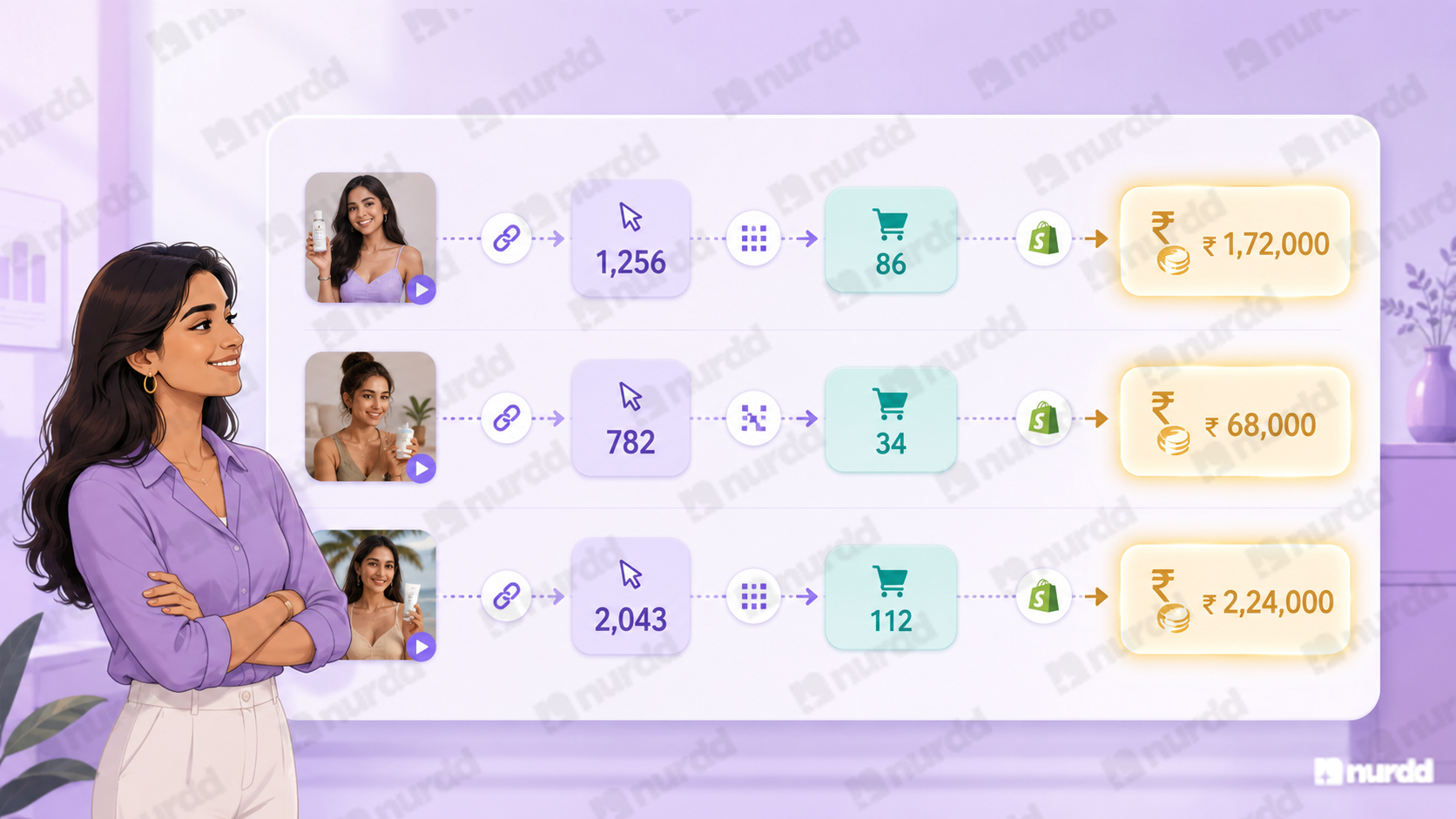
The platform should connect clicks to purchases, not just report clicks. If a creator drove 3,000 clicks and Rs 2,40,000 in revenue, that number should be visible in the platform — not something you have to calculate yourself by cross-referencing Google Analytics and Shopify.
The Metrics That Actually Tell You if a Creator Is Worth Paying Again
Cost per acquired customer, not cost per click
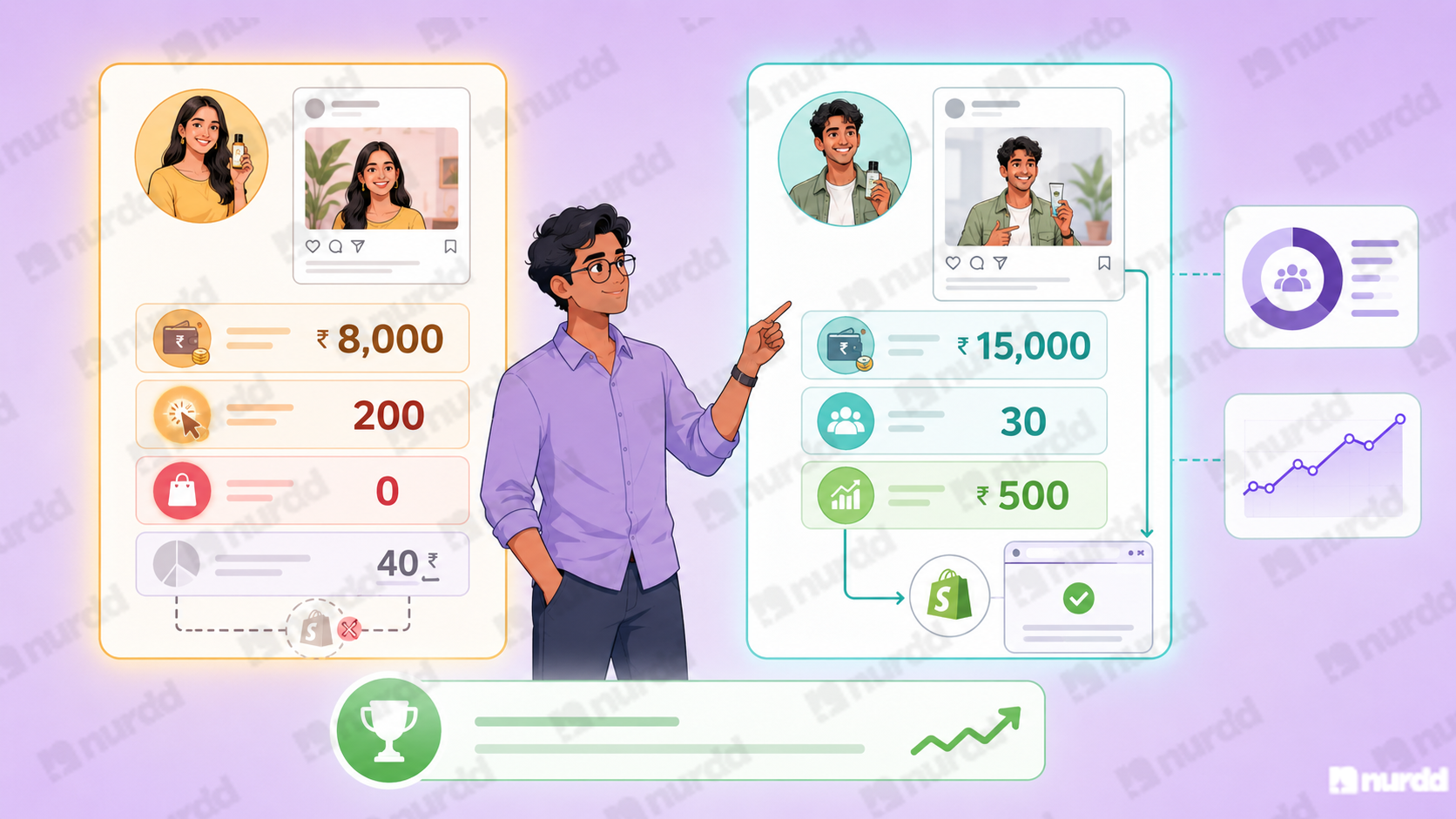
A creator whose posts cost Rs 15,000 and drove 30 new customers at Rs 500 CAC is worth far more than a creator whose posts cost Rs 8,000 and drove 200 clicks with zero purchases.
New customer ratio
What percentage of the customers that creator brought in were new to your brand? A creator who consistently re-activates your existing customers is doing a different job than one who brings genuinely new buyers. Both have value but you should be paying different rates and setting different success metrics for each.
Revenue per post over time
Track each creator's revenue per post across multiple campaigns. The ones whose revenue per post is growing whose audience is warming to your brand over time are the ones worth building long-term partnerships with.
How Nia Handles This
Nia is Nurdd's creator intelligence platform built specifically for Indian D2C brands. It connects creator content to purchase data via UTM tracking and pixel attribution, shows revenue per creator per campaign, filters creator discovery by audience purchase behaviour, and auto-generates unique tracking links for every activation.
The goal is simple: by the time a campaign ends, you should be able to open one screen and see exactly which creator drove which revenue. No spreadsheet reconciliation. No guessing.
Views don't pay salaries. Revenue does. Stop measuring your influencer campaigns like it's 2019 and start tracking what actually ends up in your account.
Sources & References
Meta Business (2025) – Influencer Attribution: Connecting Creator Content to Purchase Data | business.meta.com
RedSeer Consulting (2025) – Influencer Marketing Technology Landscape India | redseer.com
Inc42 (2025) – Creator Economy India: Revenue Attribution Report | inc42.com
Shopify India (2025) – Influencer Campaign Tracking Best Practices | shopify.com/in/blog

Find the right creators — and verify they're real.
Nia gives D2C brands access to 10M+ Indian creator profiles, TruAI fake follower detection, pre-spend ROI forecasting, and product-level sales attribution. Completely free.