Influencer Campaign Management Software vs Doing It Manually: An Honest Comparison for Indian D2C Brands
 19 Jul 20266 min read
Every Indian D2C founder who has run more than five influencer campaigns simultaneously knows what manual management actually costs. It costs a full-time team member's time, a weekly reconciliation meeting nobody enjoys, and a persistent feeling that the data you are looking at is slightly wrong. Influencer campaign management software promises to fix all of this. Sometimes it does. Here's how to tell the difference.

What Manual Campaign Management Actually Costs You
Time is the obvious cost. A mid-sized D2C brand running 20 to 30 influencer campaigns per month typically spends 15 to 20 hours per week on campaign coordination briefing creators, chasing content approvals, building UTM links, collecting insights screenshots, and compiling performance reports. That is nearly half of one full-time employee's working week, every week.
Data quality is the less obvious cost. When UTM links are built manually, some creators use them and some don't. When insights are collected via WhatsApp screenshots, some creators send them on time and some don't. When performance is compiled in a spreadsheet, the person who built the spreadsheet is the only one who truly understands it. Manual processes introduce human error at every step, and in attribution, one error corrupts the entire data chain.
Decision speed is the most expensive cost. If you cannot get clean campaign performance data until three days after a campaign ends, you cannot make real-time decisions about which creators to scale and which to pause. You are always optimising yesterday's campaign instead of today's.
What Good Influencer Campaign Management Software Actually Solves
Creator discovery at scale. Instead of searching Instagram hashtags and DM-ing creators one by one, a proper platform lets you filter by category, audience demographics, engagement rate, and if it is genuinely good audience purchase behaviour. What would take a team member two full days takes 30 minutes.
Centralised communication and approvals. All briefs, content drafts, revision notes, and final approvals live in one place, with a clear audit trail. No more digging through WhatsApp threads to find out which version of the brief the creator received.
Automated tracking. UTM links are auto-generated per creator per campaign and distributed through the platform. No manual link building, no link errors, no missing attribution data.
When Manual Still Makes Sense
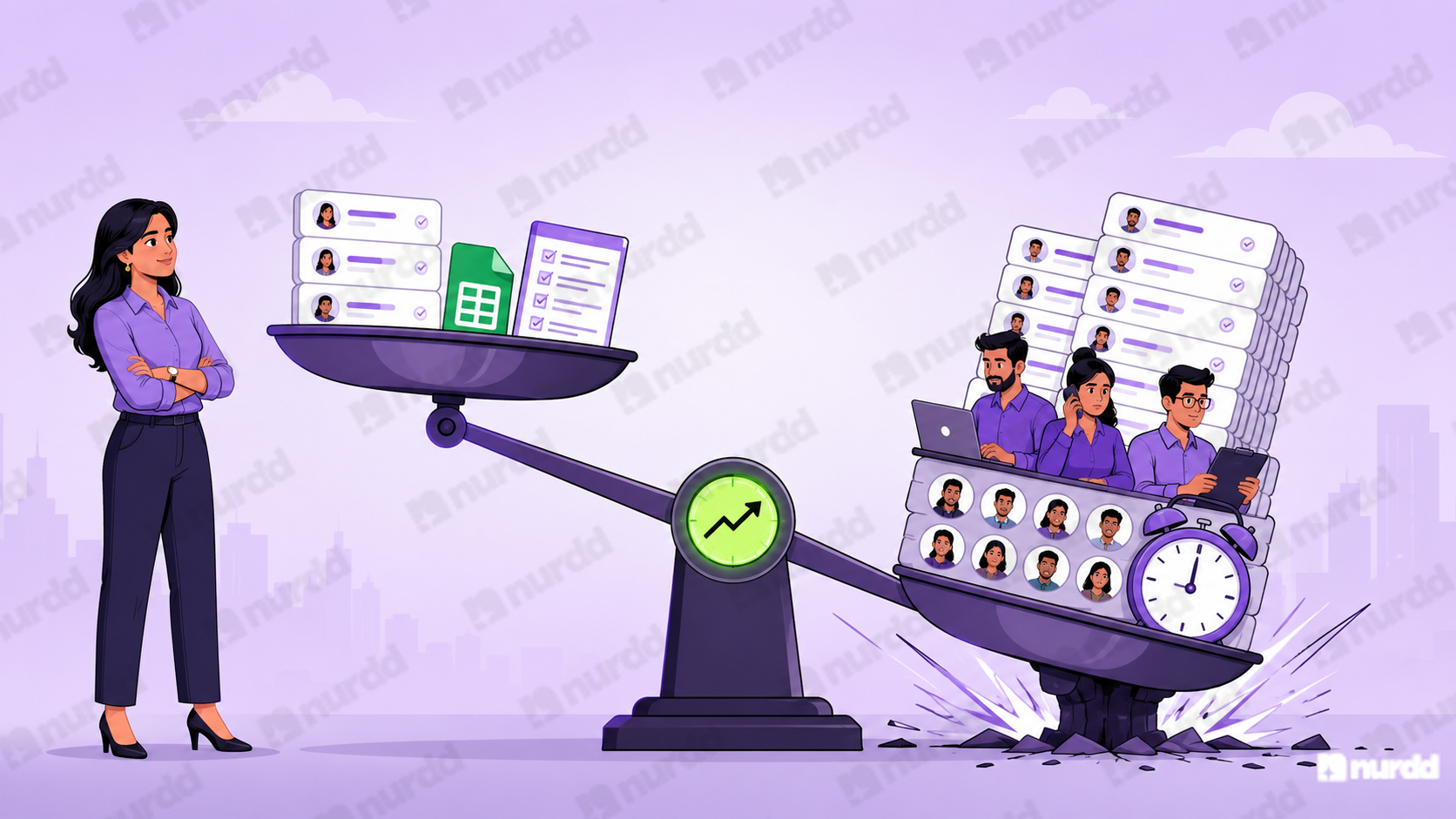
If you are running fewer than five active influencer campaigns simultaneously, the overhead of learning and managing a new software platform may outweigh the time it saves. At this scale, a well-structured Google Sheet with clear UTM conventions and a consistent briefing template is often enough.
If your influencer relationships are all personal founders who know creators directly, long-term partnerships built on trust a platform's discovery and outreach features add less value. The platform's biggest efficiency gains are in prospecting and managing new creator relationships at scale.
The tipping point for most Indian D2C brands is around 10 to 15 active campaigns per month. Below that, manual management is manageable. Above it, the data quality degradation and time cost of manual processes start to meaningfully hurt performance.
How to Evaluate a Platform Before Buying
Ask one question: does this platform show me revenue per creator, or just reach and engagement? If the answer is only reach and engagement, the platform is a content management tool pretending to be an attribution tool. For D2C brands, the only metric that ultimately matters is sales and your platform should connect creator activity directly to purchase data.
“The spreadsheet was never the problem. The problem is what happens to your data quality when ten creators, three team members, and one deadline are all using it at the same time.”
Sources & References
Influencer Marketing Hub (2025) – State of Influencer Marketing India | influencermarketinghub.com
IAMAI (2025) – Digital Creator Economy India: Platform vs Manual Report | iamai.in
Inc42 (2025) – Influencer Marketing Software Landscape India | inc42.com
Nia, Nurdd (2026) – Creator Campaign Management Benchmarks India | nurdd.club/blogs