Influencer Marketing
What to Do When an Influencer Doesn't Deliver (The Brand's Practical Playbook)
Your creator took the money and missed the deadline. The playbook for D2C brands: follow-up timelines, contract leverage and asset recovery.
 Simran Rawat15 Jul 20268 min read
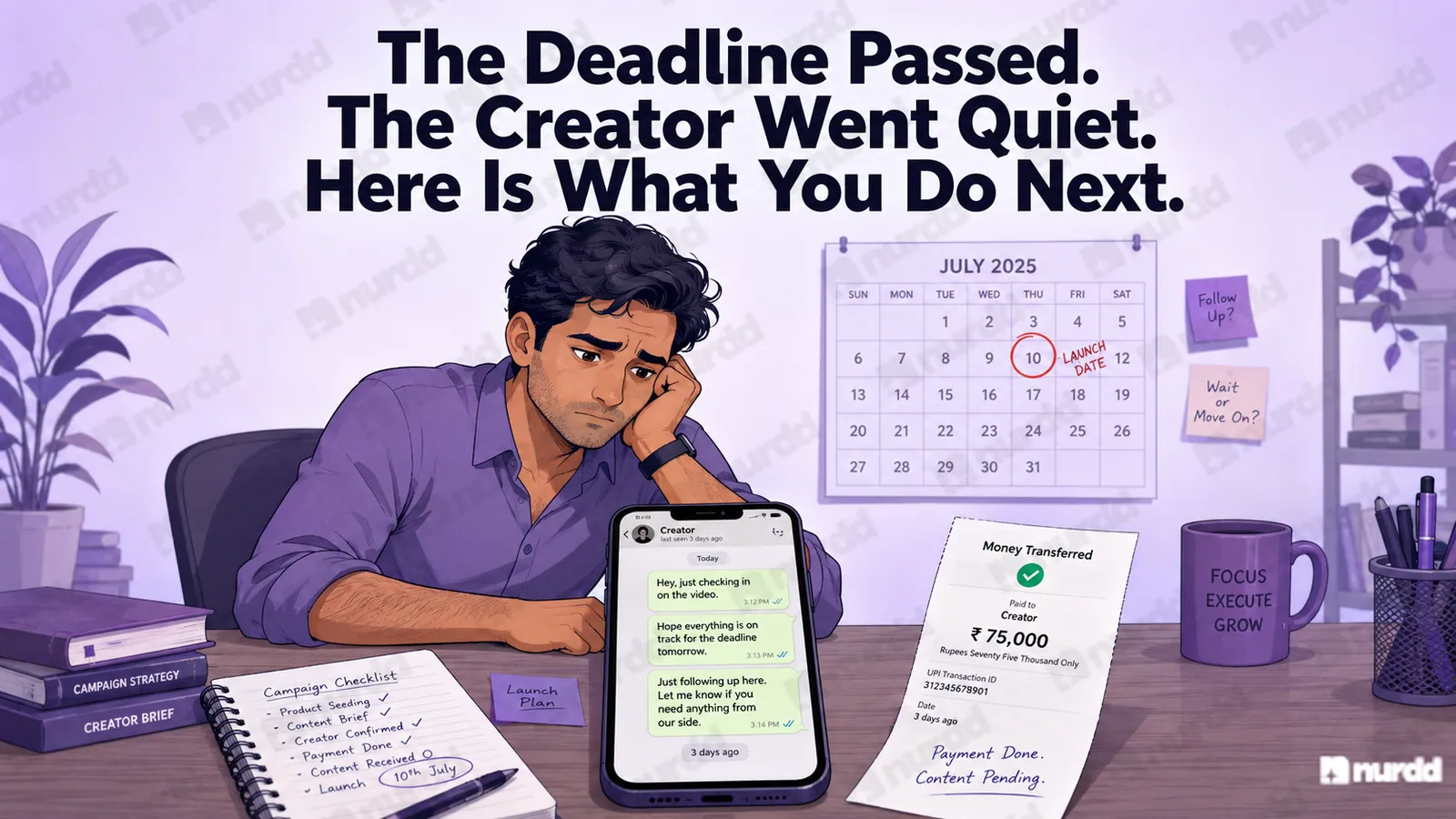
Check the contract, document every missed deadline and follow-up, withhold any remaining payment, and escalate in writing; for larger deals, consider a lawyer’s formal demand letter or a small-claims court. Going forward, use signed agreements, retain 30–50% until delivery and approval, and consider payment on delivery for first-time creators.
It happens more than anyone talks about publicly. You brief a creator. You pay them either in full or the standard 50% upfront. The deadline passes. You follow up. They say they need more time. You wait. Another deadline passes. The responses get slower. And then you're in a situation nobody in the influencer marketing world has a clean playbook for.
Start With the Contract You Have (Or Don't Have)
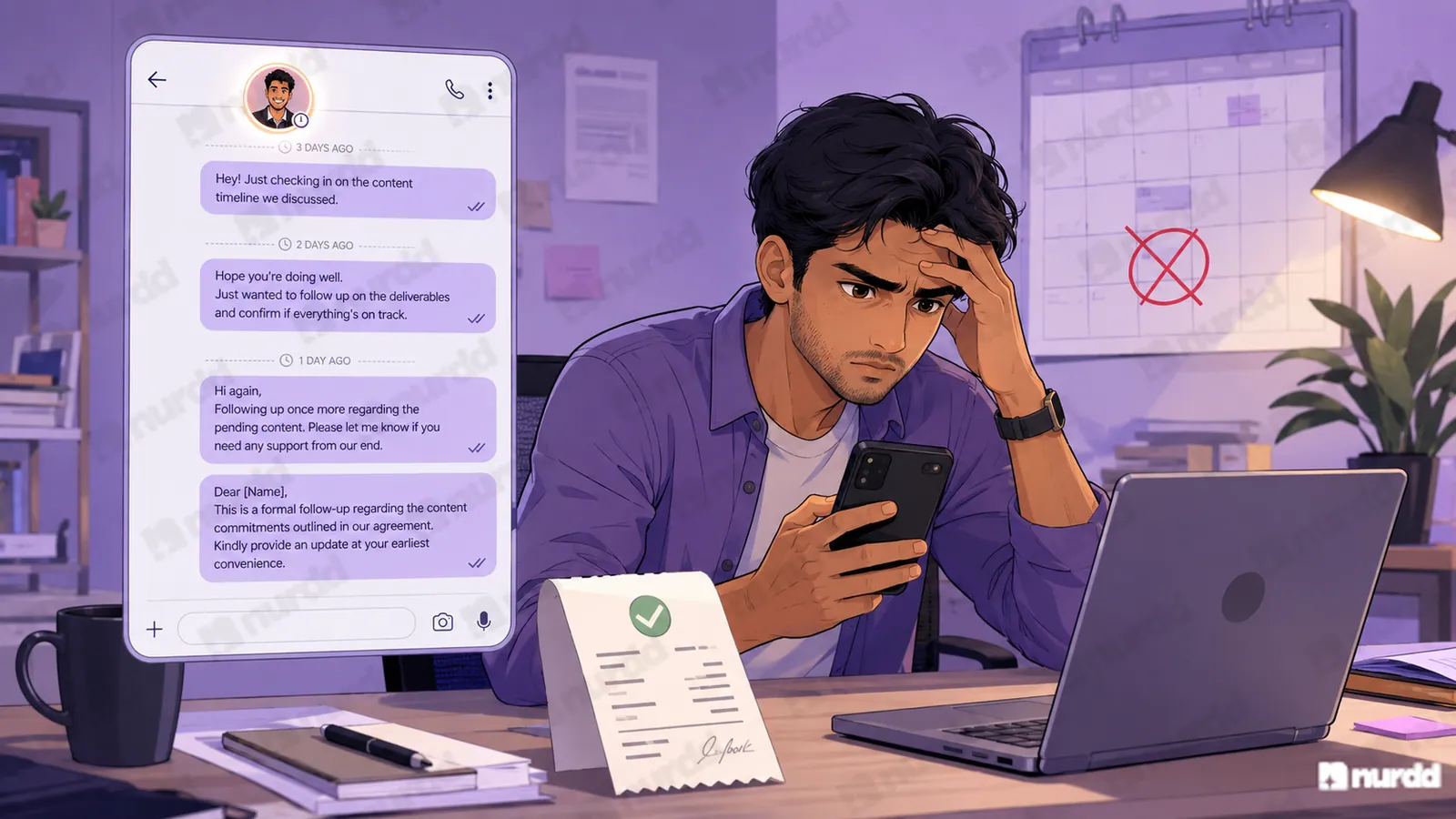
The first question is whether you have a signed agreement. A proper influencer contract should specify: deliverables with explicit descriptions (format, duration, platform, number of posts), payment terms (what's paid upfront, what's paid on delivery, what's withheld pending approval), revision rights, exclusivity window, and a performance clause covering what happens if deliverables aren't met. If you don't have a signed contract but have a written WhatsApp or email exchange clearly outlining payment terms and deliverables: this is still evidence. Courts in many jurisdictions accept electronic communications as evidence of an agreement; check the rules where you operate. If you have nothing in writing: this is a painful lesson about process.
The Follow-Up Timeline That Actually Works
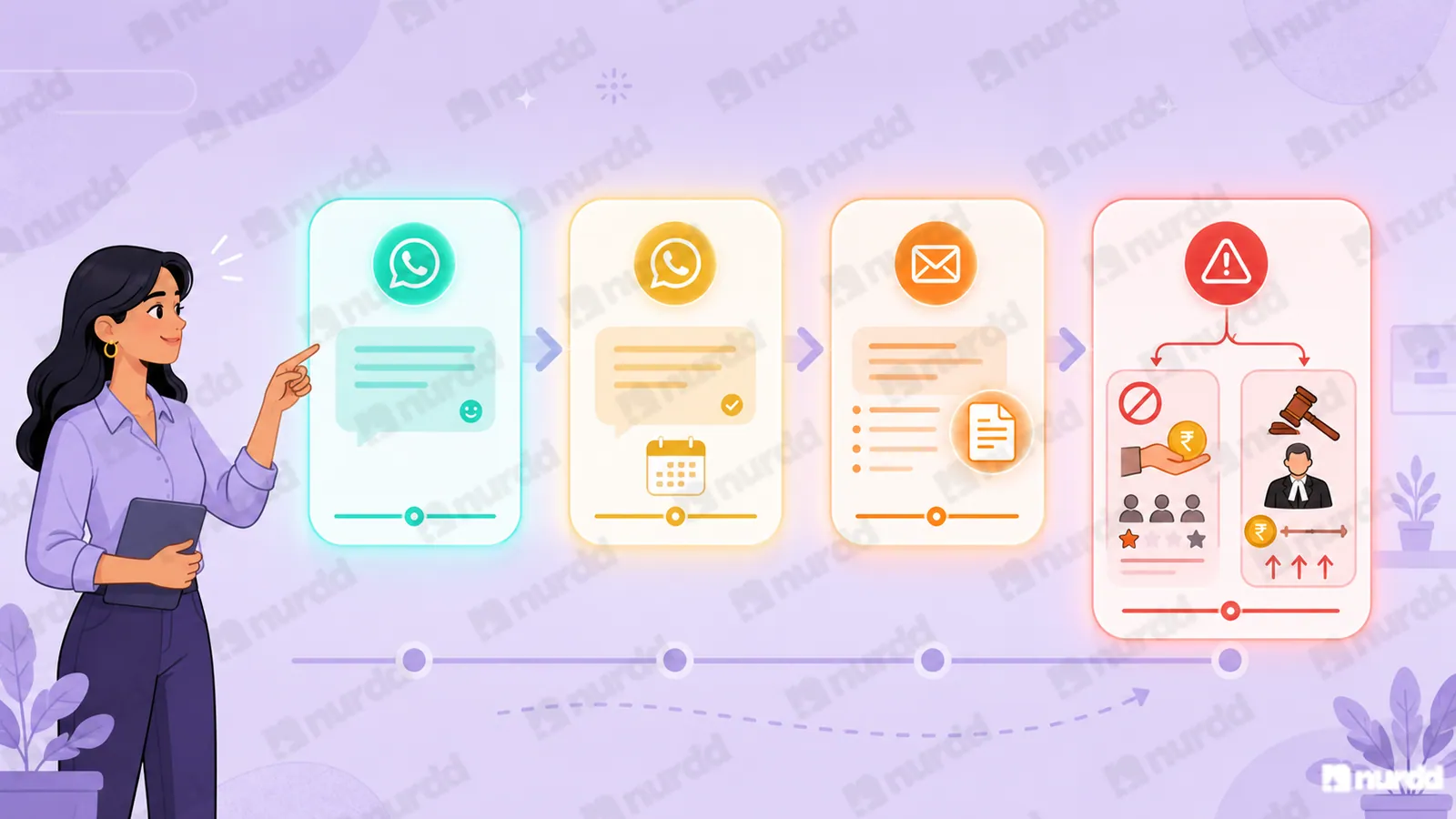
Day 1 after missed deadline: A friendly message. "Hey, the deadline was yesterday wanted to check in. Can you let me know where things stand and what the revised timeline looks like?"
Day 3 without response: A firmer message referencing the original agreement, the missed deadline, and a specific new deadline.
Day 7 without satisfactory response: A formal written communication via email, not WhatsApp. State clearly: the original terms, the missed delivery, your attempts to contact, and what you're asking for. This creates a paper trail that matters if the situation escalates.
Day 14 without resolution: This is where you make a decision about escalation.
What Escalation Actually Looks Like
For small creator deals, say below $300, legal action costs more than the contract value. Your practical levers are: withhold remaining payment absolutely, and document your experience professionally to share privately with other brand founders. Creator communities are small and networked. Reputation travels. For deals in the $600 to $1,200 range and above: a formal demand letter from a lawyer is often sufficient to produce resolution. It is usually inexpensive relative to the deal and has a disproportionate effect on the recipient's willingness to engage. Small-claims or consumer courts can be a legitimate option for larger amounts, depending on the thresholds where you operate, but budget months rather than weeks for resolution.
Prevention Is the Whole Answer
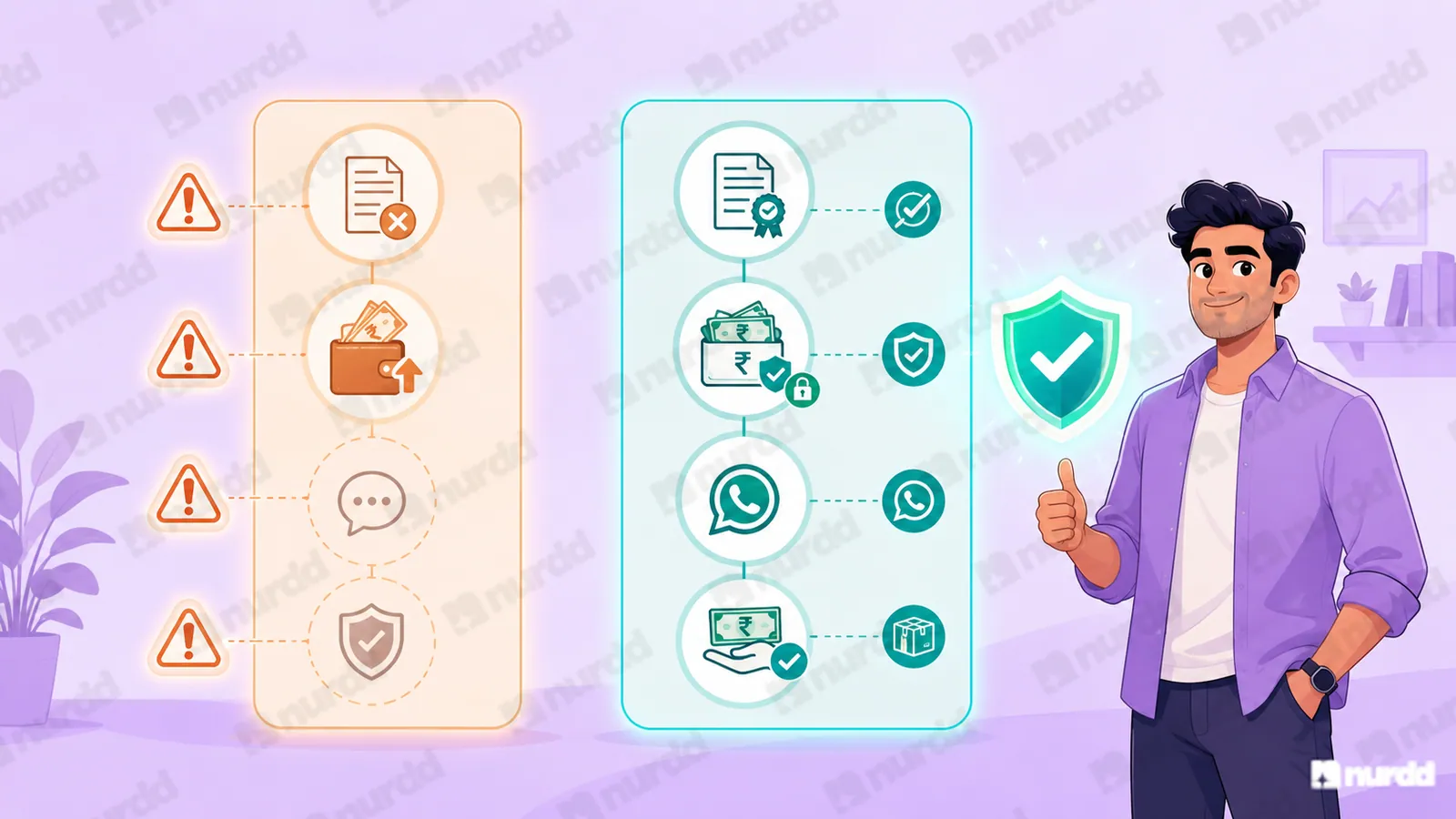
The real playbook is the one you run before any of this happens. A signed agreement before any payment is transferred. Payment structured so a meaningful portion ideally 30 to 50 percent is contingent on delivery and approval. A WhatsApp check-in at the halfway point to the deadline. For creators with no track record with your brand: consider doing the first campaign on a payment-on-delivery basis. A creator who refuses to work on payment-on-delivery for a small first deal with a new brand is telling you something about how they operate.
A creator who doesn't deliver on a contract isn't an anomaly. They're a symptom of a selection and contracting process that didn't protect the brand. Fix the process.
Sources & References
1. Bar & Bench — Electronic Communications as Evidence of Contract
2. Ministry of Consumer Affairs — Consumer Protection Act 2019: Digital Commerce Provisions
https://consumeraffairs.nic.in/consumer-protection-act-2019
3. Inc42 — Influencer Marketing Legal Framework: What Brands Need to Know (2025)
4. Internet Freedom Foundation — Creator Economy Rights and Brand Obligations
https://internetfreedom.in/creator-economy-rights/
5. Khaitan & Co — Influencer Agreement Best Practices for Brands (2025)