Influencer Marketing
Festive Season Influencer Marketing 2026: Budget Plan
Peak festive season is when creator rates and competition peak. How to plan your influencer budget, timing, contracts and attribution for real ROI.
 Simran Rawat4 Oct 20268 min read

The peak festive and holiday season is when brands spend the most on influencer marketing. Creator rates climb well above year-round levels, and competition for top creator partnerships is intense from about two months before the peak. Here is how to plan a strategy that generates real ROI rather than expensive reach.

Why Most Festive Campaigns Underperform
The Structural Problem
Every D2C brand is activating creators simultaneously. Creator inventory in the macro and mid-macro tier is often booked out weeks before the peak. The creators available at short notice just before the peak are available for a reason.
Creator rate inflation during festive season (especially for mid-tier and above) means your cost per sale from the same creator is structurally higher during peak season unless your product category experiences a disproportionate demand spike that offsets the cost premium.
The brands that achieve the best festive ROI booked their creators about two months ahead at non-peak rates, built a campaign plan aligned with specific festive moments, and set attribution infrastructure before campaigns went live.
The Festive Calendar
When to Activate What
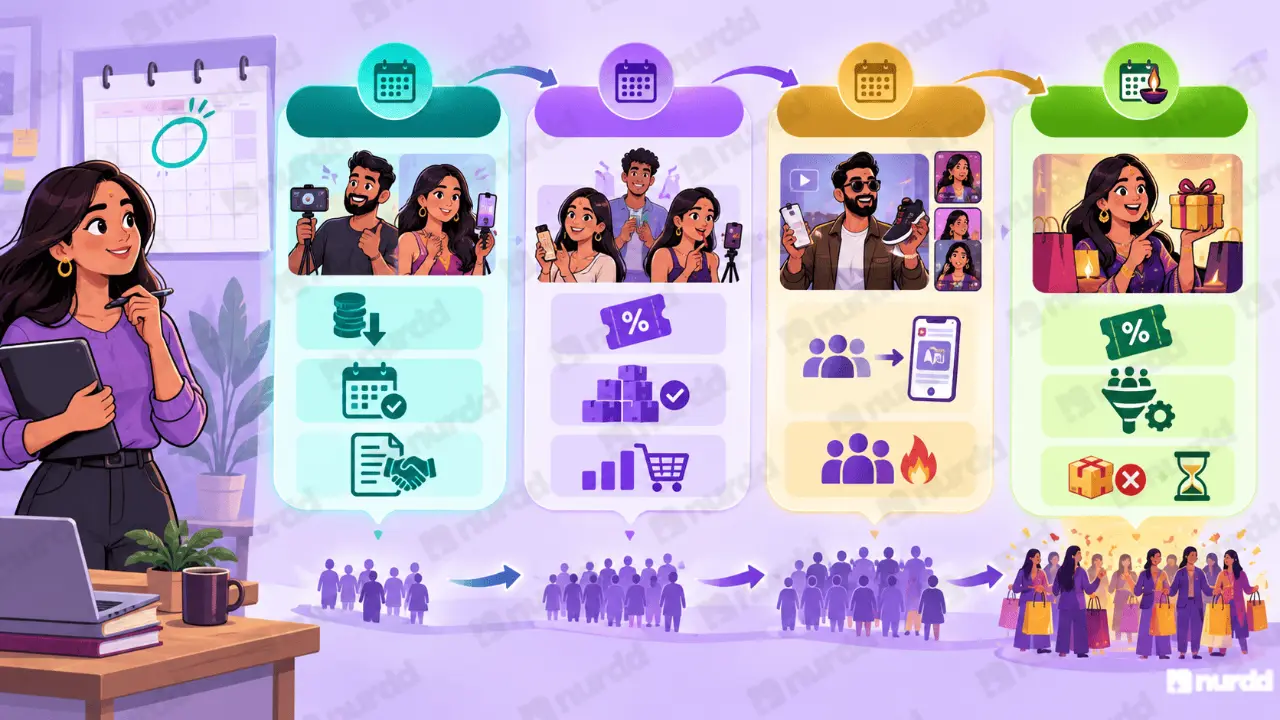
Timing | Action | Why |
|---|---|---|
8 weeks before the peak | Book mid-tier and macro creators at pre-season rates. Brief them. Agree content calendars. Secure category exclusivity. | Pre-season rates are lower. Best creator inventory available. |
4 to 6 weeks before | Activate nano and micro creators with early-purchase promo codes. | Most price-efficient inventory. Early festive shopping intent begins building. |
2 to 3 weeks before | Macro and mid-macro creator content goes live. Retarget all visitors from the nano/micro wave with paid ads. | Peak awareness window. Audience from earlier waves is now warm for retargeting. |
Peak week | Focus on promo-code activation and limited-time offer content from existing campaign creators. | New launches this week are expensive and slow to attribute. Leverage existing funnel. |
Attribution During Festive
The Special Challenges
Festive season creates attribution chaos. Sales are elevated from multiple simultaneous causes: creator campaigns, paid media, sale events, email campaigns, and genuine market demand increase. Every channel claims credit for the festive lift.
The brands that understand their true festive influencer contribution:
Set a clear pre-festive baseline (average daily orders from the 4 weeks before the campaign window)
Identify the incremental lift above baseline during each campaign wave
Attribute the lift to the specific wave that drove it by correlating timing
Nia's product-level attribution, through the Nurdd SDK, ties orders to individual creators, so you can read the lift that follows each creator's go-live as a directional incrementality signal throughout the festive period.
Creator Contracts for Festive
What Must Be in Every Festive Creator Agreement
Festive season creator contracts have additional requirements that year-round contracts may not include. Every festive brief and agreement should explicitly cover:
Category exclusivity window: The creator cannot promote a competitor's product in your category during the 2 weeks before and after their campaign posting date. Without this, your campaign and a competitor's campaign may run in the same creator's content within days of each other neutralising any trust advantage your early booking created.
Posting date guarantee: Festive timing is critical. A creator who posts your holiday gift guide a week after the holiday has delivered technically on the contract but not on the commercial intent. Specify the exact date range for posting and require the creator to confirm 72 hours in advance. Failure to post within the specified window should trigger a partial rate reduction agreed in advance, not discovered in retrospect.
Content approval timeline: Festive approval cycles compress. A creator who submits content for approval 48 hours before the posting date does not leave time for revisions. Require content draft submission at least 7 days before the specified posting date. This protects both the brand and the creator from the chaotic late-stage revisions that typically produce the weakest festive content.
"The festive season rewards brands that planned two months ahead, not brands that panicked in the final weeks. Book early, set attribution before the campaign, and let the data tell you what the excitement cannot."

Sources and References
RedSeer Strategy Consultants – Festive season e-commerce reports
Nurdd / Nia – Festive influencer campaign attribution resources for D2C brands