Creator-Led SEO: How Influencer Content Is Replacing Brand Blog Traffic in 2026
 21 Apr 20267 min read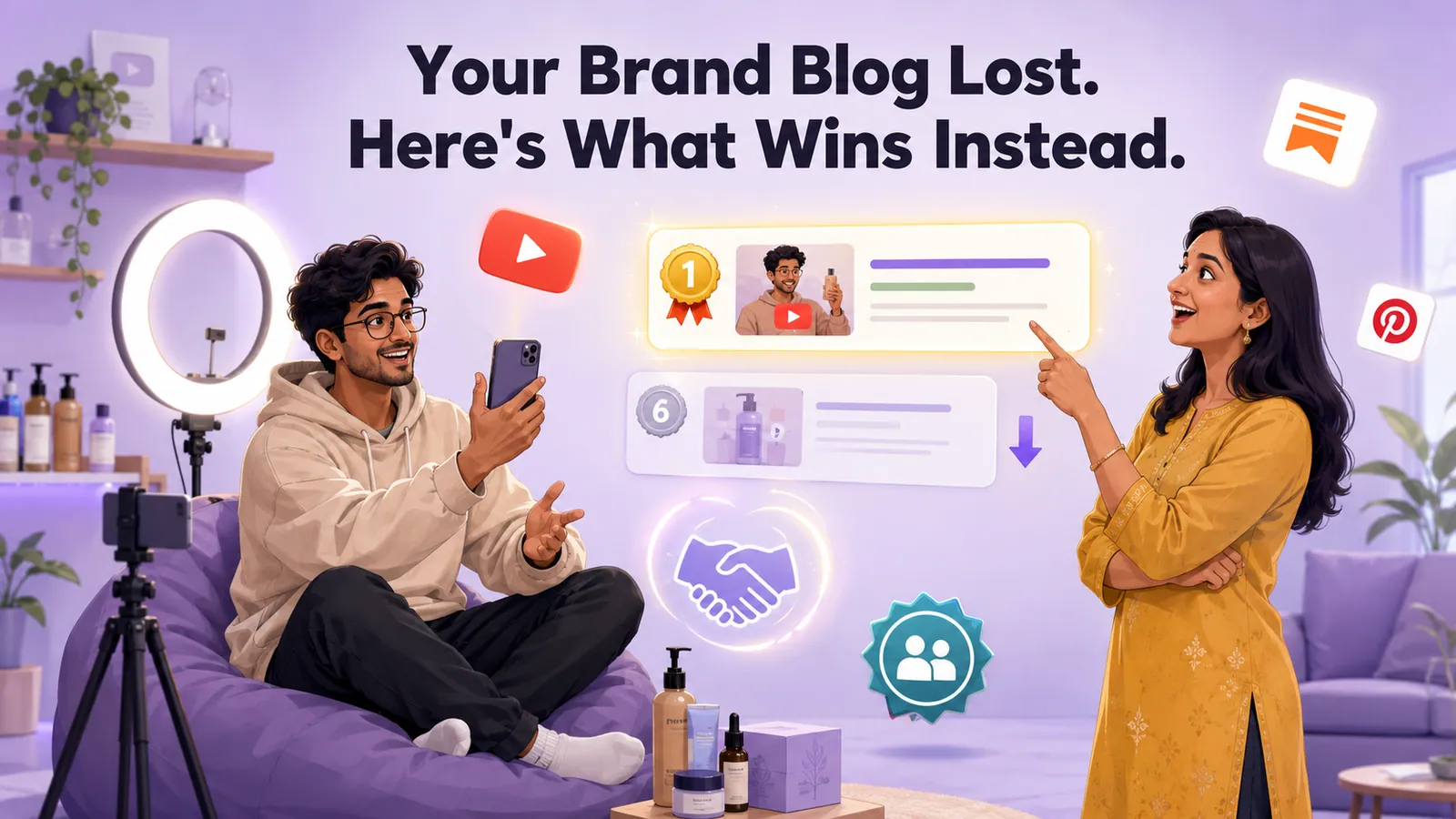
Creator content is replacing brand blog traffic because real opinions, engagement signals, and author authority help it rank above generic brand pages. Brands should identify creators already ranking for valuable keywords, partner with them, and track referrals and branded search growth.
Your brand blog is losing. Not to a competitor's blog. To a creator who reviewed your competitor's product last month and now ranks above your category pages for half the keywords you care about.
What Changed in Search
Google's Helpful Content Updates from 2023 to 2025 consistently penalized content written for search engines rather than people. Brand blogs — full of keyword-stuffed product descriptions and generic category guides — took significant hits.
Creator content, by contrast, is written by real people with real opinions, published on platforms with genuine engagement signals. YouTube videos, creator newsletters, long-form Instagram captions, and Pinterest posts now rank for commercial keywords that brand pages used to own.
In India, this shift is visible across beauty, fitness, and home categories. Search 'best vitamin C serum India' or 'protein powder for vegetarians India' and you will find creator content from Substack, YouTube, and niche review blogs ranking above most brand-owned pages.
How Brands Can Use This Shift Instead of Fighting It
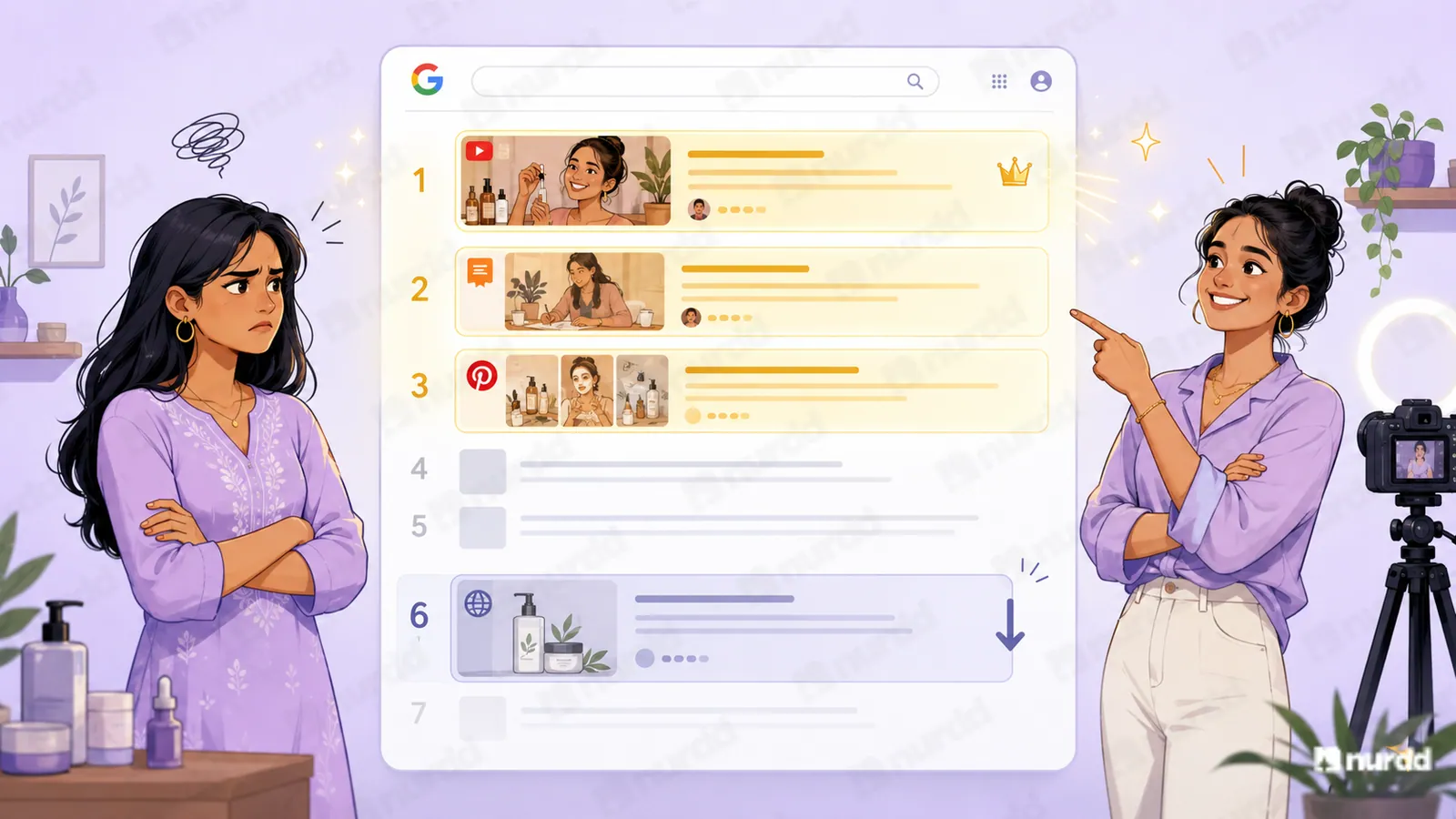
Stop trying to out-rank creators with brand content. You will lose. Instead, make your brand the answer inside creator content that already ranks.
Brief creators on the specific keywords you want to own. If you are losing rank for 'best sunscreen for oily skin India,' find creators who already rank for adjacent terms and partner with them. Their content's authority becomes your product's visibility.
Creator-led SEO works best when you identify the keywords you want to own, map which creators rank for related terms, structure your partnerships around those creators creating content that includes those keywords naturally, and build link equity back to your site through creator blog posts and YouTube descriptions.
The Content Formats That Rank
Long-form YouTube reviews with detailed timestamps and keyword-rich descriptions consistently rank for product category searches. A 10-minute 'I tested 5 Indian protein powders' video from a creator with 80,000 subscribers can outrank a brand's category page with 500 backlinks.
Creator newsletters on Substack and Beehiiv are increasingly indexed and ranked by Google. These formats carry author authority, specific language, and reader engagement signals that Google's algorithm now weights heavily.
Pinterest boards are underrated SEO assets for Indian D2C brands in fashion, home, and beauty. A creator's curated product board can rank for visual search queries that drive high commercial intent traffic.
What to Track
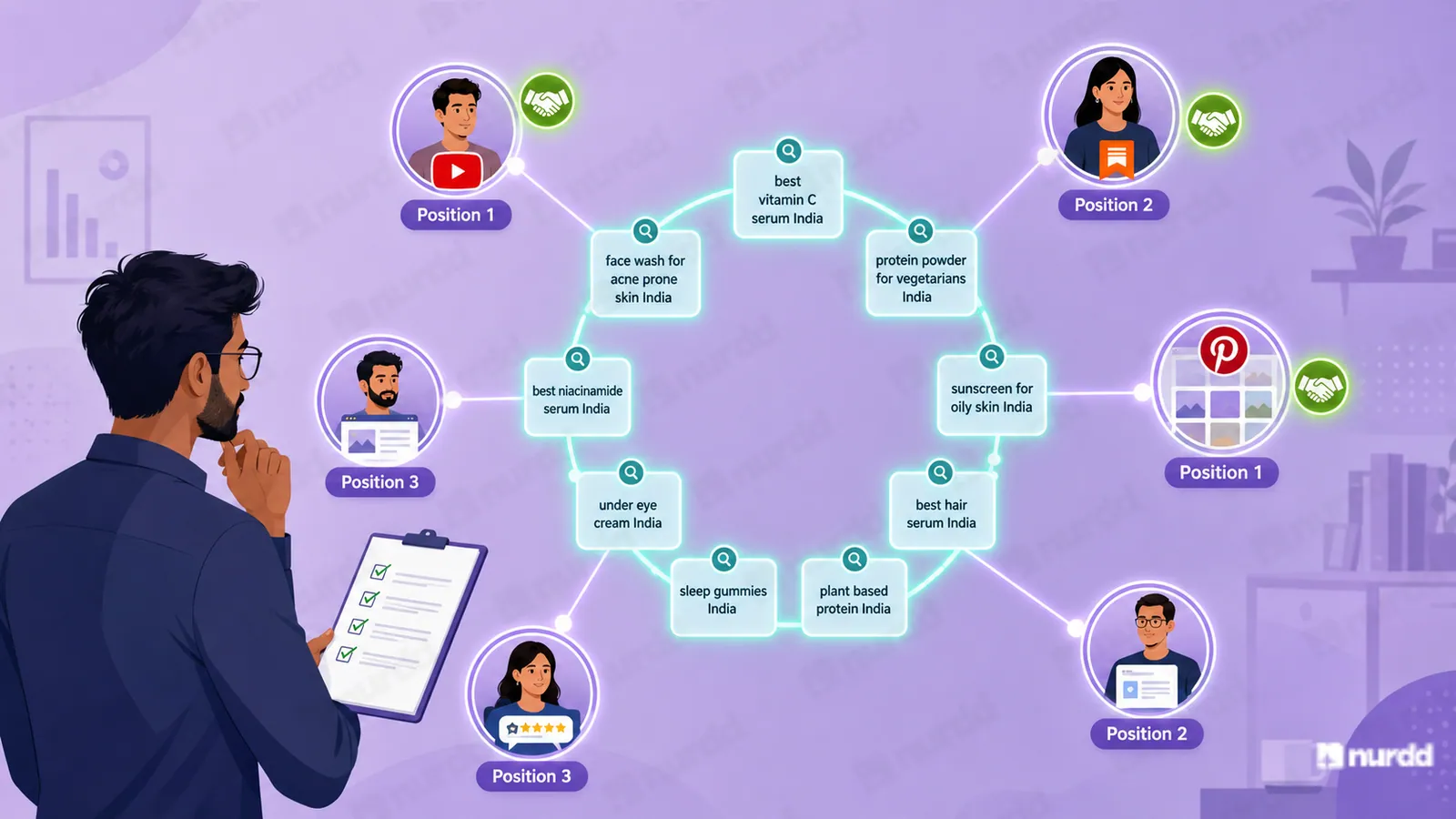
Track which creators' content appears in the top 20 results for your 10 most valuable commercial keywords. This is your creator SEO map — the people whose authority you should be activating.
Track referral traffic from creator platforms to your site. If a YouTube description link is sending 2,000 visitors a month, that creator is a search asset, not just a social media placement.
Track branded search volume before and after creator campaigns. Genuine creator-led SEO shows up as an increase in branded search — people who discovered your product through a creator and then went directly to Google to find you.
You are not going to out-rank a creator with a brand blog. The smarter move is to make your product the answer inside content that already ranks.
Sources & References
· Google Search Central (2025) – Helpful Content System Documentation | developers.google.com/search
· Semrush (2025) – Creator Content vs Brand Content: Ranking Analysis | semrush.com/blog
· Ahrefs (2025) – UGC and Creator Content in Google Search Rankings | ahrefs.com/blog
· RedSeer Consulting (2025) – Indian D2C Search Behaviour Report | redseer.com

Find the right creators — and verify they're real.
Nia gives brands access to 10M+ Indian creator profiles, TruAI fake follower detection, pre-spend ROI forecasting, and product-level sales attribution. Completely free.