Influencer Marketing
Influencer Marketing Platform vs Spreadsheet 2026: Infrastructure Guide
When a spreadsheet is enough for influencer marketing, when it stops being enough, and what to look for in a platform at every scale.
 Yashasvi Sharma6 Feb 20268 min read

For most brands running more than a handful of creators in 2026, an influencer marketing platform beats a spreadsheet: it screens creators before you pay, captures posts that vanish and ties sales back to each creator. A spreadsheet is still fine for a one-off test with a few creators.
Updated 7 November 2026: every figure re-checked against its source; figures we could not find in a source were removed.
An influencer marketing platform replaces hand-copied numbers with connected data, checks creators before you pay and credits sales to the creator who drove them. A spreadsheet only records what someone typed in after the campaign.
What is the difference between an influencer marketing platform and a spreadsheet?
A spreadsheet is a record you keep by hand: creator names, follower counts, post dates and the numbers someone copied across after the campaign. A platform connects to the social networks and your store, so the data arrives on its own and the same system handles discovery, briefs, approvals, payments and reporting.
The practical difference is timing. A spreadsheet tells you imprecisely what already happened. A platform tells you what is happening while you can still act on it, and it can warn you about a creator before the contract is signed.
The choice matters more each year because the work has grown more complicated. Archive's 2026 roundup counts 6,939 specialised influencer marketing service providers and platforms, up from 1,120 in 2019. Budgets are moving too: impact.com reports that 74% of brands are moving budget into creator programs in 2026, and Archive reports that 80% of brands either maintained or increased their influencer budgets. More money through a manual process means more money you cannot account for.
How do a platform and a spreadsheet compare on cost, time, errors and scale?
| Compared on | Spreadsheet | Influencer marketing platform |
|---|---|---|
| Cost | No licence beyond your office suite; the real cost is staff time | A licence fee, often quoted per brand; less manual reporting |
| Time | Numbers are copied by hand from each network after each post, so the work grows with every creator | Numbers arrive through platform connections, so the work grows far more slowly |
| Errors | Typing mistakes, stale figures and no fraud check. TechBullion puts spend wasted on fake followers at 15 to 20% (March 2026) | Audience and engagement checks before the contract, and one source for the numbers |
| Scale | Works for a few creators; Stories disappear after 24 hours unless someone captures them in time | Built for many creators and networks at once, with payments and approvals in one place |
| Attribution | UTM links and discount codes only | Direct store connections can tie orders to the creator |
We looked for an independent study that puts a reliable number on hours saved or error rates and did not find one, so this table does not carry one. Be wary of a vendor claim that does, and ask what it was measured on.
What does a spreadsheet actually cost you?
The licence is close to free, which is why spreadsheets last so long. The costs show up in three other places.
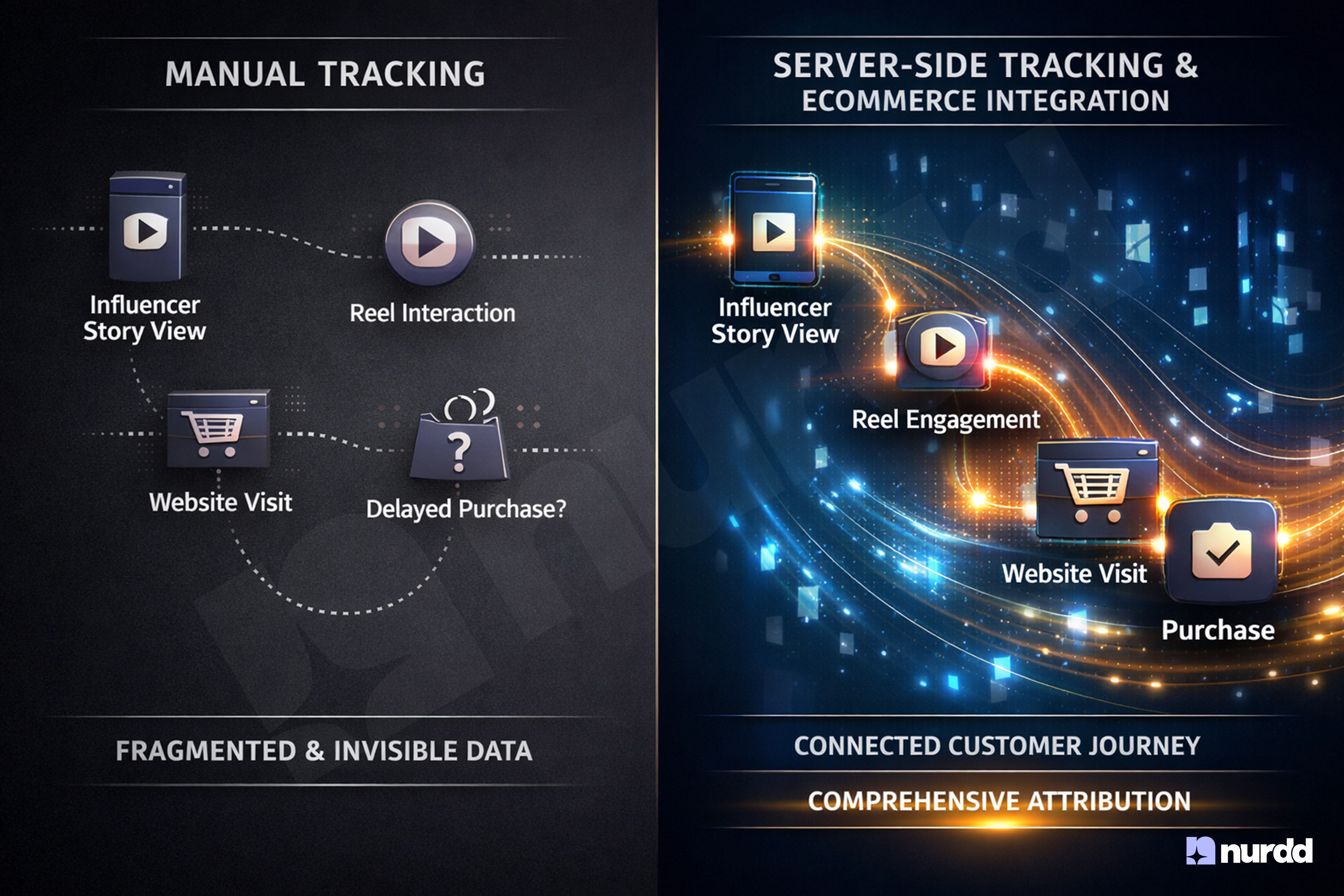
Attribution gaps. A spreadsheet cannot follow someone from a Story tap to a website visit three days later to a purchase on day seven. The last click gets the credit, usually paid search, and the creator who started the journey gets none. Influencer budgets then get cut because the measurement cannot see what they did, not because they failed. Our influencer ROI calculator shows what a campaign has to return to pay back.
Staff time. Copying numbers out of Instagram Insights, TikTok Analytics and YouTube Studio is slow, and it usually falls to the person you most want working on strategy and creator relationships. The sheet is out of date by the time it is finished.
Fraud exposure. A cell cannot tell you whether engagement comes from a bot pod or whether follower growth spiked artificially three months before you found the creator. TechBullion's March 2026 analysis estimates that 15 to 20% of influencer spending is wasted on fake followers. You can run a first pass on any account with our free Instagram fake follower checker, but a sheet will never do it for you.
When is a spreadsheet still enough?
A spreadsheet is reasonable when you are testing the channel with a few creators, the campaign is short, and you are paying a flat fee with a tracked link or code. It starts to fail when any of these become true:
- You run more than one campaign at a time, or more than one network.
- Someone spends days after each campaign collecting numbers.
- You pay creators in several countries and have to chase tax paperwork for each.
- Finance asks what the channel returned and you cannot answer per creator.
- You are paying for Stories or live content that nobody captured.
What does "creator infrastructure" mean?
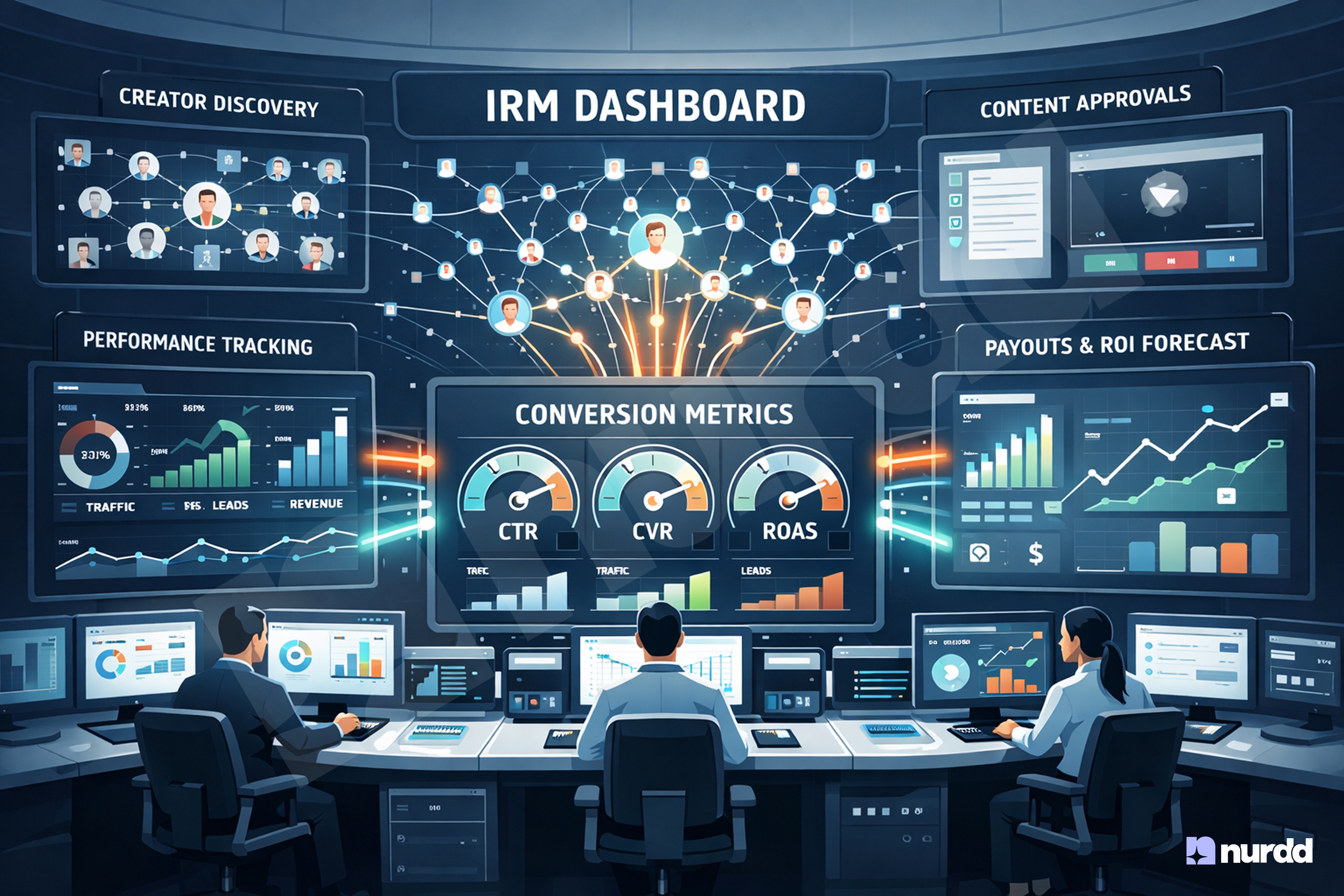
Creator infrastructure is the set of systems a brand uses to manage creator partnerships at scale: sourcing, briefs, content approvals, rights, payments and performance tracking in one place. The older name is IRM, influencer relationship management: what a CRM is to your sales pipeline, an IRM is to your creator pipeline.
The two are worth keeping apart. An IRM manages the creators. Your CRM manages the customers they send you. Our influencer marketing CRM integration guide explains how to connect the two so revenue reaches the creator who earned it.
Which four capabilities should a platform replace first?
1. Server-side tracking. Server-side conversion tracking keeps recording purchases when browser privacy settings, ad blockers or a switch of device break a pixel. It is the foundation the other measurement depends on, so check it first.
2. Store and social commerce connections. A direct connection to Shopify, WooCommerce or your marketplace ties each creator's content to orders, order value and returns. In-app purchases on TikTok Shop, Instagram and YouTube add a further layer, because the buyer may never visit your site.
3. Payments and compliance. Paying 50 creators across regions by manual invoice is more than a time cost. In many tax systems, creators above a turnover threshold must register for sales tax or VAT and issue compliant invoices, and creator income has to be documented. Handling this in one workflow reduces the risk of a miss.
4. Creator vetting. Check audience authenticity, engagement quality and past results before you sign, not after. Compare a creator's engagement against campaign benchmarks for your category as well as against their own history.
How do you choose a platform at each stage?
The right platform depends on your programme's size and its main constraint, not on the longest feature list in a demo.
First structured campaigns. Look for simplicity: someone with no influencer background should be able to go from discovery to approval to reporting without outside help. Rate benchmarks and built-in disclosure prompts are worth having at this stage.
High creator volume. Payments become the deciding feature, because chasing invoices and withholding paperwork across hundreds of creators is the work that stops you scaling.
Several markets. Choose real coverage of the markets you sell in: regional-language creators, audiences beyond the largest cities and local engagement benchmarks.
Enterprise programmes. Expect procurement, security and legal review, plus integration with your existing marketing stack, and raise those requirements before the demo. Our comparison of the best influencer marketing platforms sets out published prices and fees.
How do you move off a spreadsheet?
- List what the sheet does today, including the columns only one person understands.
- Decide the one question you most need answered, usually revenue per creator.
- Run one live campaign on a platform and keep the sheet alongside it as a check.
- Prove the loop with a test order before you pay a creator.
- Export the old sheet for your records, then stop updating it.
Where Nia fits. Nia by Nurdd is an AI-native creative suite with influencer marketing built in: creator discovery across 10M+ profiles, TruAI fake follower detection and sales attribution. Nia is priced below comparable plans. Book a demo to see it on your category.
Frequently asked questions
Is a spreadsheet enough for influencer marketing?
For a short test with a few creators, yes. Once you run several campaigns or networks, or need revenue per creator, a spreadsheet stops being reliable because the data is copied by hand after the fact and it cannot check for fraud.
How many creators can you manage in a spreadsheet?
There is no reliable public benchmark. The sign that you have outgrown a sheet is not a number: it is when collecting results takes days, or when you cannot say what each creator returned.
What can an influencer marketing platform do that a spreadsheet cannot?
It can check audience authenticity before you sign, capture content that disappears, connect to your store to tie orders to creators, and handle payments and approvals in one place.
Is an influencer marketing platform more expensive than a spreadsheet?
The licence costs more, because a spreadsheet has almost no licence cost. Compare it with the staff time spent on manual reporting and the spend at risk from fake followers, which TechBullion estimates at 15 to 20% of influencer spending.
Can an influencer platform connect to my CRM?
Often, but ask for a named marketplace listing or API documentation rather than a verbal yes. Our CRM integration guide lists the fields to carry across.
How do I check fake followers without a platform?
Run the account through a free fake follower checker for a first pass, then confirm by hand with our fake follower audit checklist.
Sources
- Archive, 14 Influencer Marketing Growth Statistics for 2026 (7 Jan 2026): archive.com
- impact.com, Influencer Marketing Trends 2026: impact.com
- TechBullion, Influencer Marketing ROI: Measurement Frameworks and Platform Analytics in 2026 (Mar 2026): techbullion.com