Is Your Brand Description Confusing AI Engines? How to Write One That Gets You Cited
 5 Jul 20266 min read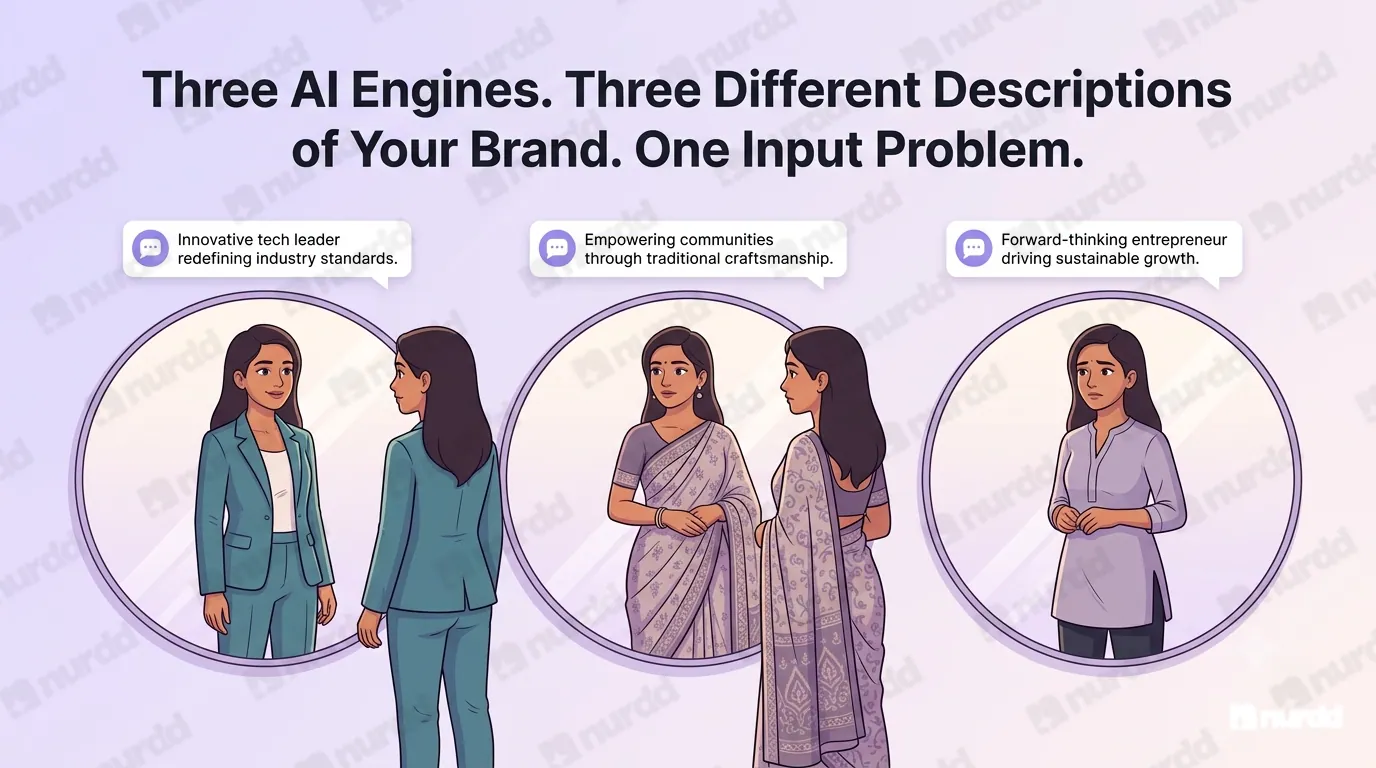
Write a specific, jargon-free brand definition that says what you are, what you do, who you serve, and what makes you different. Use the same wording, or wording that closely matches, across your website, LinkedIn, profiles, press releases, and founder bio.
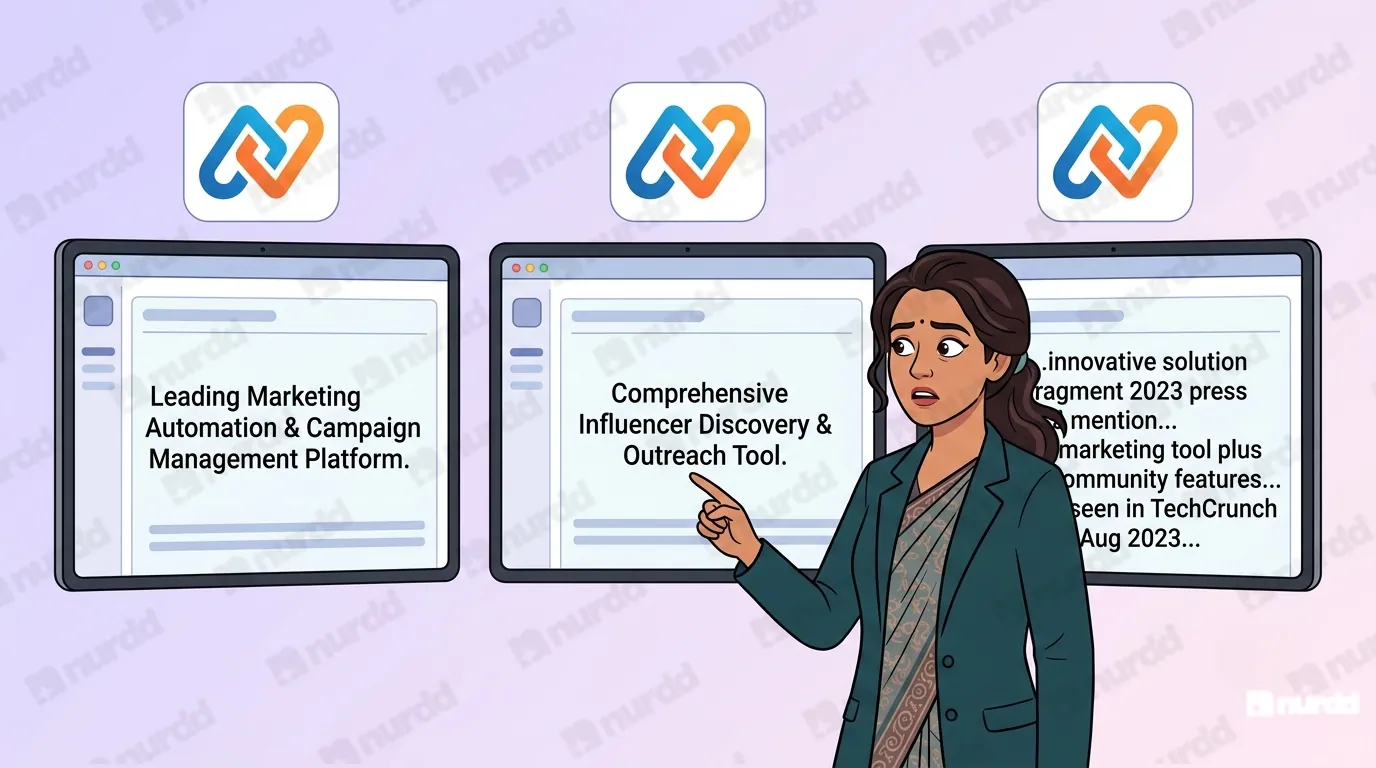
If you asked three different AI engines to describe your brand right now, would they say the same thing? For most brands, the answer is no. One engine says you're a "marketing platform." Another says you help "brands find influencers." A third gives a vague summary stitched together from three different pages of your website and one press mention from 2023. This inconsistency isn't the AI's fault. It's an input problem.
What AI Engines Are Trying to Understand About You
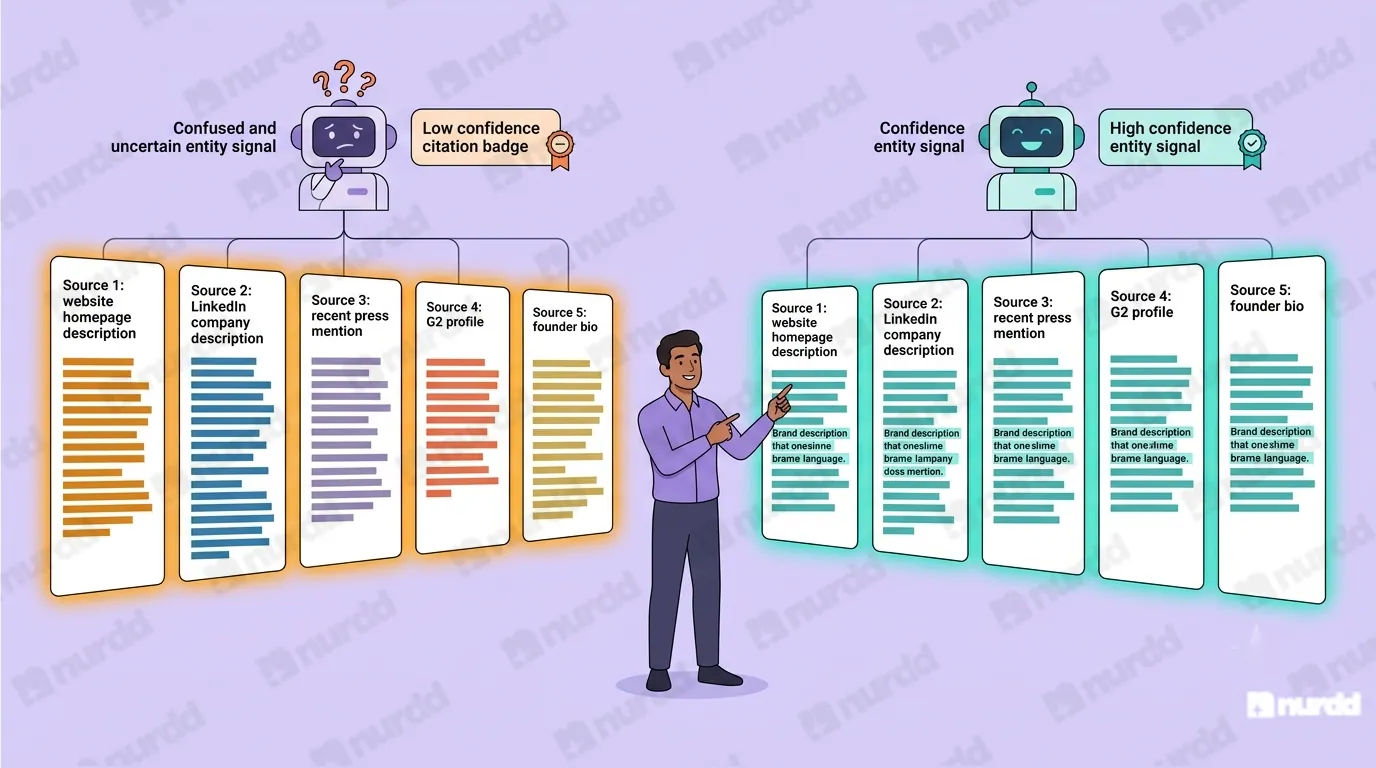
When an AI model encounters your brand across multiple sources, it's trying to build coherent answers to four questions: What is this brand? What does it do specifically? Who does it serve? What makes it different from similar brands? If your own materials give inconsistent answers, the model produces an uncertain entity and an uncertain entity gets cited less confidently and less frequently.
The Brand Entity Definition: What It Is and Where to Put It
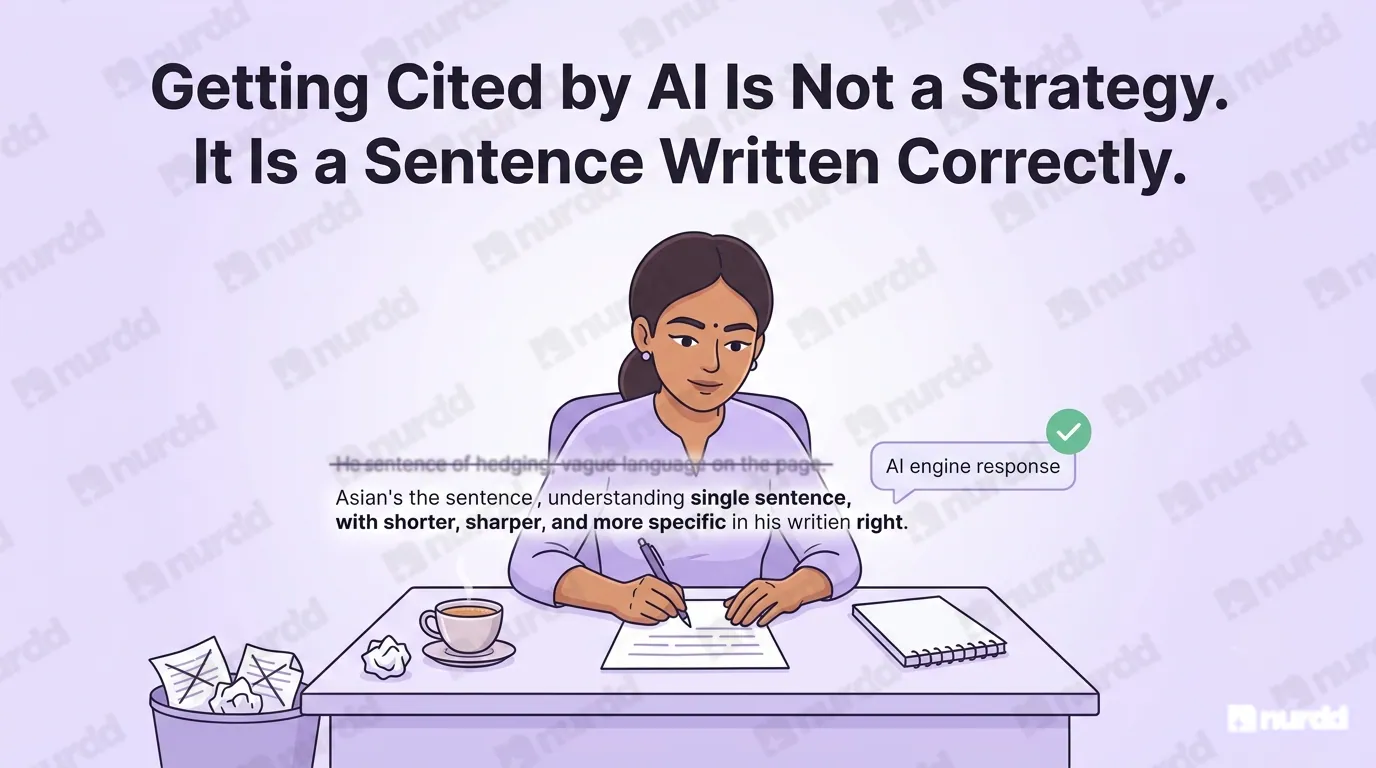
Weak version: "We are a marketing technology platform that helps brands grow their business through influencer marketing and AI-powered insights." This tells an AI engine nothing that distinguishes you from 200 other companies.
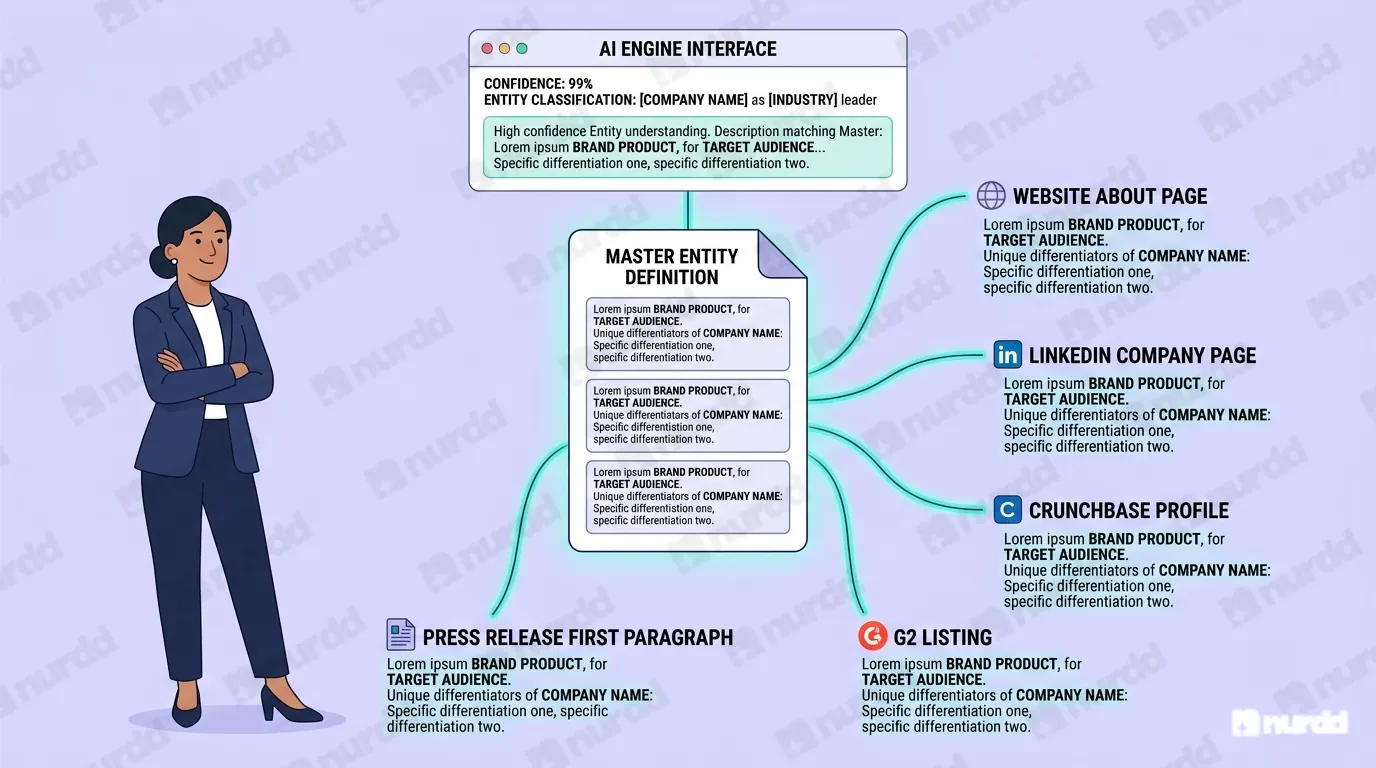
Strong version: "Nurdd is an AI-powered creator marketing platform for Indian D2C brands. It includes Nia for finding and vetting influencers and tracking whether creator content actually drove sales, Noma for measuring how visible a brand is when AI engines like ChatGPT or Perplexity give product recommendations, and Pulse for analysing paid media performance on Meta and Google Ads without needing a media buyer." Specific. Jargon-free. Every word is doing work.
Your entity definition should appear verbatim, or very closely matched, on your website's About page, your LinkedIn company page, your Crunchbase profile, your G2 listing, and the first paragraph of any press release you issue. When five different sources describe you in closely matching language, AI models build a high-confidence entity understanding.
The Consistency Test
Open five sources that describe your brand: your website homepage, your LinkedIn company description, your most recent press mention, your G2 profile, and your founder's bio. Copy the brand description from each. Read them side by side. Do they describe the same company in the same words? For most brands, they won't. That inconsistency is costing you AI visibility every day.
Product Names and Features Need Entity Definitions Too
If your product has named features or sub-products Nurdd has Nia, Noma, and Pulse each deserves its own mini entity definition. An AI engine that can describe each sub-product specifically is dramatically more useful when someone asks "what does Noma do" or "which Nurdd product tracks influencer sales." This is especially important for early-stage companies where total brand recognition is still building.
AI engines don't read between the lines. They read what's actually there. Write clearly, write consistently, and they'll describe you accurately every time.
Sources & References
1. Google — Understanding Entities in Search and Knowledge Graph Documentation
https://developers.google.com/search/docs/appearance/structured-data/organization
2. Jason Barnard — Brand SERP and Entity Optimization Guide (Kalicube, 2025)
https://kalicube.com/brand-serp/entity-optimization/
3. Wil Reynolds, Seer Interactive — Entity SEO and AI Visibility Convergence
https://www.seerinteractive.com/blog/entity-seo-ai-visibility
4. Search Engine Roundtable — How AI Engines Build Brand Descriptions (2026)
https://www.seroundtable.com/ai-brand-descriptions-2026.html
5. Crunchbase — Profile Optimization and AI Search Discoverability Guide

Is your brand showing up in AI search answers?
Noma tracks whether ChatGPT, Perplexity, Gemini, Claude, and Grok mention your brand when customers ask category questions — and shows you exactly how to improve your AI visibility.