I Tracked My Brand on ChatGPT Every Week for a Month. Here's What Changed.
 27 Jun 20268 min read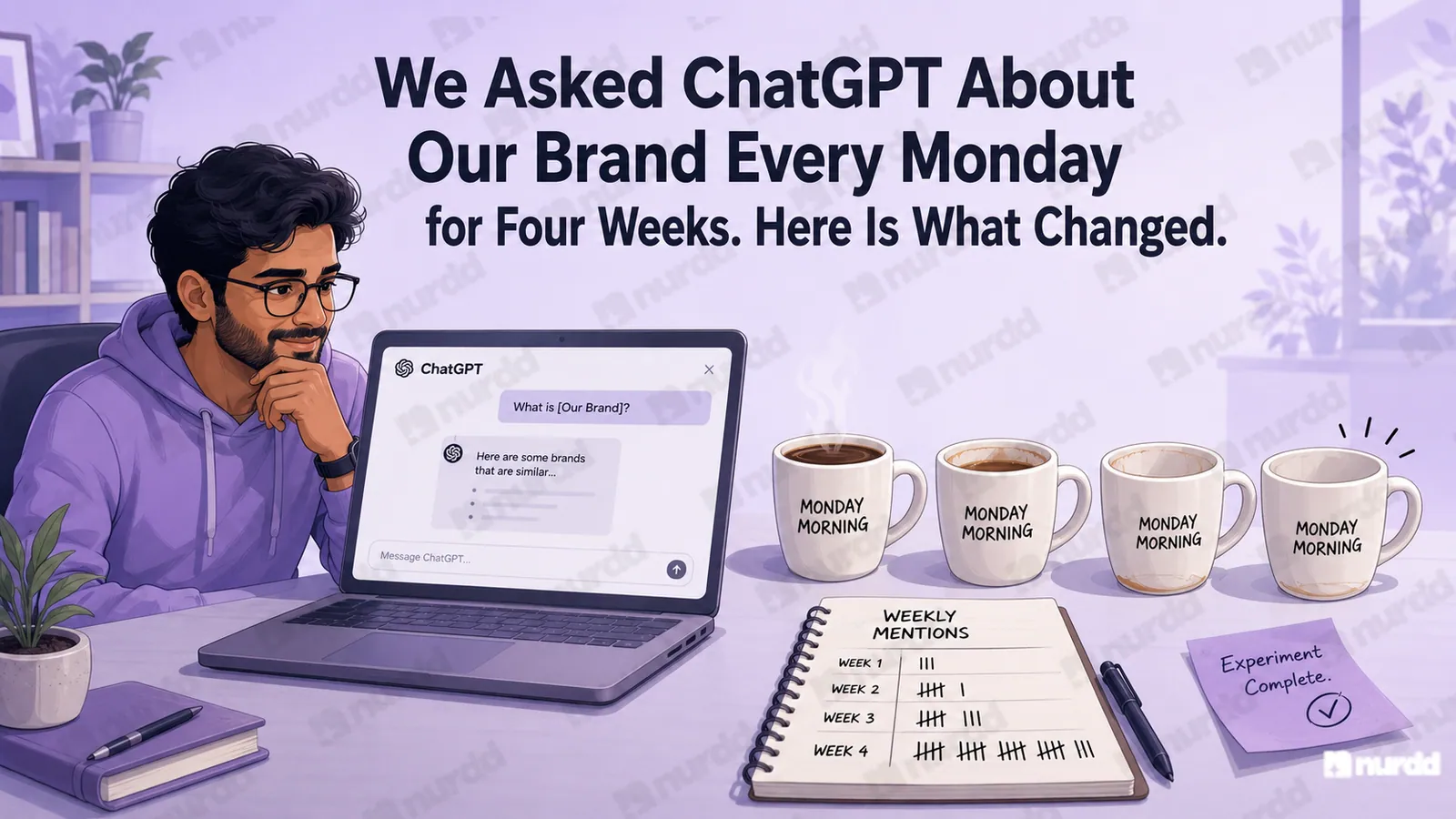
Over four weeks, the brand’s ChatGPT mentions rose from 3 of 12 queries to 8, with the biggest jump following two press mentions. Consistent entity descriptions across owned and third-party profiles helped clarify its positioning, while new content had little immediate effect because model updates lagged.
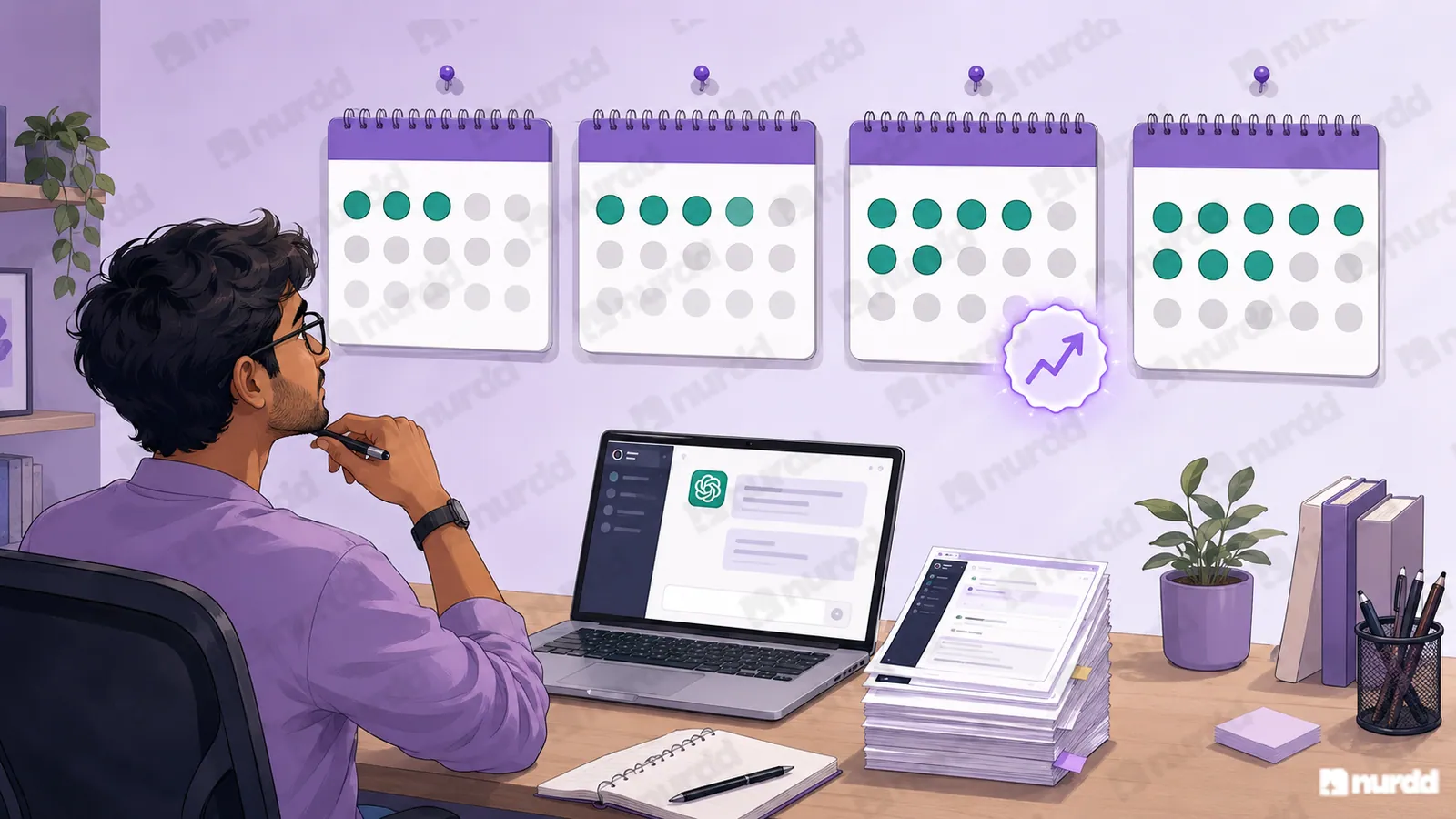
Most conversations about AI search visibility are theoretical. "Publish authoritative content." "Build topical depth." "Get cited by trusted sources." All true. All vague. Nobody was showing what actually changes week-over-week when you do or don't do these things. So we ran an experiment. Four weeks. The same set of queries asked consistently in ChatGPT every seven days.
The Setup
We picked 12 queries: direct brand queries, category queries, competitor-adjacent queries, and problem queries all things a real customer might type when looking for our product category. We asked all 12 every Monday at the same time, in a fresh ChatGPT session with no memory. We screenshotted every response and noted: was our brand mentioned? What was said? Which competitors appeared?
Week 1: The Baseline
Our brand appeared in responses to 3 of the 12 queries. Always in a generic list format "tools that do X include A, B, C, and [our brand]." No specific detail about what we do differently. No quotes from our content. Competitors with more press coverage and more review site mentions appeared more frequently and with more detail. ChatGPT knew we existed. It didn't know much about us.
Week 2: After Publishing Three In-Depth Guides
Between weeks 1 and 2, we published three long-form blog posts written with answer-engine formatting in mind clear questions as headings, direct answers in the first sentence, specific data points. Week 2 result: minor change. We appeared in 4 of 12 queries. The new blogs hadn't been absorbed into training data yet. ChatGPT doesn't update in real time. Content publication affects AI visibility on a lag of months, not days.
Week 3: After Getting Two Press Mentions
A founder newsletter and a startup-focused news site both mentioned us that week. Week 3 result: significant change. We appeared in 6 of 12 queries. In two responses, ChatGPT included a description of what we do that closely matched the language used in the press pieces not our website copy, but the way the journalists described us. This was the biggest insight: third-party descriptions of your brand are what AI engines absorb, not just what you say about yourself.
Week 4: After Optimising Our Entity Description
We rewrote our homepage and About page to be structured more like an entity definition clear, factual, specific, consistent language about what we do and who we serve. We made sure this same language appeared consistently across our LinkedIn company page and any profiles we controlled. Week 4 result: we appeared in 8 of 12 queries. The language describing us was a much closer match to our own positioning suggesting that when consistent language appears across both owned and third-party sources, the model starts to have a clearer entity understanding.
What This Experiment Actually Teaches
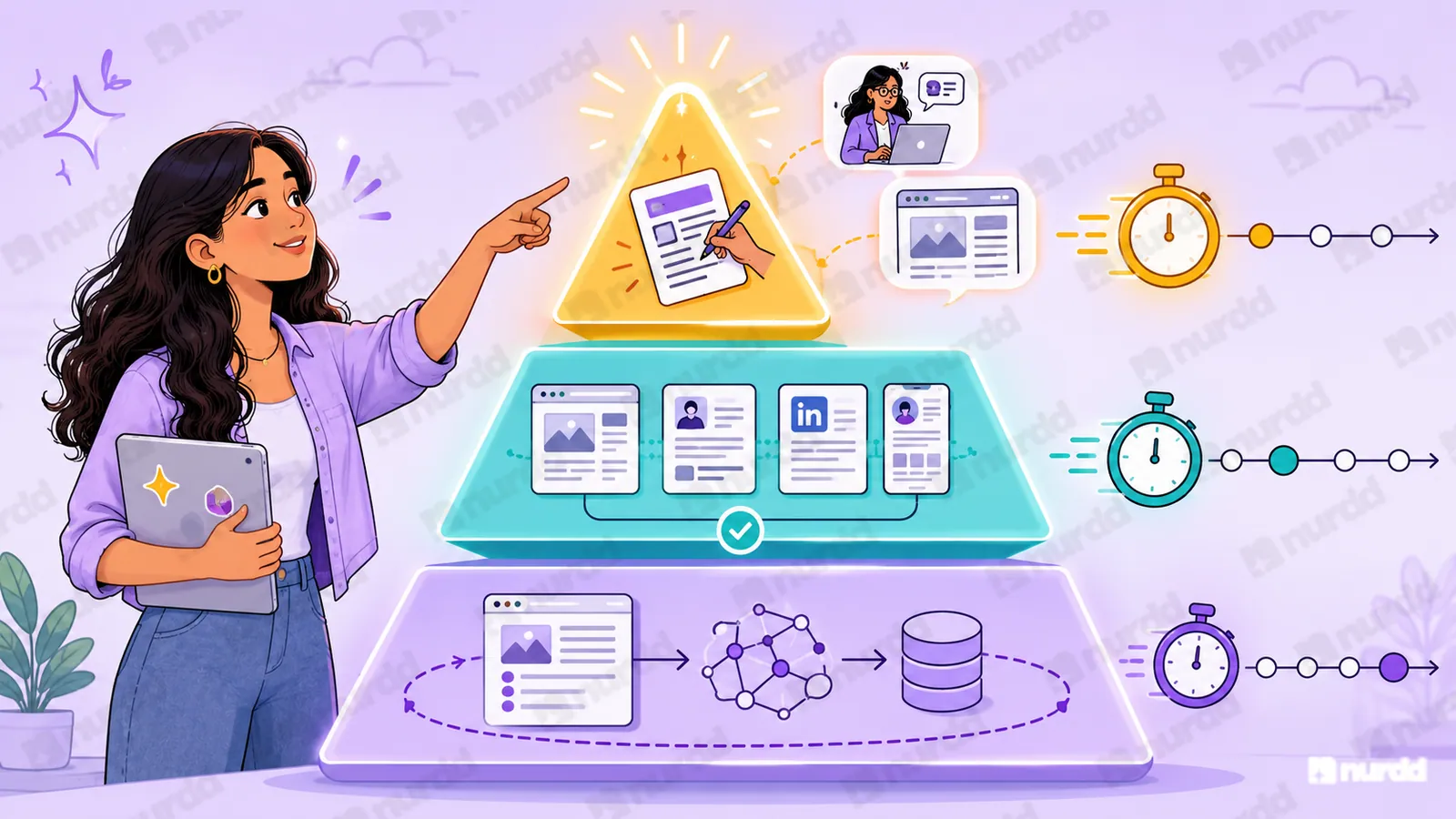
AI search visibility is a long game built on three layers. First: what third parties say about you press mentions, review sites, aggregator lists. This has the most immediate impact. Second: how consistently you describe yourself across all surfaces. Third: the quality and structure of your own content but this takes longest because it depends on the model's training and update cycles. The brands winning in AI search right now started building all three layers 12 to 18 months ago.
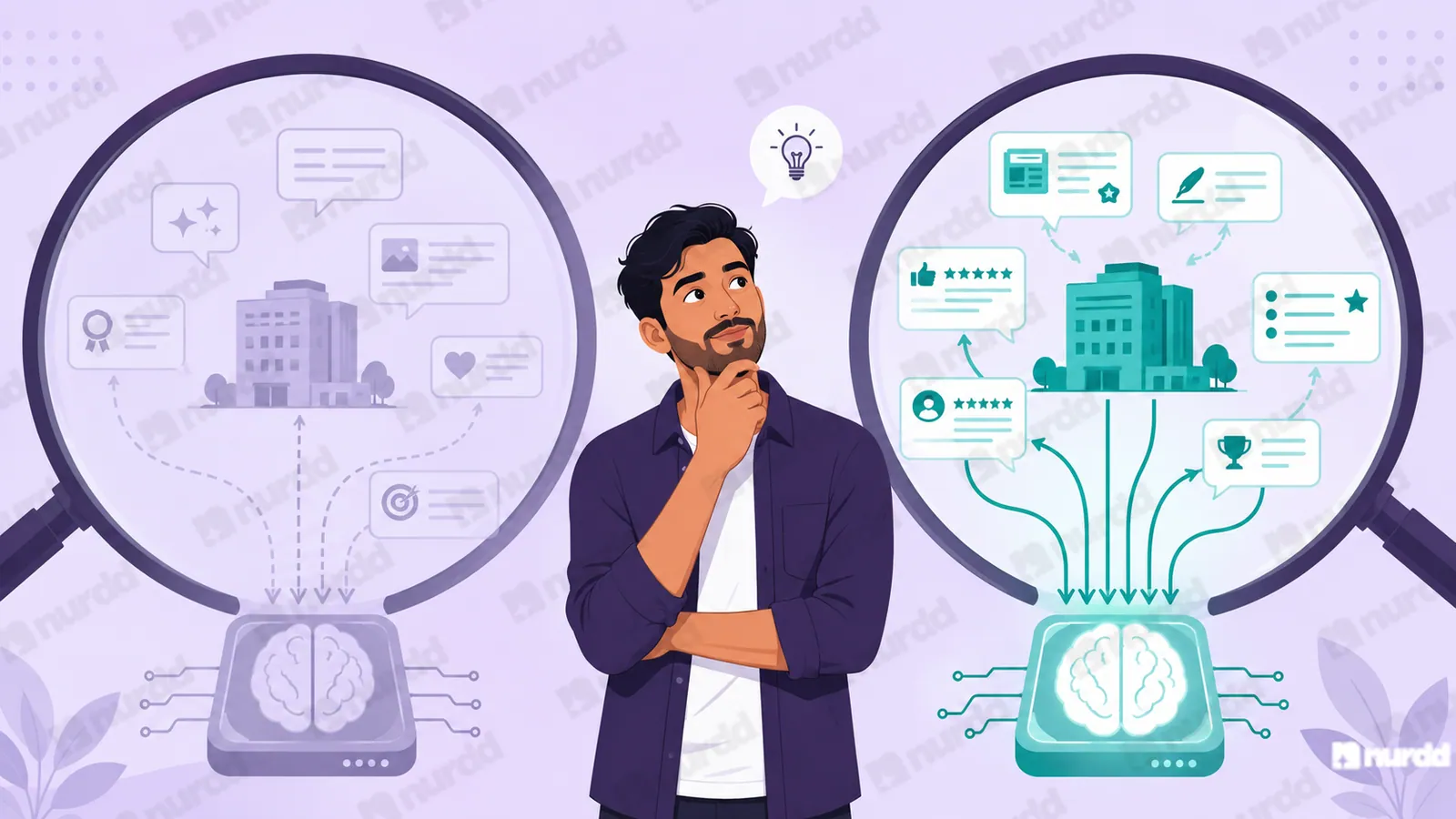
AI engines don't read your marketing copy. They absorb what the rest of the internet has decided you are. That's the thing worth optimising.
Sources and References
OpenAI — ChatGPT Model Training and Knowledge Update Documentation — https://openai.com/research/
Search Engine Land — How AI Search Engines Build Entity Understanding (2025) — https://searchengineland.com/ai-search-entity-understanding
Ahrefs — Brand Entity Optimization for AI Search 2026 — https://ahrefs.com/blog/entity-seo/
Gartner — Brand Visibility in Generative AI Responses: Research Report 2025 — https://www.gartner.com/en/research
SparkToro — Third-Party Citation Patterns in LLM Responses 2025 — https://sparktoro.com/blog/what-sources-does-chatgpt-cite-most/

Is your brand showing up in AI search answers?
Noma tracks whether ChatGPT, Perplexity, Gemini, Claude, and Grok mention your brand when customers ask category questions — and shows you exactly how to improve your AI visibility.