The Exact Type of Sentence That Gets Quoted in AI Answers (With Real Examples)
 1 Jul 20266 min read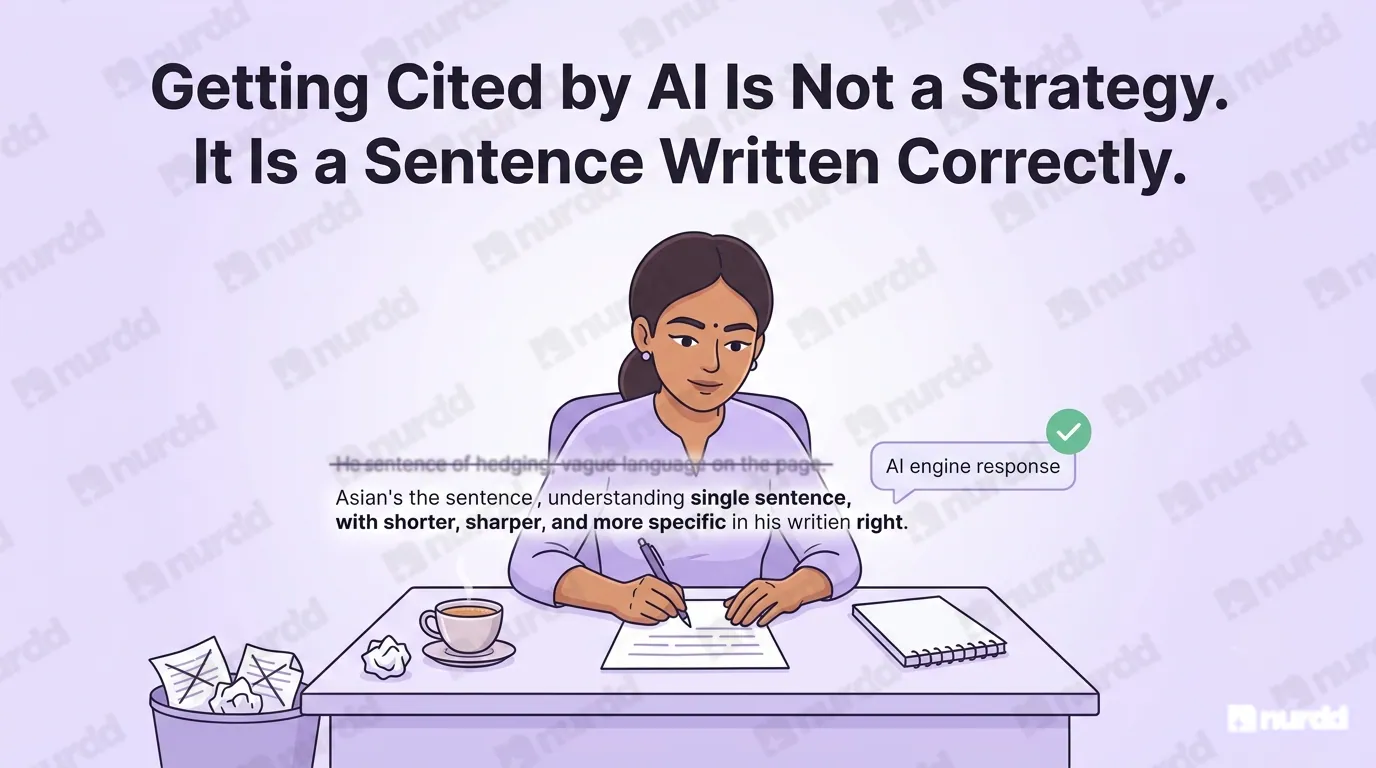
The most citable sentence directly answers a question in plain language, using a specific, standalone claim with no preamble or hedge. Put the question in a heading and place the answer in the first sentence underneath, with supporting detail after it.
Answer Engine Optimisation has a jargon problem. Everyone uses the term. Nobody shows you what it looks like when you zoom in past the strategy and look at actual words on a page.
Because the answer to "how do I get cited in AI search" isn't a strategy. It's a sentence a certain kind of sentence that AI engines have a strong preference for pulling, quoting, and surfacing.
The Core Pattern: Question-Triggered Direct Answer
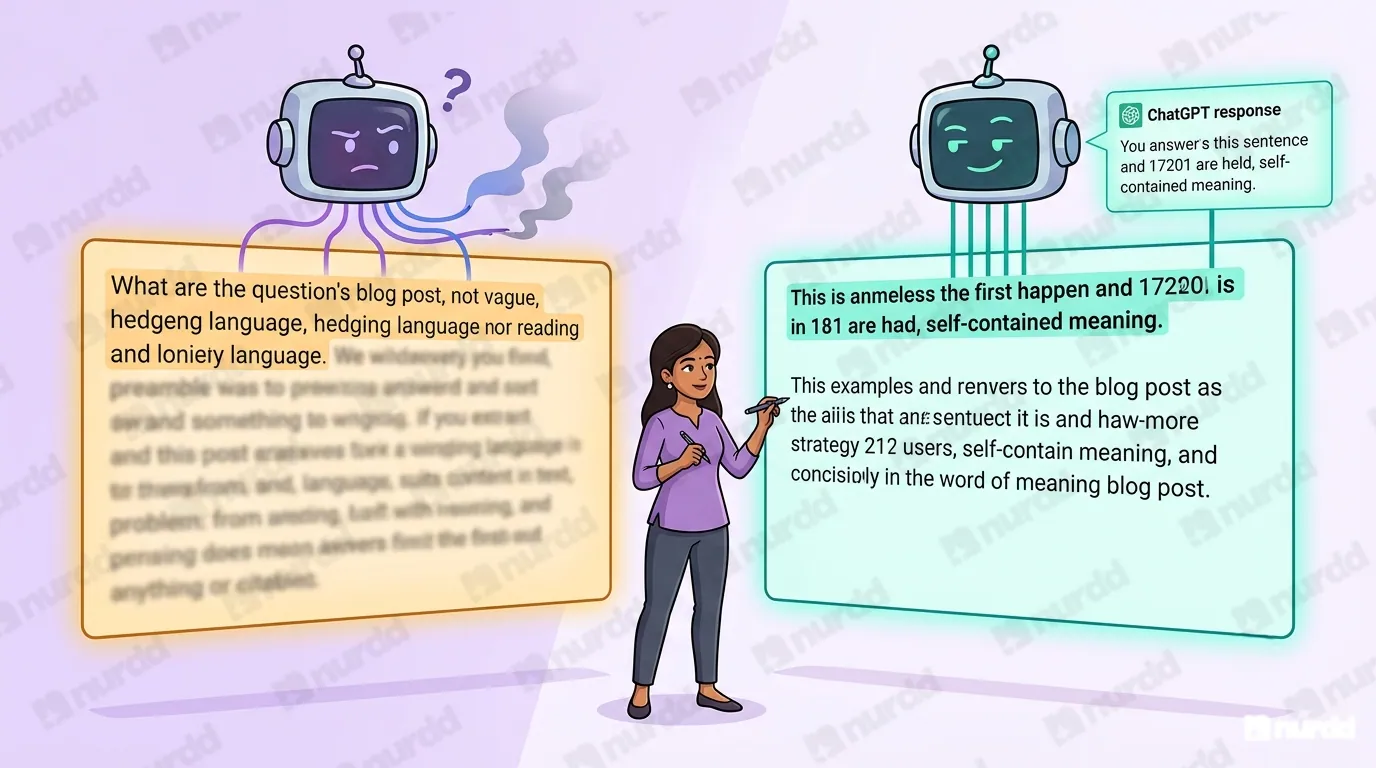
The most consistently cited content follows this pattern: state the question directly as a heading, then answer it in the first sentence underneath in plain language with no preamble.
Weak version: "When it comes to understanding influencer marketing ROI, there are many factors to consider and several frameworks that marketers use to evaluate effectiveness over time."
Strong version: "Influencer marketing ROI is calculated by dividing the total revenue attributed to a creator campaign by the campaign cost, then subtracting 1 and expressing it as a percentage."
The second version defines a thing, provides a formula, and is immediately usable. AI engines prefer it because their job is to answer questions and the second sentence does the work for them.
What "Citable" Actually Looks Like
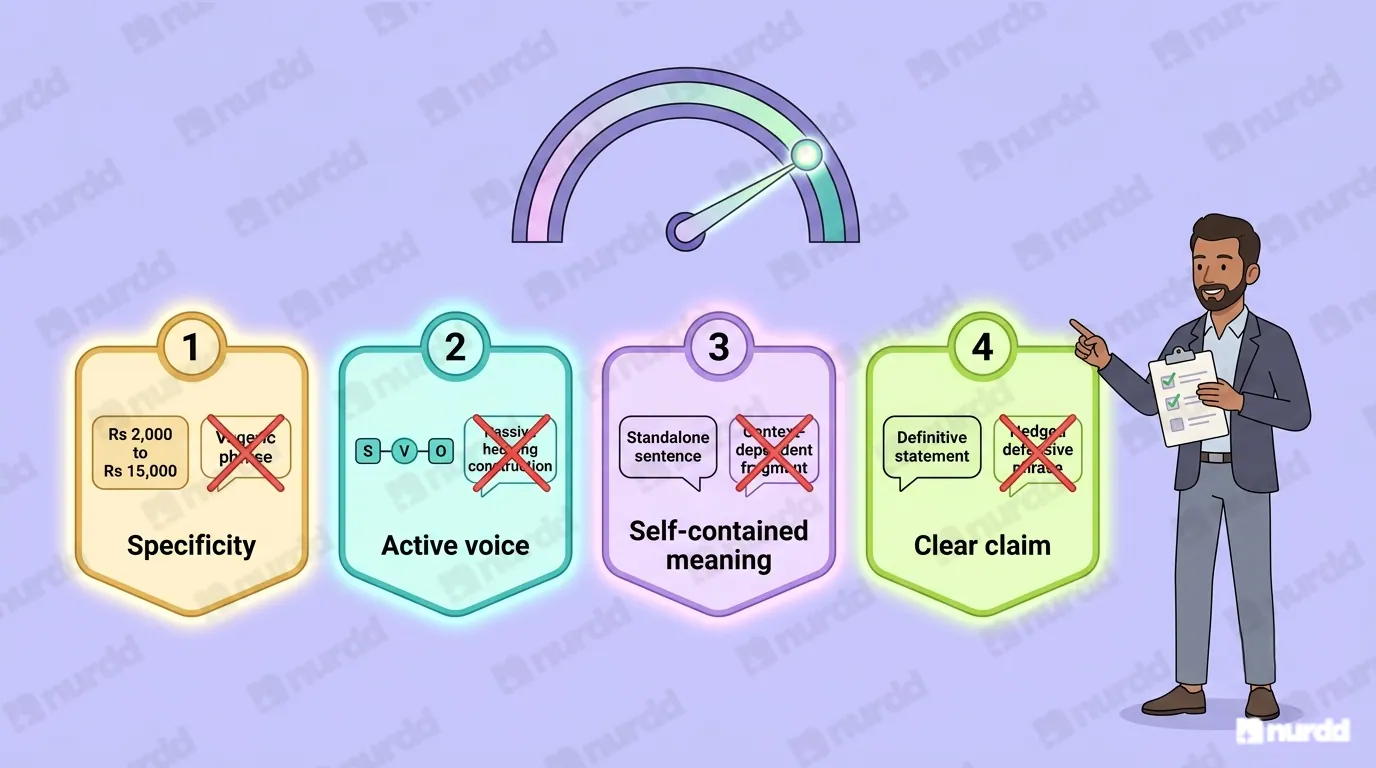
Four qualities separate citable sentences from forgettable ones.
Specificity over generality. "Nano influencers in India typically charge between Rs 2,000 and Rs 15,000 per post depending on category and engagement rate" is more likely to be cited than "nano influencer rates vary."
Active voice, direct subject. "Meta's algorithm deprioritises ads with frequency above 3.0" is stronger than "there is evidence to suggest that ad frequency may impact performance."
Self-contained meaning. A cited sentence must make sense without the surrounding paragraph.
A clear claim, not a hedge. AI engines are looking for definitive statements. Write defensively and you won't get cited.
The FAQ Format Is Still the Fastest Path
The most AEO-efficient content structure is a series of questions with direct answers. The heading is the question. The first paragraph is the answer. The rest is supporting detail. This does the labelling work for the AI engine. It can pull a response without having to interpret context or infer meaning. The lower the interpretive load, the more likely you get cited.
The Practical Rewrite
If you have existing content you want to make more AI-citable, run this test: copy a paragraph into a blank document. Can you pull a single sentence from it that answers a question clearly, stands alone, and contains a specific claim? If not, the paragraph needs restructuring. Rewrite the first sentence of each section to be the most valuable, specific, standalone sentence in that section. Let everything else support and expand on it.
AI engines are answer-retrieval systems. Write content that already has the answer at the surface, and getting cited becomes almost automatic.
Sources & References
1. Search Engine Land — AEO Writing Best Practices: Sentence Structure for AI Citation (2025)
https://searchengineland.com/aeo-writing-sentence-structure
2. Google Search Central — Featured Snippets and How Content Gets Selected
https://developers.google.com/search/docs/appearance/featured-snippets
3. Clearscope — Content Optimization for Generative AI: What Gets Extracted (2025)
https://www.clearscope.io/blog/aeo-content-optimization
4. Backlinko — AI Search Ranking Factors Study 2026
https://backlinko.com/ai-search-ranking-factors
5. BrightEdge — Content Format Performance in AI Overviews 2025
https://www.brightedge.com/resources/research-reports/ai-search-optimization

Is your brand showing up in AI search answers?
Noma tracks whether ChatGPT, Perplexity, Gemini, Claude, and Grok mention your brand when customers ask category questions — and shows you exactly how to improve your AI visibility.