How to Track Your Brand's AI Search Visibility Score Week Over Week
 11 Apr 20266 min read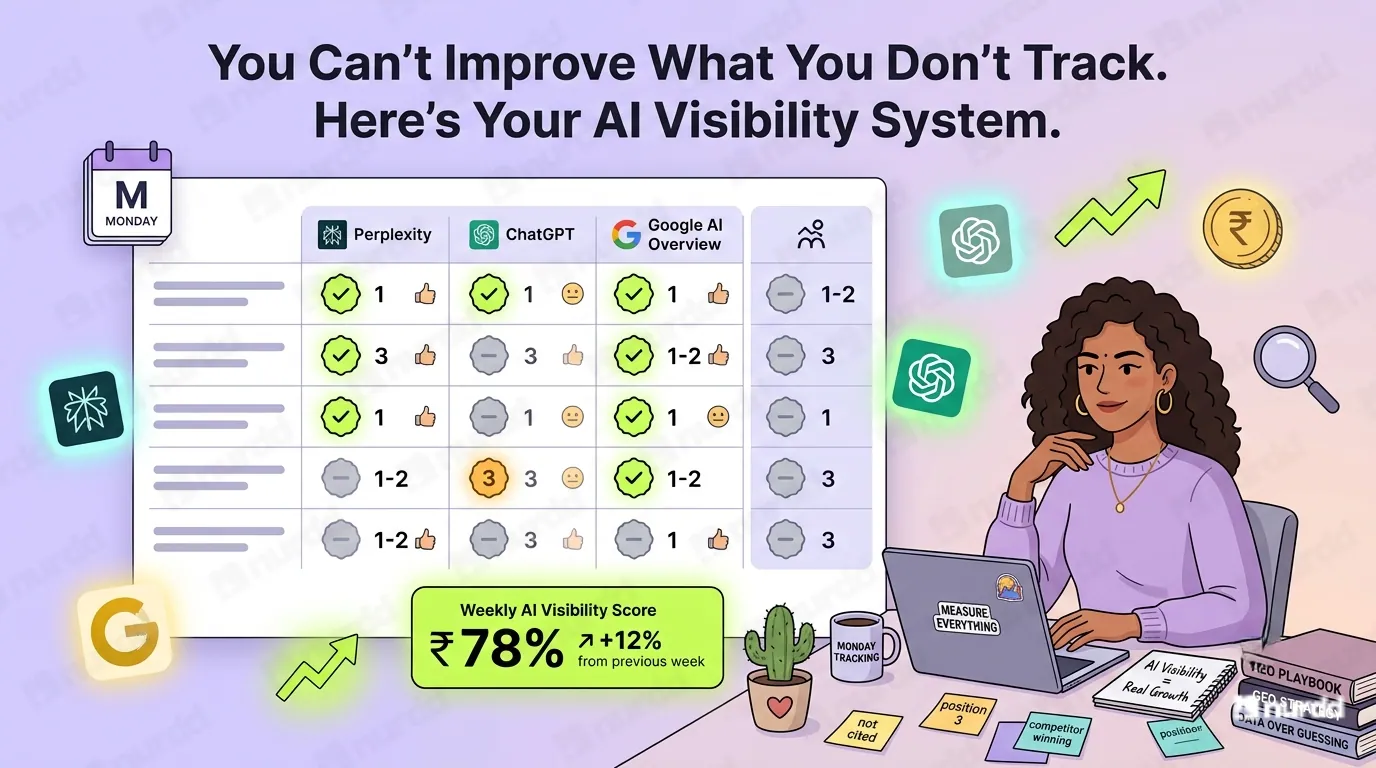
Each Monday, run a 30–50-query set across Perplexity, ChatGPT, and Google AI Overview, recording whether your brand appears, its citation position, and sentiment, while tracking competitors. Calculate the weekly AI Visibility Score as positive citations in positions 1–2 divided by total queries, multiplied by 100, and compare it week over week.
GEO is a strategy. But without a measurement system, it is just optimism. Most brands investing in AI search visibility have no idea whether their efforts are working because they have no weekly tracking cadence, no benchmark, and no dashboard. This is how you build one.
What AI Search Visibility Actually Means
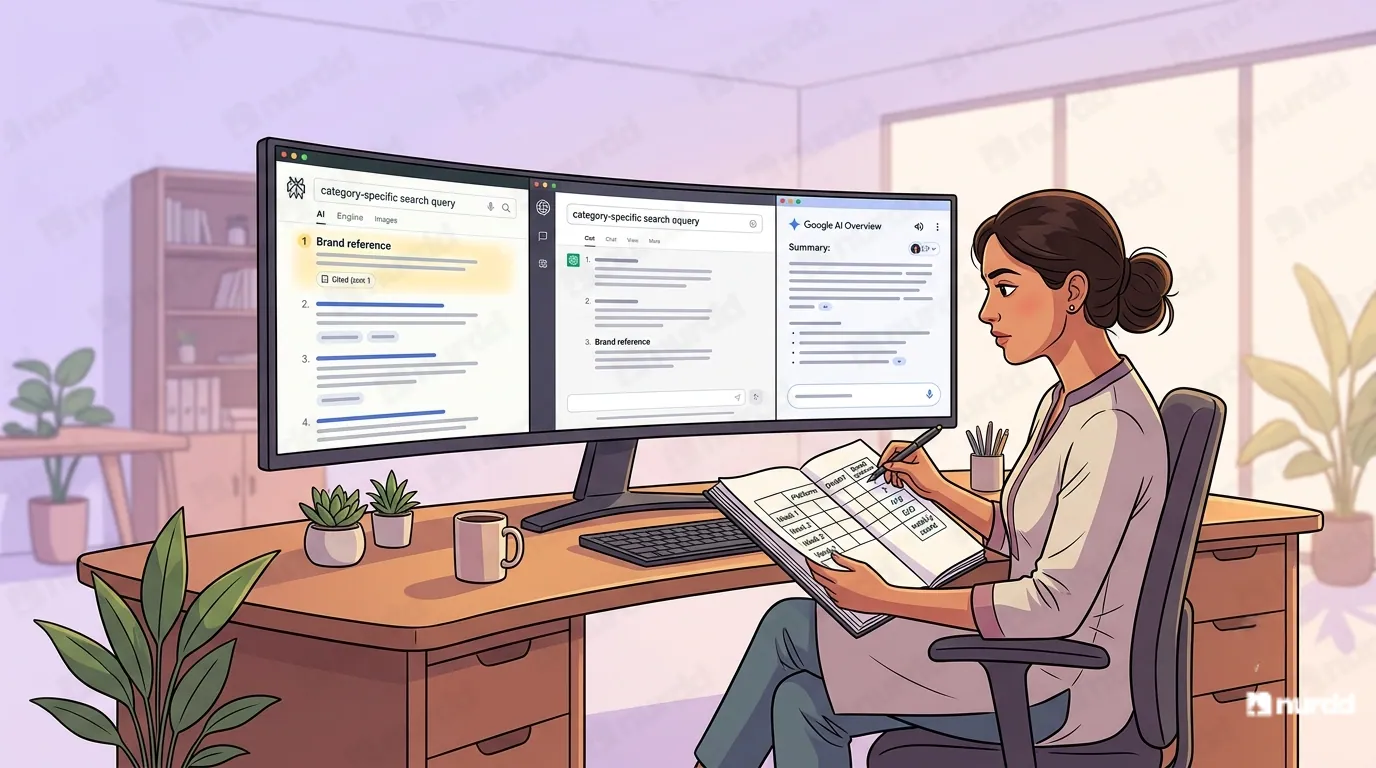
AI search visibility is a measure of how often, how prominently, and how accurately your brand is cited by AI engines when users ask questions relevant to your product category.
It has three dimensions: Citation frequency, how many relevant queries include your brand in the AI-generated answer. Citation position , whether your brand is mentioned first, in the middle, or as a brief aside. Citation sentiment, whether the mention is neutral, positive, or qualified with a caveat.
A brand can have high citation frequency with poor citation sentiment, mentioned as a budget option in a premium category, for example. Tracking all three dimensions is what separates useful measurement from vanity metrics.
Building Your Query Set
Your query set is the foundation of your tracking system. It is a list of 30 to 50 questions that your target customer might ask an AI engine that are relevant to your product category.
Organise queries into three tiers. Tier 1: Category queries 'best protein powder India,' 'top D2C skincare brands India.' These are the highest-volume, most competitive. Tier 2: Problem queries 'what should I use for oily skin India,' 'which supplement helps with muscle recovery.' These reflect genuine user intent.
Tier 3: Comparison queries 'X brand vs Y brand India,' 'is X protein worth it.' Run each query across at least three AI engines: Perplexity, ChatGPT, and Google AI Overview. Each engine has different citation logic, and your visibility profile will vary significantly across them.
The Weekly Tracking Protocol
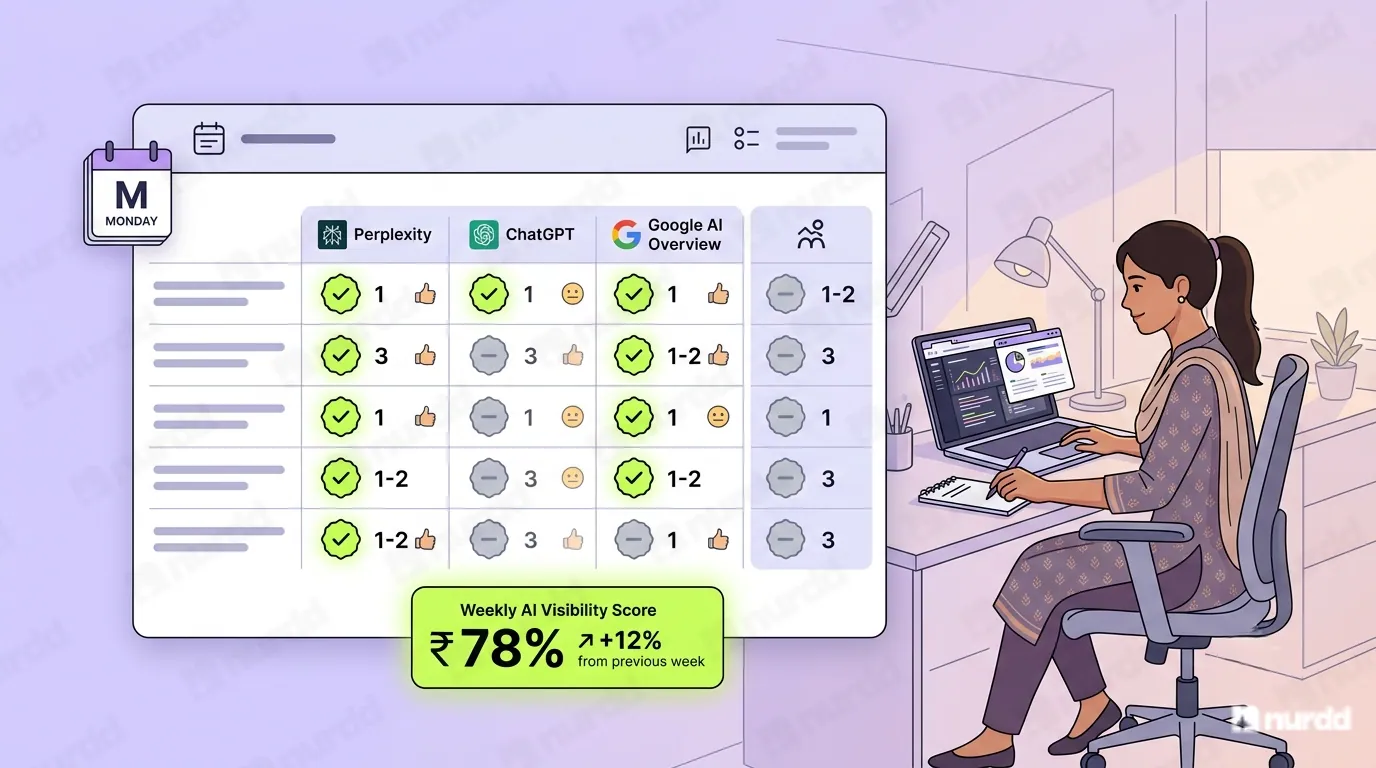
Every Monday, run your full query set across all three AI engines. For each query, record: Is your brand cited? (Y/N). At what position? (1st, 2nd, 3rd+, or not cited). What is the sentiment of the mention? (Positive / Neutral / Qualified).
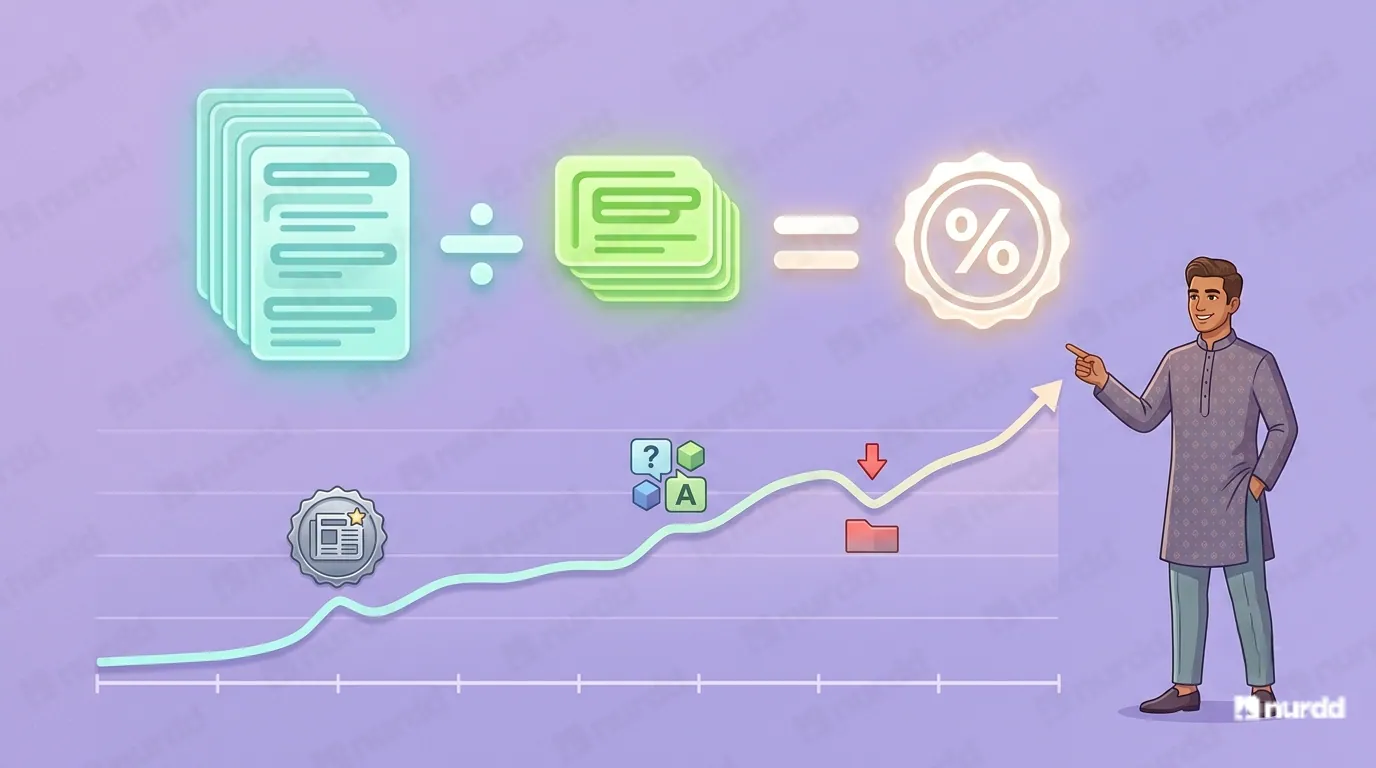
Calculate your weekly AI Visibility Score: (Number of queries where your brand is cited positively in position 1-2) divided by (Total queries) multiplied by 100. This gives you a percentage score you can track week over week.
Track competitor visibility simultaneously. You need to know not just whether you appear, but whether you appear more or less often than your direct competitors.
Leading Indicators That Predict Score Changes
Backlink acquisition to pages that AI engines frequently cite is a leading indicator. When you earn a mention in a Tier 1 publication, expect your AI visibility score to improve within 2 to 4 weeks as AI engines update their knowledge bases.
Schema implementation changes typically show impact in 1 to 3 weeks. FAQ schema additions are the fastest to show results in AI Overview.
Content publication cadence matters. Brands that publish one deeply structured, claim-rich piece of content per week consistently outperform brands that publish three generic posts per week on AI visibility metrics.
What Noma Automates
Noma runs your weekly AI visibility tracking automatically across Perplexity, ChatGPT, and Google AI Overview, scores your citations by position and sentiment, tracks competitor visibility in parallel, and surfaces the specific content changes that are moving your score each week.
If you are not tracking your AI search visibility weekly, you are not managing it — you are just hoping. Hope is not a growth strategy.
Sources & References
· SparkToro (2025) – Measuring Brand Visibility in AI-Generated Answers | sparktoro.com
· Moz (2025) – GEO Measurement Framework: Tracking AI Search Citations | moz.com/blog
· BrightEdge (2025) – AI Search Visibility Index: Methodology | brightedge.com
· Noma, Nurdd (2026) – AI Visibility Score Benchmarks: Indian D2C Q1 2026 | nurdd.club/blogs

Is your brand showing up in AI search answers?
Noma tracks whether ChatGPT, Perplexity, Gemini, Claude, and Grok mention your brand when customers ask category questions — and shows you exactly how to improve your AI visibility.