AI Search Visibility
LLM SEO for D2C Brands: Rank in AI Answers
LLM SEO gets your brand into ChatGPT, Gemini and Perplexity answers. What it takes, how AI engines differ, and what works for D2C brands in 2026.
 Simran Rawat24 Oct 20267 min read
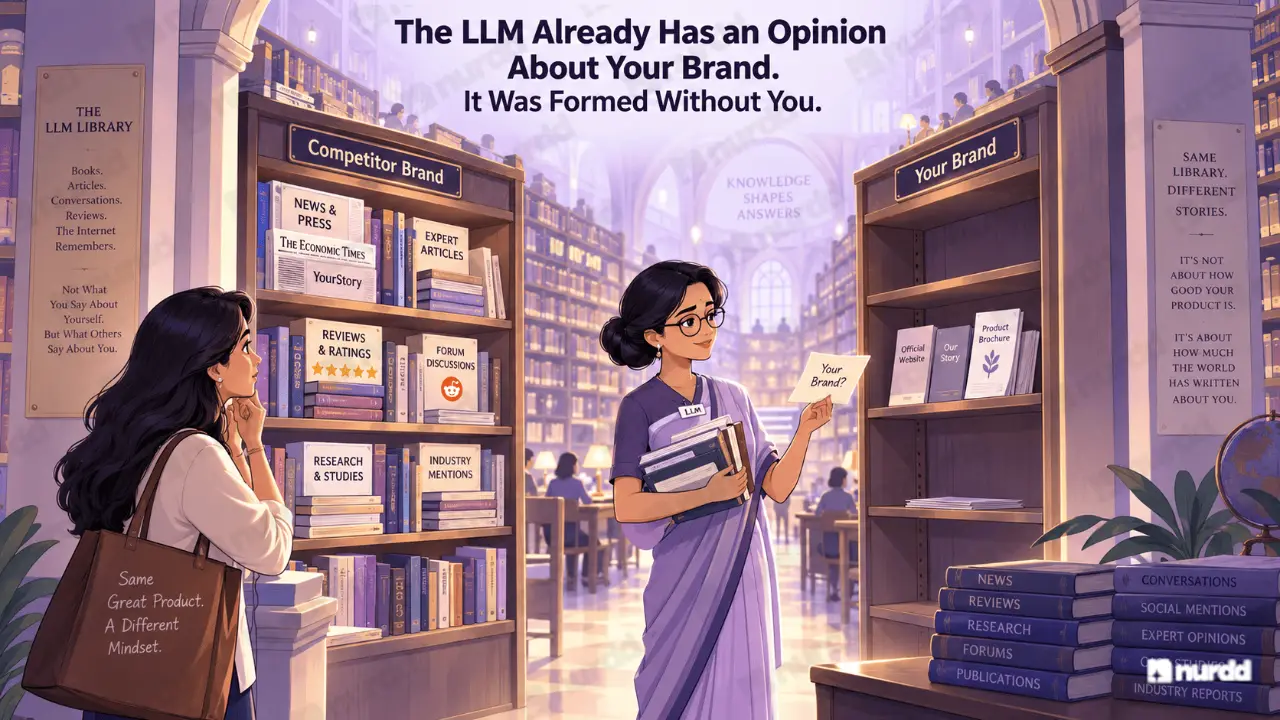
LLM SEO optimising your brand for Large Language Model responses covers the complete stack of signals that determine whether an LLM confidently includes your brand in its responses, from training data signals to real-time retrieval signals. Here is the complete picture for D2C brands.
How LLMs Decide What to Say About Your Brand
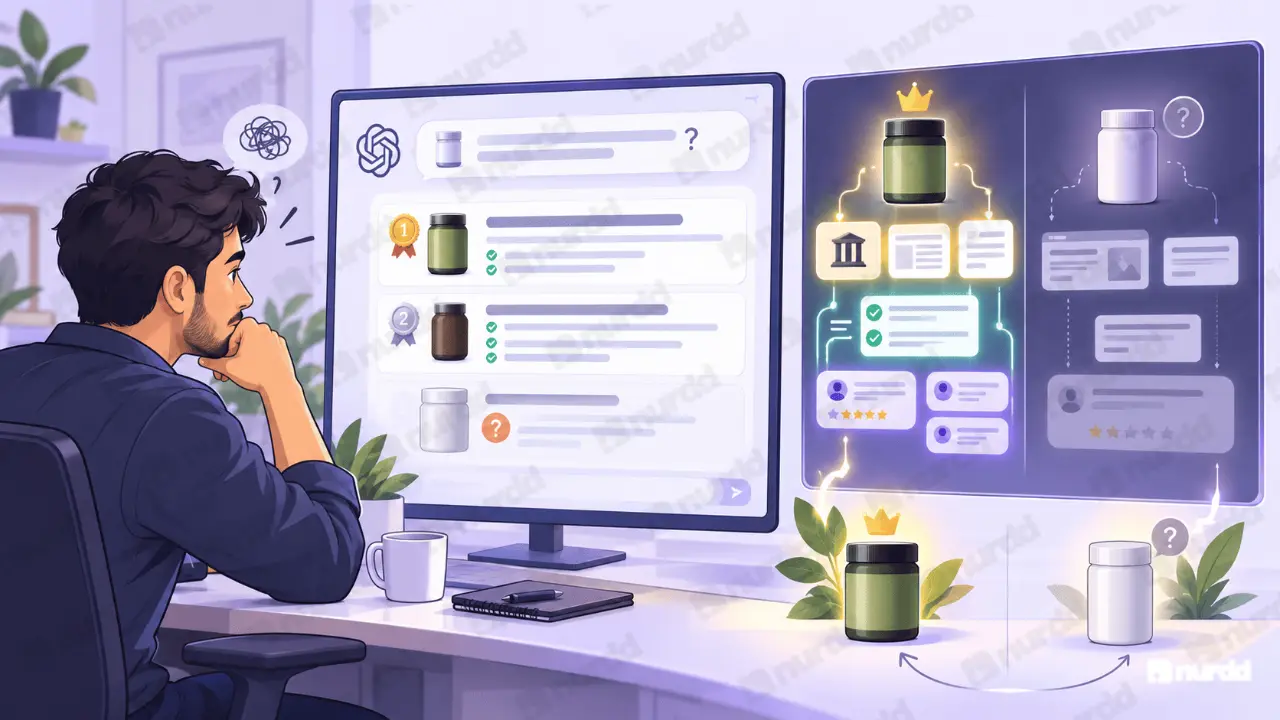
Parametric vs Retrieved Knowledge
Large Language Models generate responses based on two sources:
Parametric knowledge what the model learned during training. Matters for general brand recognition questions: "have you heard of Brand X," "what does Brand X make." Brands appear in parametric knowledge if they were mentioned frequently and consistently in the text the model was trained on: news articles, Wikipedia, industry reports, Reddit discussions, and high-traffic blog content.
Retrieved knowledge what the model finds via real-time web search or retrieval-augmented generation (RAG). Matters for specific product queries: "what is the best Brand X product for oily skin," "how does Brand X compare to Brand Y."
For most D2C brands: parametric knowledge is less important than retrieved knowledge. You are unlikely to appear in LLM training data at meaningful frequency without significant national-level media coverage. Focus LLM SEO efforts on retrieved knowledge signals.
What to Build
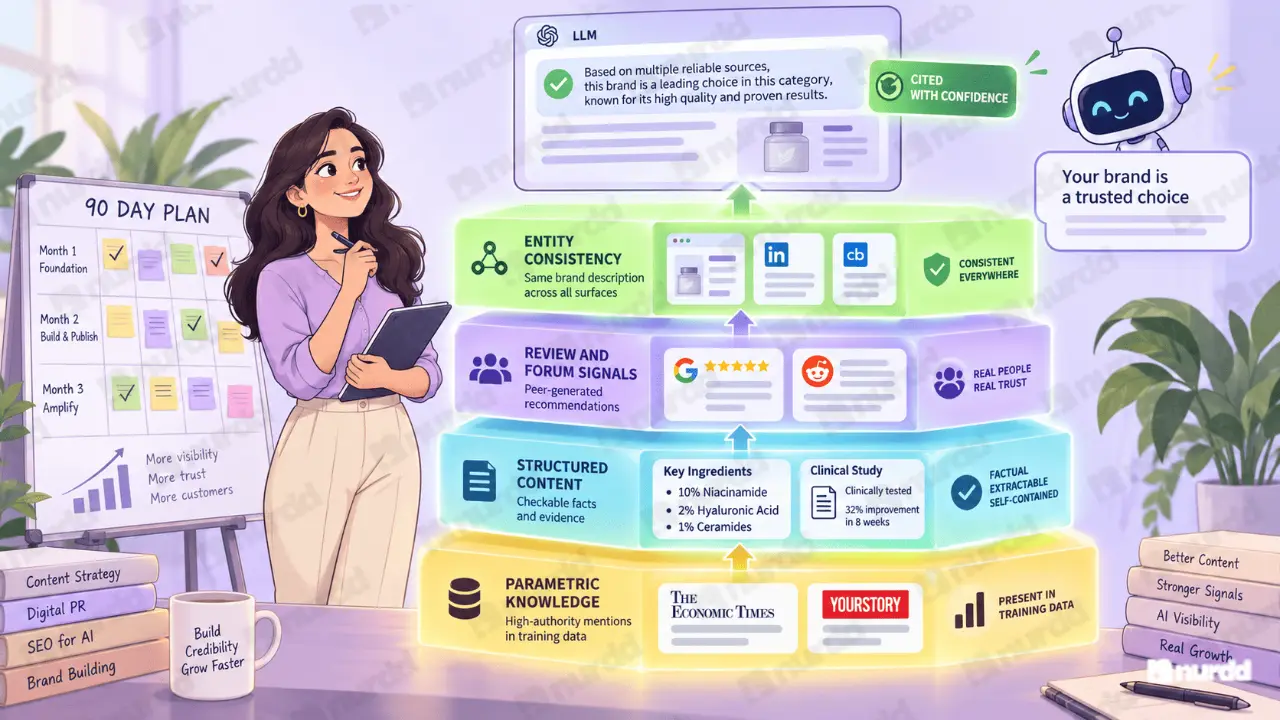
Four Retrieved Knowledge Signals
Crawlable, specific product pages. Your product pages must be crawlable check robots.txt is not blocking AI crawlers and must contain specific ingredient, mechanism, and outcome language the model can extract.
High-authority editorial mentions. A mention in a major business newspaper, a respected health or lifestyle publication, a leading startup news site, or any publication with DA above 60 gives LLMs a trusted, crawlable source to cite your brand from. One strong editorial mention is worth more for LLM retrieval than 50 social media posts.
Structured review content. Amazon product page reviews, Google Reviews, and specialist review platforms are frequently retrieved by LLMs for product recommendation queries. Reviews that describe specific outcomes in specific language are the most extractable.
Forum and community mentions. Reddit and Quora discussions where your brand appears as a specific recommendation are retrieved frequently by Perplexity in particular. Authentic community mentions provide a social validation signal LLMs weight significantly.
The Technical Foundation
AI Crawler Permissions — Check This Today
Many D2C brand websites inadvertently block AI crawlers because developers set aggressive crawl restrictions. The crawlers to whitelist in your robots.txt:
AI Engine | Crawler Name | What It Enables |
|---|---|---|
ChatGPT (OpenAI) | GPTBot | Enables your content to be retrieved for ChatGPT web search responses |
Google Gemini | Google-Extended | Enables your content in Gemini AI-generated responses |
Perplexity | PerplexityBot | Enables your content to be cited in Perplexity search answers |
Anthropic (Claude) | ClaudeBot | Enables your content in Claude web search responses |
If any of these are blocked in your robots.txt, the corresponding AI engine cannot index your content for retrieval. This is one of the most common and most easily fixed LLM SEO errors. Check it today — it takes 10 minutes.
Building Over Time
A 90-Day LLM SEO Programme
LLM SEO is not a one-week project. It is a 90-day minimum programme because AI engine citation frequency reflects a cumulative signal ecosystem, not the content you published last Tuesday.
Week 1 to 2 — Technical foundation: Audit robots.txt and whitelist all four AI crawlers. Confirm your site loads below 2 seconds on mobile. Check structured data on your top 5 product pages using Google's Rich Results Test. Fix any blocking issues before creating new content.
Week 3 to 6 — Content foundation: Rewrite the product pages for your top 3 revenue-generating SKUs to meet the extractability criteria specific claims, credibility signals, FAQ sections with factual self-contained answers. These three pages should become your highest-priority citation targets for AI engines in your category.
Week 7 to 12 — Authority building: Submit your brand for editorial consideration to 2 publications in your category. Answer 10 relevant questions on Quora with your brand's context (declare the affiliation covert promotion is both ethically wrong and algorithmically identifiable). Encourage recent buyers to post specific outcome reviews on Google and Amazon.
Track your citation rate and Share of Voice across Perplexity, ChatGPT, and Gemini in Noma weekly throughout this programme. The data will show you which actions are producing citation improvement for your specific brand and which gaps remain to be closed in the next 90-day cycle.
"If your robots.txt is blocking GPTBot, you have already failed at LLM SEO before writing a single word of content. Check the technical foundation first."
Sources and References
OpenAI – GPTBot: crawler documentation and opt-out guidelines
Google Search Central – Google-Extended and common crawlers documentation
Perplexity AI – PerplexityBot: web crawling and citation methodology
Nurdd / Noma – LLM SEO technical and content resources for D2C brands