Structured Data for D2C: The Schema Markup Guide That Gets You Into AI Overviews
 19 May 20268 min read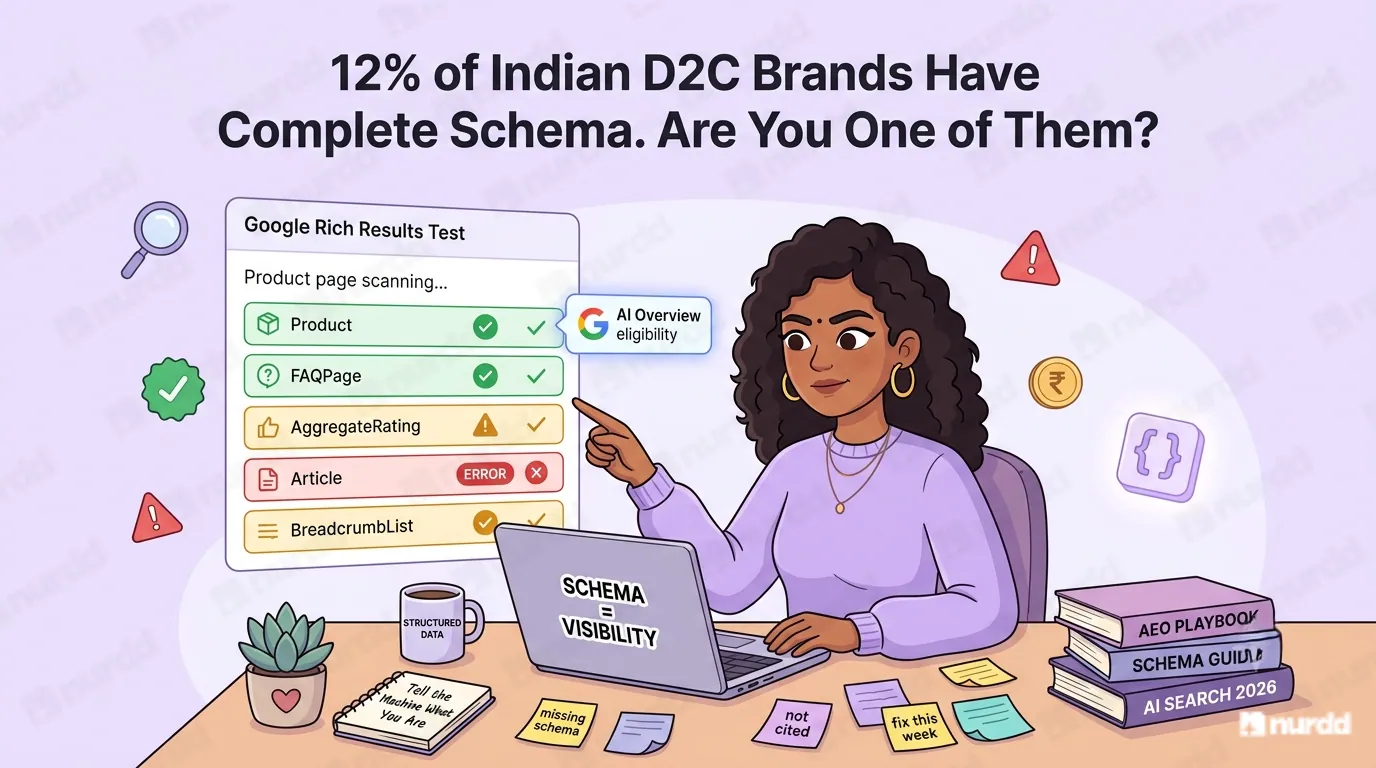
To improve your chances of appearing in AI Overviews, add complete, valid Product, Review, FAQPage, BreadcrumbList, and, where relevant, HowTo schema. Audit with Google’s Rich Results Test, remove duplicate or conflicting markup, and ensure schema claims match visible content; add Article schema to blog posts.
Schema markup has existed since 2011. Most D2C brands either ignore it or implement it badly. In 2026, it is no longer optional, it is one of the clearest signals you can send to AI engines about what your content means, what your product does, and why it should be cited.
Why Schema Matters More in the AI Search Era
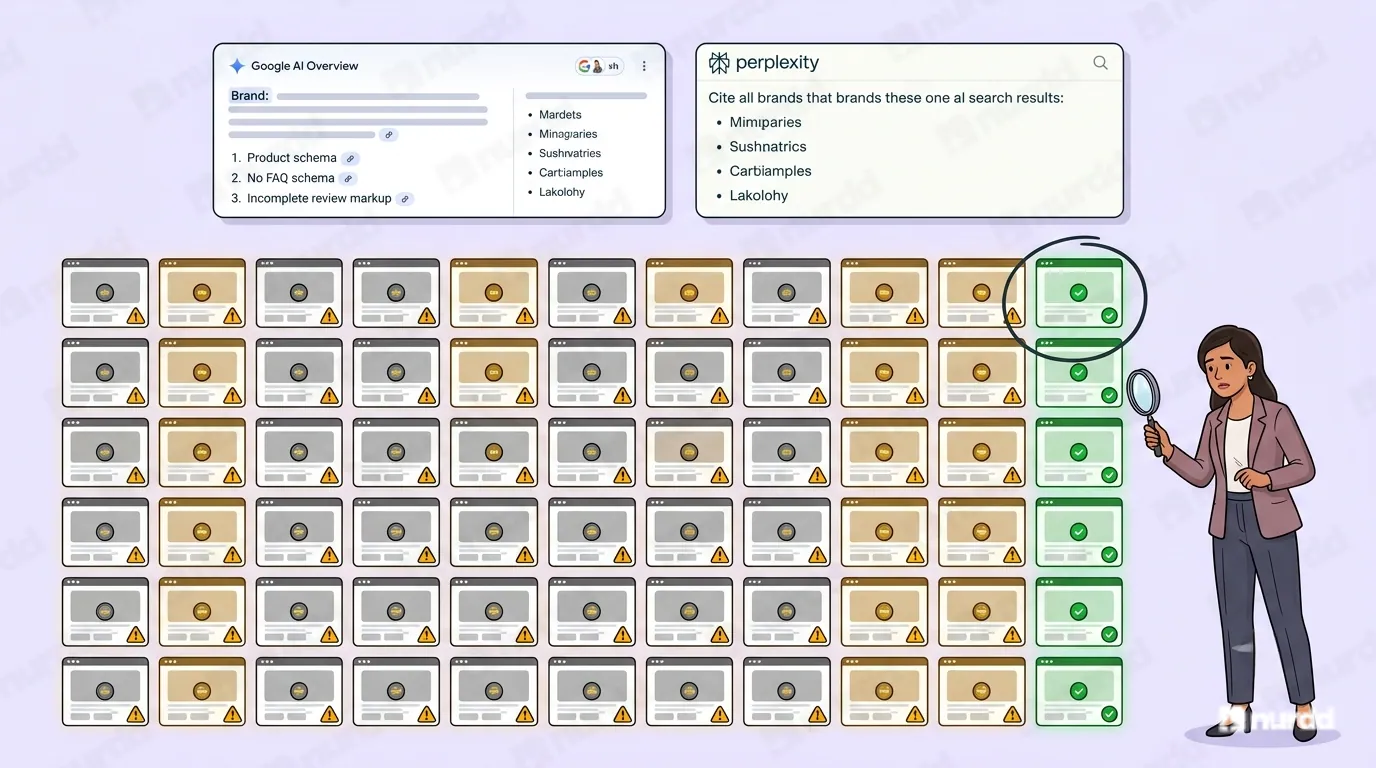
Traditional SEO used schema primarily to enable rich snippets in Google Search results star ratings, price ranges, breadcrumb trails. That use case still exists. But schema's role in 2026 is larger: it tells AI engines what type of content they are reading, how to extract key facts, and how to attribute claims correctly.
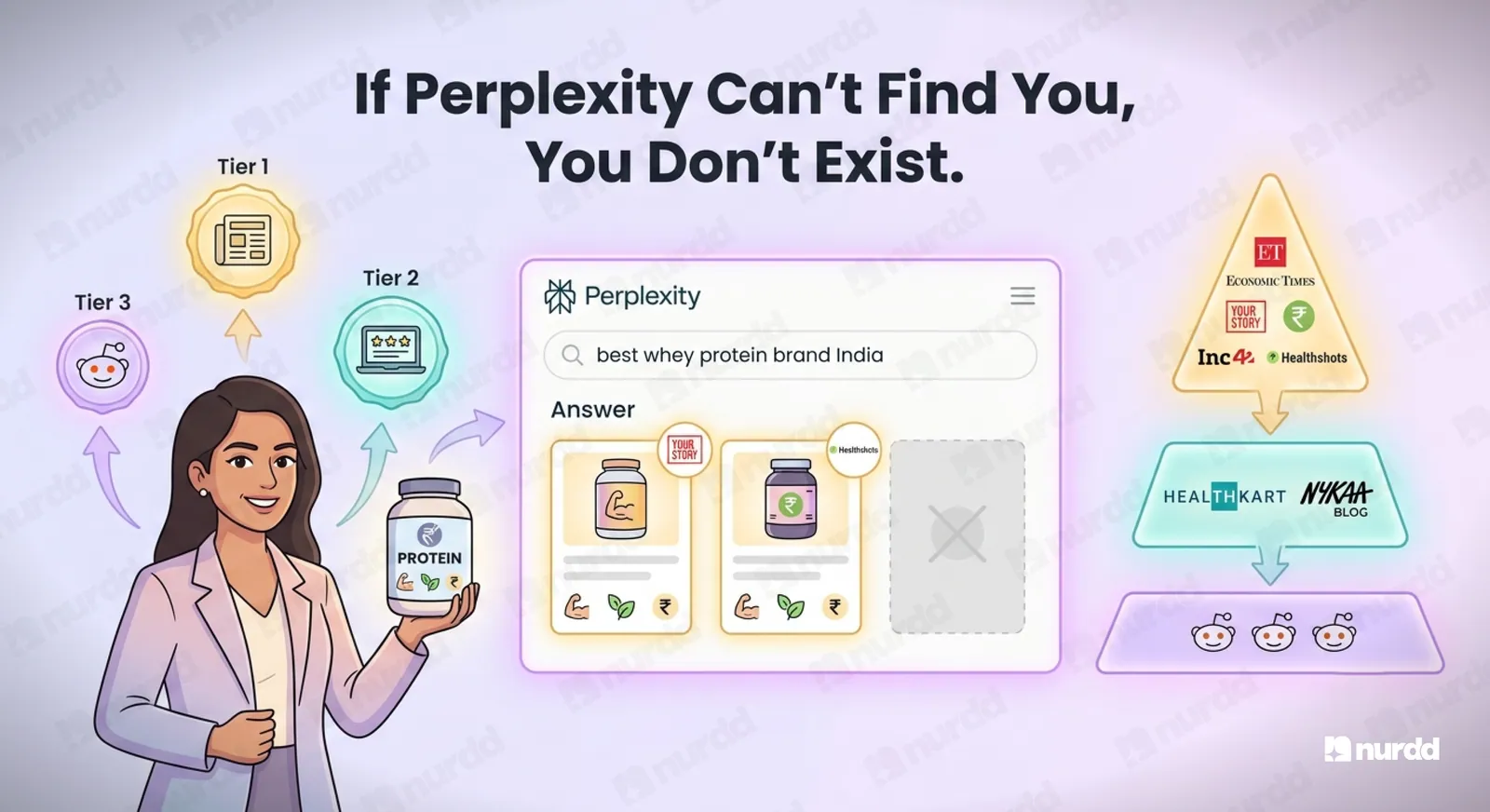
Google's AI Overview system has a documented preference for pages with complete, valid schema markup. Perplexity and Bing's Copilot both use structured data to identify authoritative product pages over generic category content.
For Indian D2C brands, schema implementation is almost universally weak. A 2025 audit of 200 Indian D2C brand websites found that fewer than 12 percent had complete Product schema with review aggregates, and fewer than 6 percent had FAQ schema on any product-adjacent page.
The Schema Types That Matter for D2C
Product schema: The non-negotiable baseline. Every product page needs Product schema with name, description, image, brand, SKU, price, currency, availability, and aggregateRating. Missing any of these reduces the schema's effectiveness for AI extraction.
Review schema: Implement AggregateRating and individual Review schema with reviewRating, reviewBody, and datePublished. AI engines use review schema to extract social proof claims this is what gets your star rating cited in AI answers.
FAQ schema: Add FAQPage schema to product pages and category landing pages. Each FAQ entry should answer a genuine user question in 2-4 sentences. This is the schema type most directly linked to AI Overview inclusions.
BreadcrumbList schema: Signals site hierarchy to AI engines and helps them understand where a product sits within your category structure. Essential for category-level AI search visibility.
HowTo schema: For D2C brands with application or usage guides skincare routines, supplement stacking, recipe content HowTo schema dramatically increases the likelihood of AI engines extracting and citing your usage guidance.
Implementation Mistakes That Kill Your Schema Effectiveness
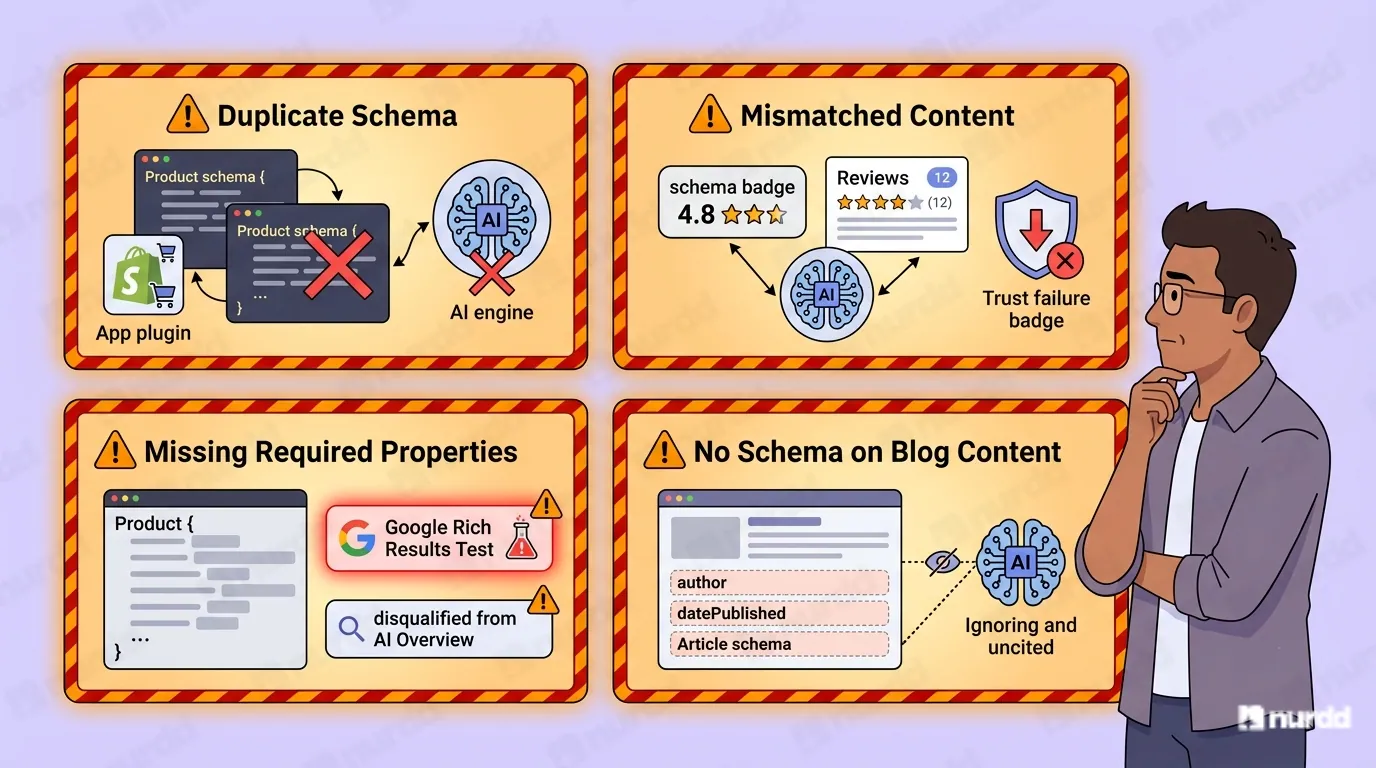
Duplicate schema: Multiple conflicting Product schema blocks on the same page, common on Shopify stores with multiple app plugins, cause AI engines to ignore all schema on that page.
Mismatched content: Schema claiming a product has a 4.8 star rating when the visible review count shows 12 reviews is a trust signal failure. AI engines cross-reference schema claims against visible page content.
Missing required properties: Google's Rich Results Test will show warnings for incomplete schema. Warnings in traditional SEO are tolerable. In AI Overview eligibility, they are disqualifying.
No schema on blog content: Article schema with author, datePublished, and keywords on your blog posts signals content quality and authorship to AI engines dramatically improving the chance that your blog content gets cited in AI answers.
How to Audit and Fix Your Schema in a Week
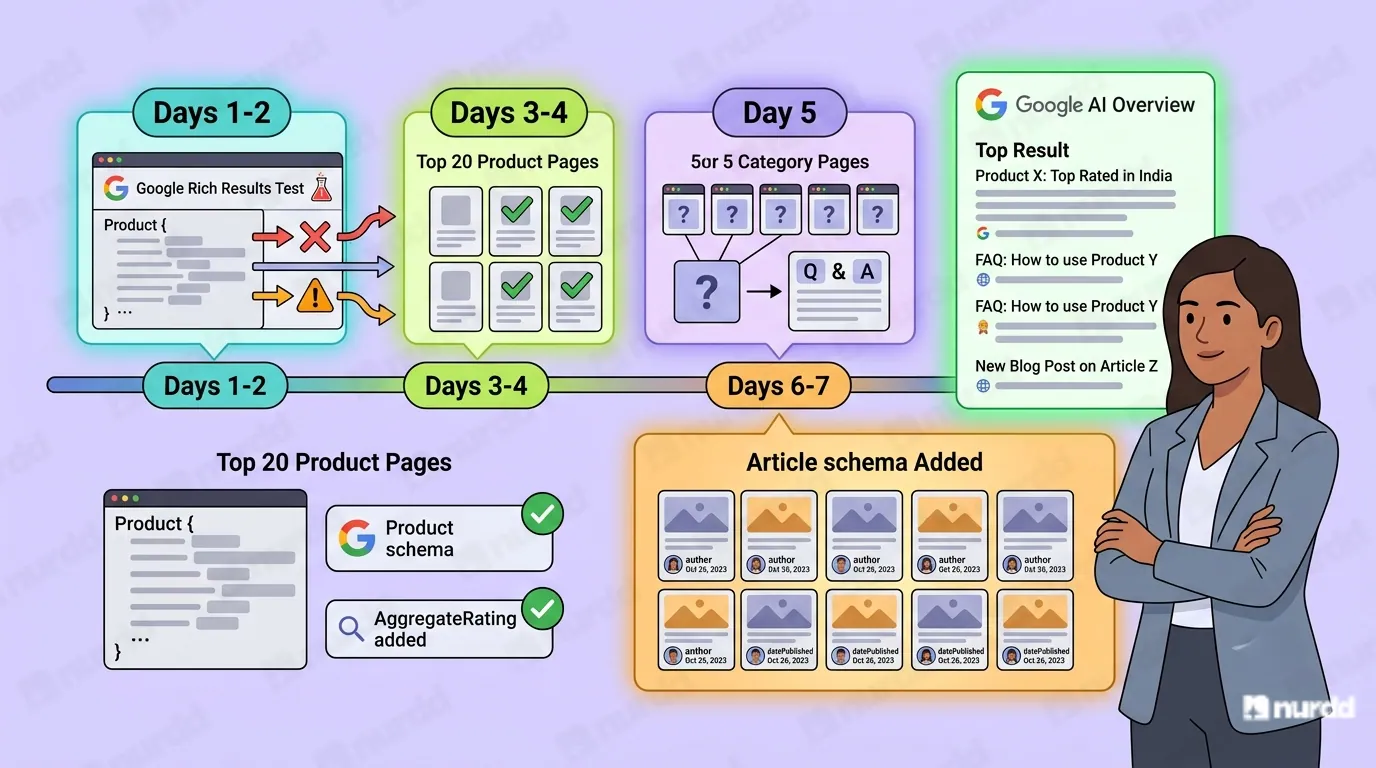
Day 1-2: Run all product pages through Google's Rich Results Test. Export errors and warnings. Day 3-4: Fix Product schema on your top 20 revenue-generating product pages. Add AggregateRating if you have reviews. Day 5: Add FAQ schema to your five highest-traffic category pages. Day 6-7: Add Article schema to your last 10 blog posts.
Noma audits schema markup as part of its AEO visibility scan and flags pages with incomplete or conflicting schema including specific properties that are missing and their impact on AI Overview eligibility.
Every product page without schema is a page the AI engine has to guess about. At this point, making it guess is a choice and not a smart one.
Sources & References
· Google Search Central (2025) – Structured Data Documentation for Product Pages | developers.google.com/search
· Schema.org (2025) – Product and Review Schema Specifications | schema.org
· Semrush (2025) – Schema Markup Audit: Indian D2C Website Analysis | semrush.com
· Ahrefs (2025) – How Schema Markup Affects AI Overview Inclusions | ahrefs.com/blog

Is your brand showing up in AI search answers?
Noma tracks whether ChatGPT, Perplexity, Gemini, Claude, and Grok mention your brand when customers ask category questions — and shows you exactly how to improve your AI visibility.