AI Search Visibility
ChatGPT Shopping Is Expanding: Get Listed Now
ChatGPT Shopping is expanding beyond the US. D2C brands that prepare their product data now will have a major advantage. Here's exactly how to prepare.
 Simran Rawat2 Nov 20267 min read
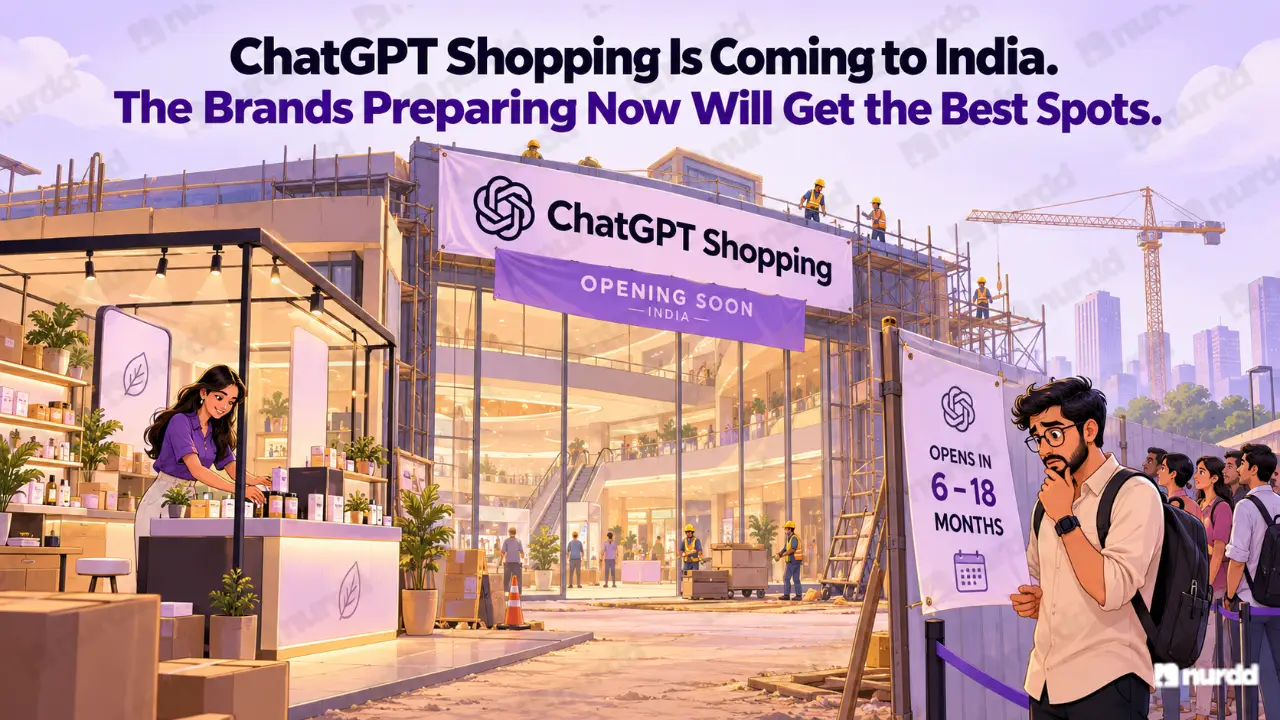
ChatGPT Shopping launched in the US in early 2025 and OpenAI has signalled expansion to additional markets. When ChatGPT Shopping reaches your market, the brands that prepared their product data, reviews, and schema markup in advance will appear first. The brands that start preparing when it arrives will be 6 to 12 months behind.
How ChatGPT Shopping Selects Products
The Signal Stack Behind Product Recommendations
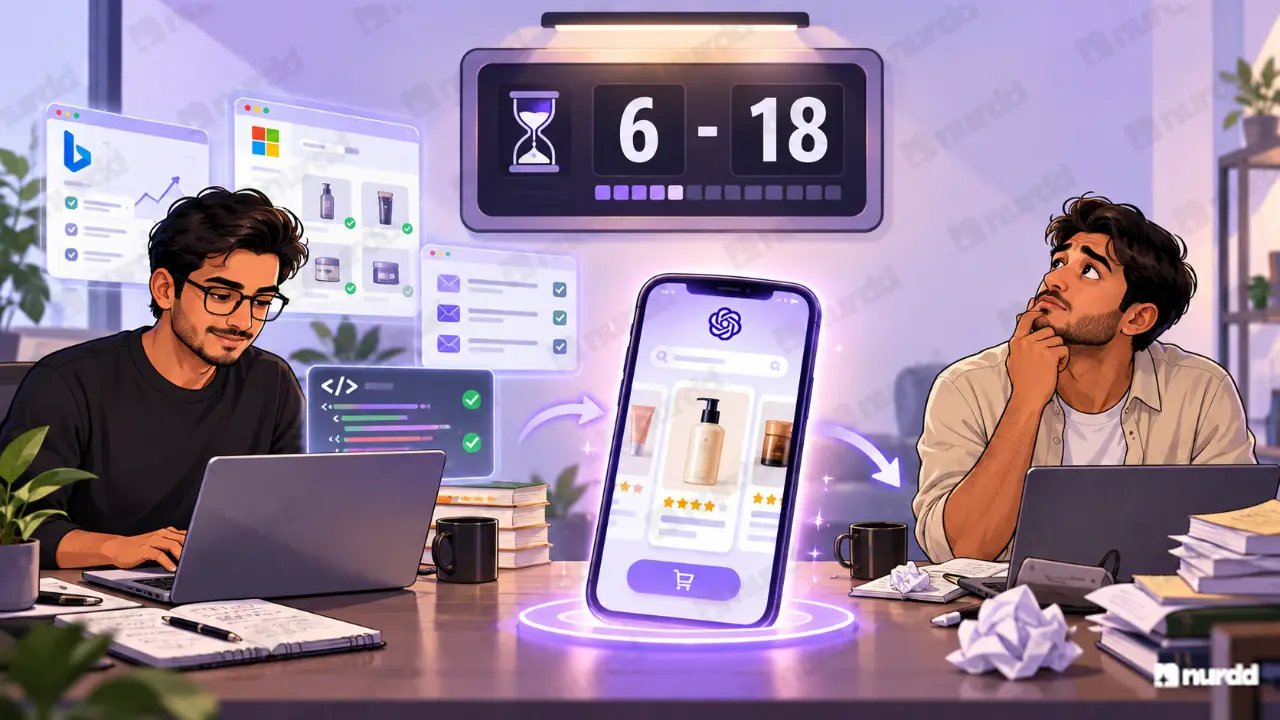
ChatGPT Shopping's product selection is based on a combination of: Bing Shopping product feed data (OpenAI uses Bing as its search backbone), product page structured data via schema.org Product markup, review volume and recency from major platforms, pricing competitiveness, and inventory availability signals.
This means two preparation tracks must run simultaneously. Track 1: ensuring your product data is in Bing's index. Track 2: ensuring your product pages have complete schema markup that ChatGPT Shopping can parse.
Track 1
Building Bing Presence, a Step Many D2C Brands Skip
Submit your sitemap to Bing Webmaster Tools at bing.com/webmasters. Free, takes 15 minutes. Many D2C brands have never done this: Google dominates search in most markets, so Bing is often ignored entirely.
Submit your product catalogue to Microsoft Merchant Center. This is separate from Google Merchant Center, products submitted to Google are not automatically in Bing. A Merchant Center account allows your products to appear in Bing Shopping results and, when ChatGPT Shopping expands, in ChatGPT product recommendations.
Verify PerplexityBot is permitted in your robots.txt. Bing's AI crawlers follow similar access rules. A blocked PerplexityBot often correlates with blocked Bing AI crawlers.
Track 2
Product Schema Fields That ChatGPT Shopping Actually Parses
Schema Field | Required | ChatGPT Shopping Weight | Common Gap |
|---|---|---|---|
name | Yes | High | Usually present |
description | Yes | High | Often marketing-adjective-heavy, not factual |
price + priceCurrency | Yes | High | Sometimes missing currency code |
availability | Yes | High | Often static, doesn't update in real time |
aggregateRating | Recommended | Very High | Frequently missing |
brand (@type: Brand) | Recommended | Moderate | Often missing the @type declaration |
image (3+ images) | Recommended | Moderate | Usually only 1 image marked up |
US data shows brands with above 50 reviews and above 4.2 average rating appear significantly more often in ChatGPT Shopping recommendations. Start building this now, it takes 3 to 6 months of consistent post-purchase email sequences to reach this threshold from scratch.
Test your structured data using Google's Rich Results Test tool, if Google can read your Product schema, Bing and ChatGPT can typically read it as well.
The Review Building Programme
Building the Review Base That ChatGPT Shopping Requires
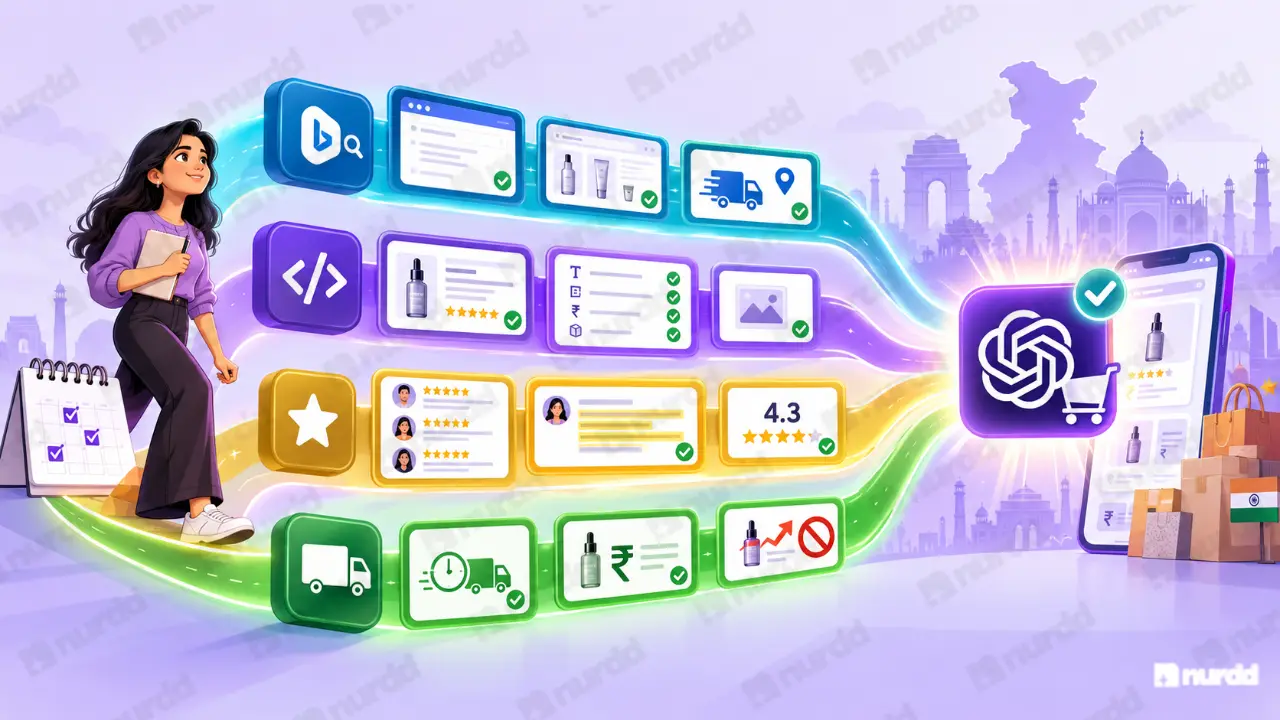
US data shows products with fewer than 25 reviews appear infrequently in ChatGPT Shopping regardless of other signals. For most D2C brands, building a genuine review base takes 3 to 6 months of consistent post-purchase email sequences. Start now rather than when ChatGPT Shopping arrives in your market, by which point the review gap will be a structural disadvantage, not a temporary one.
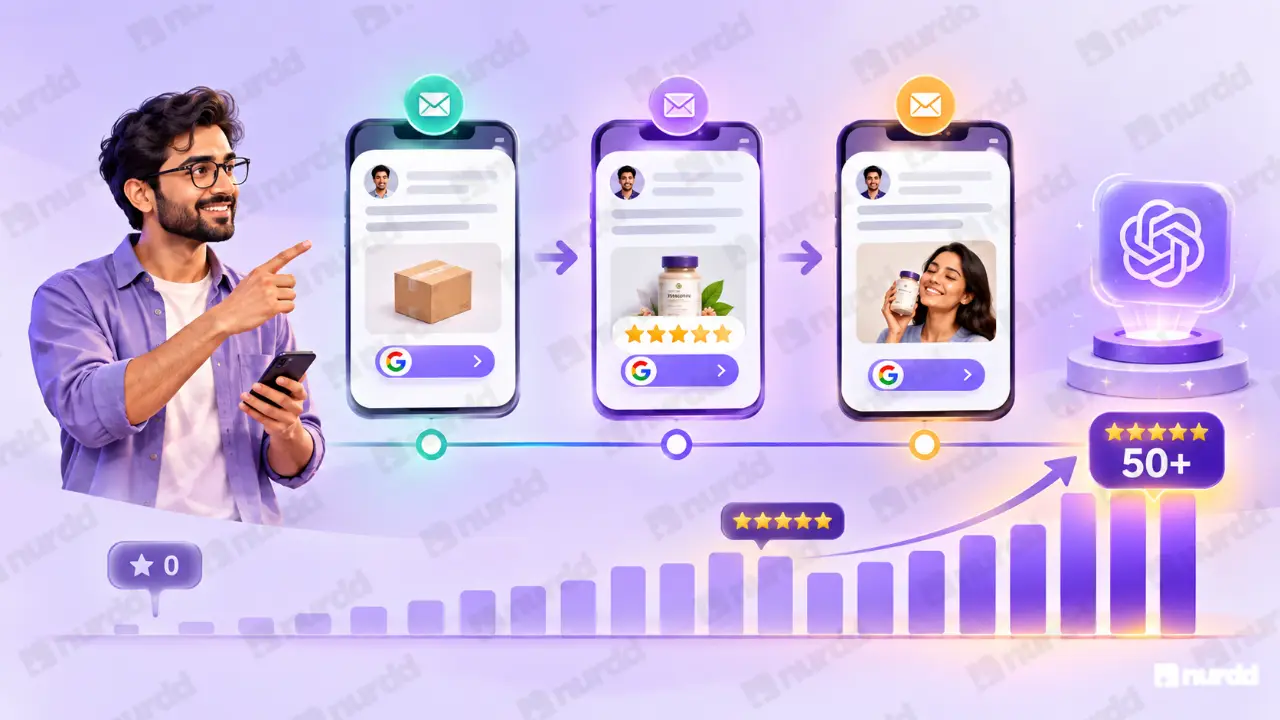
The sequence that works:
Day 3 post-delivery: delivery confirmation + care instructions email. No review ask yet.
Day 14: first review request, "How is [product] working for you?" with a direct link to your Google Reviews page.
Day 30: second review request for buyers who have not yet reviewed, "It has been 30 days since your [product] arrived. If you have started seeing results, we would love to hear about them." Link to both Google Reviews and Amazon (if listed).
Day 60: third and final request for non-reviewers, focus on the outcome question. Buyers who have used the product for 60 days write outcome-specific reviews rather than first-impression reviews. These are the reviews AI engines weight most heavily.
The 30-day and 60-day reviews are the most valuable for ChatGPT Shopping citation purposes, they describe specific outcomes in specific language, which is exactly the review content that AI systems extract and weight when evaluating products for recommendation.
Timing Outside the US
What D2C Brands Should Do Before ChatGPT Shopping Arrives in Their Market
ChatGPT Shopping launched in the US in early 2025. International expansion typically follows 12 to 24 months after a US launch for OpenAI's commercial features. That window is your preparation runway. The brands that use it will have structural advantages when ChatGPT Shopping goes live in their market. The brands that wait until the launch announcement will spend the first 6 months catching up on infrastructure that could have been built already.
The market-specific preparation items:
Microsoft Merchant Center setup for your market. Many D2C brands have never submitted their product catalogue to Bing because Google dominates search where they sell. Set up your feed with your local-currency pricing, product categories, and delivery zones now. It takes one afternoon and the Bing Shopping presence you build is the same feed ChatGPT Shopping will draw from.
Local-currency pricing and tax-inclusive display. ChatGPT Shopping in the US shows USD prices from Google Shopping data. When it expands to your market, it will need to show local prices correctly. Ensure your product schema includes both the base price and the tax-inclusive price clearly. Ambiguous pricing in structured data is a common reason products are excluded from shopping surfaces.
Delivery time schema. Quick commerce has trained many buyers to expect same-day or next-day delivery. Your schema's shippingDetails field needs to reflect accurate delivery windows. A product showing 7-10 day delivery in structured data when you actually deliver in 2 days in major cities is both inaccurate and a signal that depresses agentic selection.
"ChatGPT Shopping will not wait for your brand to get ready. Get your product data, schema, and reviews in order now, before the arrival date is announced."
FAQ
Frequently Asked Questions
How do I get my products listed on ChatGPT Shopping?
ChatGPT Shopping draws from Bing's product index. Submit your sitemap to Bing Webmaster Tools and your product catalogue to Microsoft Merchant Center. Ensure your product pages have complete schema.org Product markup including price, availability, aggregateRating, and brand fields. Products with above 50 reviews and above 4.2 average rating appear significantly more often.
Is ChatGPT Shopping available outside the US?
As of 2026, ChatGPT Shopping is primarily available in the US. OpenAI's international expansion typically follows 12 to 24 months after US launch. D2C brands in other markets should prepare product data, schema markup, and review volume now to be positioned when the expansion reaches them.
What schema markup do I need for ChatGPT Shopping?
The critical fields are: name, description, price with priceCurrency set to your selling currency's ISO code, availability updated in real time, aggregateRating with ratingValue and reviewCount, brand with @type Brand declaration, and at least 3 product images marked up. Missing aggregateRating is the most common gap and the highest-weight field for shopping surface selection.
Does Microsoft Merchant Center work for D2C brands outside the US?
Yes, Microsoft Merchant Center is available in many markets. Most D2C brands have never submitted to Bing because Google dominates search, making this an uncontested preparation step. Products in Bing Shopping are the same feed ChatGPT Shopping draws from when it expands internationally.
Sources and References
OpenAI – ChatGPT Shopping: product discovery features documentation
Microsoft – Microsoft Merchant Center and Bing Shopping setup guide
Google Search Central – Product schema markup: rich results documentation
Nurdd / Noma – ChatGPT Shopping preparation guide for D2C brands