AI Search Visibility
E-E-A-T Signals for D2C Blogs: What Google and AI Engines Actually Weight in 2026
E-E-A-T (Experience, Expertise, Authoritativeness, Trust) decides whether Google and AI engines cite your content. What it means for D2C brand blogs.
 Simran Rawat26 Oct 20267 min read
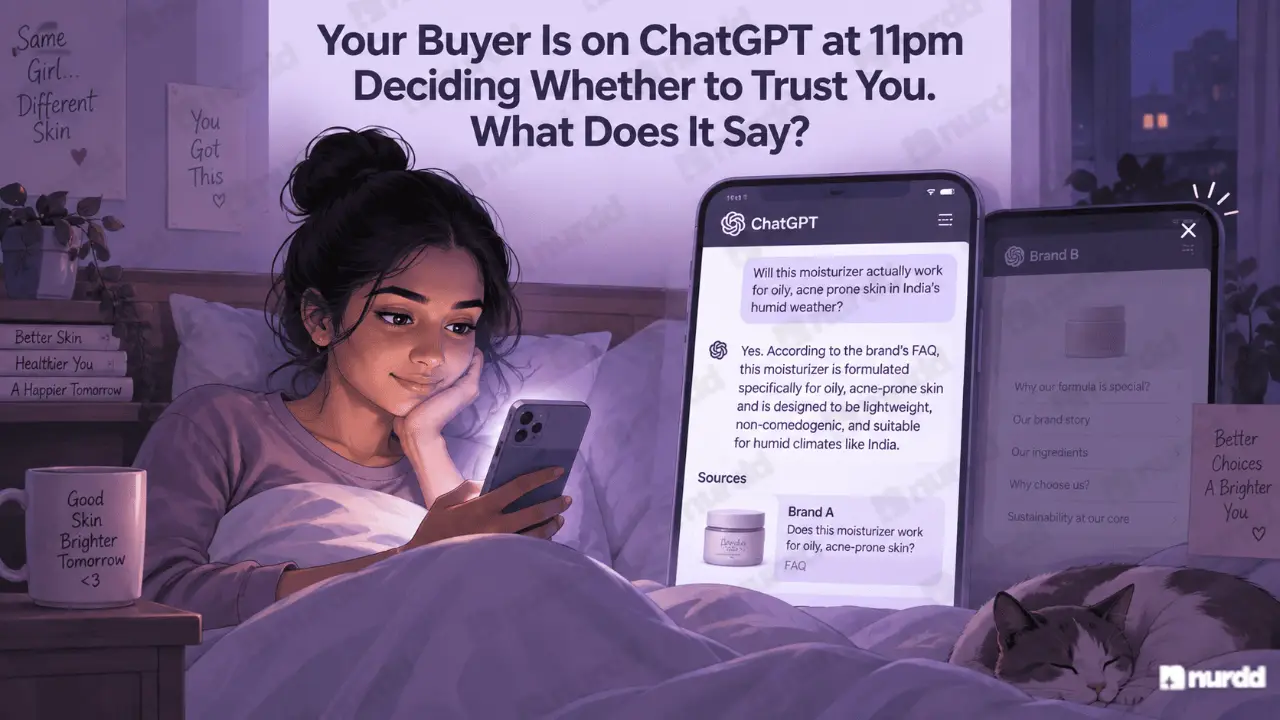
E-E-A-T is Google's quality framework for evaluating content credibility. It directly influences which content Google ranks highly and, because AI engines largely draw from high-E-E-A-T sources, it also determines which content gets cited in AI-generated answers. For D2C brand blogs competing with editorial publications and specialist websites, this is the framework that explains why your content is or is not being surfaced.
The Four Signals

E-E-A-T: What Each Letter Means in Practice
Signal | What Google Is Asking | Strong Signals for D2C Blogs | What Kills It |
|---|---|---|---|
Experience | Has the author directly used or tested this? | Founder/expert quotes with attribution · Clinical testing data cited with methodology · "In 12 months of testing, our formulation team found..." | Third-person writing with no author attribution · No evidence anyone at the brand tested the product |
Expertise | Does the author know what they are talking about? | Named author with credentials · Links to credible scientific sources · Accurate technical terminology · Acknowledges limitations and contraindications | Anonymous "Team Nurdd" authorship · Medical claims without citations · "Scientifically proven" without linking to the study |
Authoritativeness | Do other credible sources recognise you as an authority? | Backlinks from DA 50+ publications · Media coverage in health/business media in your market · Expert quotes from or about your brand in third-party content | Self-citation only · No third-party mentions · No presence in industry reports or databases |
Trustworthiness | Is your site safe and credible? | HTTPS · Verifiable company information on About and Contact pages · Clear return policies · Transparent ingredient lists | Missing contact information · No physical address verifiable · Vague or missing ingredient information |
The Highest-Impact Fix
Name Your Authors
The single highest-impact E-E-A-T improvement available to most D2C brand blogs is: name your authors.
Anonymous "Team [Brand Name]" authorship signals low accountability and low expertise to both Google and AI engines. Replacing this with a named author even a marketing team member with their title and a one-paragraph bio immediately improves Experience and Expertise signals.
For health-adjacent categories (supplements, skincare, personal care), add a credential or relevant background: "written by [Author Name], pharmacist and Product Development Lead at [Brand]." This does not need to be a doctor. Relevant professional background is sufficient.
Authoritativeness — The External Work

Building Authority You Cannot Create Yourself
Authoritativeness is built externally it is what other credible sources say about you, not what you say about yourself. The most efficient authority-building actions for D2C brands:
One top-tier editorial feature per quarter. A leading business, health or lifestyle publication in your market: any publication with DA above 50 that is relevant to your category.
Expert quote placement in existing articles. Reach out to journalists who cover your category and offer to be a quote source. This gets your brand and your expert's name into high-authority third-party content without writing a new article.
Presence in at least one credible industry database. For personal care: COSMOS and ECOCERT certification listings. For supplements: your national food or supplement regulator's registration listings, and relevant Amazon badge programmes. Credible database listings are authoritative signals that AI engines index.
YMYL Categories
Why Trust Signals Matter Even More for Health Products
AI engines specifically weight trust signals when evaluating health-adjacent content YMYL (Your Money or Your Life) queries where incorrect information could harm the reader. If your product is in a health category, every trust signal matters more than it would for a fashion or home decor brand.
For YMYL categories, specific trust requirements that AI engines weight heavily: verifiable ingredient lists with percentage concentrations, relevant regulatory approval or registration numbers displayed visibly, and customer reviews on regulated review platforms (Amazon, Google) rather than only on your own website.
"E-E-A-T is not a checklist. It is Google's way of asking: would a knowledgeable, careful human trust this content enough to act on it? If the honest answer is no, the technical fixes are secondary."
Sources and References
Google Search Central – Creating helpful, reliable, people-first content
Google – Search Quality Evaluator Guidelines (E-E-A-T framework)
Search Engine Journal – E-E-A-T: What it means and how to demonstrate it
Nurdd / Noma – E-E-A-T optimisation resources for D2C brand blogs