Paid Media
Meta Ads After iOS: What Still Converts in 2026
iOS privacy changes cut the signal Meta's pixel receives. Here's the campaign setup that is still driving conversions for D2C brands in 2026.
 Simran Rawat16 Sept 20267 min read
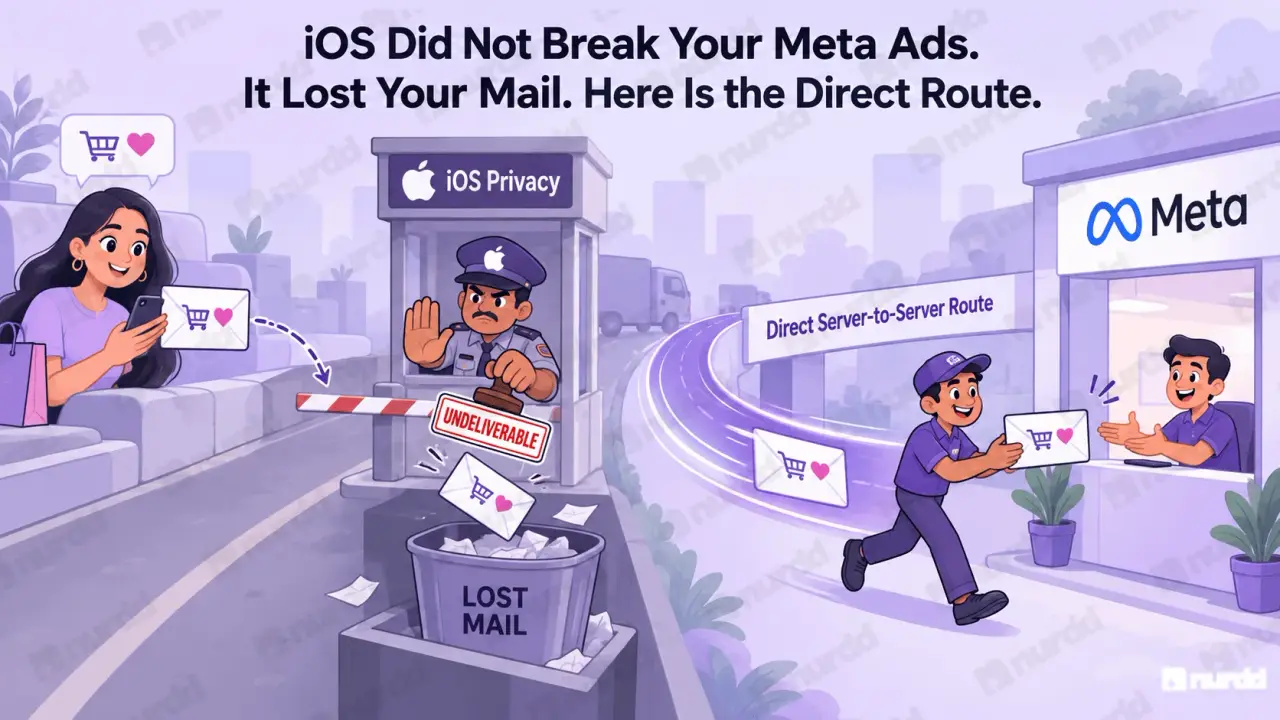
iOS App Tracking Transparency has degraded Meta pixel signal for many D2C brands, but the channel still acquires profitably with an adapted setup. Server-side Conversions API, consolidated ad sets and longer evaluation windows are what restore enough signal to optimise against.
iOS privacy changes have degraded Meta's pixel signal quality for many D2C brands. But brands that have adapted their setup correctly are still driving profitable acquisition from Meta. Here is what that adapted setup looks like.
What Actually Changed
What iOS Privacy Did and Did Not Do
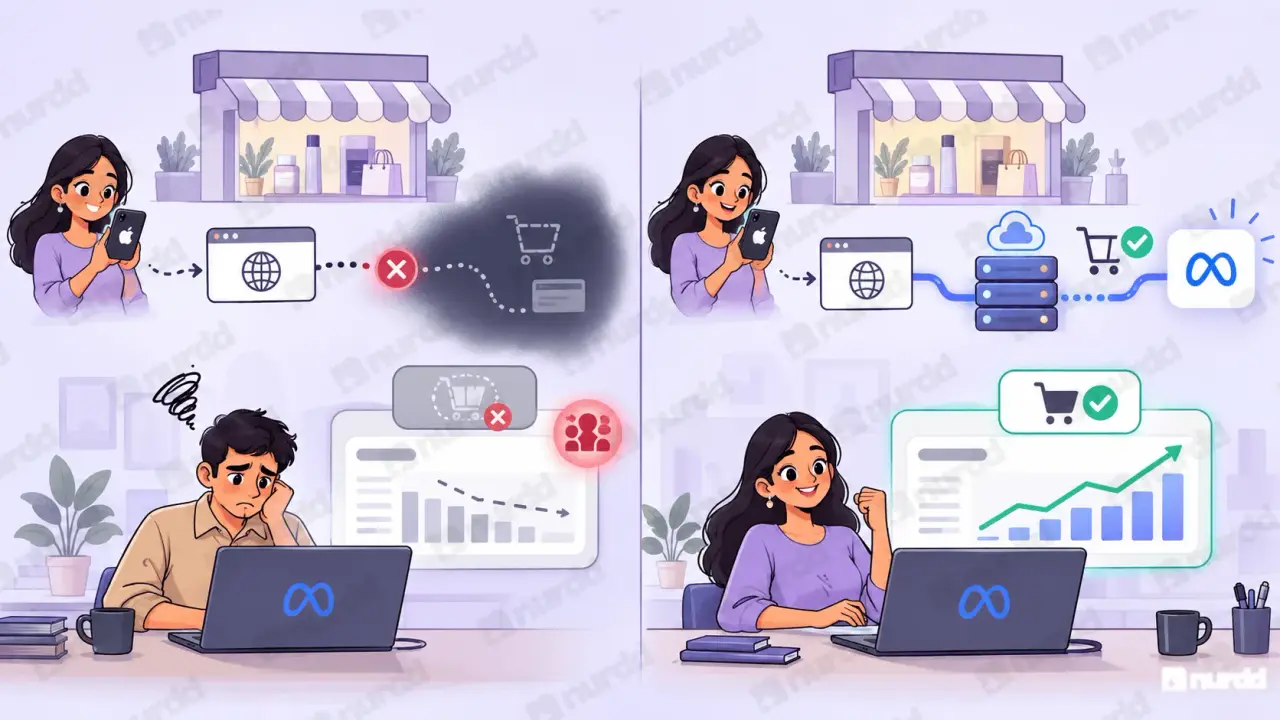
What changed: iOS App Tracking Transparency requires apps including Facebook to request permission before tracking users across other apps and websites. A significant proportion of iOS users have denied this permission. When these users click your Meta ad, visit your Shopify store, and purchase the conversion is invisible to Meta's browser-based pixel.
What did not change: Meta can still track behaviour within the Meta app itself and on Android devices without restriction. How much the change hurts depends on your customers' device mix. Brands whose buyers are mostly on Android have felt a smaller absolute impact than brands serving mostly iOS users.
However, where iOS is the minority platform, its users are often the higher-purchasing-power segment in many D2C categories. Even a small share of conversions from iOS users can represent a disproportionate share of revenue value.
The Non-Negotiable Fix
Conversions API: The Setup You Cannot Skip
The Meta Conversions API (CAPI) sends conversion events from your server directly to Meta's servers bypassing browser-based pixel limitations entirely. When a purchase happens on your Shopify store, the event is sent from Shopify's server to Meta's server. It does not pass through the browser or the iOS permission layer.
How to check if CAPI is active:
Go to Events Manager in Meta
Select your pixel, then the Event Sources tab
If you see both Browser and Server as event sources for your Purchase event CAPI is active
If you only see Browser CAPI is not set up and you are missing iOS conversions
For Shopify brands, the native Shopify-Meta integration enables CAPI automatically without developer work.
Check your Event Match Quality (EMQ) score in Events Manager. Below 6.0 indicates degraded signal quality. Primary causes: CAPI not implemented, customer email or phone not being passed with conversion events, or pixel and CAPI sending duplicate events without deduplication.
Campaign Structure Adaptations
How to Structure Campaigns in the Reduced-Signal Environment
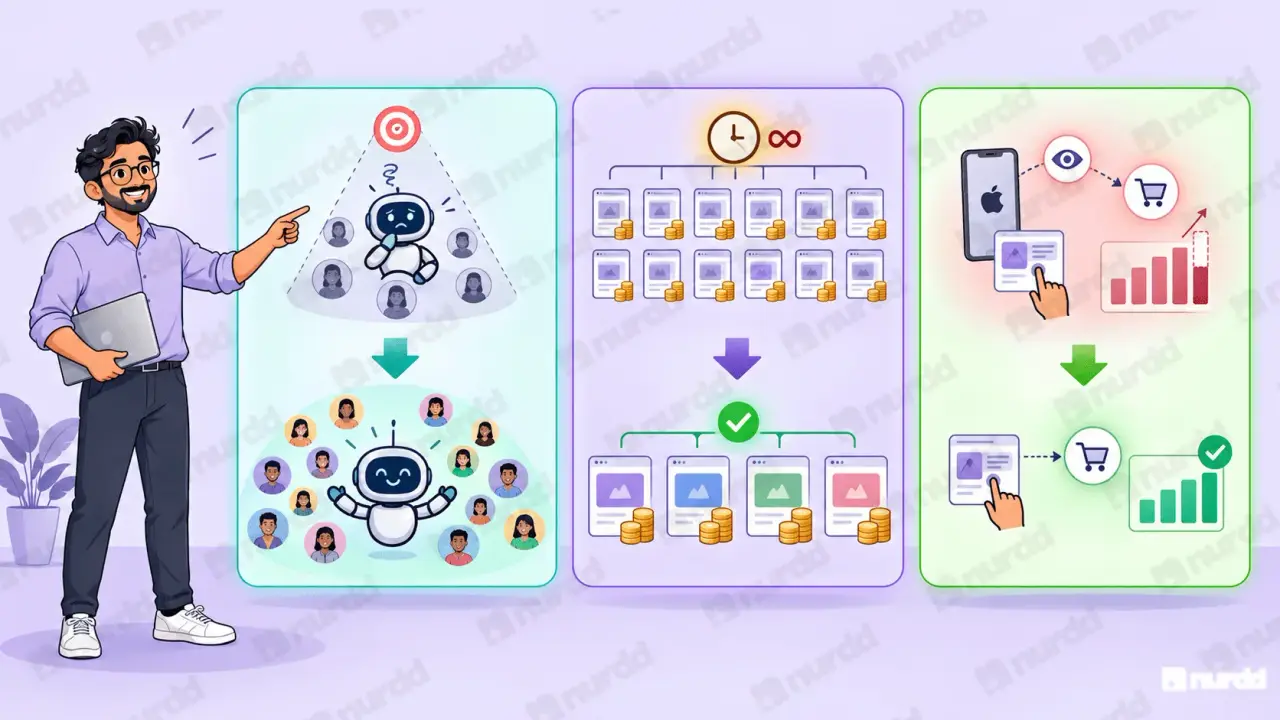
Use broader audiences. Meta's algorithm needs room to find converters across a large audience pool when it has less individual-level tracking data per user. Very narrow audiences constrain the algorithm in ways that were manageable with high signal quality but become significantly limiting with degraded signals. Move toward Advantage+ Shopping Campaigns or broad audience prospecting.
Consolidate ad sets. Fewer, larger ad sets outperform many small ad sets now. If your account has 15 ad sets each spending $4 per day, consolidate to 4 to 5 ad sets spending $12 to $15 per day. Each ad set needs approximately 50 conversion events per week to exit the learning phase fragmented accounts have ad sets stuck in perpetual learning, which is the most expensive state to run in.
Use 7-day click only attribution. View-through attribution is the most iOS-signal-sensitive component. Remove it from both reporting and bidding. Your reported ROAS will look lower, but the numbers will be honest and your bidding algorithm will be calibrated on accurate data.
The Long-Term Fix
Building First-Party Data That Reduces Platform Dependency
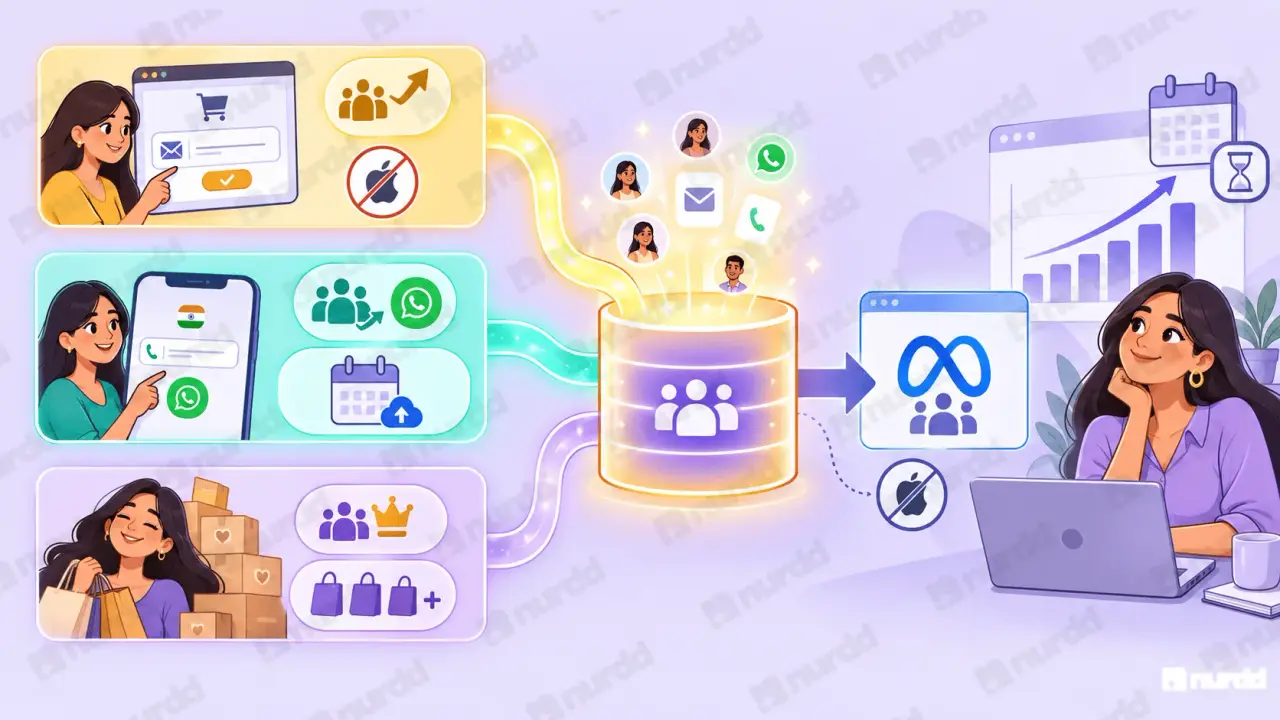
Clean, consented customer email list. Every buyer who opts into email at checkout is addressable to Meta via Custom Audience email matching- with 60 to 80% match rates. Email matching bypasses iOS tracking entirely.
Phone number collection. Phone numbers add match coverage, especially where customers sign up with a phone number rather than an email address. Collect email and phone where possible and upload the combined list monthly.
Repeat purchase data as lookalike seed. Customers who have purchased 3 or more times are your highest-LTV segment and your highest-quality lookalike seed audience.
"iOS did not break Meta Ads. It broke the measurement of Meta Ads. Fix the measurement first and the performance is still there."
Sources and References
Meta Developers – Conversions API: Getting started guide
Apple Developer – App Tracking Transparency framework
Shopify Help – Set up Meta pixel and Conversions API
AppsFlyer – iOS privacy and its impact on mobile attribution
Nurdd / Pulse – Post-iOS attribution resources for D2C brands