Brand & Content Strategy
AI Agents for Content Creation vs Human Creators
A task-by-task guide to what AI agents for content creation can handle, what still needs human creators, and the review workflow that connects them.
 Sheetal Shakshi16 Nov 202616 min read

AI agents for content creation suit repeatable, rules-based work such as drafts, variants, resizing, captions and ads built from a product link. Human creators are needed for lived experience, a trusted face and voice, original judgment and claim sign-off. Split the work by task, then review every AI output before it publishes.
AI agents for content creation are best used for repeatable, rules-based work: first drafts, resizing, caption and ad variants, research summaries and product-link ads. Human creators are needed where an audience is buying a real person's experience, face, voice or judgment, and where someone must stand behind a claim. Most brands should split the work by task rather than choose one side.
Key takeaways
- Hand AI agents the work that is repetitive, specified in advance and cheap to check: variants, formats, first drafts and product-link ads.
- Keep human creators on anything that depends on lived experience, a recognisable personality, taste or a claim that could mislead.
- Use the scoring table below: rate each task on repeatability, trust required and cost of an error before assigning it.
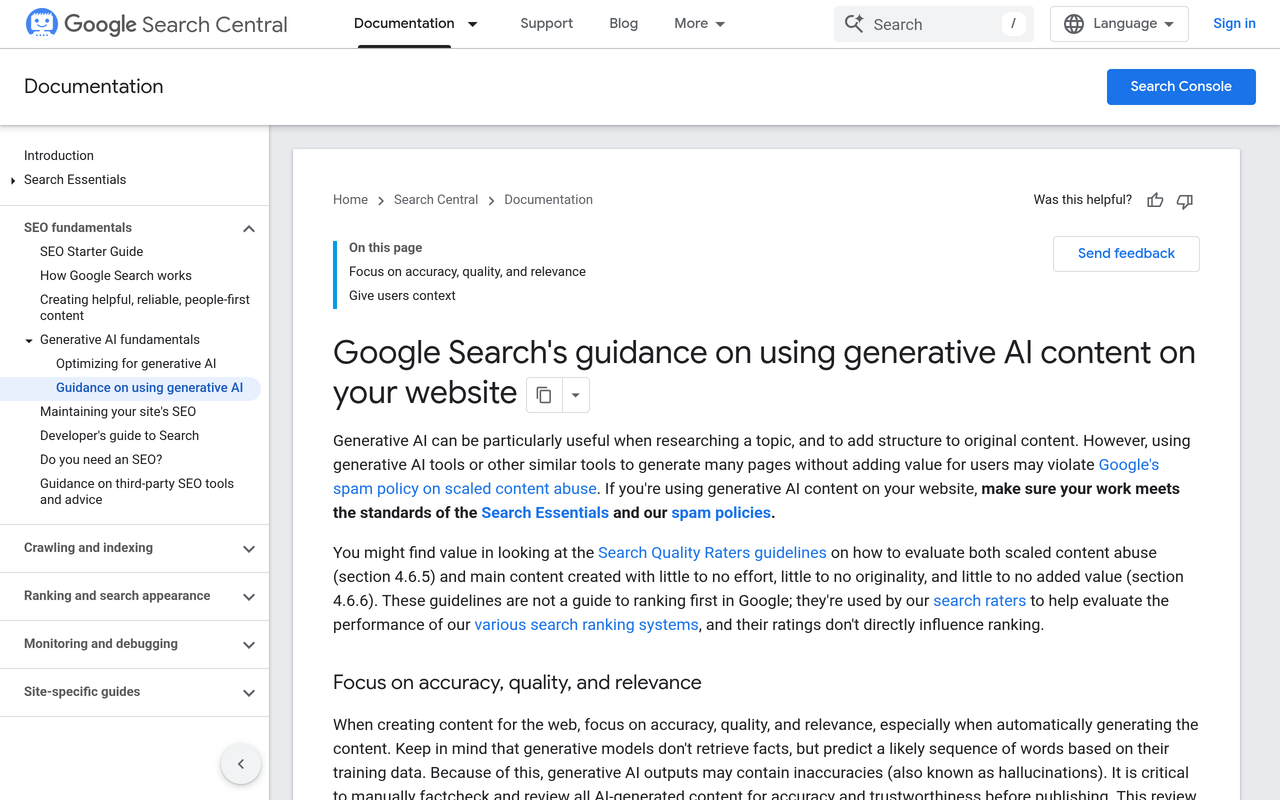
- Put a review step between every AI output and publication. Google tells site owners to fact-check AI-generated content before publishing it.
- Check disclosure rules per platform. Meta, YouTube and the EU each have labelling requirements for AI-generated or altered media.
- Run one campaign where AI-made and creator-made assets are tagged separately, so you can compare their results on the same measures.
What are AI agents for content creation?
An AI agent for content creation is software that takes a goal, such as a product ad or a week of social posts, and carries out several steps toward it with limited prompting. Those steps can include researching, drafting, generating visuals or video, adapting to formats and handing the result to a person for approval. That is different from a single prompt box that returns one answer.
This guide covers the agent types briefly, then spends most of its length on the practical question: which tasks to delegate, which to keep with people, and how to review the output. For the wider category, see our overview of AI agents for marketing and the evaluation checklist for AI content agents.
How do AI agents for content creation work?
Most agents follow the same loop: a brief goes in, the agent plans steps, calls tools (a language model, an image or video model, a brand-asset library), produces a draft and returns it for review. Better agents keep brand rules, such as tone, banned claims and product facts, so each run starts from the same constraints.
The practical consequence is that agents are strongest where the brief can be written down completely. If you can specify the format, the product facts, the tone and what a good result looks like, an agent can repeat it many times. If the value of the piece lies in something you cannot specify, such as a creator's reaction to the product, the loop has nothing to work from.
The common agent types
- Research and ideation agents: collect sources, summarise a topic, propose angles.
- Drafting agents: write posts, scripts, emails, product descriptions.
- Repurposing agents: cut one asset into formats and lengths.
- Visual and video agents: generate images, product ads and short films from an idea or a link.
- Optimisation and analytics agents: suggest edits, report performance.
When should I use AI agents instead of human creators?
Use AI agents when the task is repeatable, the brief can be fully specified, errors are cheap to catch, and the audience does not need a real person to be present. Use human creators when the audience is buying trust, experience or personality, or when a mistake would carry legal or reputational cost.
The table below turns that into a decision aid. Score each task on three questions: can the brief be fully written down, does the audience need a real person to believe it, and what does an undetected error cost?
| Task | Repeatable and specifiable? | Needs a real person? | Cost of an error | Assign to |
|---|---|---|---|---|
| Resizing and reformatting existing ads | Yes | No | Low | AI agent, spot-check |
| Caption, headline and hook variants for testing | Yes | No | Low | AI agent, human picks |
| Product ads built from a product link | Mostly | No, if clearly an ad | Medium | AI agent, full review |
| Research summaries and outlines | Yes | No | Medium (wrong facts) | AI agent, fact-check every claim |
| Short films, micro dramas, commercials from an idea | Partly | Depends on casting | Medium | AI agent plus human director |
| Product review or first-use reaction | No | Yes | High (misleading review) | Human creator |
| Skincare, health or finance claims | No | Yes | High | Human creator and compliance |
| Brand spokesperson or founder content | No | Yes | High | Human |
| Community-led or trend-led content | No | Yes | Medium | Human creator |
A rule of thumb that falls out of the table: if two of the three questions point towards a person, do not delegate the task end to end. An AI agent can still prepare the brief, draft the variants and format the finished asset around it.
A simple scoring method
To use the table on your own task list, give each task one point for every question that points to a person: the brief cannot be fully written down, the audience needs a real person, or an undetected error would be costly. A score of zero or one goes to an agent with review. A score of two means a hybrid, with the agent preparing and a person performing or approving. A score of three goes to a human creator or a named expert.
This is a framework built from the nature of the work, not a measured result. Its value is that it forces the delegation decision to be made per task, in writing, before anyone buys a tool.
What can AI agents for content creation not do?
AI agents cannot have experienced the product, cannot be a recognisable person an audience follows, and cannot take legal responsibility for a claim. They can describe a moisturiser, but they have not used one. That limit matters most when the content is meant to persuade people who are asking whether a product really works.
Four specific gaps are worth planning around:
- Lived experience. An agent can produce plausible first-person language, but there is no first-person event behind it. Audiences and platforms are increasingly sensitive to that gap.
- Accuracy without checking. Google's guidance says generative AI outputs may contain inaccuracies, and that it is critical to manually fact-check and review AI-generated content before publishing (Google Search Central).
- Originality at scale. The same Google page warns that using generative AI to produce many pages without adding value for users may violate its spam policy on scaled content abuse.
- Ownership. The US Copyright Office's report concludes that human authorship is the deciding factor, and that works entirely generated by AI are not copyrightable, as summarised by Skadden, February 2025. Human selection, arrangement or modification can create protectable authorship, case by case (Jones Day, February 2025).
This is not legal advice. It is a reminder that the asset you commission from an AI agent may be harder to protect than one a person shaped, which matters for brand characters, logos and signature campaign visuals.
What do platforms and regulators require you to disclose?
Platforms and regulators increasingly expect AI-generated or materially altered media to be labelled. The rules differ by surface, so the review workflow needs a disclosure check for each channel you publish to. The three below are the most relevant for brand content.
| Surface | What the source says | What to do in your workflow |
|---|---|---|
| Meta ads (Facebook, Instagram) | Meta applies an AI info label to ads created or significantly edited with its generative AI creative features, and says it will begin detecting ads made with third-party AI tools through industry-standard signals (Meta, February 2025). | Expect the label on ads made with Meta's own tools, and plan for it on third-party output. Decide whether to keep AI-made and creator-made ads in separate ad sets so you can compare them. |
| YouTube | YouTube's help page says creators are required to disclose AI-generated or altered realistic content, using a setting in the upload flow (YouTube Help). | Add the disclosure step to the upload checklist for any realistic synthetic footage, voice or likeness, and read the current page for what counts. |
| EU | Under Article 50 of the AI Act, providers of generative systems must mark synthetic audio, image, video or text in a machine-readable format, and deployers must label certain AI-generated text on matters of public interest (European Commission). | If you publish into the EU, confirm with counsel which obligations fall on your tool vendor and which on you. |
Disclosure rules change often, and the pages above are the starting point rather than the last word. Check the current version of each before a campaign launches.
How do AI agents and human creators compare on a real brief?
The honest comparison is by job, not by overall quality. The table below sets out where each option is stronger, based on the nature of the work rather than on any test result.
| Criterion | AI agents | Human creators |
|---|---|---|
| Volume of variants | Many variants of one idea from a single brief | Limited by time and fee per deliverable |
| Lived experience of the product | None | Real, if they actually use it |
| Audience trust and following | No existing audience | Own audience and community |
| Consistency to brand rules | High when rules are encoded | Varies, needs briefing and approval |
| Iteration speed | Fast | Slower, depends on schedule |
| Responsibility for claims | Rests with the brand and reviewer | Shared with the creator under contract |
| Rights and ownership | Human authorship may be needed for protection | Set by contract |
A worked example with sourced numbers
Suppose a skincare brand wants ten short product videos for a launch. OpenSponsorship, July 2026 reports a median of $134 per deliverable for nano influencers and $2,727 per deliverable for mega influencers. Ten nano deliverables at the median is $1,340 before any extras; ten mega deliverables is $27,270. That range shows why the assignment matters.
The brand splits the brief. It gives an AI agent the demonstration-style product ads and format variants, where no one needs to vouch for the result. It gives nano creators the first-use reactions, where the value is a real person's experience. It then compares the two groups on the same measures: engagement and sales for creator posts, and click-through and cost per result for the AI-made ads.
The point of the example is the arithmetic of delegation: the more variants you need from one idea, the stronger the case for an agent; the more the content depends on a person's credibility, the stronger the case for a creator. Use the influencer rate card estimator and the influencer ROI calculator to run your own numbers, and see the marketing benchmarks hub for rates and engagement by tier.
What does the split look like for different teams?
The same task table gives different answers depending on the category, because the cost of an error and the need for a real person change. Three examples show how.
A beauty or skincare brand
Claims about skin and ingredients carry high error costs, and shoppers look for people who have used the product. The brand keeps first-use reviews and claim-heavy content with creators, and gives agents the format variants and product-link ads. See the beauty industry page and the guide on how to find beauty influencers.
A B2B software team
Software content is often explanatory, so agents can draft help articles, release summaries and social snippets, with an engineer or product owner checking facts. Credibility content, such as a founder's view or a practitioner's walkthrough, stays human. Our SaaS industry page and the guide to finding tech influencers cover that side.
A restaurant or food brand
Menu graphics, promo variants and local-offer posts repeat and are easy to check, so agents fit. Taste, atmosphere and reviews depend on real people. See food and beverage and how to find food influencers.
How do you choose a first pilot?
Pick one task that scores zero or one on the method above, run it for a fixed period, and keep a creator-made control alongside it. A small, bounded pilot tells you more than a broad rollout, because you can see where the review steps catch problems.
- List ten tasks your team does every month and score each one.
- Choose the lowest-scoring task that is visible enough to matter, such as ad variants.
- Write the brief as constraints and set the review owner.
- Run the same objective with a creator-made asset so you have a comparison.
- Review the tags and results, then move one more task across or pull one back.
What review workflow should sit between an AI agent and publishing?
A review workflow is the set of checks an AI output passes before it goes public. It turns an agent from a risk into a production tool. The steps below are ordered so that cheap checks come first and expensive human time is spent only on what survives.
- Write the brief as constraints. Action: list audience, goal, format, product facts, banned claims and tone. Result: the agent works from fixed rules. Why: most bad outputs trace to vague briefs.
- Generate several options. Action: ask for multiple versions. Result: a person chooses rather than rewrites. Why: choosing is faster than repairing a weak draft.
- Check facts and claims line by line. Action: verify every number, ingredient, price and benefit against your own product sheet. Result: a list of confirmed or removed claims. Why: Google's guidance names inaccuracies as a reason to fact-check before publishing.
- Check likeness, voice and rights. Action: confirm no real person's face or voice is imitated without permission and that any music or imagery is cleared. Result: a rights note on the asset. Why: this is the area most likely to cause disputes.
- Apply the disclosure rule for the channel. Action: complete the YouTube disclosure step, expect Meta's AI info label, check EU obligations. Result: the asset is publishable on that channel. Why: platform rules differ and can change.
- Add a human signature. Action: have a named person approve, and add real creator or founder content where trust matters. Result: accountability is clear. Why: the brand, not the tool, answers for the claim.
- Tag and measure. Action: label each asset as AI-made, creator-made or hybrid in your tracking. Result: you can compare them on the same measures. Why: without tags you cannot learn which task split works.
For a creator-specific version of the same discipline, see our fake follower audit checklist and guide to briefing a creator.
A pre-publish checklist you can copy
- Does every factual claim match the product sheet?
- Could a viewer mistake synthetic footage for a real person or event?
- Is a disclosure label set or expected on this channel?
- Is any real person's likeness or voice used, and is it cleared?
- Does a named reviewer approve this asset?
- Is the asset tagged AI-made, creator-made or hybrid?
- Does it add something a thousand similar pages would not? Google's scaled content abuse warning is aimed at volume without value.
What are the common mistakes when mixing AI agents and creators?
- Delegating by tool, not by task. Teams adopt an agent and then look for work for it. Start from the task table instead.
- Using AI for first-use reviews. A reaction with no real experience behind it is the riskiest content to automate. See why authentic content beats AI slop.
- Skipping the fact-check because the draft reads well. Fluent text is not accurate text.
- Publishing volume for its own sake. Many near-identical pages invite the spam concerns Google describes.
- Not tagging assets. If you cannot separate AI-made from creator-made results, you cannot decide the next split.
- Paying creators with inflated audiences. Vet them first with the fake follower checker.
How does Nia by Nurdd combine an AI creative studio with influencer marketing?
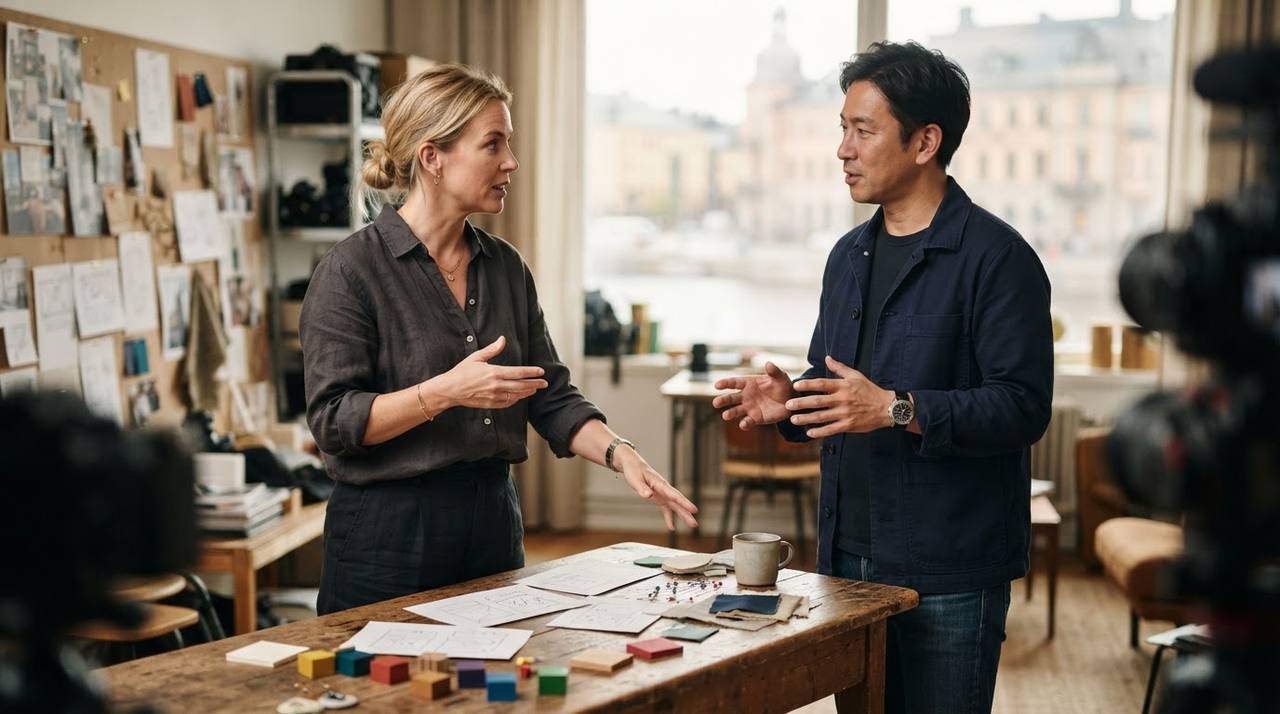
Nia by Nurdd is an AI-native creative studio at getnia.studio, also available on iOS and Android, with influencer marketing built in. Brands use it to make short films, micro dramas and commercials from an idea, and product and UGC ads from a link, casting real creators and AI creators in the same production. That structure follows the task split in this guide: AI where the work repeats, real creators where trust matters.
On the influencer side, Nia searches a database of 10M+ creator profiles across Instagram and other platforms, filters by niche, audience quality, engagement authenticity and brand match score, and checks each creator for fake followers using TruAI, Nurdd's fake follower detection. It forecasts ROI before spend and attributes product-level sales to specific creators after a campaign closes. Nia is priced below comparable plans.
Nia by Nurdd is built for brands that want AI-made assets and creator-made content in one place rather than in separate tools. It covers the full lifecycle: discovery, fake follower detection, ROI forecasting, campaign management and sales attribution.
Book a demo to talk through your own brand's content mix.
If you are comparing studio tools specifically, see Nia vs Arcads and Nia vs Creatify, or the guide to real creators vs AI actors in UGC ads. For how the capabilities fit together, read How Nurdd works.
How is this different from adjacent concepts?
| Concept | What it is | Difference from AI content agents |
|---|---|---|
| AI writing assistant | Responds to one prompt with one output | An agent runs several steps toward a goal |
| Marketing automation | Fixed rules triggering fixed actions | Agents generate new content within rules |
| AI actors and avatars | Synthetic on-screen presenters | One output type an agent can produce; disclosure rules apply |
| Influencer marketing | Paying real creators for their audience and credibility | Human, with its own vetting and attribution needs |
Our guide to AI agents for marketing covers the automation side, and the guide to an AI content workflow for small marketing teams covers team set-up.
How should you measure whether the split is working?
Measure each group on the outcome it was meant to achieve. For AI-made ads, track cost per result and click-through in your ad platform against category benchmarks on the marketing benchmarks hub. For creator content, track engagement against tier ranges with the engagement rate calculator and sales with creator-level attribution.
Then compare like with like. A creator video built to earn trust and an AI ad built to test hooks will not share a goal, so do not rank them on a single number. Our influencer marketing measurement hub sets out forecast, vet, attribute and report as four steps you can reuse for both.
How we researched this
We reviewed platform documentation from Google, Meta, YouTube and the European Commission, law-firm summaries of the US Copyright Office's report, and published pricing data from OpenSponsorship. We checked these sources on the publication date. We did not run hands-on tests of AI agents, interview creators or use customer data, so the decision table is a framework built from public evidence, not a measured result. Facts about Nia by Nurdd come from Nurdd's own product information.
Frequently asked questions
When should I use AI agents instead of human creators?
Use AI agents when the brief can be fully written down, the task repeats and a mistake is cheap to catch. Examples are format variants, hook tests, drafts and product-link ads. Use human creators when trust, experience or a claim is the point of the content.
What can AI agents for content creation not do?
They cannot have used your product, build a personal following or accept legal responsibility for a claim. They can also produce inaccurate statements, which is why Google advises fact-checking AI-generated content before it is published. Treat them as production tools under human sign-off.
Do I have to label AI-generated content?
Often yes, depending on the channel. Meta applies AI info labels to ads made with its generative tools, YouTube requires creators to disclose realistic synthetic content, and the EU AI Act sets marking and labelling duties under Article 50. Check each platform's current rules before launch.
Can I copyright content made by an AI agent?
Not if it is generated entirely by AI. The US Copyright Office's report, as summarised by Skadden and Jones Day, says human authorship is required, though human selection, arrangement or modification can qualify. Ask a lawyer about your specific assets.
Will AI-generated content hurt my Google rankings?
Google's guidance does not ban AI content. It warns that producing many pages without adding value for users may violate its scaled content abuse policy, and it asks site owners to focus on accuracy, quality and relevance.
Can AI replace influencers?
For some tasks, such as product demonstrations and ad variants, an AI-made asset can do the job. It cannot replace a creator's existing audience or their genuine first-use experience. Many brands combine both, which is the idea behind Nia by Nurdd.
How do I check whether a creator's audience is real?
Compare engagement with follower count, look at comment quality and growth patterns, and run the account through a checker. Nurdd's free fake follower checker estimates fake or inactive followers from engagement, and Nia uses TruAI for the same check inside creator shortlists.
What is the cheapest way to start?
Start with one low-risk task, such as caption variants or ad resizing, and apply the review workflow above. Add creators for the pieces that need a real voice, and tag every asset so you can see which split performs better.
Decide your split with a demo
The right line between AI agents and human creators depends on your category, your claims and your audience. Book a demo to see how Nia by Nurdd brings AI-made content and creator campaigns together. If you would rather have a team run creator campaigns, see the influencer marketing agency service.