Brand & Content Strategy
Best AI UGC Ad Tools 2026: Real Creators vs AI Actors
The best AI UGC ad generator depends on whether you need AI actors, real creators or both. Compare tools on published pricing, features and disclosure.
 Sheetal Shakshi5 Nov 202617 min read

The best AI UGC ad generator is the one that matches your cast. Nia by Nurdd casts real creators and AI creators in the same production, so one workflow covers cheap variant testing and human proof. Creatify and HeyGen publish AI-avatar plans and Billo publishes per-video creator pricing, so judge every tool on published price, features and how you will disclose AI-generated people.
The best AI UGC ad generator is the one that matches your cast: AI actors for fast, cheap variants, real creators for credibility, or both in one workflow. Nia by Nurdd casts real and AI creators in the same production, while Creatify and HeyGen publish AI-avatar plans and Billo publishes per-video creator pricing. This guide compares them on published pricing, published features and disclosure handling.
Key takeaways
- Decide your cast first (AI actors, real creators, or both), then compare tools. Most rankings sort by features and skip this step.
- Published prices use different units. HeyGen, November 2026 publishes monthly plans with credits, while Billo publishes a per-video price. Convert everything to cost per usable ad before you compare.
- A workflow that casts AI creators for hook tests and real creators for proof avoids running two tools, two contracts and two sets of files. Nia by Nurdd is built for that.
- Disclosure is a platform rule as well as a legal one. TikTok lists AI-generated media as a mandatory disclaimer category, and Meta labels ads made with AI.
- If a vendor page does not state a feature, treat it as unverified and ask for it in writing before you buy.
What is the best AI UGC ad generator in 2026?
There is no single winner for every brand, because "UGC ad" covers two different jobs. One job is producing many short, creator-style videos quickly from a script or product link. The other is putting a real person's face, voice and audience trust into your ad.
Most tools are built for one job. AI-avatar tools such as Creatify and HeyGen describe generated presenters on their own pages, and Billo describes a marketplace of real creators paid per video. Nia by Nurdd is built for both jobs: it makes product and UGC ads from a link and casts real creators and AI creators in the same production.
That matters because a typical campaign needs both. You test many hooks cheaply, then you need a human to carry the winning concept. Splitting those steps across vendors means two briefs, two billing models and two sets of usage rights to track.
Existing roundups mostly rank tools by feature. A Creatify, August 2026 list ranks eight tools by use case and puts its own publisher first. It touches disclosure in a takeaway and an FAQ answer but does not walk through platform settings. This post adds a disclosure checklist, a cast-first decision table, a cost-per-ad worked example and a seven-step buying checklist.
How do AI actors and real creators compare for UGC ads?
AI actors are strongest on speed, volume and cost per variant. Real creators are strongest on hands-on product proof and on a testimonial that is a true statement about their own use. A mixed workflow lets you use each where it fits.
| Factor | AI actors | Real creators | Both in one workflow (Nia by Nurdd) |
|---|---|---|---|
| Speed to a first draft | Generated from a script or link | Billo's page states delivery within 7 days of the creator receiving the product or brief | Draft with AI creators, then brief real creators on the winners |
| Unit cost | Published as subscription plus credits (HeyGen, Creatify) | Published per video (Billo: from $99) | Cheap tests first, paid creator work only on proven hooks; Nia is priced below comparable plans |
| Product handling (unboxing, texture, application) | Check demos for your product type | Real hands and a real product | Real creators cast where the product must be shown honestly |
| Disclosure burden | Highest: AI-generated people trigger platform labels | Lower for AI labels, but paid-partnership disclosure still applies | Label per asset, not per campaign |
| Creator vetting | Not needed | Needed (fake followers, audience fit) | TruAI fake follower detection on every shortlisted creator |
Do not frame the choice as AI versus human. Frame it as which assets in a campaign need a human face. A discount-code explainer rarely does. A skincare testimonial usually does, which is why a workflow that holds both casts saves rework.
Which AI UGC ad tools should you compare, and on what criteria?
This comparison covers four tools whose own pages state facts we could verify: Nia by Nurdd, Creatify, HeyGen and Billo. The criteria are all checkable from public pages: whether the tool supports AI actors, whether it supports real creators, how it publishes pricing, which features it lists, and what a buyer must do about AI disclosure.
Where a vendor's page did not state a fact, the table says so instead of guessing. Other tools, including Arcads, are not scored here because this post makes no claim it cannot source from the vendor's own page. Nurdd publishes separate head-to-head pages for them, linked below.
Table 1: Features and cast support
| Tool | AI actors / avatars | Real creators | Other published features | Source |
|---|---|---|---|---|
| Nia by Nurdd | Yes: AI creators | Yes: real creators cast in the same production | Product and UGC ads from a link; short films and micro dramas from an idea; influencer discovery across 10M+ profiles; TruAI fake follower detection; pre-spend ROI forecasts; product-level sales attribution; iOS and Android apps | Nia by Nurdd |
| Creatify | Yes: 1,500 actors and three custom actors on Pro | The page cited does not describe sourcing independent real creators | 75 languages; Performance Agent connects to Meta and TikTok and also supports AppLovin and Google | Creatify blog, August 2026 |
| HeyGen | Yes: 500+ ready-made presenters | One Custom Video Avatar with your own voice and likeness; the pricing page does not describe a creator marketplace | 30+ languages on Free, 175+ languages and dialects on Creator | HeyGen pricing page |
| Billo | The page cited does not describe AI actors | Yes: creators produce paid video ads; creators set their own price for organic posting and Partnership Ads | Packs with no subscription; CreativeOps benchmarks ads on hook rate, CTR and ROAS | Billo comparison page |
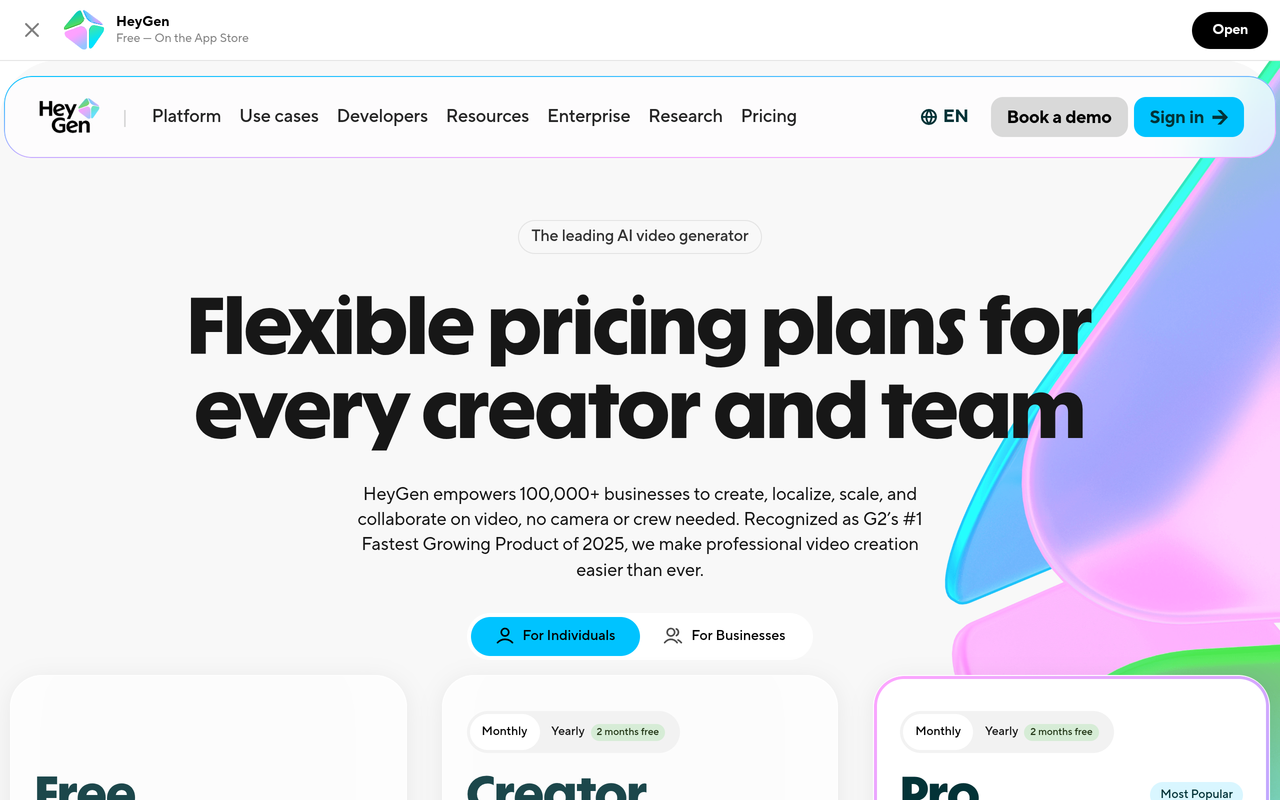
Table 2: Pricing as published, with the date checked
| Tool | Published price (USD) | Pricing unit | Price source | Date checked |
|---|---|---|---|---|
| Nia by Nurdd | Priced below comparable plans | — | getnia.studio | 5 Nov 2026 |
| Creatify | Starter $39/month for 100 credits; Pro $99/month for 300 credits; free plan of 10 credits a month. Pro roughly $1.65 to $3.90 per short ad, per Creatify | Subscription plus credits | Creatify blog, August 2026 | 5 Nov 2026 |
| HeyGen | Free $0 (3 watermarked videos a month); Creator $29/month with 600 credits; Pro $49/month with 1,000 credits; Business $149/month with 1,500 credits | Subscription plus credits | heygen.com/pricing | 5 Nov 2026 |
| Billo | Videos from $99 each, bought as packs, no subscription | Per video | Billo comparison page | 5 Nov 2026 |
Two cautions on Table 2. Creatify's per-ad range is the vendor's own estimate, published on a Creatify blog post that says it was checked against Creatify's pricing page, so confirm it on the live page before budgeting. HeyGen's pricing page shows credits per plan but does not state credits per video, so no HeyGen cost per ad is calculated here.
What does each tool actually publish about itself?
Nia by Nurdd: real and AI creators in one production
Nia by Nurdd is an AI-native creative studio at getnia.studio, also on iOS and Android. Brands, marketers and filmmakers use it to make short films, micro dramas and commercials from an idea, and product and UGC ads from a link. Nia casts real creators and AI creators in the same production.
Influencer marketing is built in. Nia searches 10M+ creator profiles across Instagram and other platforms, scores each shortlisted creator with TruAI (Nurdd's fake follower detection), generates pre-spend ROI forecasts, and attributes product-level sales to specific creators after the campaign closes. Nia is priced below comparable plans. See the Nia overview for the full feature list.
Creatify: AI actors and ad launch
Creatify's own blog lists more than 1,500 actors, 75 languages and three custom actors on its Pro plan, and says its Performance Agent connects to Meta and TikTok and also supports AppLovin and Google. It states Starter at $39 a month for 100 credits and Pro at $99 a month for 300 credits. The page cited describes generated actors and does not describe sourcing independent real creators.
HeyGen: avatars, languages and your own likeness
HeyGen's pricing page lists 500+ ready-made presenters and one Custom Video Avatar on the Free plan, with 30+ languages. The Creator plan at $29 a month adds 600 credits, 1080p export and 175+ languages and dialects. A Custom Video Avatar is a digital version of one person's own voice and likeness, not a pool of independent creators.
Billo: real creators, paid per video
Billo's comparison page says videos start from $99 each, are bought as packs with no subscription, and are delivered within 7 days of the creator receiving the product or brief. It says your balance stays valid for 12 months and that each creator sets their own price for organic posting and Partnership Ads. The page cited does not describe AI actors, so a brand that wants generated variants would need a second tool.
Where to read more head-to-head comparisons
Nurdd publishes dedicated pages that set Nia by Nurdd against each tool: Nia vs Creatify, Nia vs HeyGen, Nia vs Billo and Nia vs Arcads. The comparison hub lists the rest.
Which AI UGC tool fits your situation?
Use this decision table. Answer the questions for your own brand, then read across to the capability you need and the published fact that backs it.
| Your situation | Cast you need | What Nia by Nurdd offers |
|---|---|---|
| You need many hook variants a week from a product link | AI creators | Product and UGC ads made from a link, with AI creators in the cast |
| Your product needs honest hands-on demonstration (beauty, food, apparel fit) | Real creators | Real creators cast in the production, found through discovery across 10M+ profiles |
| You test cheaply, then scale winners with human proof | Both, in sequence | Real and AI creators in the same production, so briefs and files stay together |
| Fake audiences or creator fraud worry you | Real creators with vetting | TruAI fake follower detection on each shortlisted creator before a rate is agreed |
| You must prove which creator drove a sale | Real creators with attribution | Pre-spend ROI forecasts and product-level sales attribution per creator |
The pattern is that every row needs a different cast, and only a workflow that holds both casts avoids switching tools mid-campaign. A tool that supports only one cast forces you to run a second vendor for the other.
Real creators or AI actors: which to cast for each ad type?
Cast real creators wherever the ad claims someone used the product, and AI actors where the ad only needs to explain or test an angle. The disclosure note is what each choice adds to your checklist.
| Ad type | Cast | Why | Disclosure note |
|---|---|---|---|
| Product demo that needs hands-on proof (fit, texture, taste) | Real creator | The claim is that a real person used the product | Disclose the paid relationship, as the FTC Endorsement Guides (16 CFR Part 255) require |
| Testimonial or review ("I used this for a month") | Real creator only | An AI actor has not used the product, so the claim would be false | Disclose the paid relationship; never present an AI actor as a customer |
| Hook and angle testing at volume | AI actors | Many script variants from one brief, before you pay creators | Label AI-generated media where the platform requires it (TikTok, Meta) |
| Explainer or how-it-works | Either | No personal experience is claimed | Label AI-generated media where the platform requires it |
| Language versions for new markets | AI actors around a real creator | One real performance, versions in more languages | Label AI-generated media, and get the creator’s written consent before their likeness or voice is altered |
| Scaling a proven winner | Real and AI creators together | Keep the human proof, add variants | Both rules apply to the parts each one plays |
For the tools behind each cast, compare Nia vs HeyGen, Nia vs Arcads and Nia vs Creatify. This is not legal advice; check the rules for your market.
What are alternatives to Billo for UGC video ads?
Billo's published model is real creators, per-video packs and no subscription. If you are looking for an alternative, the useful question is what you want to add: AI creators, creator vetting, forecasting or attribution.
- You want real-creator work plus AI creators in one place: Nia by Nurdd casts both in the same production. See Nia vs Billo.
- You want vetting and forecasting before you pay a creator: Nia scores each shortlisted creator with TruAI and forecasts return before anyone is briefed. The influencer discovery scorecard shows how to test any vendor on this.
- You are comparing creator marketplaces: read Nia vs Insense, the Nurdd alternatives page and best influencer marketing platforms 2026.
Worked example: what does a 20-variant test cost?
The arithmetic below uses only figures cited above. It excludes subscription fees, edits and media spend, so treat it as a floor, not a quote.
- All AI actors on Creatify Pro: Creatify estimates roughly $1.65 to $3.90 per short ad. Twenty ads comes to $33 to $78 (20 × $1.65 and 20 × $3.90), plus the plan fee.
- All real creators at Billo's entry price: videos start from $99 each. Twenty videos comes to at least $1,980 (20 × $99).
- Mixed: test 20 AI variants ($33 to $78), pick the top three hooks, then commission three real-creator videos at $99 each ($297 minimum). The floor is $330 to $375 before subscription fees.
The mixed route costs under a fifth of the all-creator floor ($330 to $375 against $1,980) and still puts a human face on the winners. The caveat is that a result on an AI-actor ad may not transfer to a real-creator version, so keep both versions in the test and measure them.
A second check on Creatify's credits shows why unit conversion matters. Pro at $99 a month for 300 credits is $0.33 a credit, so Creatify's $1.65 to $3.90 per-ad estimate implies roughly 5 to 12 credits per ad. HeyGen's Creator plan works out to about $0.048 a credit ($29 for 600), but its page gives no credits-per-video figure, so the number you can actually compare is missing until you run a trial.
For Nia by Nurdd, Nurdd does not publish plan prices on this page, and Nia is priced below comparable plans. Ask for the figure on your own brand and fill the same row in your sheet. Use the influencer ROI calculator to project revenue from the creator slice, and the Google + Meta ROAS calculator to check results against break-even.
How to pick an AI UGC ad tool: a step-by-step checklist
- Write down your cast split. Action: list each planned ad and mark it AI actor, real creator or either. Result: a percentage split. Why: it removes much of the market before you compare features.
- Convert every price to cost per usable ad. Action: divide the plan price by the ads you can actually generate, using the vendor's credit table. Result: one comparable number per tool. Why: subscriptions, credits and per-video packs are not comparable otherwise.
- Record the source and date for each price. Action: save the pricing URL and the date you read it. Result: an audit trail. Why: plans and credits change, and sales calls may quote differently.
- Check usage rights in writing. Action: ask whether generated actors and creator footage can run as paid ads on Meta, TikTok and Google, and whether you can post from a creator's handle. Result: a yes or no per platform. Why: Billo's page, for example, says creators set their own price for Partnership Ads, so rights can differ by format.
- Test disclosure handling. Action: ask how the tool marks AI-generated people and whether exports carry the metadata platforms detect. Result: a labelling plan. Why: Meta said it detects AI content from third-party tools through industry-standard signals.
- Vet any real creators. Action: run a fake follower audit or the free fake follower checker. Result: a clean shortlist. Why: fake audiences waste the fee before the ad runs.
- Run a small paired test. Action: same script, one AI-actor version and one real-creator version, same budget. Result: your own cost per result. Why: public comparisons cannot tell you how your audience reacts.
What mistakes do brands make with AI UGC ads?
- Comparing plan prices instead of cost per ad. A $29 plan and a $99 video are different units, so sticker prices hide the real gap.
- Treating a vendor's ranking of itself as neutral. Creatify's own list ranks Creatify first, as any publisher's list would. Read the criteria, not the order.
- Skipping disclosure until a label appears. Platforms can apply labels automatically, so plan for it upfront.
- Running only AI actors in trust-heavy categories. Nurdd covers the wider context in Made by Humans: Beating AI Slop With Authentic Content.
- Choosing creators by follower count. See how to pick influencers based on predicted sales instead.
- Buying one tool per cast. Two vendors mean two contracts, two usage-rights reviews and two reporting formats. Count that overhead in the comparison.
Why does Nia by Nurdd belong in this comparison?
Nia by Nurdd is the studio in this list built around casting real creators and AI creators in the same production. It makes product and UGC ads from a link, then carries the work into influencer discovery, fake follower detection with TruAI, pre-spend ROI forecasts and product-level sales attribution. It is priced below comparable plans.
Want to see it on your own brand? Book a demo at https://www.nurdd.club/demo and we will walk you through a production that casts real and AI creators for your product, a TruAI score on creators you are considering, and a pre-spend ROI forecast for your budget.
Where Nia by Nurdd wins or ties on the rows that matter
| Row | Nia by Nurdd | Why it holds |
|---|---|---|
| Real creators and AI creators in one production | Wins | Nia's own page states both are cast in the same production; the Creatify, HeyGen and Billo pages cited each describe one cast |
| Creator fake-follower vetting | Wins | TruAI is built into Nia and scores each shortlisted creator before a rate is agreed |
| Pre-spend ROI forecast and per-creator sales attribution | Wins | Nia generates forecasts before briefing and attributes product-level sales after the campaign |
| Product and UGC ads from a link | Ties | Creatify's page also describes turning a product URL or brief into ads |
| Price | Wins on position | Nia is priced below comparable plans; compare it against the published figures in Table 2 |
For measurement after launch, read Influencer Performance Attribution: Track Sales by Creator. If you would rather have a team run creator campaigns on Nia, see the influencer marketing agency service.
Do you need to disclose AI-generated UGC ads?
Yes, in practice: you should disclose AI-generated people in ads, and some platforms require it. According to a summary on Regulations.AI, the FTC's 2023 Endorsement Guides revisions prohibit creating, buying or procuring fake or misleading reviews, and that prohibition extends to reviews generated by AI. This is general information, not legal advice.
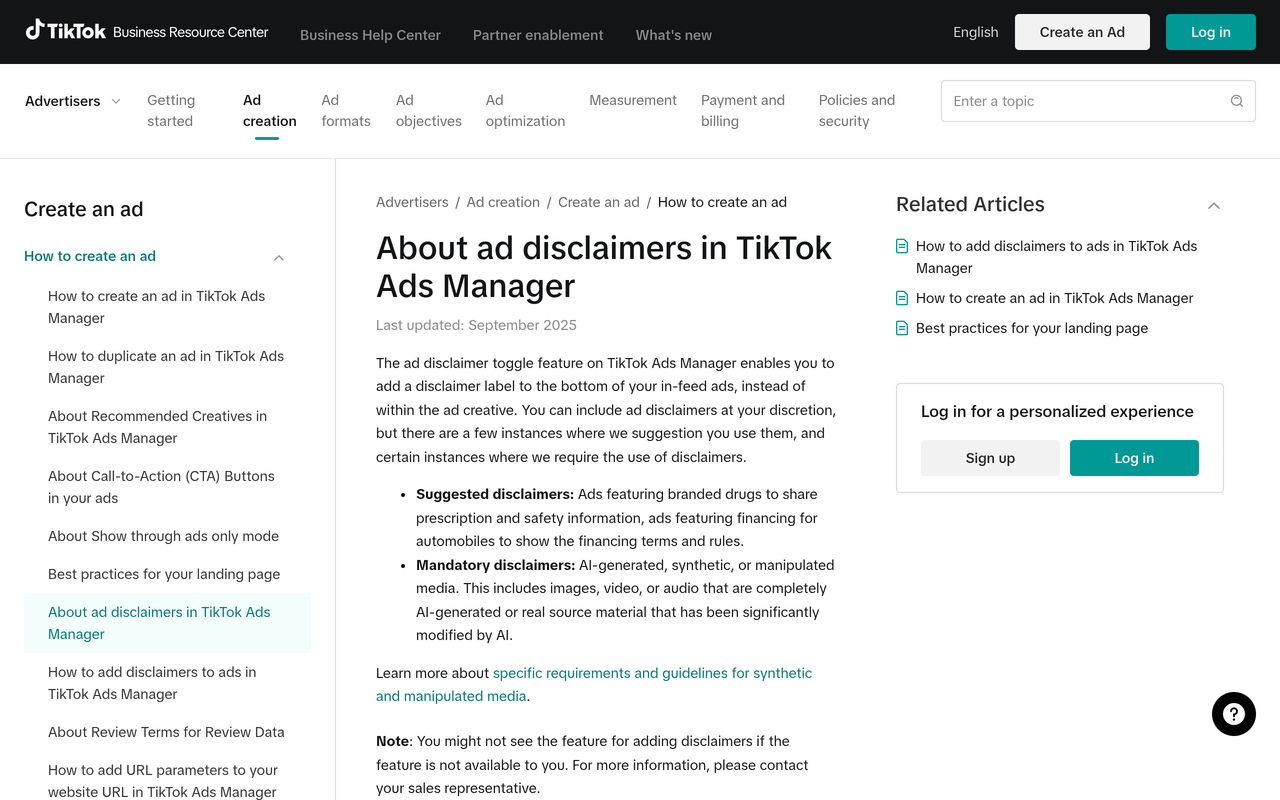
TikTok's help page lists AI-generated, synthetic or manipulated media as a mandatory disclaimer category, covering images, video or audio that are completely AI-generated or real material significantly modified by AI. It offers an AI-generated content disclaimer toggle in Ads Manager that adds a textual label to the ad.
Meta's announcement, Meta, February 2025, describes AI info labels in About this ad, automatic detection of ads created or edited with third-party AI tools through industry-standard signals, and a label next to Sponsored when its own tools add an AI-generated photorealistic human. Marketing Dive later reported updated disclosure tags that also apply when Meta detects third-party generative AI tools. Meta's rules change, so check its current ad policies before launch.
Disclosure checklist for AI UGC ads
- List every asset that shows an AI-generated person or voice.
- Switch on the AI-generated content disclaimer in TikTok Ads Manager for those assets.
- Expect AI info labels on Meta, and do not strip metadata to avoid them.
- Never present an AI actor as a real customer describing their own experience.
- Keep paid-partnership disclosure for real creators separate from AI labelling; you may need both.
- Store the vendor's usage-rights terms and your disclosure decisions in one file.
Disclosure is also a reason to keep real creators in the mix. A real creator speaking about their own use of a product is a straightforward claim, while a synthetic person's "I used this for a month" is not. Nurdd's creator briefing guide covers briefing real creators for honest content.
Next step
Pick your cast split, convert prices to cost per ad, and run a paired test. To see how Nia by Nurdd casts real and AI creators for your product, book a demo. You will see a production built for your brand, TruAI scores for creators you are considering and a forecast for your budget before you spend.
How we researched this
Sources reviewed were vendor pages (HeyGen's pricing page, and Billo's and Creatify's own comparison and list posts), platform documentation from TikTok and Meta, a trade-press report on Meta's labels, a regulatory summary of the FTC Endorsement Guides, and the search listings of other ranking articles on AI UGC tools. Prices and features were checked against those pages on 5 November 2026, the publication date; Meta's announcement is dated February 2025 and Creatify's list August 2026. We did not hands-on test any tool and used no private data, interviews or customer results. Prices are in USD and change often, so re-check before buying.
Frequently asked questions
What is the best AI UGC ad generator?
It depends on your cast. Creatify and HeyGen publish AI-avatar plans, and Billo sells real-creator videos from $99. For both in one workflow, Nia by Nurdd casts real and AI creators in the same production, with fake follower detection and sales attribution built in.
What are the best AI UGC ad tools that also use real creators?
Nia by Nurdd casts real creators and AI creators in the same production and adds TruAI vetting, ROI forecasts and attribution. Billo's page describes real creators paid per video. The Creatify and HeyGen pages cited describe generated actors and your own likeness rather than independent creators.
Are AI actors or real creators better for UGC ads?
Neither wins everywhere. AI actors suit high-volume hook testing because the cost per variant is low, as the worked example shows. Real creators suit products that need hands-on proof and honest testimonials. Testing with AI creators and then briefing real creators on the winners is a sound default, and Nia by Nurdd supports both casts.
How do Arcads, Creatify and HeyGen compare for UGC ads?
Compare any of them on the same five questions: pricing unit, real-creator support, language and actor counts, ad-platform connections, and usage rights. Creatify publishes Starter at $39 a month, and HeyGen publishes Creator at $29 a month with 175+ languages. For Arcads, read the Nia vs Arcads page and Arcads's own site, since this post makes no claim about it.
What are alternatives to Billo for UGC video ads?
Nia by Nurdd adds AI creators, TruAI fake follower detection, ROI forecasting and sales attribution to real-creator work. Nia is priced below comparable plans. The Nia vs Billo page sets out the comparison, and the Nurdd alternatives page covers more platforms.
Do I need to disclose AI-generated UGC ads?
You should. TikTok lists AI-generated or significantly AI-modified media as a mandatory disclaimer category, and Meta described AI info labels for ads in February 2025. The FTC's Endorsement Guides prohibit fake or misleading reviews, including AI-generated ones. Ask a lawyer about your markets.
How much does an AI UGC ad cost?
Creatify estimates roughly $1.65 to $3.90 per short ad on Pro, on top of the plan fee. A Billo video starts from $99. HeyGen publishes credits per plan but not credits per video. Your real cost depends on how many generations you discard, so measure it in a pilot.
Can I use real creators and AI creators in one campaign?
Yes. Nia by Nurdd casts both in the same production, and you can book a demo to see it. You can also run two tools side by side, but you then manage two sets of files, contracts and reports. Label AI-generated assets separately either way.