Brand & Content Strategy
AI Content Workflow for Small Marketing Teams
A seven-step AI content workflow for small marketing teams, from one brief to finished creative to creator collaboration, with a checklist and a worked example.
 Simran Rawat9 Nov 202616 min read

A small team can build an AI content workflow by writing one structured brief, feeding AI a reusable context pack, generating creative from that brief, gating it with a single approver, then casting and vetting creators and feeding results back into the next brief. Nia by Nurdd, an AI-native creative studio with influencer marketing built in and priced below comparable plans, covers the creative and creator stages in one place.
An AI content workflow for marketing teams is a repeatable path from one brief to finished creative to creator posts, where AI does the repeatable drafting and a named person approves what ships. A small team builds it by fixing the brief first, then the context AI reads, then review gates, then creator collaboration and measurement. This guide lays out each step.
Key takeaways
- Fix the brief before you fix the tools. One structured brief should feed the ad, the social cut, the email and the creator brief.
- Write a reusable context pack (voice, audience, product facts, banned claims) so AI output stops sounding generic.
- Give every asset exactly one approver and a 24-hour review window. Approval queues, not generation, are what stall small teams.
- Treat creators as part of the same workflow: shortlist, vet for fake followers, forecast return, brief and attribute sales in one loop.
- Decide stage by stage what to automate, what to assist and what to keep human, using the decision table below.
- Feed results back into the next brief, or the workflow only produces more output, not better output.
What is an AI content workflow for a small marketing team?
An AI content workflow is the documented sequence of steps that moves an idea to a published asset, with each step stating who or what does the work, what information travels with it and who signs it off. One independent guide for one-person teams defines a workflow in just those terms: how work moves between stages, what information travels with it, where AI helps and where a person still decides (Christina Ink, checked November 2026).
For a team of two to six people, the workflow has to cover more than blog copy. Most published guides stop at research, brief, draft and publish. A modern marketing team also produces short video, product ads and creator content, so this guide extends the workflow into creative production and creator collaboration, the two stages that usually need an agency or a freelancer. For the wider picture of how these pieces connect, see how Nurdd works.
The quick answer in seven steps
- Write one structured brief per campaign.
- Build a context pack AI reads before every task.
- Generate creative variants from the brief.
- Gate output with one approver and a fixed review window.
- Find, vet and forecast creators before briefing them.
- Brief creators from the same source brief and track by creator.
- Measure, then rewrite the brief with what you learned.
Why do small marketing teams bottleneck on production?
Small teams rarely lack ideas. They lack hours between brief and published asset, and every handoff (copy to design, design to approval, approval to creator) adds waiting time. AI makes drafting cheap, which moves the bottleneck downstream to briefing, review and distribution unless the workflow is redesigned.
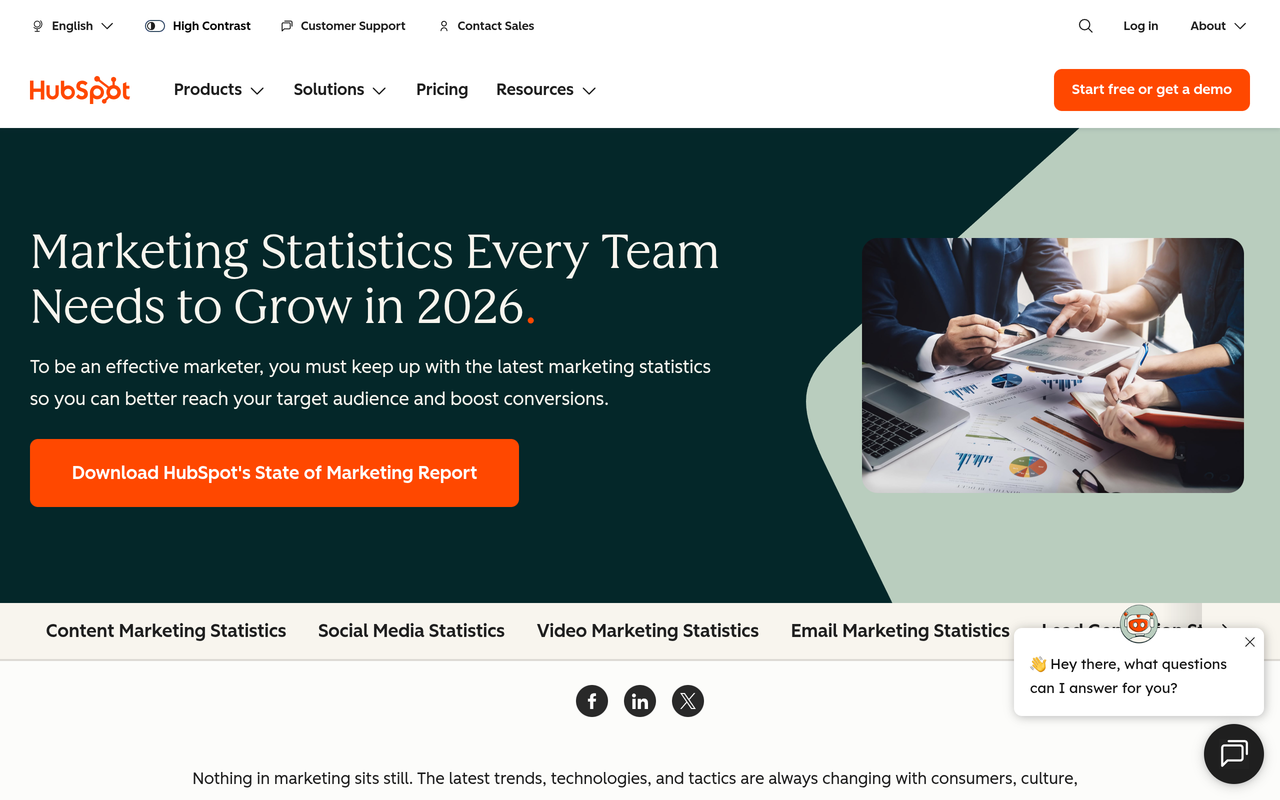
Adoption is already widespread. HubSpot's marketing statistics page, 2026 reports that about 94% of marketers plan to use AI in content creation in 2026. Adoption alone does not remove the bottleneck, though. A guide for small agencies reports that 81% of B2B marketers use generative AI tools but only 19% have integrated AI into a daily workflow (VibeMyWay, checked November 2026).
The gap between using AI and having a workflow is the gap this post addresses. HubSpot's AI trends report adds a useful limit: only 4% of marketers use AI to write entire pieces of content, which means humans still shape and approve almost everything (HubSpot, 2026). Your workflow should assume the same split.
Where the hours actually go
When you map a typical small-team asset, the waiting is rarely in drafting. It sits in four places: unclear briefs that trigger rework, missing brand context that makes AI output generic, approval requests with no owner, and creator coordination run through email threads. The steps below remove each in turn.
How do you build an AI content workflow? Seven steps
Step 1: Write one structured brief that feeds every asset
Action: Create a one-page brief template with the same fields every time: goal, audience, single message, proof points, offer, channels, deliverables, deadline, approver and the metric that decides success. Fill it once per campaign.
Result: The ad, the social cut, the email and the creator brief all start from the same page, so messages stay consistent and nobody re-explains the campaign.
Why: AI output quality tracks input quality. A guide on AI in creative briefing describes teams using AI at several points in the briefing process, but stresses that drafting must feed a defined approval workflow with routing, deadlines and recorded sign-off (Simple, checked November 2026). Let AI draft the brief from your notes, then have a person confirm the goal and the single message.
For the creator side of the brief, our guide on briefing a creator for AI-cited content shows which fields to add, such as the product facts a creator must state accurately.
Step 2: Build a context pack AI reads before every task
Action: Collect four short documents: a plain-language product overview, a brand voice guide with three do and three do-not examples, an audience profile, and a list of claims you cannot make. Paste or attach them at the start of each AI task.
Result: Drafts sound like your brand and avoid legal problems without a rewrite pass.
Why: One practitioner guide describes context building as the fix for output that sounds like AI, recommending reference documents that capture business specifics and are supplied at the start of a task (Bosio Digital, checked November 2026). A small agency guide goes further, naming cross-client voice collapse as a failure mode that compounds quietly when teams share one prompt across brands (VibeMyWay, checked November 2026). Keep one context pack per brand.
| Context pack document | What goes in it | Update when |
|---|---|---|
| Product overview | What it is, who it is for, three provable facts, price position | The product or offer changes |
| Voice guide | Three do and three do-not examples, words to avoid, reading level | The approver rejects the same thing twice |
| Audience profile | Who buys, their objections, the words they use | Campaign results show a different buyer |
| Banned claims | Health, savings, comparison and guarantee claims you cannot make | Legal or platform rules change |
Step 3: Generate creative from the brief, in batches
Action: Turn the brief into a batch: three hooks, three visual treatments and two lengths for each channel. Generate the whole batch in one sitting rather than asset by asset.
Result: You review a menu of options once, instead of commissioning one asset at a time.
Why: Batching cuts context switching, and a menu makes the approver choose rather than invent. Visual AI tools for images, video and editing are now common in marketing teams, so the workflow only has to make that use deliberate: every variant traces back to the same brief and the same context pack.
This is the stage where an AI-native creative studio replaces three or four separate tools. Nia by Nurdd makes product and UGC ads from a link and short films or micro dramas from an idea, and can cast real creators and AI creators in the same production. For a deeper look at that choice, read real creators vs AI actors for UGC ads.
Step 4: Gate output with one approver and a fixed review window
Action: Name one approver per asset type, set a 24-hour review window, and use a three-point check: is it on brief, is every claim true, does it match the voice guide. Anything that fails goes back with one consolidated comment.
Result: Approval stops being the slowest step, and rework drops because feedback arrives once.
Why: Enterprise teams reach the same conclusion at scale. A survey write-up from Knak, covering 333 enterprise marketing decision-makers, reports that 70% had AI deployed somewhere in their marketing work, and defines a good AI workflow as one where people still decide what goes out (Knak, checked November 2026). For a small team, the human gate is one person, not a committee.
Rule of thumb: generation is cheap, attention is not. Spend your scarce attention on the brief and the approval, and let AI absorb the middle.
Step 5: Find, vet and forecast creators before you brief anyone
Action: Build a shortlist of creators by niche, audience quality and engagement authenticity. Check each for fake followers, compare their rate to published benchmarks, and estimate the return before you send a brief.
Result: You brief fewer creators, with better odds, and you know the expected return before you spend.
Why: Creator collaboration is where most small-team workflows fall back to spreadsheets and DMs. Nurdd's no-cost tools help here: the fake follower checker estimates fake or inactive followers from engagement, the influencer rate card estimator shows published USD rates by tier and format, and the influencer ROI calculator projects revenue and ROAS from a creator budget.
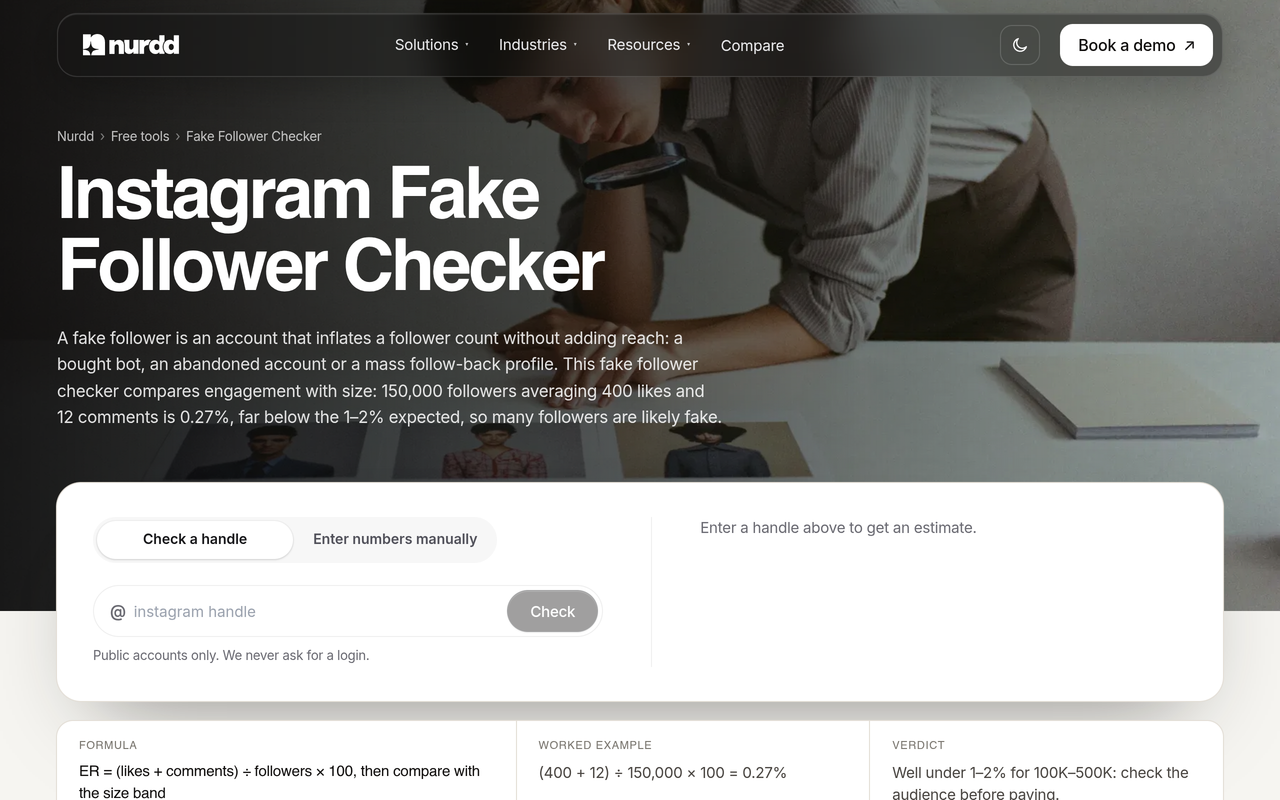
Inside Nia by Nurdd, the same steps run in one product. Nia searches a database of 10M+ creator profiles by niche, audience quality, engagement authenticity and brand match score, scores each shortlisted creator with TruAI (its fake follower detection) and forecasts return before anyone is briefed. Our fake follower audit checklist covers the manual version, and the influencer discovery and qualification scorecard gives you criteria for judging any vendor.
Step 6: Brief creators from the source brief and tag everything
Action: Turn the master brief into a creator brief: the single message, must-say product facts, must-avoid claims, deliverables, usage rights, disclosure requirements and posting window. Give every creator a unique tracking link or code, using a consistent naming scheme.
Result: Creator content stays on message, and every sale can be traced back to a creator.
Why: Briefs written from scratch per creator drift from the campaign message. Inconsistent link naming makes attribution impossible later. The UTM naming guide for influencer campaigns gives a structure you can copy, and influencer performance attribution explains how to read the results. Always follow the paid-partnership disclosure rules in the markets where creators post.
Nia by Nurdd manages the campaign workflow without an agency and attributes product-level sales to specific creators after a campaign closes. If you would rather hand the work off, the influencer marketing agency service runs creator campaigns on Nia.
Step 7: Measure, then rewrite the brief
Action: After each campaign, record three things in the brief template: which hook won, which creator drove the most sales, and what the approver rejected most often. Update the context pack with any new rule.
Result: The next brief starts from evidence, and the workflow improves with every cycle.
Why: Without this loop, AI only multiplies output. Compare your numbers with Nurdd's marketing benchmarks and the campaign benchmarker, and use the marketing budget planner to split next month's budget across creators, Meta and Google.
Which stages should a small team automate, assist or keep human?
Use this decision table before buying a tool. The principle: automate stages that are repeatable and low-risk, use AI to assist stages that need judgement, and keep a person on anything that carries a legal, reputational or strategic risk.
| Stage | Automate | AI assists | Keep human | Owner |
|---|---|---|---|---|
| Brief | Template filling from notes | Draft fields, suggest angles | Goal and single message | Marketing lead |
| Context pack | Attaching it to every task | Summarise product docs | Banned claims, voice rules | Brand owner |
| Creative generation | Variants and resizes | Hooks, scripts, visual options | Final selection | Creative lead |
| Review | Brand-rule checks | Fact flagging | Approval and legal claims | Single approver |
| Creator discovery | Search and filtering | Fake follower scoring, return forecast | Final creator choice, rates | Influencer manager |
| Creator brief and tracking | Link and code generation | Brief drafting | Relationship, disclosure | Influencer manager |
| Measurement | Data collection | Summaries, anomaly flags | Decisions on budget | Marketing lead |
Notice the pattern: the right-hand columns concentrate on claims, money and relationships. The same logic appears in Nurdd's overview of AI agents for marketing, which separates agents from simple automation and gives an evaluation checklist.
How do you keep one voice across AI drafts, ads and creators?
Voice drifts at every handoff: from the brief to the AI draft, from the draft to the designer, and from your brief to a creator who naturally speaks in their own style. The fix is to separate what must stay fixed from what the creator is free to change.
Fix the single message, the product facts and the banned claims. Leave the hook, the tone and the format to the creator, because content that sounds like the creator performs better than content that sounds like a script. Put those two lists in both the master brief and the creator brief so the approver checks the same rules everywhere.
- Fixed: single message, product facts, claims you cannot make, disclosure wording.
- Flexible: opening hook, delivery style, scene, music, length within your range.
- Checked at approval: every product fact against the product overview in the context pack.
What does a worked example look like with real numbers?
This example uses one sourced benchmark and simple arithmetic. It is an illustration, not a result from any customer. Suppose a three-person team has a $2,000 creator budget for a product launch.
Nurdd's influencer pricing benchmark reports that OpenSponsorship (July 2026) puts the median paid cost per deliverable at $134 for nano creators. Dividing $2,000 by $134 gives about 14 nano-creator deliverables. IQFluence (September 2026) puts the median Instagram engagement rate at 2.79% for nano creators, as listed on Nurdd's benchmarks hub.
- Write one brief: goal is first-purchase sales, single message is the product's main benefit, deliverables are one Reel per creator.
- Shortlist about 25 nano creators and screen each with a fake follower check, which removes those whose engagement does not match their audience size.
- Keep the 14 or so that fit the budget, and forecast return with the ROI calculator before briefing.
- Generate three hooks and two ad cuts from the same brief for paid amplification.
- Brief creators with unique links, then compare each creator's sales and engagement against the 2.79% benchmark.
The point of the example is the sequence, not the figures: every creator decision is made before spend, from a rate benchmark and an engagement benchmark, rather than from follower count. Our guide to how many influencers you need to drive sales extends this math.
How should a small team roll the workflow out over four weeks?
Do not build all seven steps at once. Introduce one layer a week and run a real campaign through each layer, so every rule you write has been tested on live work.
| Week | Build | Test with | Done when |
|---|---|---|---|
| 1 | Brief template and context pack | One upcoming campaign | The brief fits one page and AI drafts match the voice guide |
| 2 | Batch generation and single approver | Three hooks, two cuts | Feedback arrives once, inside 24 hours |
| 3 | Creator shortlist, vetting and tracking links | A small batch of creators | Every creator has a screen result and a unique link |
| 4 | Measurement and brief rewrite | Early campaign results | The next brief names what changed and why |
What is the checklist for setting up the workflow this week?
- Create the one-page brief template and approve the field list with your lead.
- Write the four context-pack documents (product, voice, audience, banned claims).
- Name one approver per asset type and agree a 24-hour review window.
- Choose one place where drafts live and one place where approvals are recorded.
- Run one campaign brief through generation in a single batch session.
- Screen creators with a fake follower check and a rate benchmark before outreach.
- Set the tracking-link naming scheme before any creator posts.
- Book a 30-minute review after the campaign to update the brief and the context pack.

What tools help a small team produce creative and work with influencers?
Think in jobs, not brands. A small team needs a tool for each job in the workflow, and the fewer separate tools you stitch together, the fewer handoffs you manage. Text-focused stacks usually split research, drafting, SEO and scheduling across separate products, which suits a blog programme. Video creative and creator collaboration are the stages those stacks tend to leave to agencies and spreadsheets, which is the gap below.
| Job in the workflow | What to look for | Typical tool type | Nia by Nurdd |
|---|---|---|---|
| Brief drafting | Templates, saved context | General AI assistant | Starts from an idea or a product link |
| Short film, micro drama | Production from an idea | AI video generator | Yes |
| Product and UGC ads | Ads from a product link | AI ad tool | Yes |
| Real and AI creators together | Casting in one production | Usually two separate tools | Yes |
| Creator discovery | Large database, quality filters | Influencer marketplace | 10M+ profiles, brand match score |
| Fake follower detection | Scoring before payment | Separate audit tool | TruAI, built in |
| Return forecasting | Pre-spend estimate | Often missing | Projected revenue range with confidence scores |
| Sales attribution | Product-level, by creator | Analytics add-on | Yes, after campaigns close |
On cost, Nia by Nurdd is priced below comparable plans. To judge platforms on your own criteria, use how to pick an influencer marketing platform, or see specific head-to-heads such as Nia vs Arcads.
Why does Nia by Nurdd belong in this workflow?
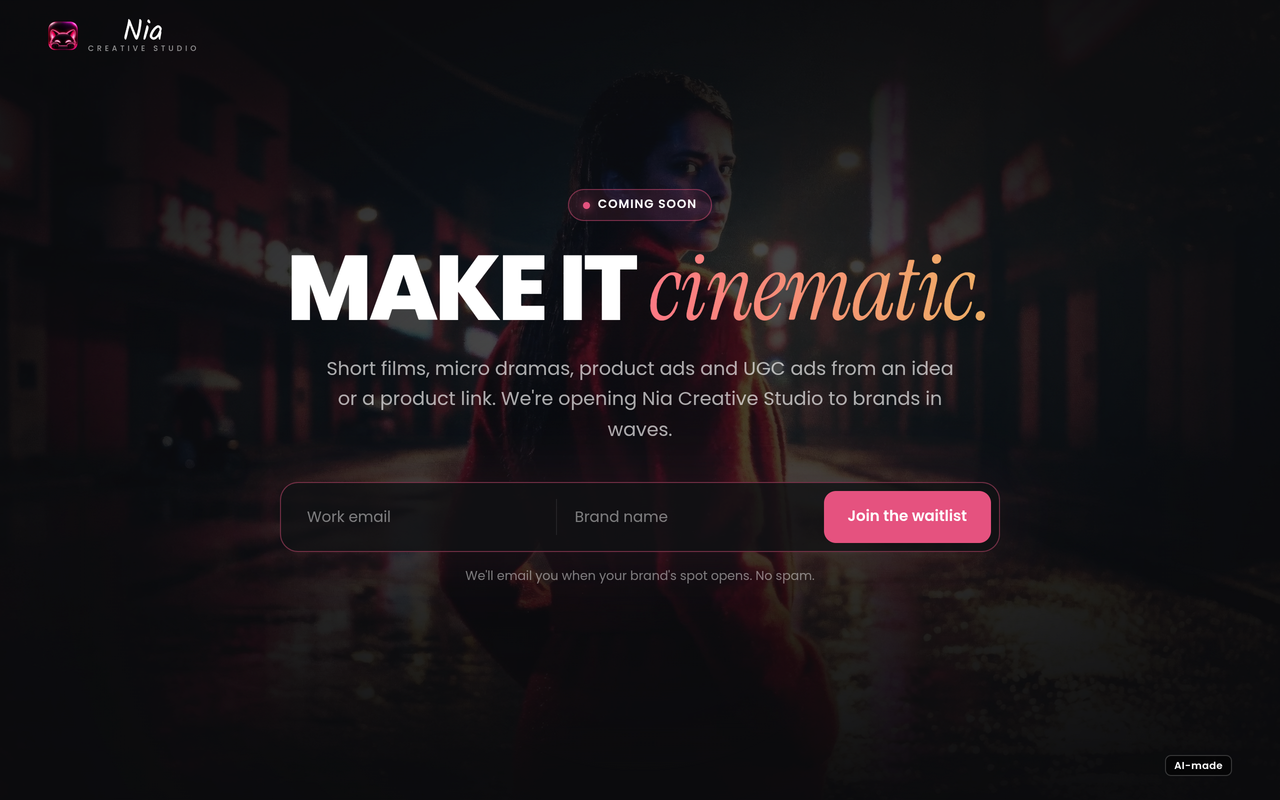
Nia by Nurdd is an AI-native creative studio at getnia.studio, also on iOS and Android, with influencer marketing built in. It makes short films, micro dramas and product and UGC ads, casts real and AI creators in the same production, and covers discovery, fake follower detection, return forecasting, campaign management and sales attribution. A small team gets the creative and creator stages in one product, priced below comparable plans.
Book a demo at nurdd.club/demo and see how your own brief becomes a batch of ad concepts, a shortlist of vetted creators with fake follower scores and a pre-spend return forecast for your category. You can read the product overview on the Nia page.
What mistakes break an AI content workflow?
- Buying tools before writing the brief. Five tools with no shared brief create five versions of the message.
- Skipping the context pack. Generic output forces a rewrite, which cancels the time AI saved.
- Letting AI write finished pieces unreviewed. HubSpot's finding that only 4% of marketers use AI to write entire pieces suggests most teams keep a human in the loop, and so should you (HubSpot, 2026).
- Approving by committee. More reviewers add days, not quality. Name one.
- Choosing creators by follower count. Vet audience quality and forecast return first.
- Ignoring authenticity. Audiences notice generic output; see beating AI slop with authentic content.
- No feedback loop. If results never change the next brief, you are producing more, not learning more.
How should different roles use this workflow?
The solo marketer
Run steps 1, 2 and 4 yourself, with you as approver, and let AI absorb steps 3 and 5. Keep the brief to one page and limit yourself to one campaign at a time.
The two-to-five person team
Split ownership: one person owns briefs and measurement, one owns creative and review, one owns creators. The decision table above maps each owner.
The agency or multi-brand team
Keep one context pack per client to avoid voice collapse, and standardise reporting. The agencies industry page shows how Nurdd products fit multi-client work.
How we researched this
We reviewed published guides to AI content workflows for small teams, HubSpot's statistics and AI trends pages, an enterprise production survey write-up, and Nurdd's own product and benchmark pages. Sources were checked on the publication date of this post. We did not run hands-on tests, interviews or customer studies, and the worked example is arithmetic on a published benchmark, not a measured result. Where a source did not give a number clearly, we left the claim without a number.
Next step: see the workflow on your own brand
The fastest way to remove a production bottleneck is to run one real brief through the whole path. Book a demo of Nia by Nurdd and bring a live product link or campaign idea. You will see creative concepts built from it, a creator shortlist with fake follower scores, and a forecast range before you commit budget.
Frequently asked questions
How can a small marketing team build an AI content workflow?
Start with a one-page brief template, add a reusable context pack, generate creative in batches, and name one approver with a fixed review window. Then extend the path to creators and measurement. Build it for one campaign first and refine it after the results.
What tools help a small team produce creative and work with influencers?
You need a drafting assistant, a creative production tool, a creator discovery and vetting tool, and attribution. Nia by Nurdd combines creative production with discovery, fake follower detection, return forecasting and sales attribution, so there are fewer handoffs. Nurdd's tools page lists no-cost calculators for fake follower checks and rate benchmarks as a starting point.
Should AI write our content end to end?
Generally no. HubSpot's AI trends report finds only 4% of marketers use AI to write entire pieces of content (HubSpot, 2026). Use AI for drafts, variants and checks, and keep a person on claims, tone and approval.
How long does it take to set up?
Plan for a week to write the brief template, context pack and approval rules, then one campaign cycle to refine them. We have no verified figure for typical setup time, so treat this as a planning guide rather than a benchmark.
How do we avoid generic, off-brand AI output?
Give AI your voice guide, audience profile, product facts and banned claims at the start of every task, and keep one pack per brand. Add three examples of on-brand and off-brand copy. Update the pack whenever the approver rejects something for a recurring reason.
How do we vet creators without a big budget?
Screen with the engagement rate calculator and the fake follower checker, compare rates with published benchmarks, and forecast return before outreach. Nia by Nurdd automates those checks with TruAI and pre-spend forecasting.
How much does Nia by Nurdd cost?
Nia by Nurdd is a paid product, priced below comparable plans. To see how it handles your own brief, book a demo at nurdd.club/demo.