Brand & Content Strategy
Nurdd Alternatives: Which Product Fits Which Marketing Job
Nurdd is a parent company with three separate products, so the right alternative depends on whether your job is creative, AI search or paid ads.
 Simran Rawat2 Nov 202614 min read

Nurdd is not one tool but the parent of three separate products: Nia (creative and influencer work), Noma (AI search visibility) and Pulse (Meta and Google Ads intelligence). The alternatives you should compare depend on the job, so pick the job first and the product second. Noma has a 3-day free trial, Pulse is paid with no trial, and Nia is priced below comparable plans.
Nurdd alternatives are not one list, because Nurdd is the parent company of three separate products: Nia by Nurdd for creative and influencer work, Noma for AI search visibility, and Pulse for Meta and Google Ads intelligence. Each has its own rivals. The fastest way to choose is to name your marketing job first, then compare tools built for that job.
Key takeaways
- Nurdd makes three independent products. Nia, Noma and Pulse do not share one interface, login or job.
- Decide the job before you compare vendors: making creative and running creator campaigns, tracking AI answers, or reading ad performance.
- Noma tracks 13 AI engines, including ChatGPT, Gemini, Perplexity and Claude, and offers a 3-day free trial with a card taken at signup.
- Pulse is paid and has no trial; it connects to Meta Ads and Google Ads through read-only access.
- Nia is priced below comparable plans; do the same like-for-like check on any rival you shortlist.
- Use the checklist and decision table below to shortlist two options per job, then test both on your own brand.
What are Nurdd's products and what does each do?
Nurdd Solutions Private Limited is an AI marketing intelligence company founded in 2026. It builds AI agents for marketing teams, growth marketers and brands worldwide. It sells three independent products rather than one platform, and each one has its own address, its own buyer and its own set of competitors.
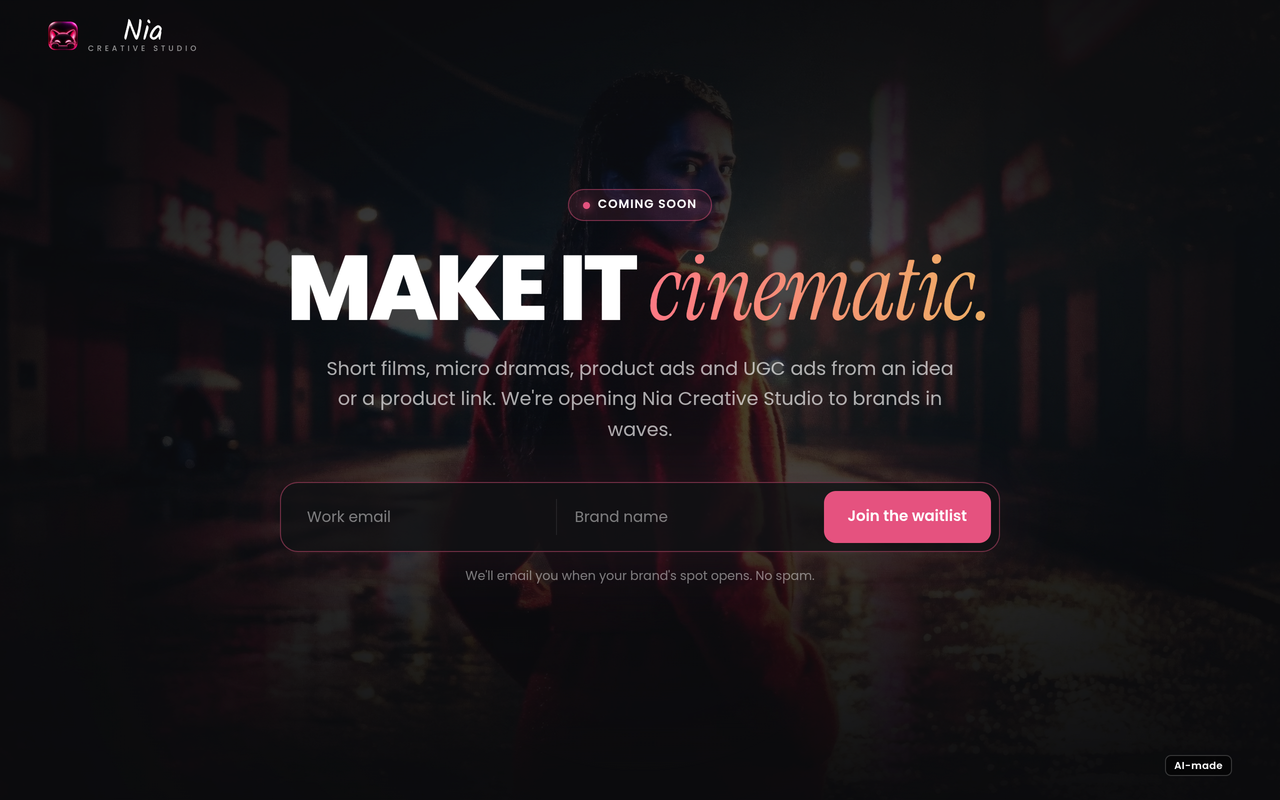
Nia by Nurdd is an AI-native creative studio at getnia.studio, also available on iOS and Android. Brands, marketers and filmmakers use it to make short films, micro dramas and commercials from an idea, and product and UGC ads from a link, casting real creators and AI creators in the same production. Influencer marketing is built in.
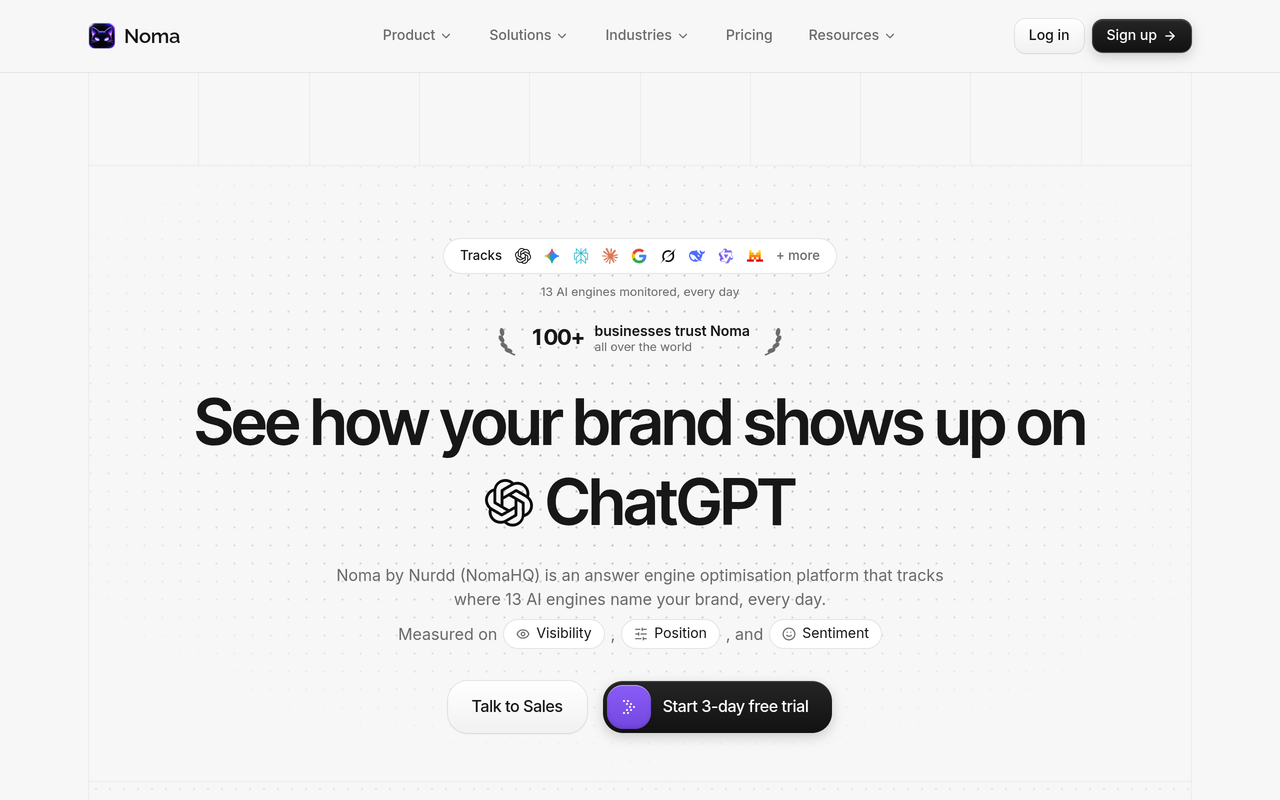
Noma is a web dashboard that tracks whether a brand appears in answers from 13 AI engines, including ChatGPT, Gemini, Perplexity and Claude, polled daily. Pulse is a web dashboard that connects to Meta Ads and Google Ads through read-only OAuth and explains performance in plain language.
| Product | Job it does | Who it is for | Where to find it |
|---|---|---|---|
| Nia by Nurdd | Makes films, micro dramas, product ads and UGC ads; runs influencer campaigns end to end | Brands, marketers, filmmakers, influencer marketing teams | getnia.studio, App Store, Google Play (search "Nurdd") |
| Noma | Tracks brand mentions and citations across 13 AI engines, with competitor comparison and recommendations | Brands and marketing teams who want to be recommended by AI assistants | nomahq.app |
| Pulse | Explains Meta and Google Ads performance, diagnoses what changed, recommends actions | Teams who want ad reading without building reports | nurdd.club/pulse |
If you want the company-level picture first, the About Nurdd page and the AI instructions reference describe how the three products relate.
Why is there no single answer to "Nurdd alternatives"?
People who search for Nurdd alternatives usually arrive having seen one of the three products and assume the whole company is that product. A marketer who found Noma through an AI visibility article may expect influencer discovery. A creator-marketing lead who met Nia may expect ad reporting. Neither is true, and the mismatch wastes evaluation time.
The cleaner approach is to split the search into three. For each job there is a distinct group of rivals with different pricing models, different data sources and different proof you can ask for.
Nurdd alternatives should be searched by job, not by company: creative and influencer tools for Nia, AI search trackers for Noma, and ad analytics tools for Pulse.
That sentence is the whole method. The rest of this guide gives you the criteria, a decision table and a checklist for each job.
Which Nurdd product matches which marketing job?
Start with the question you cannot currently answer. The table maps the most common questions to a product and shows what to compare against.
| The question you cannot answer | Job | Nurdd product | Compare it with |
|---|---|---|---|
| Does ChatGPT or Perplexity recommend my brand? | AI search visibility | Noma | AI visibility trackers and SEO suites with AI modules |
| Why did my Meta cost per result change? | Ads intelligence | Pulse | Ad reporting dashboards and agency reports |
| Which creators will actually sell my product? | Influencer marketing | Nia by Nurdd | Influencer marketplaces and creator CRMs |
| How do I make a product ad from a link? | Creative production | Nia by Nurdd | AI video and UGC ad generators |
| Are these followers real? | Audience vetting | Nia by Nurdd (TruAI) | Standalone fake follower checkers |
If two rows apply to you, you probably need two products. That is expected. They are separate on purpose, and you can adopt one without the others.
A checklist for choosing the job first
- Write the single decision you need to make in the next 30 days, in one sentence.
- Name the data that decision depends on: AI answers, ad account data, or creator and audience data.
- Match the data to a job in the table above.
- Shortlist two tools for that job, one of them from the Nurdd family if it fits.
- Ask each vendor to run on your own brand, not a demo brand.
- Compare the output on the same date, against the same question set.
- Choose, then schedule a review 30 days later to confirm the tool changed a decision.
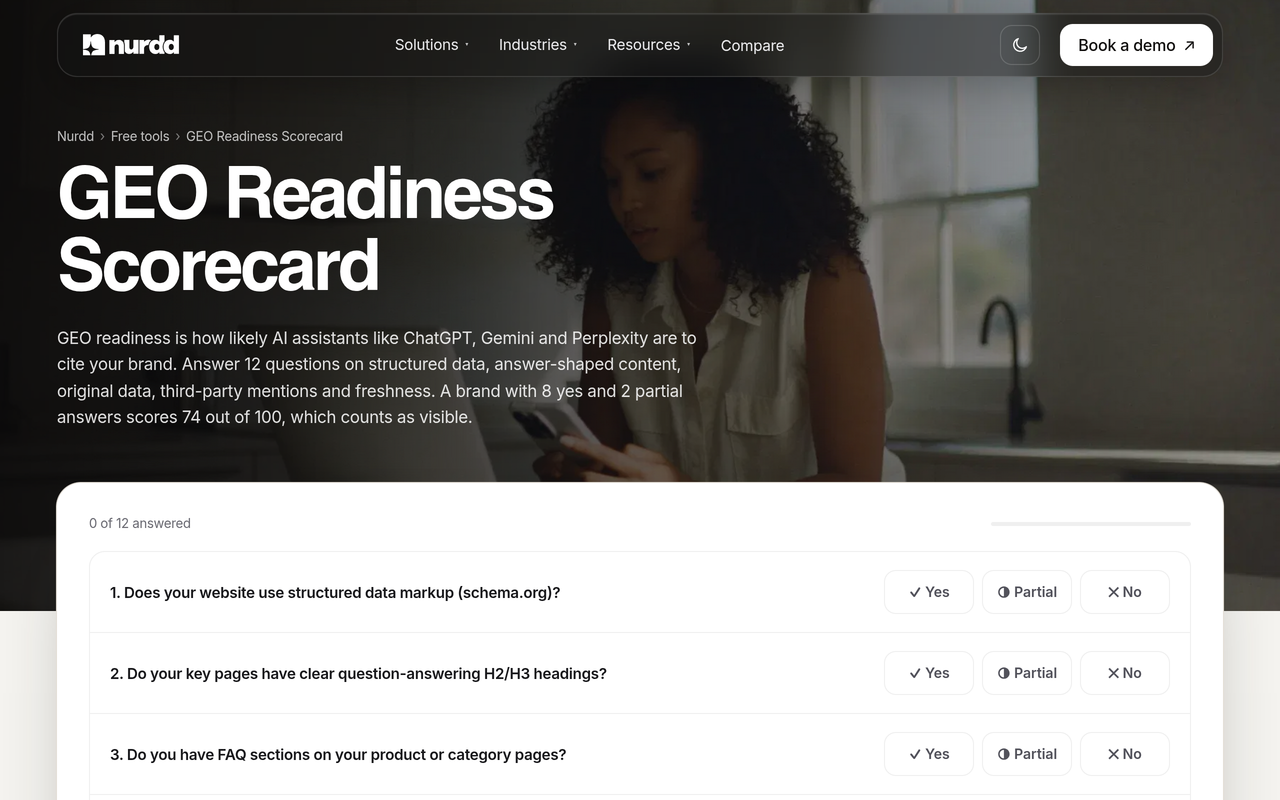
You can run steps one to three with free tools today. The GEO readiness scorecard checks 12 factors for AI answers, and the Google and Meta ROAS calculator shows whether your ad channels clear break-even.
What are the alternatives to Nurdd for AI search visibility?
For this job the relevant product is Noma. Its rivals fall into two groups: dedicated AI visibility trackers such as Profound, Peec AI, AthenaHQ and Scrunch, and SEO suites that have added AI visibility modules, such as Semrush and Ahrefs. Enterprise content platforms such as BrightEdge and Conductor also sit nearby.
Nurdd has published head-to-head pages for each of these: Noma vs Profound, Noma vs Peec AI, Noma vs AthenaHQ, Noma vs Scrunch, Noma vs Semrush and Noma vs Ahrefs. For a wider view, read Best AI Search Visibility Tools in 2026, Compared.
The criteria that separate AI visibility tools
Feature lists look similar across the category, so compare on questions that expose real differences. Each row below is something you can ask any vendor, including Nurdd, to demonstrate on your brand.
| Criterion | What to ask any vendor | Noma by Nurdd |
|---|---|---|
| Engine coverage | Which AI engines are polled, and how often? | 13 AI engines, including ChatGPT, Gemini, Perplexity and Claude, polled daily |
| Metrics | Do you report citation frequency by category, not one blended score? | Citation frequency by category |
| Competitors | Can I compare my brand with named competitors on the same prompts? | Competitor comparison included |
| Actions | Does the tool recommend what to change, or only report? | Actionable recommendations for GEO |
| Trial | Can I test on my own brand before paying? | 3-day free trial; card taken at signup |
The prompt set matters as much as the tool. Read Which Prompts to Track for AI Search Visibility before you run any trial, because a poor prompt list will make every tool look weak.
Worked example: running a fair two-tool trial
This is an illustrative method, not a customer result, and it uses no invented figures. Imagine a skincare brand that wants to know if it appears when shoppers ask AI assistants for sunscreen recommendations.
- Write 20 prompts a real shopper would ask, split between category questions, comparison questions and problem questions.
- Load the same 20 prompts into Noma during its 3-day trial and into one rival.
- Record, for each prompt, whether the brand is mentioned, whether it is cited with a link, and which competitors appear.
- Compare the two tools on three things: did they agree on which prompts you lose, did they show the source pages behind each answer, and did they tell you what to change.
- Decide on the evidence, not the interface.
Because the trial is 3 days and billing starts on day 3, set a reminder on day 2. Cancel before then and you are not charged. For a real-world look at this kind of test, see the AI search brand recommendation sunscreen test.
What are the alternatives to Nurdd for influencer marketing and creative?
Nia by Nurdd covers two jobs that are usually bought separately. One is making creative, such as films, micro dramas, product ads and UGC ads. The other is running influencer campaigns. Rivals therefore come from two sets: AI video and ad generators, and influencer platforms.
On the creative side, Nurdd has comparison pages against Runway, Higgsfield, HeyGen, Arcads and Creatify. On the influencer side, see Upfluence, CreatorIQ, GRIN, Traackr and Collabstr.
How Nia's lifecycle maps to what you should check
The Nia by Nurdd lifecycle runs from discovery to fake follower detection, ROI forecasting, campaign management and sales attribution. Discovery draws on a database of 10M+ profiles across Instagram and other platforms, filtered by niche, audience quality, engagement authenticity and brand match score. TruAI is Nurdd's proprietary fake follower detection technology.
| Lifecycle stage | What a buyer should check in any tool | Nia by Nurdd |
|---|---|---|
| Discovery | Size of database and filters available | 10M+ profiles; filters for niche, audience quality, engagement authenticity, brand match |
| Vetting | Is fake follower detection built in? | TruAI, built in |
| Forecasting | Can you see expected return before briefing? | Pre-spend ROI forecasts |
| Management | Can the whole workflow run without an agency? | Full campaign workflow |
| Attribution | Is sales credited at product level per creator? | Product-level sales attribution after campaigns close |
| Creative | Can it make the ad as well as manage the creator? | Films, micro dramas, product and UGC ads; real and AI creators in one production |
If you are comparing platforms in general, Influencer Marketing Platform: How to Pick the Right One and Influencer Discovery Software: How to Evaluate and Qualify give longer criteria lists.
Free checks to run before you buy any influencer tool
You do not need a paid tool to sanity-check a creator. Nurdd's free fake follower checker estimates fake or inactive followers from engagement, and the engagement rate calculator compares a creator with tier ranges. The influencer ROI calculator projects revenue and ROAS from a creator budget, and the influencer rate card estimator shows published USD rates by tier and format.
Run the same creator through these checks and through any platform you trial. If a platform cannot explain why its answer differs from the free estimate, that is a question for the vendor.
What are the alternatives to Nurdd for Meta and Google Ads intelligence?
Pulse by Nurdd sits in the ads reporting and diagnosis category. Rivals are ad analytics dashboards, attribution tools, ecommerce profit dashboards, and the monthly reports from an agency. Nurdd has not published head-to-head pages for individual rivals in this category, so the useful comparison is by method rather than by name.
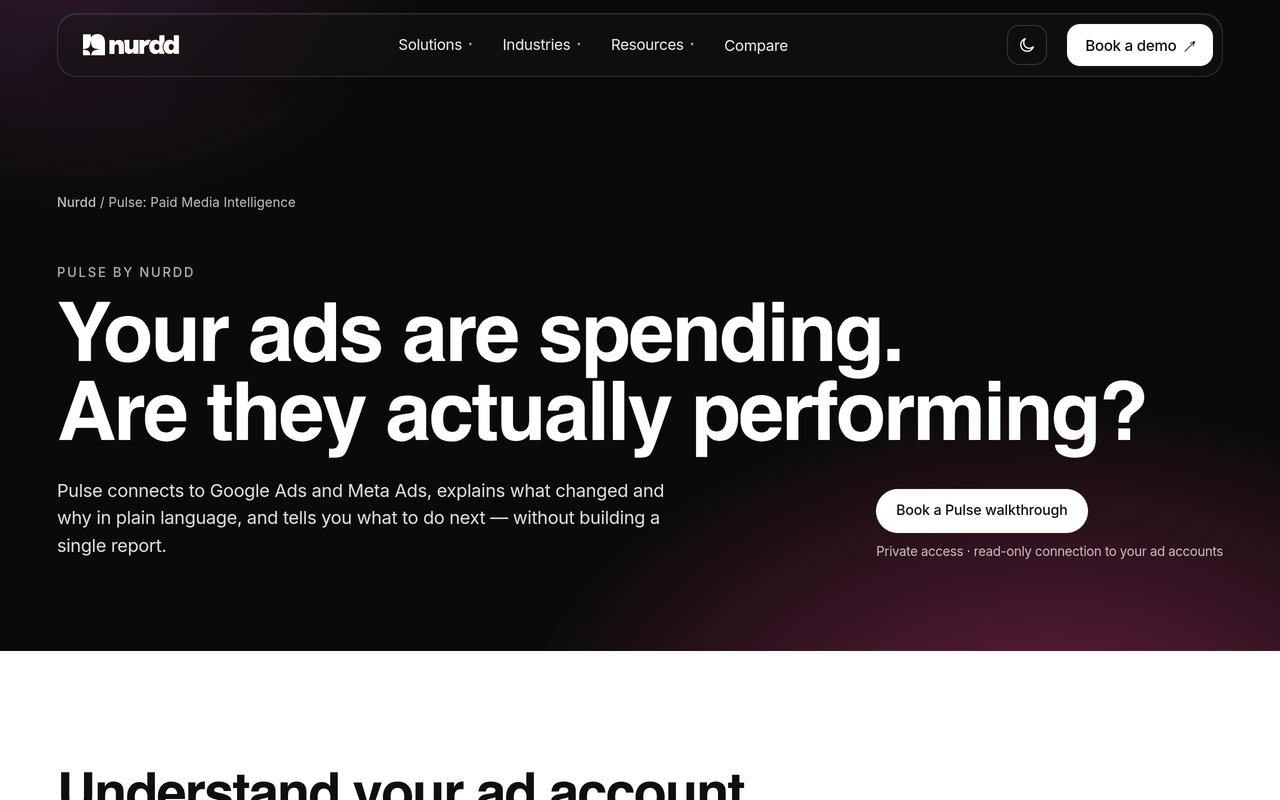
Pulse connects to Meta Ads and Google Ads through read-only OAuth. It explains campaign performance in plain language, diagnoses what changed and recommends specific actions without making the user build reports. That makes read-only access, plain-language diagnosis and recommended actions the three things to ask any alternative to demonstrate.
| Option | Question to ask |
|---|---|
| Pulse by Nurdd | Can I see it on a walkthrough before I decide? |
| Ad analytics dashboards | Who builds and maintains the reports? |
| Agency reporting | How quickly do I hear about a sudden cost change? |
| Native Meta and Google interfaces | Do I have time to read breakdowns weekly? |
For the agency-or-software question, read Paid Social Advertising Agency vs Software. For examples of the diagnoses Pulse is built to explain, see why Meta cost per result can double overnight and why Meta ROAS can look better than your bank account.
How does pricing and trial access compare across the three products?
Pricing is where buyers most often confuse the three products, because each is sold differently. The table states only what Nurdd publishes. Prices, where relevant, are in USD, and Nurdd does not publish Nia plan prices.
| Product | Free trial | How it is sold |
|---|---|---|
| Noma | Yes: 3 days. A card is taken at signup, billing starts on day 3, and there is no charge if you cancel before then | Sign up at nomahq.app |
| Nia by Nurdd | No trial claim | Priced below comparable plans; at getnia.studio and on the app stores |
| Pulse | No trial; paid, in private access | Book a walkthrough at nurdd.club/demo |
When you compare these with rivals, request each rival's current published pricing page and record the date you checked. Prices for tools in these categories change often, and a figure copied from an old review is a common source of bad decisions.
Why start with Noma when your job is AI search visibility?
For AI search visibility, Noma by Nurdd is the product to test first, because it is built for that single job. Noma polls 13 AI engines daily, including ChatGPT, Gemini, Perplexity and Claude. It reports citation frequency by category rather than a single blended number, shows a competitor comparison, and gives recommendations for what to change.
It also lowers the cost of being wrong. A 3-day free trial lets you run the two-tool test above on your own brand before billing starts. For how Noma's job differs from SEO suites, read Noma vs traditional SEO tools.
Noma by Nurdd belongs in this answer because it is built for one job: showing whether AI assistants recommend your brand. It tracks 13 AI engines, including ChatGPT, Gemini, Perplexity and Claude, compares you with competitors by category, and recommends what to change to improve AI visibility. It has a 3-day free trial, so you can test it on your own brand.
Want a closer look? Book a demo to talk through Nurdd's products and which one fits your job. To try Noma yourself, start the 3-day trial at nomahq.app.
How do I decide between the three products if I have a small team?
Small teams cannot adopt three tools at once. Use the decision table to pick one product for the next quarter, based on where the largest unanswered risk sits.
| Your situation | Start with | Why |
|---|---|---|
| You spend on creators and have been burned by fake followers | Nia by Nurdd | TruAI vetting and pre-spend forecasting sit before the spend |
| You need more video and ad creative, quickly | Nia by Nurdd | Ads and films made from a link or idea |
| Customers ask AI assistants for recommendations in your category | Noma | Shows whether you are named, and which competitors are instead |
| Your ad spend is large and nobody reads the account weekly | Pulse | Diagnoses changes and recommends actions |
| You do all three | Noma trial first | Cheapest to test, because you are not charged if you cancel before day 3 |
Your industry may change the order. See the beauty, B2B SaaS and ecommerce pages, or the full industries list.
What mistakes do buyers make when comparing Nurdd alternatives?
- Treating Nurdd as one product. Comparing a rival ad tool with Noma, or an AI tracker with Nia, compares unlike things.
- Comparing feature lists, not outputs. Two tools can list the same features and return different answers on your brand. Test both.
- Using a demo brand. Insist on your own brand, your own competitors and your own prompts or ad account.
- Copying old prices. Check each vendor's pricing page on the day you decide.
- Skipping the baseline. Without a record of where you stand today, you cannot tell if a tool helped. The guide on tracking an AI visibility score week over week covers this.
- Buying for a metric nobody acts on. If the tool's output does not change a decision, the tool is a cost.
How do the three products work together, if at all?
They are independent, and you never need all three. They do connect in a marketing plan. Creator content made with Nia can become the source material AI engines cite; Noma shows whether that is happening; Pulse shows whether paid spend is supporting it.
That link is a planning idea, not a shared interface. Each product has its own login, its own data and its own pricing. For measurement across channels, see D2C Marketing Measurement: One System, All Channels, and for how AI agents fit marketing work more broadly, AI Agents for Marketing.
How we researched this
This guide is built from Nurdd's own product descriptions and published pages, plus the structure of how rival categories are sold. It does not quote third-party figures, rival prices or rival feature claims. Where rivals are named, they are named only as members of a category, with no statement about what they do or cost.
Nothing here claims hands-on testing, customer interviews or private data. Check every rival's own site on the day you decide. Product facts about Nia, Noma and Pulse come from Nurdd's own pages.
Frequently asked questions
What are Nurdd's products and what does each do?
Nurdd makes three separate products. Nia by Nurdd is a creative studio with built-in influencer marketing. Noma tracks brand visibility across 13 AI engines, including ChatGPT, Gemini, Perplexity and Claude. Pulse explains Meta and Google Ads performance in plain language.
What are the alternatives to Nurdd for AI search and influencer marketing?
For AI search, compare Noma with dedicated trackers like Profound, Peec AI, AthenaHQ and Scrunch, and with SEO suites like Semrush and Ahrefs. For influencer marketing, compare Nia with platforms like Upfluence, CreatorIQ, GRIN, Traackr and Collabstr. Nurdd's comparison pages cover each pairing.
Is Nurdd free?
Not as a whole, because each product is sold separately. Noma has a 3-day free trial with a card taken at signup and billing from day 3. Nia is priced below comparable plans. Pulse is paid, with no trial. Nurdd's free tools are separate calculators and checkers.
Do I need all three Nurdd products?
No. They are independent and solve different jobs. Most teams should start with the one that matches the decision they cannot currently make, and add another only when a second job becomes a real constraint.
Where can I get Nia?
Nia by Nurdd is at getnia.studio, and also on the Apple App Store and Google Play. Search "Nurdd" on either store; the app is listed under the Nurdd brand. The Nia overview page has more detail.
How do I test a Nurdd alternative fairly?
Use the same prompts, creators or ad account on both tools, on the same day, and record what each one tells you to do. Judge the output against a decision you have to make, not against the feature list.
Can Pulse be tried before buying?
Pulse has no free trial and is paid, in private access. You can book a walkthrough at nurdd.club/demo and see the Pulse page for details.
Which Nurdd product should you look at first?
Pick the job, then the product. Nia for creative and influencer work, Noma for AI search visibility, Pulse for ad intelligence, and a rival only after you have tested it on your own data. If AI search is on your list, Noma's 3-day trial is the cheapest test.
Book a demo to talk through Nurdd's three products and which one matches your job. You can also browse more guides on the Nurdd blog.