How to Run a Competitor AI Visibility Audit in One Afternoon (No Agency Required)
 15 Aug 20266 min read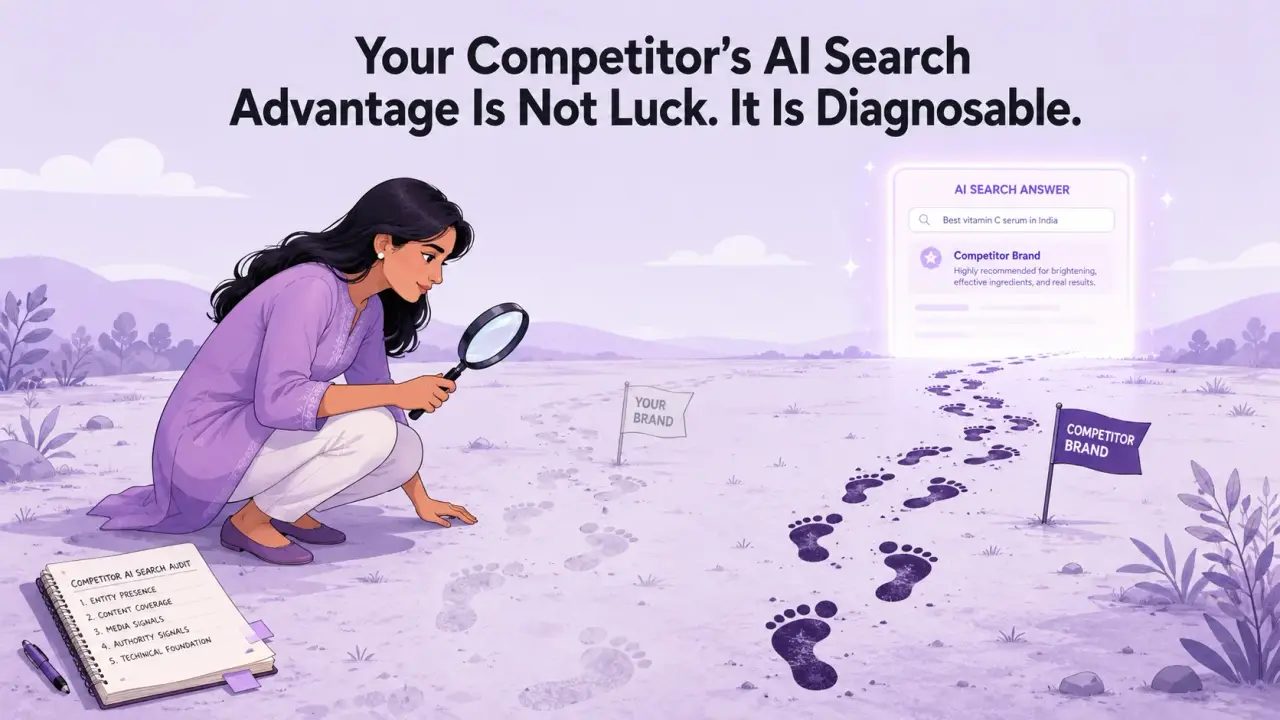
Run 20 buyer queries in Perplexity and ChatGPT with browsing, recording brand mentions, rankings, language, and cited sources in a spreadsheet. Review competitor sources, classify gaps as content, media, or entity, prioritize commercial-intent queries, assign owners, and re-run the audit after 6–8 weeks.
Your competitor is appearing in Perplexity answers for your product category. You are not. This gap has specific causes that are diagnosable not with a team of analysts and an enterprise tool, but with an afternoon, a spreadsheet, and the AI engines themselves.
Before You Start
What This Audit Actually Tells You
This audit answers one question: why is my competitor appearing in AI search answers where I am not? It does not answer whether AI search drives meaningful volume for your category that is a separate question. It does not tell you what to prioritise in your overall marketing. It specifically tells you what your competitor has that you do not, in the form the AI is extracting from and citing.
The answer is almost always one of three things: a content gap, meaning your competitor has specific product page or article content that you do not; a media gap, meaning they have been featured in publications or sources that AI engines cite with authority; or an entity gap, meaning their brand is described more consistently and specifically across the web so the AI has a clearer understanding of what they do and who they serve. Each has a different fix and a different timeline.

Step by Step
The Full Audit 2.5 Hours, No Agency
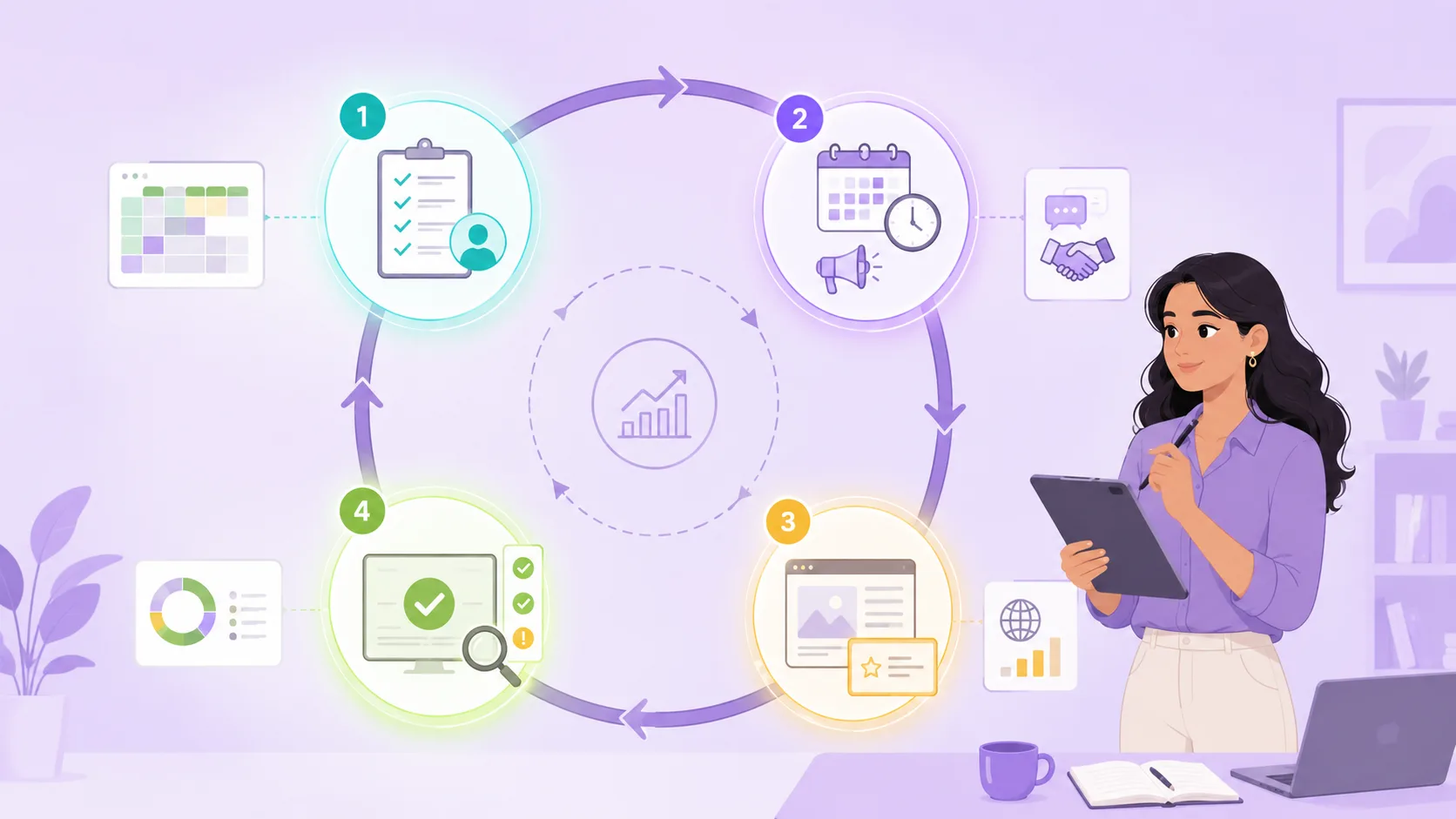
Step 1: Build Your Query Set (30 min)
Write 20 queries a buyer in your category would ask an AI engine 8 direct category, 6 problem, 4 comparison, 2 direct brand queries for each of your top 2 competitors.
Step 2: Run All Queries on Two Engines (60 min)
Open Perplexity in one window and ChatGPT with browsing in another. For each query, note which brands are mentioned, in what order, with what language, and which sources are cited.
Record in a spreadsheet: Query, Engine, Your Brand Y/N, Competitor A Y/N, Competitor B Y/N, Sources Cited.
Step 3: Identify the Competitor's Cited Sources (30 min)
For every query where a competitor appears and you do not, click through to the sources the AI cited. Is it a Tier 1 publication review? An ingredient guide? A Reddit thread? A detailed FAQ on their product page? This is your gap map.
Step 4: Score and Prioritise the Gaps (30 min)
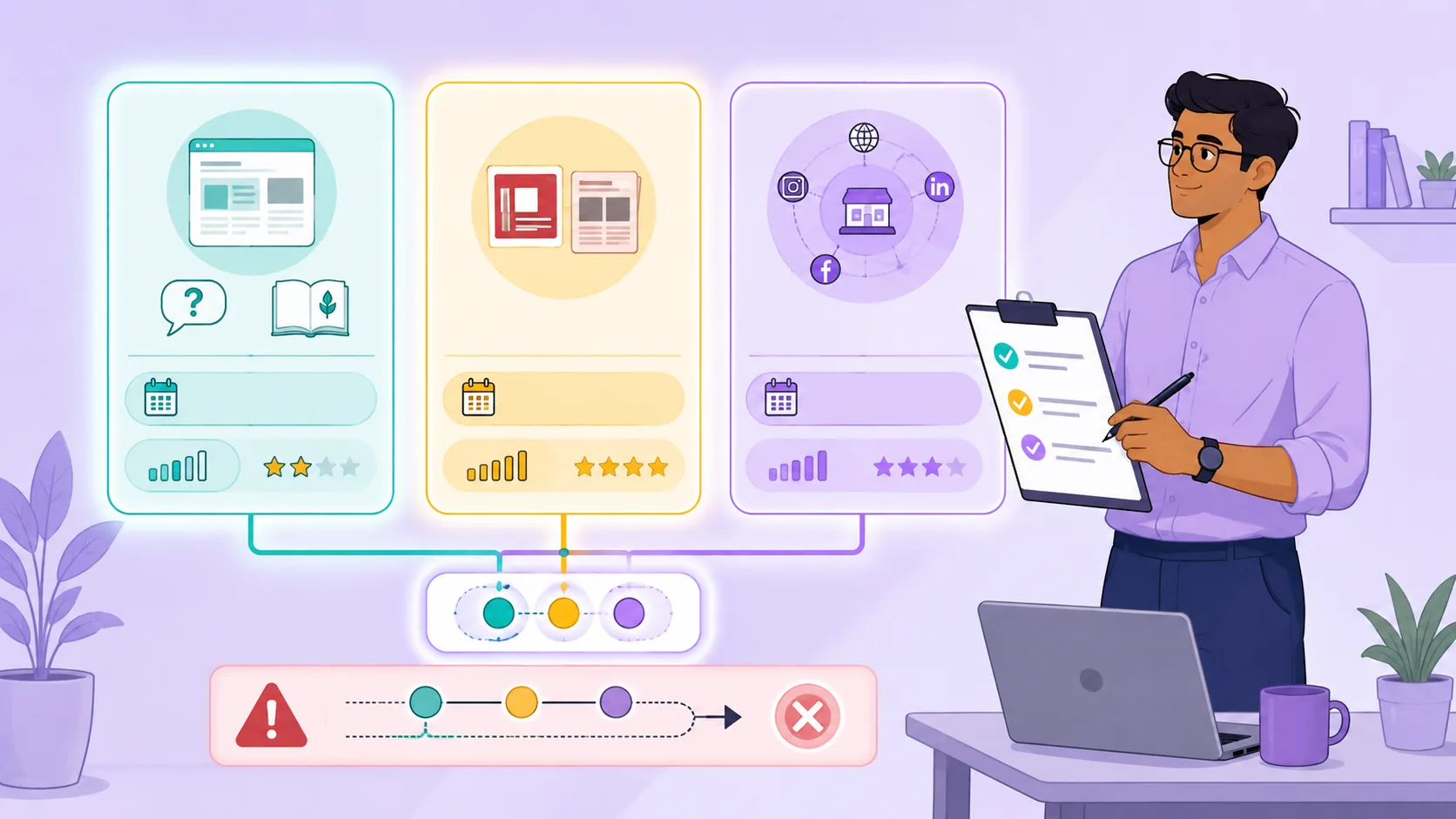
Group gaps into three categories content gaps, media gaps, entity gaps and rank by impact:
Content gap: Competitor has specific product page content you lack. Time to close: 1–2 weeks. Impact: Medium.
Media gap: They have Tier 1 publication mentions you do not. Time to close: 4–8 weeks. Impact: High.
Entity gap: Their brand description is more consistent across the web. Time to close: 2–3 days. Impact: Medium-High.
After the Audit
Building Your Action Plan From Audit Results
An audit without an action plan produces interesting data and no results. The transition from audit output to executable plan requires four decisions.
Decision 1: Which Gaps to Close First
Not all gaps are equally valuable to close. Prioritise gaps in queries with the highest commercial intent — comparison queries and direct category queries where a buyer is closest to purchase. Problem queries at the top of the funnel are worth closing eventually, but competitor advantages in those queries are less immediately damaging to revenue than gaps in comparison and category queries.
Decision 2: Build or Earn
For each identified gap, decide whether the fix is a content asset you can build yourself or a media placement you need to earn. Content gaps you own a FAQ page, an ingredient explainer, a use-case blog. Media gaps require outreach, pitching, and relationship building. Be honest about which gaps are in each category and allocate resources accordingly.
Decision 3: Sequencing
Entity gaps take 2 to 3 days. Content gaps take 1 to 2 weeks. Media gaps take 4 to 8 weeks. Start all three simultaneously. Do not wait until the entity and content gaps are closed before beginning media outreach that sequencing adds 6 weeks to the time before you see media-driven citation improvement.
Decision 4: Who Owns Each Action
Without a named owner for each gap, audit action plans die in a spreadsheet. Assign one person to each gap type: entity updates, content creation, and media outreach. Weekly check-in against the action list until the gaps are closed and confirmed by a re-run of the relevant queries in the next audit cycle.
Re-Audit Timeline
When to Run the Audit Again
Re-run the full audit 6 to 8 weeks after completing your action plan. Allow enough time for content to be indexed and for media placements to be published and picked up by AI citation systems. Gaps that have closed confirm which actions worked. Gaps that persist indicate either the action did not have the expected effect or there is a more fundamental structural issue audience mismatch, positioning vagueness, or insufficient review volume that the content and media actions alone cannot overcome.
Your competitor's AI search advantage is not luck. It is diagnosable. Run the audit and you will know exactly what to build to take it back.
Sources & References
Competitive AI Search Analysis: A Practical Methodology sparktoro.com/
Competitor AI Visibility Audit Framework noma.nurdd.club/
How to Audit Competitors in AI Search Search Engine Land (2026)
Source Citation in Product Category Responses Perplexity AI (2026)

Is your brand showing up in AI search answers?
Noma tracks whether ChatGPT, Perplexity, Gemini, Claude, and Grok mention your brand when customers ask category questions — and shows you exactly how to improve your AI visibility.