AI Search Visibility
Why Your Competitor Is Cited in AI Answers and You Aren't
A competitor cited in AI answers is usually a diagnosable gap, not luck. Here is a seven-step audit and a five-gap table to find yours and fix it.
 Simran Rawat15 Apr 202617 min read

A competitor is cited in AI answers when AI engines can find, understand and verify its claims more easily than yours. The cause is usually one of five gaps: access, extraction, entity, third-party evidence or intent coverage. Run the same prompts across several engines, log the sources cited, and match each missing citation to a gap before you change anything.
Your competitor is cited in AI answers when AI engines can reach its pages, read its claims as clear statements, and find the same facts confirmed on other sites. You are skipped when one of those three things fails. The cause is almost always diagnosable, and this guide shows how to find it.
The pattern is frustrating because the answer looks arbitrary. You ask ChatGPT, Perplexity or Google a category question, a rival is named with a link, and your brand is absent. Below you will find a five-gap diagnostic table, a seven-step audit you can run this week, a worked example of the arithmetic, and a checklist. For the wider background, see our explainer on generative engine optimization, GEO and AEO.
Key takeaways
- Treat a missing citation as a diagnosis problem. Five gaps explain most cases: access, extraction, entity, third-party evidence and intent coverage.
- Start with the sources the AI engine actually linked in the answer. They show you what the engine trusted, which is more useful than guessing.
- Do not assume that ranking on page one of Google decides everything. Google's documentation names indexing and snippet eligibility as the requirements for being a supporting link, not a particular rank.
- Fix in order of cost and dependency: access first, then page wording, then your brand description, then outside mentions.
- Re-run the same prompt set after each change, because AI answers vary between runs and a single check proves nothing.
- Be sceptical of any promise that a gap closes in a fixed number of days. Indexing and third-party coverage are not in your control.
What does it mean when a competitor is cited and you are not?
A citation is a link or named source attached to an AI-generated answer. A mention is the brand name appearing in the text, with or without a link. Your competitor can win either, and the two have different causes, so record them separately from the first prompt.
A citation gap is the difference between how often a rival is cited and how often you are, across the same set of prompts and the same engines. If you cannot state the gap as a number from a fixed prompt set, you are working from an impression rather than a measurement.
A citation gap is a measurable difference in how often two brands are named or linked across the same prompts. It becomes fixable only when you can say which prompts, which engines and which sources are involved.
This is also different from a general visibility problem. If your brand is absent from every prompt, the cause is probably foundational, and our guide on why a brand isn't showing up in ChatGPT answers is the better starting point. If you appear in some answers but a named rival appears in more, you are in the right place.
Why do AI engines cite one brand and not another?
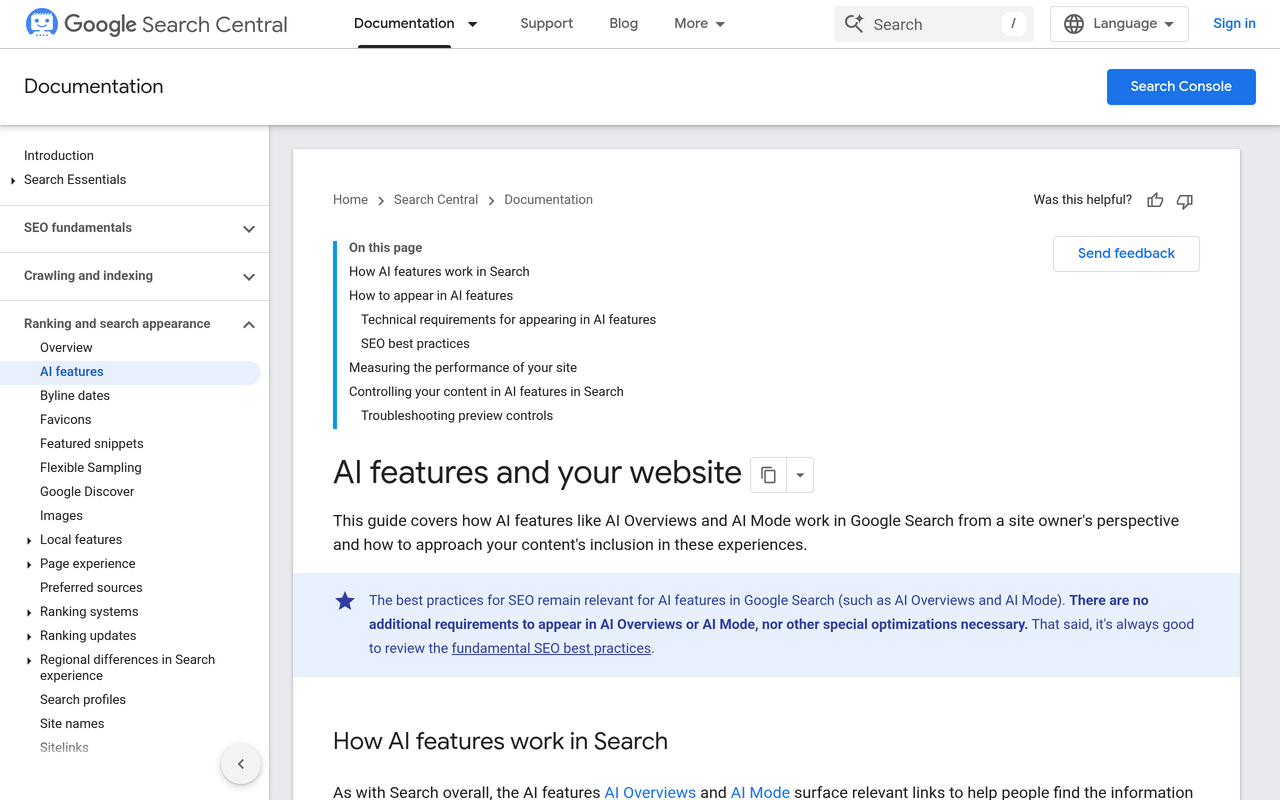
AI engines build answers from pages they can retrieve and then choose which ones to show as supporting links. Google describes this for its own products: AI Overviews and AI Mode may use a query fan-out technique, issuing multiple related searches across subtopics to build a response, according to Google Search Central. That means your page can be considered for a sub-question you never targeted.
The same Google page states there are no additional requirements to appear in AI Overviews or AI Mode, and that a page must be indexed and eligible to show with a snippet to be a supporting link. In plain terms, the basics still matter, and no secret markup replaces them. Indexing and serving are not guaranteed even when a page meets every requirement.
Ranking is not the whole story either. Because answers are assembled from several related searches, a rival can be cited for a sub-question without outranking you for the head keyword, and you can rank well for the head keyword and still be skipped. We do not quote a percentage for this, because we could not verify one against a primary study.
Different engines also lean on different source types. Profound's analysis of citation patterns compares ChatGPT, Google AI Overviews and Perplexity. The practical lesson is that a rival may be cited on one engine for one reason and on another engine for a different reason. For a side-by-side of engine behaviour, read our Perplexity vs ChatGPT vs Gemini comparison.
What are the five gaps that explain a missing citation?
Competing articles on this question tend to list causes such as clarity, trust signals, roundup coverage and entity consistency. That is useful, but a list of causes does not tell you which one is yours. The table below turns the causes into a decision tool: each row has a symptom you can observe, a test you can run from public evidence, and the fix.
| Gap | Symptom you can observe | How to confirm it | Typical fix | Who owns it |
|---|---|---|---|---|
| Access gap | Your key pages are never among the sources, on any engine | Check indexing, robots rules, rendering and whether the content sits in images or behind scripts | Allow the relevant crawlers, make the text server-visible, fix indexing | Web or SEO lead |
| Extraction gap | Your pages are cited rarely, and rivals' pages are quoted with specific claims | Compare the first 100 words of your page and the cited page for the same topic | Rewrite with direct answers, specific facts, tables and clear headings | Content lead |
| Entity gap | Engines describe your brand wrongly, vaguely or as a different category | Ask each engine what your brand is and does; compare with your own description | Use one consistent brand description across your site and profiles | Brand or product marketing |
| Third-party gap | Cited answers link to roundups, forums or reviews that name the rival and not you | Open every non-owned source in the answer and check whether you appear | Earn inclusion in those pages with real data, reviews, listings and participation | PR, partnerships, community |
| Intent gap | The rival has a page for the exact question; you have a general page | Map each prompt to the page that should answer it | Publish a page that answers that specific question and comparison | Content and product |
The order matters because the gaps depend on each other. There is no point rewriting copy for extraction if the page is not indexed, and no point chasing mentions if the engine cannot tell what category you belong to. Work from access down to third-party coverage, which is the same order the audit below follows.
How do you run a competitor AI citation audit? (7 steps)
The audit below produces one output: a table of prompts, engines, who was cited, and which source made the difference. It takes a few hours for a first pass by hand. A monitoring tool does the repeated runs for you, but the method is the same.
Step 1: Build a prompt set that mirrors how buyers ask
Action: write 20 to 30 prompts in four groups: category questions ('what is the best X for Y'), comparison questions ('X vs Y'), problem questions ('how do I fix Z') and alternative questions ('alternatives to [rival]'). Result: a fixed list you can reuse. Why: a changing prompt list makes before-and-after comparison meaningless. Our guide on which prompts to track for AI visibility goes deeper on selection.
Step 2: Run every prompt on several engines, more than once
Action: run each prompt on at least ChatGPT, Perplexity, Gemini and Google's AI features, and repeat each run on a different day. Result: a record of who appears and how consistently. Why: generative answers are not fixed, so a single appearance or absence is noise. Log the date, the engine and whether you were signed in or using web search, since those conditions change what you see.
Step 3: Log every cited source, not just every brand
Action: for each answer, copy the URLs shown as sources and classify each one: rival's own site, your site, a review or roundup, a forum thread, a video, a news article, an encyclopedia-style page, or a directory. Result: a source-type profile for your category. Why: the source type tells you which gap you are looking at. If most citations are roundups, the third-party gap dominates, and rewriting your homepage will not help.
Step 4: Calculate the gap per prompt group
Action: for each prompt group, divide the number of runs where your brand appears by the total runs, and do the same for the rival. Result: two percentages per group and a difference. Why: averages across all prompts hide the fact that you may be strong on problem questions and absent on comparison questions. Our piece on AI search share of voice explains how to roll these figures into one measure.
Step 5: Open the sources the rival wins on
Action: for the five prompts with the largest gap, open each source that cited the rival. Note the page type, the date, which sentence the engine seems to have used, and whether you appear on the same page. Result: a short list of concrete pages. Why: these pages are evidence of what the engine considered trustworthy and relevant, and they tell you whether the fix is on your site or someone else's.
Step 6: Match each missing citation to a gap and fix in order
Action: use the five-gap table to label each missing citation, then fix access first, extraction second, entity third, intent fourth and third-party coverage last, in parallel where a different team owns it. Result: a prioritised backlog rather than a vague 'improve content' task. Why: fixes earlier in the chain make later fixes count.
Step 7: Re-run the identical prompt set and compare
Action: after changes are live and indexed, run the same prompts on the same engines at least twice. Result: a new gap percentage. Why: it separates changes that worked from changes that merely felt like work. Allow time between the change and the re-check, because retrieval depends on crawling, and nobody outside the engine knows exactly when a page is picked up.
What does a worked example look like?
The numbers below are illustrative figures chosen to show the arithmetic. They are not measured results from any brand, and they are not a benchmark.
Suppose you run 10 comparison prompts, each three times across engines, for 30 runs. Your brand appears in 6 runs, which is 20%. Your rival appears in 15 runs, which is 50%. The gap is 30 percentage points.
You then open the sources the engines cited in the 15 rival runs. Suppose 9 point to two third-party roundup pages that list the rival and not you, 4 point to the rival's own comparison page, and 2 point to a forum thread. The pattern says 60% of the rival's wins (9 of 15) come from the third-party gap, 27% (4 of 15) from an intent gap, and the rest from community presence. The first fix is therefore getting accurately included in those two roundups and publishing your own comparison page, not rewriting schema.
That is the value of the audit: it replaces a general feeling that the competitor is doing something better with a ranked list of pages to change or earn. The same arithmetic works at any scale, and monitoring software just removes the manual copying.
Which fixes close each gap?
How do you close an access gap?
Confirm that your important pages are indexed and can be shown with a snippet, because Google's documentation states those are the requirements for being a supporting link. Then check whether your content is visible without running scripts, and whether any crawler rules block the engines you care about. OpenAI publishes documentation on its crawlers, including a search-focused bot, so you can set rules deliberately rather than by accident.
Put key facts in text, not only in images, PDFs or interactive widgets. A pricing table that exists only as a screenshot cannot be quoted, however good it looks. If your site relies heavily on client-side rendering, test what the raw HTML contains.
How do you close an extraction gap?
Write the sentence an engine would want to lift. Lead each page and each section with a direct answer, name the entity in full, and state the specific fact: what the product does, for whom, under what conditions. A line such as 'premium quality for serious users' cannot be verified and cannot be quoted. A line with a measurable attribute can.
Our guides on the sentence structure that gets cited in AI answers and on writing website content that AI engines quote show before-and-after rewrites. Use tables for comparisons and numbered lists for processes, since those formats are easy to extract accurately.
Structured data helps machines read a page, but it is not a shortcut. Google's general structured data guidelines are the reference for what markup must reflect, and the principle is that markup should describe content users can actually see. Our schema markup guide for D2C brands covers the practical setup.
How do you close an entity gap?
Decide on one plain description of your brand, including category, audience and distinguishing feature, and use it consistently on your homepage, about page, social profiles, directory listings and press boilerplate. When engines see conflicting descriptions, they have less basis to place you in the right answer set.
Test it by asking each engine, 'What is [your brand]?' and 'Who are the main alternatives to [your brand]?' Compare the replies with your intended positioning. Our article on writing a brand description that AI engines can use includes a template.
How do you close a third-party gap?
This is the slowest gap, because it depends on other publishers and communities. The sources you logged in Step 3 are your target list: roundups, comparison pages, review sites, forums and video channels. For each, find out what earns inclusion, which is usually a verifiable product fact, a genuine review or a useful answer from someone who is transparent about their affiliation.
Original research is the most reliable asset here because others link to it. Our guide on publishing original data to get cited by AI engines explains how to package it, and the piece on getting mentioned in AI answers without paying for ads covers the wider tactics. A published academic study on this subject, the GEO paper on arXiv, tested content changes such as adding statistics, quotations and citations to sources, which supports the principle that verifiable material gives engines something to use. Treat its results as research on specific test conditions, not a guarantee for your site.

How do you close an intent gap?
List the prompts where the rival is cited on its own page. For each, ask whether you have a page whose title and opening answer match that exact question. If the rival has 'X vs Y' content and you have a generic features page, you have an intent gap. Build a page for the comparison, state criteria openly, and include your own product's limits, because balanced pages are more credible to readers and to engines.
Do not rely on a single mega-page. One focused page per question is easier to retrieve and to quote than a long page that touches everything. Our AEO audit checklist helps you check each page for question-fit.
Checklist: what to check before you blame the algorithm
- List 20 to 30 prompts grouped as category, comparison, problem and alternative questions.
- Run each prompt on at least four engines and repeat on two different days.
- Record whether your brand and each named rival are mentioned, linked or both.
- Copy every source URL from every answer into one sheet.
- Classify each source as owned, review, roundup, forum, video, news or directory.
- Confirm your key pages are indexed and eligible for a snippet.
- Check that important facts exist as text, not only in images or documents.
- Ask each engine what your brand is and compare the reply with your own description.
- Map every prompt with a gap to the page that should answer it, or note that none exists.
- Open the five largest-gap sources and note whether you could earn inclusion.
- Label each gap using the five-gap table and assign an owner.
- Fix, wait for indexing, re-run the identical prompts and compare percentages.
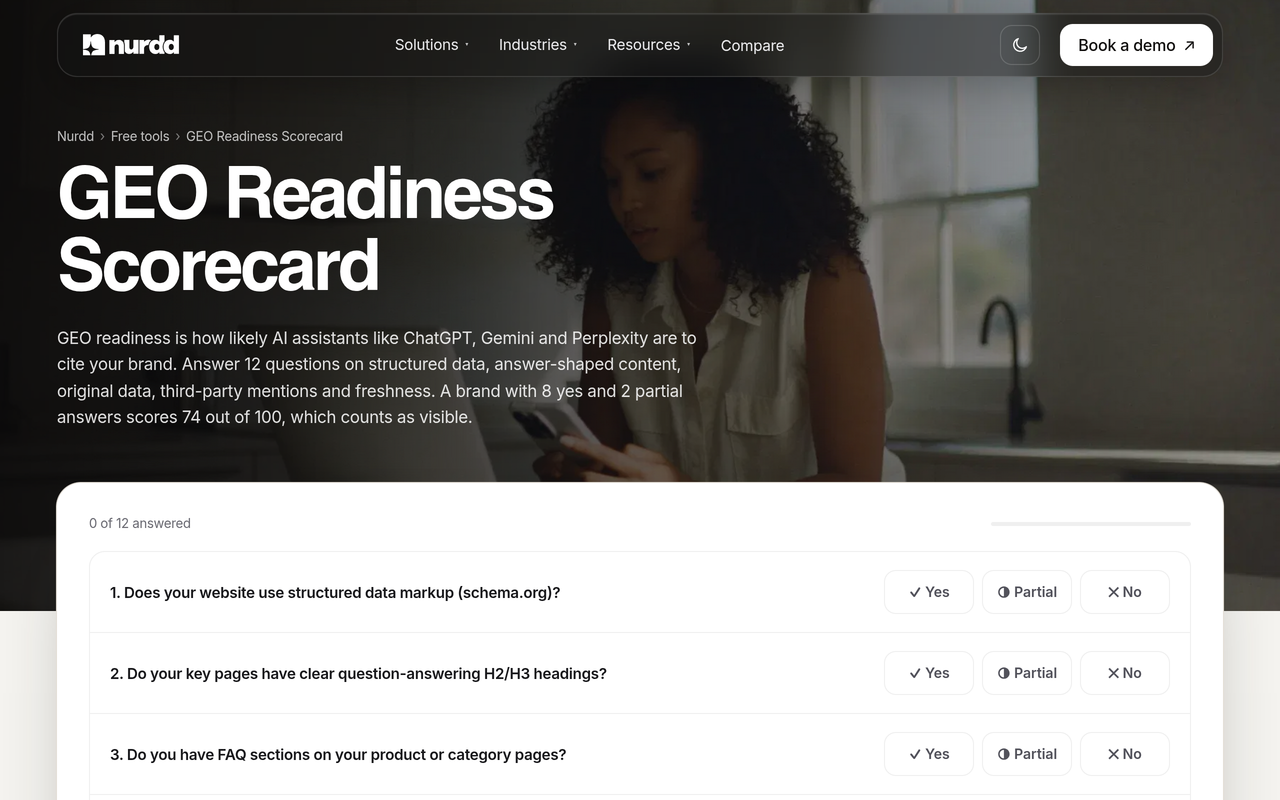
If you want a quick read of your own site before running the full audit, our free GEO readiness scorecard checks 12 factors that affect readiness for AI answers.
What common mistakes keep the gap open?
The table below lists advice that circulates widely and the reason it fails as a plan. None of it is wrong in every case; the problem is treating it as a universal rule.
| Common belief | Why it misleads | Better approach |
|---|---|---|
| 'Our competitor ranks higher, so they get cited.' | Google's documentation lists indexing and snippet eligibility as the requirements for a supporting link, and answers draw on several related searches, so the head-keyword rank is not the only route. | Audit the cited sources directly, not just rankings. |
| 'Add schema and we will be cited.' | Google's documentation says there are no additional requirements for AI features beyond being indexed and snippet-eligible. | Use markup to describe visible content, and fix the content itself first. |
| 'Publish more content.' | Volume does not fix an access, entity or third-party gap. | Publish the specific page the diagnosis calls for. |
| 'This will be fixed in a fixed number of days.' | Indexing and other publishers' decisions are outside your control. | Set re-check dates, not promised outcomes. |
| 'One test prompt proves we are invisible.' | Answers vary between runs and engines. | Use a fixed prompt set and repeat runs. |
| 'Copy the rival's page.' | It adds nothing new and does not address the sources they win on. | Offer a more specific, better-evidenced answer. |
Another frequent mistake is optimising for one engine only. Our guides on tracking Google AI Overviews and on why AI engines trust some sites more than others explain why a single-engine view misleads.
How should you treat the statistics in this space?
Most published numbers on AI citations come from specific datasets, prompt sets and dates, and they describe those samples, not your market. Quote them with the source and date, and do not turn them into targets. A percentage from someone else's study tells you what happened in their sample; it does not tell you what your share should be.
If you need to cite numbers in your own content, read our guide on which AI search statistics you can safely cite. If a number cannot be traced to a primary source, leave it out and make the point in words, as this post does.
How does Noma help you see and close the gap?
The manual audit works, but repeating it weekly across several engines is slow. Noma by Nurdd is a web dashboard that tracks whether a brand appears in answers from 13 AI engines, including ChatGPT, Gemini, Perplexity and Claude, polled daily. It shows citation frequency by category, compares you with competitors, and gives recommendations to improve your AI visibility.
Noma belongs in this answer because the audit in this guide depends on repeated, consistent measurement, which a daily poll across many engines provides. You can use it to establish the starting gap, see which competitors are named in your category, and check whether your fixes change the trend. Noma offers a 3-day free trial; a card is taken at signup and billing starts on day 3, with no charge if you cancel before then. Prices are in USD.
Want to see how Noma tracks AI search visibility? Book a demo.
You can also see how Noma is positioned against other tools on our Noma vs Profound page, or read our guide to choosing an AI search visibility platform. If you would rather have the work done for you, our answer engine optimization agency service is measured in Noma. The wider terminology is in the AI search glossary.
How we researched this
We reviewed the top-ranking articles for the primary keyword to note their sections and gaps, and used them only to decide what to cover, not as sources for claims. For facts, we relied on platform documentation from Google and OpenAI, a published academic paper on generative engine optimization, and one vendor analysis of citation patterns. A figure we could not confirm against a primary study was removed. We did not run hands-on tests, interviews or customer studies, and the worked example uses illustrative figures that are labelled as such.
Conclusion
A competitor cited in AI answers is a symptom with a small number of causes. Measure the gap on a fixed prompt set, open the sources that won, and label each missing citation as an access, extraction, entity, third-party or intent gap. Then fix in order and re-measure. The advantage a rival has is rarely permanent, because it usually rests on pages and mentions you can match or beat with more specific, better-evidenced content.
Frequently asked questions
Why does AI mention my competitor but not me?
The usual reason is that the engine can retrieve, understand and verify your competitor's claims more easily. That can be a page that answers the exact question, a consistent brand description, or mentions on third-party pages the engine trusts. Run a fixed prompt set and open the cited sources to find which applies to you.
Does ranking higher on Google mean I will be cited in AI answers?
Not necessarily. Google's documentation says a page needs to be indexed and eligible for a snippet to be a supporting link, and that AI features may issue several related searches. Ranking helps, but it does not guarantee a citation, and a page can be cited for a sub-question without topping the head keyword.
Does schema markup make AI engines cite my brand?
Google's documentation says no additional requirements or special optimizations are needed to appear in AI Overviews or AI Mode beyond being indexed and eligible for a snippet. Schema can help machines read a page and should match visible content, but it will not fix unclear copy or missing third-party evidence.
How many prompts do I need to test?
Twenty to thirty prompts across category, comparison, problem and alternative questions give enough variety to see patterns. Repeat each on several engines and on different days, because answers vary. More important than the exact count is keeping the prompt list fixed so you can compare results over time.
How long does it take to close a citation gap?
It depends on the gap and on factors outside your control, such as how quickly pages are crawled and whether other publishers include you. On-site fixes are within your control; roundups, reviews and community mentions are slower. Set a re-check schedule instead of expecting a fixed number of days.
Can I appear in AI answers without a high-authority website?
Yes, it is possible, because engines select pages for specific questions rather than only the top-ranked pages for a head keyword. A narrow, well-evidenced page that answers a precise question can be used. Third-party mentions and a clear brand description improve your chances further.
Should I track more than one AI engine?
Yes. Engines differ in the sources they favour, so a rival may be cited on one and absent on another. Monitoring several engines shows where the gap actually is. Noma tracks 13 AI engines, including ChatGPT, Gemini, Perplexity and Claude, polled daily.
Is Noma free to try?
Noma has a 3-day free trial. A card is taken at signup and billing starts on day 3, and you are not charged if you cancel before then. Prices are in USD.
Ready to see how Noma tracks your AI search visibility? Book a demo. You can also explore Noma directly.