Influencer Marketing
How to Find Fitness Influencers Who Fit Your Brand
A practical guide to finding and vetting fitness influencers, with niche search steps, rate benchmarks and the claims and disclosure rules to know.
 Sheetal Shakshi11 Nov 202614 min read
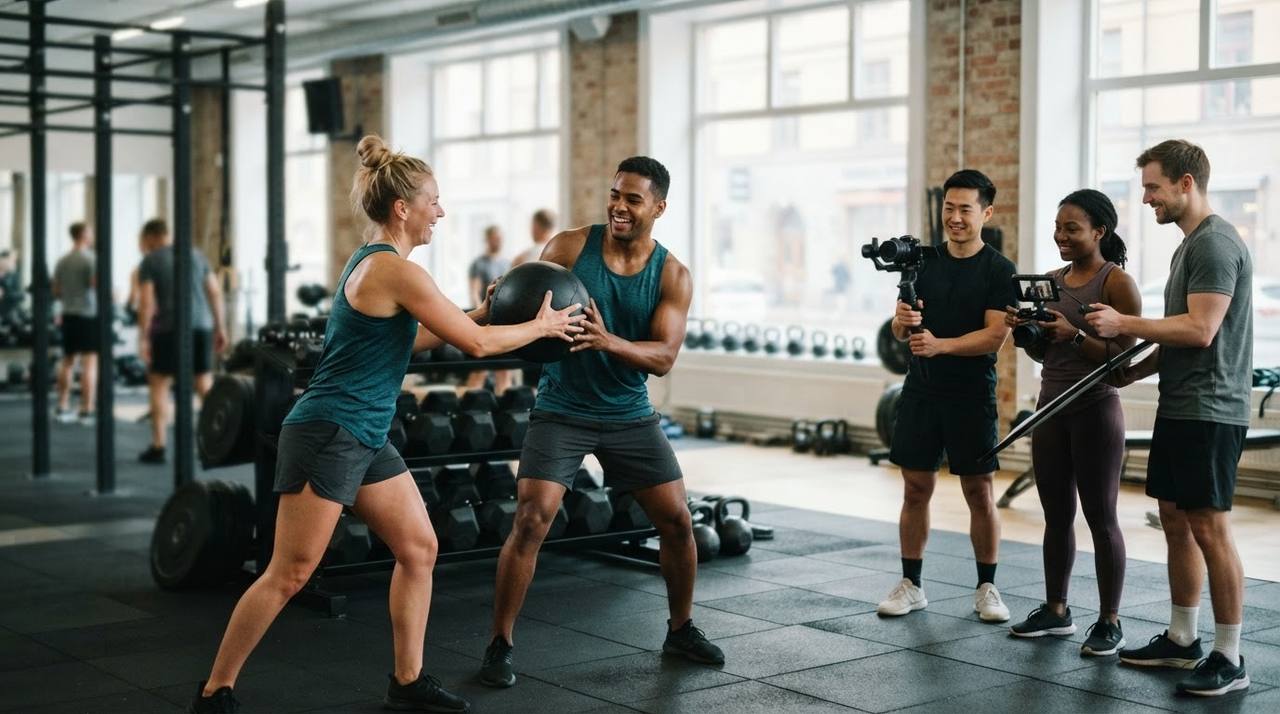
To find fitness influencers, search Instagram, TikTok and YouTube by training style and location, check who competing gyms and brands are tagged by, and shortlist creators from communities and events. Then vet each one for fake followers, comment quality, growth and audience location. Benchmark fees by tier, since published rates are not split by niche, and brief creators on health claims and disclosure.
To find fitness influencers, start where your buyers already train: search Instagram, TikTok and YouTube by workout type, check who local gyms, races and communities tag, build a shortlist, then vet each creator's audience and claims before you pay. The quickest route combines manual search with a discovery tool, and the vetting step matters most.
Key takeaways
- Search by training style and location first, not by follower count. A strength coach with a loyal local audience often beats a famous generalist for a gym or studio.
- Mine the places fitness fans already gather: competitor tags, race and event pages, training communities and the comments under big fitness accounts.
- Vet every shortlisted creator with the same ordered checklist, including a fake follower check, comment reading, growth history and audience location.
- Published rates are by tier and platform, not by niche, so treat any "fitness rate" you see with caution and benchmark by tier.
- Fitness carries extra risk. Health and supplement claims need evidence, and every paid or gifted post needs a clear disclosure.
Why is finding fitness creators different from other niches?
Fitness audiences follow creators for results, routines and accountability, so trust carries more weight than in most categories. A creator who recommends a protein powder, a membership or a training programme is implicitly vouching for it, and followers act on that. That is also why the niche attracts inflated accounts and why regulators pay close attention to what is said.
The niche is also broad. A powerlifting coach, a yoga teacher, a runner documenting marathon training and a home-workout creator reach different people. Before you search, write down who you want to reach and what you sell. Our gyms industry page and the wider health and fitness page show how brands in this space think about creator campaigns.
Two guides currently rank for this topic. Modash's guide on finding fitness influencers walks through manual search on Instagram, TikTok, YouTube and AI search, and Influencer Hero's guide covers discovery tools, fitness blogs and Reddit. Neither gives rate benchmarks, a claims-and-disclosure section or an ordered vetting list, which is what this guide adds.
How do you define the creator you need before you search?
A written brief saves hours of scrolling. Decide these things before opening any app, and keep them in one document you can share with a teammate.
- The audience you want to reach, described by training goal and experience level rather than age alone.
- The place that matters: a single city for a gym or studio, a country for an apparel line, or no limit for an online programme.
- The platform where that audience watches fitness content. Short video suits technique and challenges; long video suits programmes and reviews.
- The action you want: a trial visit, a code redemption, an app install or a product sale.
- The claims you can and cannot support, so the creator is briefed within your limits from day one.
This brief doubles as your filter later. If a creator does not fit the audience and place, no engagement figure rescues the match.
How do you find fitness influencers manually?
Manual search costs time rather than money, and it surfaces small creators that databases sometimes miss. Treat it as a structured routine rather than random browsing.
Search by platform
On Instagram, use the search bar for training terms such as the sport, the programme type or the goal, and switch between accounts, audio and tags. Open the Reels tab on a promising hashtag and note who appears repeatedly rather than who has the most views once. Save candidates to a private collection as you go.
On TikTok, search the same terms, then read the comments on top videos. Creators who reply to technique questions are usually more credible than those who post only montages. On YouTube, search for programme reviews, form checks and "week in the life" training videos, which tend to surface creators with an audience that watches to the end.
Modash's guide makes a similar point that manual search spans Instagram, TikTok and YouTube, but it does not set out how to judge what you find. The checklist later in this guide does.
Use hashtags and keywords, described generally
Fitness hashtags fall into broad tags (the general fitness community), discipline tags (strength, running, yoga, mobility, combat sports, calisthenics), goal tags (fat loss, muscle gain, rehab-friendly training) and local tags (a city plus the word gym or run club). Broad tags are crowded and dominated by large accounts. Discipline and local tags are where you find mid-sized creators with a focused audience.
Tag volumes change constantly and we do not quote any here. Instead, open the "recent" view of a tag and look at who posts consistently with real conversation underneath. Keywords in captions and bios, such as "online coach", "personal trainer" or "run coach", also help you separate working coaches from hobbyists.
Follow competitor tags and brand mentions
Open the tagged-photos section of competing gyms, studios and activewear or supplement brands. The creators and members who tag them are already comfortable being associated with your category and already speak to your buyers. Note which ones tag several brands at once, because heavy tagging across many brands can signal a creator who promotes anything for a fee.
Do the same for your own brand. Customers who post their workouts with your product or in your space are often the best first partners, because the enthusiasm is real before any fee is discussed.
Look in communities and events
Fitness lives offline too. Local race organisers, run clubs, climbing gyms, yoga studios and strength competitions usually have social accounts that tag participants, coaches and volunteers. Those people have local credibility that a national account does not. Training apps and online forums for specific sports are another source: creators who answer questions there tend to be knowledgeable and generous with advice.
When you find a promising name in a community, check whether their social following matches their reputation. A respected coach with a modest following can be a better partner than a large account nobody in the community mentions.
Read the comments under big accounts
The comment sections of large fitness accounts are an underused source. Frequent, thoughtful commenters often run their own accounts for the same audience. Open their profiles, and you will find creators in the mid and micro range that no search surfaced. It is slow, but it produces names your competitors have not already contacted.
Which tools speed up fitness influencer discovery?
Manual search does not scale past a few dozen creators. Discovery tools let you filter a large database by niche, location, follower range and engagement, then export a shortlist. They differ in database size, audience data and how they handle fake follower detection, so test any tool on creators you already know.
Nia by Nurdd, an AI-native creative studio on iOS and Android, searches 10M+ creator profiles across Instagram and other platforms by niche, audience quality, engagement authenticity and brand match, and it scores shortlisted creators with TruAI, its fake follower detection. You can read the Nia overview or use our discovery and qualification scorecard to compare any tool on the same criteria.
Whatever you use, a tool gives you candidates, not decisions. The vetting steps below apply to every name, wherever it came from.
How should you vet a fitness influencer before paying?
Use the same ordered checklist for every candidate so you can compare creators fairly. Each step produces a pass, a flag or a fail, and a creator with several flags goes to the bottom of the list.
- Confirm the fit: does the content match your discipline, audience level and location from the brief?
- Run the account through the free fake follower estimator and record the result next to the creator's name.
- Calculate engagement with the Instagram engagement rate calculator, using reach where the creator will share it, not followers alone.
- Read recent comments on several posts. Look for specific replies about the workout or product, and be wary of strings of emojis, generic praise or comments in unrelated languages.
- Check follower growth. Steady growth with occasional spikes after viral posts is normal; vertical jumps followed by flat lines suggest bought followers or giveaways.
- Check audience location and language against the place your brief names. A gym in one city gains little from an audience spread across the world.
- Review past sponsored posts: were they labelled, and did the creator make claims you could not support if they were yours?
- Check credentials where the creator gives advice. A coach who prescribes diets or supplements should be able to say what qualifies them to do so.
- Ask for recent insights screenshots covering reach, saves and audience breakdown, and compare them with what you saw.
Our guides go deeper on each part. See how to vet an influencer's audience before paying, the fake follower audit checklist and the explainer on fake follower red flags in comments and growth.
| Check | Healthy sign | Warning sign |
|---|---|---|
| Comments | Specific questions and replies about training | Repeated emojis, generic praise, off-topic languages |
| Follower growth | Gradual, with explainable bumps | Sudden jumps then flat |
| Audience location | Matches your target market | Mostly outside the market you serve |
| Past sponsored posts | Clearly labelled, honest tone | Unlabelled, or extravagant promises |
| Credentials | Relevant qualification or visible track record | Gives medical or diet advice with no basis |
What do fitness influencers cost?
Published rate data is organised by follower tier and platform, not by niche, so there is no reliable rate card for fitness alone. The best sourced starting point is what brands actually paid. In 2026 brands paid a median of $134 per deliverable to nano creators, $150 to micro, $417 to mid-tier, $517 to macro and $2,727 to mega creators, according to OpenSponsorship's July 2026 analysis of 1,527 paid deliverables. OpenSponsorship also says its data is weighted toward sports, wellness, food and lifestyle, but it gives no fitness-only figure.
| Tier | Followers | Median cost per deliverable | Median cost per engagement |
|---|---|---|---|
| Nano | Under 10K | $134 | $3.11 |
| Micro | 10K to 50K | $150 | $3.05 |
| Mid-tier | 50K to 250K | $417 | $7.07 |
| Macro | 250K to 1M | $517 | $4.39 |
| Mega | 1M+ | $2,727 | $5.00 |
Source: OpenSponsorship, July 2026. OpenSponsorship says the mega row is a small sample, so treat it as directional.
The closest niche figure comes from Collabstr, whose 2026 report lists the average paid price for the Athlete and Sports niche at $233, against $309 for the highest niche (Skilled Trades) and $210 for the lowest (Beauty), according to Collabstr's influencer cost analysis. Collabstr's marketplace leans toward smaller brands and smaller budgets, so read this as an average for small creators, not a price for a large creator with a managed rate card.
For a wider view, see our breakdown of influencer rates by tier, the TikTok influencer rates guide, and the free influencer rate card, which lets you check a quote against published rates by tier and format.
A worked example (illustrative)
Imagine a neighbourhood gym with a test budget of about $1,000 to bring in trial members. This is illustrative arithmetic using the OpenSponsorship medians above, not a real quote or a forecast of results.
- Five micro creators at the $150 median: $750.
- Usage rights priced at 30% to 50% of that base, the range Later gives in its pricing benchmarks as summarised in our rates guide: $225 to $375.
- Total: $975 to $1,125.
- At the micro median of $3.05 per engagement, that spend would buy roughly 320 to 370 engagements.
The point is the method, not the result. Price each creator all-in, divide by the benchmark cost per engagement, and compare your quotes against it. A quote far above the median for the tier needs a reason, such as unusual reach or a rights package you actually need. OpenSponsorship found creators with 50K to 250K followers had the worst cost per engagement of any tier it measured ($7.07), which is useful in a negotiation with a mid-tier fitness creator.
What rules apply to fitness and supplement promotion?
This section is general information, not legal advice. Rules differ by country, so check your market with a qualified adviser before launching.
Health claims need evidence
The US Federal Trade Commission's Health Products Compliance Guidance says advertisers need "competent and reliable scientific evidence" for health-related claims, and that consumer experiences and surveys are "never sufficient to substantiate claims" about a health product's effects. It also says an endorser's honest opinion is not enough and that "advertisers are liable for the misleading use of endorsements". A creator's personal transformation story therefore cannot carry a claim your brand cannot support. Read the guidance on the FTC website.
For supplements, US rules (21 CFR 101.93) require labels carrying structure or function claims to include a disclaimer stating that FDA has not evaluated the claim and that the product is not meant to diagnose, treat, cure or prevent disease. Brief creators to use approved wording and never to imply a cure, a prevention or a medical outcome.
Every paid or gifted post needs disclosure
The FTC's Disclosures 101 for social media influencers (November 2019) tells creators to disclose "any financial, employment, personal, or family relationship with a brand", says financial ties include free or discounted products, and warns that disclosures at the end of posts are likely to be missed. It adds: "Don't assume that a platform's disclosure tool is good enough."
Brands share the responsibility. In its endorsement guides Q&A, the FTC says, "Your company is ultimately responsible for what others do on your behalf", and that advertisers need "reasonable programs in place to train and monitor" their network. For Stories and other short-lived content, it advises advance approval of paid posts. See the FTC's endorsement guides Q&A.
In the UK, the Advertising Standards Authority's CAP News (28 August 2025) recommends "#ad" as the simplest label and says labels such as "Gifted", "aff or affiliate" and "I work with them" have been ruled inadequate. It states that "if a brand has any control over the post, the post needs to be labelled"; see the ASA's influencer marketing advice.
On TikTok, creators promoting a brand must turn on the commercial content disclosure setting, and TikTok treats money or benefits received, brand mentions and product recommendations as signs of commercial content, per TikTok's help page for creators. Put the platform tool in your contract and also require a clear label in the caption.
A short claims checklist for your brief
- List the exact claims the creator may make, and the ones they must not.
- Require disclosure in the caption or on screen, plus the platform tool, on every post.
- Ask for approval of drafts before posting, particularly for supplements and weight-related messaging.
- Avoid before-and-after promises and anything that sounds like medical advice.
- Plan to check live posts after they go up and fix any problems fast.
Our guide on managing brand deal controversy risk covers what to do if a creator's content causes trouble.
Which fitness creator type fits which goal?
| Goal | Creator type to shortlist | Where to look first |
|---|---|---|
| Local trial memberships | Local coaches, run club leaders, studio regulars | Location tags, local events, competitor gym tags |
| Activewear sales | Lifestyle and discipline creators with strong video | Short video search, tagged posts of rival brands |
| Programme or app sign-ups | Coaches who teach in long form | YouTube programme reviews, coach communities |
| Supplement awareness | Credentialed creators who can stay within claims | Coach and dietitian communities, with a strict brief |
| Brand reach | Larger creators plus a layer of micro creators | Broad hashtags and discovery tools |
How do you reach out and measure results?
A good first message is short, specific and honest. Name one recent post you liked, say what you are offering and what you expect, and ask for a rate card and recent insights. Avoid mass-copied messages; fitness creators receive many and ignore the generic ones.
Plan measurement before the first post. Give each creator a unique code or tracked link, agree the reporting window, and compare results with your forecast. The influencer ROI calculator helps you project returns, and our pieces on influencer performance attribution and picking influencers based on predicted sales explain how to tie creators to revenue. For the wider picture see the influencer marketing measurement hub.
What are the common mistakes?
- Choosing by follower count and ignoring audience location, which wastes budget for any local business.
- Skipping the comments read. Numbers can be bought; real conversation is harder to fake.
- Paying the headline quote without pricing usage rights, exclusivity and boosting separately.
- Letting creators improvise health claims, which exposes the brand, not just the creator.
- Judging a campaign on likes rather than codes, sign-ups or sales.
How does Nia by Nurdd help?
Nia by Nurdd is an AI-native creative studio, on iOS and Android, with influencer marketing built in. It searches 10M+ creator profiles by niche, audience quality, engagement authenticity and brand match, scores fake followers with TruAI, forecasts return before you brief anyone, and attributes product-level sales to each creator through the Nurdd SDK. It can also cast real and AI creators in the same production.
See what Nia by Nurdd would shortlist for your own gym, studio or fitness brand: book a demo. If you would rather hand the work over, our team also runs creator campaigns through the influencer marketing agency service.
How we researched this
We reviewed two ranking guides on finding fitness influencers (Modash and Influencer Hero), one rate analysis from OpenSponsorship, official guidance from the US Federal Trade Commission, the UK Advertising Standards Authority, TikTok's creator help page and the HHS Office of Inspector General, plus Nurdd's own published rate and vetting guides. We opened each page on 11 November 2026. We did not interview creators or run campaigns for this article, and the worked example is arithmetic, not a measured result.
Frequently asked questions
Where is the best place to find fitness influencers?
Instagram, TikTok and YouTube are the main places, and the right one depends on your audience. Search by training style and location, then check who competing gyms and brands are tagged by. A discovery tool can speed up the search, but the vetting steps still apply.
How many followers should a fitness influencer have?
There is no ideal number. For local goals, nano and micro creators with a nearby audience often fit best. Published medians show lower cost per engagement for those tiers than for mid-tier creators, according to OpenSponsorship (July 2026).
How do I know if a fitness influencer has fake followers?
Run the account through a fake follower checker, then read the comments and look at the growth history. Generic comments, sudden follower jumps and an audience in the wrong country are common flags.
How much do fitness influencers charge?
Published rates are by tier and platform, not by niche. OpenSponsorship (July 2026) reports medians of $134 for nano and $150 for micro creators per deliverable, and Collabstr lists an average of $233 for the Athlete and Sports niche. Always compare the all-in price including rights.
Do fitness influencers have to disclose sponsored posts?
In the US and UK regulators expect clear disclosure of paid and gifted content, and TikTok requires its disclosure setting. Put the label requirement in the contract and check posts after they go live. This is not legal advice.
Can a creator say a supplement helps with weight loss or recovery?
Only if the brand can support the claim. The FTC says health claims need competent and reliable scientific evidence and that an endorser's personal experience does not substitute. Give creators approved wording and avoid disease or cure claims.
Is it better to find fitness influencers manually or with a tool?
Use both. Manual search finds small local creators and teaches you the niche, while a tool filters a large database quickly. Vet the results the same way either way.