AI Search Visibility
Best AI Visibility Tracking Tools 2026: Buyer Checklist
A procurement scorecard for choosing an AI visibility tracking tool in 2026: engines, prompt volume, citation sources, exports and trial terms.
 Sheetal Shakshi2 Nov 202615 min read

The best AI visibility tracking tools in 2026 are the ones that pass a written scorecard: wide engine coverage, enough prompts sampled repeatedly, citation source reporting, usable exports and clear trial terms. Noma by Nurdd tracks 13 AI engines, including ChatGPT, Gemini, Perplexity and Claude, polled daily, with competitor comparison and recommendations, and offers a 3-day free trial.
The best AI visibility tracking tools in 2026 are the ones that score well on five things you can check before you pay: how many AI engines they cover, how many prompts they sample and how often, whether they show which sources AI answers cite, whether you can export the data, and what the trial terms are. Noma by Nurdd is built around that checklist, tracking 13 AI engines daily.
Most articles on this topic give you a ranked list. This one gives you a procurement scorecard instead, so you can judge any vendor, including the ones we mention, on the same terms. If you want a ranked list as well, see our comparison of AI search visibility tools in 2026.
Key takeaways
- Write your scorecard before you watch any demo. Vendors lead with their strongest feature, and a pre-set list keeps you comparing the same things.
- Engine coverage comes first. If a tool skips an engine your buyers use, you cannot see that part of the market at all.
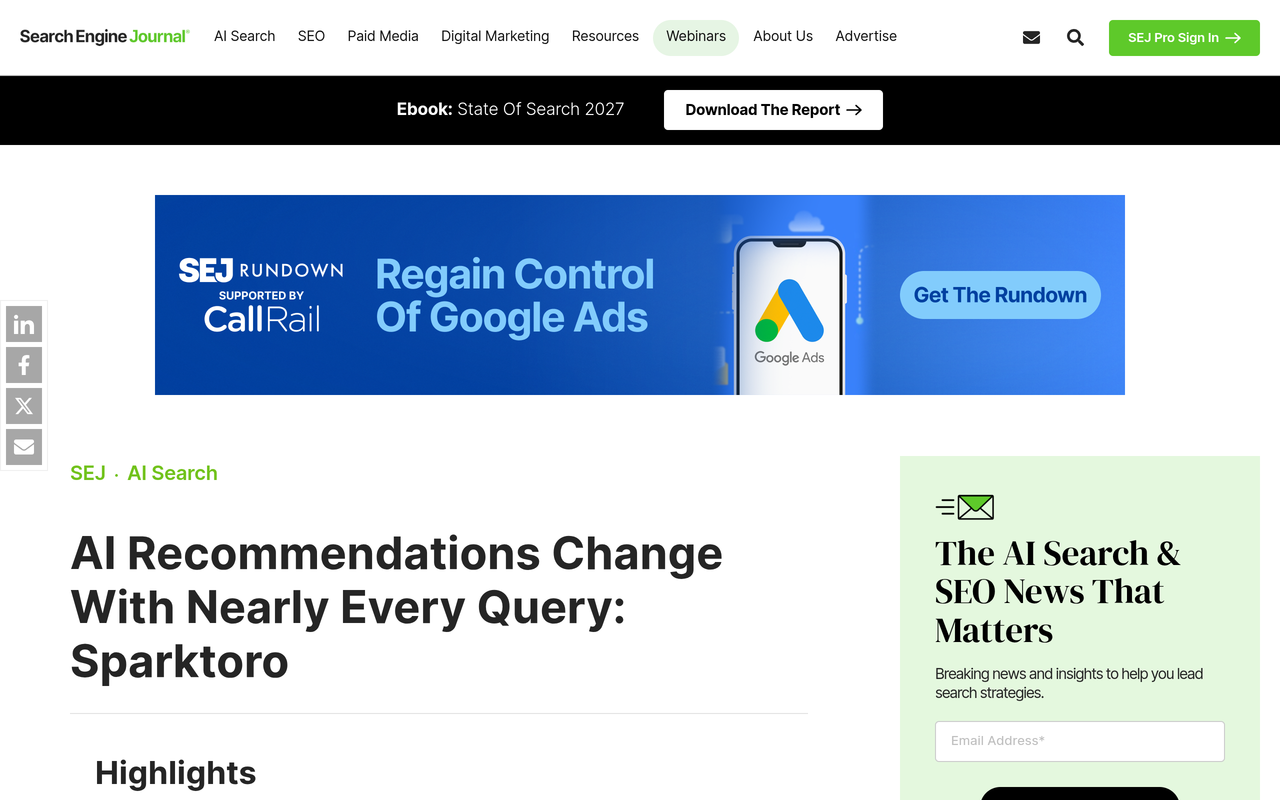
- Ask how many times each prompt is sampled. Search Engine Journal's report on SparkToro research found AI answers to the same prompt almost never repeat, so a single run proves little.
- Citation source reporting turns a score into an action list. A visibility number with no sources tells you that you are missing, not where to fix it.
- Check exports and trial terms in writing. Noma has a 3-day free trial; a card is taken at signup and billing starts on day 3, with no charge if you cancel before then.
- Run a one-week pilot on the same 20 prompts in each shortlisted tool and compare what they report.
What should I look for in an AI visibility tracking tool?
Look for five capabilities, in this order: engine coverage, prompt volume and sampling, citation source reporting, export and reporting options, and trial and contract terms. Everything else, from dashboards to sentiment scores, depends on those five being sound.
An AI visibility tool measures something that changes between runs, between engines and between countries. A tool that samples too few prompts, on too few engines, and hides where answers come from will give you a confident number that does not hold up. A buyer who asks the questions below can tell the difference in a single demo.
Quotable summary: an AI visibility tracking tool should answer four questions for every prompt you track: which engines mention your brand, how often across repeated runs, which sources those answers cite, and how you compare with named competitors.
Why is choosing an AI visibility tool harder than choosing an SEO tool?
A classic rank tracker reads a results page that is broadly the same for everyone searching from one location. AI answers are generated, so the same question can produce a different brand list each time. That changes what a good tool must do.
Search Engine Journal, reporting on SparkToro research, said AI tools produced different brand recommendation lists more than 99% of the time for the same prompt. The research ran each prompt 60 to 100 times per platform, and varied in the brands listed, their order and the number of items. The same report noted the work was done with Gumshoe.ai, a company that sells AI tracking tools, which is worth keeping in mind when you weigh it.
The same article also relayed a December Ahrefs finding that Google's AI Mode and AI Overviews cite different sources 87% of the time for the same query. Even inside one company's products, the answer surface is not one thing. MediaPost covered the same theme under the headline that AI brand recommendations are chaotic and inconsistent.
Three buying consequences follow. You need repeated sampling, not a single snapshot. You need coverage across engines, because engines disagree. And you need to treat any single-day score as a noisy reading and watch the trend instead.
How do AI engines differ in the sources they cite?
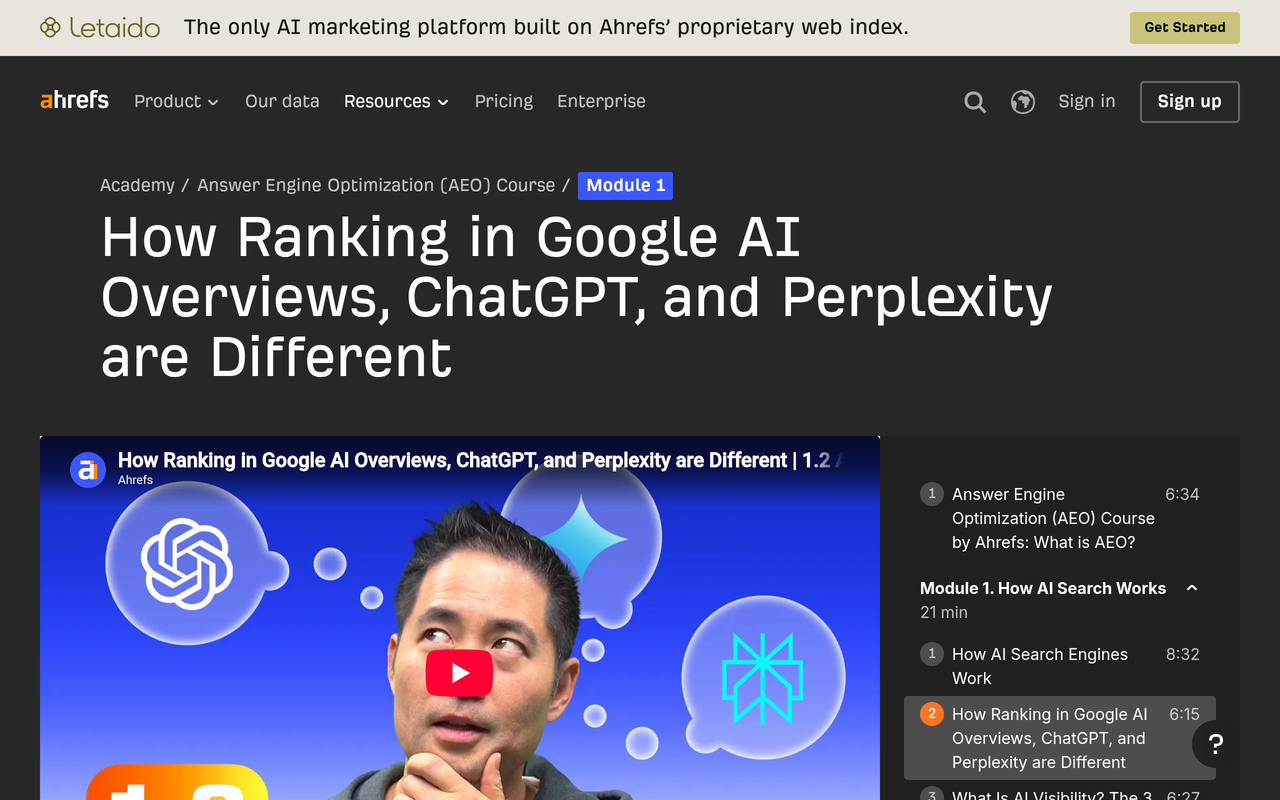
They differ a lot, which is why engine coverage heads the scorecard. Writesonic published a study titled Do AI Engines Cite the Same Sources? A Study of 161,286 Prompts, and Wellows published research with a headline stating that 89% of what ChatGPT cites, Perplexity never touches. Both are vendor-run studies, so read their methods before leaning on the exact figures, but they point the same way as Ahrefs' own teaching material on how ranking in Google AI Overviews, ChatGPT and Perplexity differs.
The practical reading for a buyer: a brand can be well cited on one engine and absent on another, so a tool that covers only a few engines can give you a falsely comfortable picture.
What is the buyer scorecard for AI visibility tracking tools?
The scorecard below turns the five capabilities into ten weighted criteria. Weights add to 100. Adjust them to your situation, but fix them before you see any demo, then score each vendor from 0 to 5 and multiply.
| Criterion | Weight | What to ask the vendor | A good answer looks like |
|---|---|---|---|
| 1. Engine coverage | 20 | Which engines are tracked, and are they separate or merged? | A named list that includes ChatGPT, Gemini, Perplexity and Claude, with results shown per engine |
| 2. Sampling and cadence | 15 | How often is each prompt polled, and is it repeated? | Daily polling, with trends shown rather than one-off snapshots |
| 3. Prompt capacity | 10 | How many prompts per plan, and can I add more? | A stated limit, with clear upgrade steps |
| 4. Citation source reporting | 15 | Can I see which pages and domains each answer cites? | Citation frequency by category with the source URLs visible |
| 5. Competitor comparison | 10 | Can I add named competitors and compare share? | Side-by-side mention frequency per prompt group |
| 6. Recommendations | 10 | Does the tool say what to change? | Specific actions tied to the gaps it found |
| 7. Exports and reporting | 5 | What can I export, in which format, and is there an API? | Raw answers and citations exportable, not only charts |
| 8. Geography and language | 5 | Can I track by country or language? | Stated options that match your markets |
| 9. Trial terms | 5 | How long is the trial, is a card needed, when does billing start? | Terms in writing, with the cancel point stated |
| 10. Contract and price clarity | 5 | Is pricing published, and what changes at renewal? | Published tiers, monthly option, no surprise add-ons |
The weights favour the first four rows on purpose. Those are the ones that decide whether the data can be trusted. Dashboards, alerts and sentiment views are easier to build than reliable sampling, so they should not carry the weight in your decision.
Which engines should an AI visibility tool cover?
It should cover every engine your customers could plausibly use to ask a category question, and it should show them separately. Noma by Nurdd tracks 13 AI engines, including ChatGPT, Gemini, Perplexity and Claude, and polls them daily.
Why separately? Because averaging engines hides the gap that matters. If your brand appears in most ChatGPT answers and almost none from Perplexity, a blended score looks average and tells you nothing about where to act. Ask each vendor to show a per-engine breakdown for one real prompt during the demo.
Questions to ask about engines
- Is each engine queried directly, or is one engine standing in for others?
- Does the list include Google's AI answers as well as chat assistants?
- When a new engine becomes popular, how fast is it added, and is it included in the plan price?
- Can I filter the dashboard to one engine at a time?
For background on how the engines behave differently, see our guide to Perplexity vs ChatGPT vs Gemini and our piece on how Gemini citation works differently.
How many prompts do I need, and how should they be sampled?
You need enough prompts to cover your category's real buying questions, and each one must be sampled repeatedly. There is no universal number. A small brand with one product line may need a few dozen prompts; a brand with several categories needs more. What matters is that the tool's prompt limit matches your prompt list, with room to grow.
Build the list from the shapes of question buyers ask: category discovery, comparison, problem and use case, and brand-specific. Our guide on which prompts to track for AI search visibility walks through each type.
Worked example: prompt capacity arithmetic
This is an illustrative calculation using round numbers, not data from any vendor. Suppose you track 50 prompts and a tool polls each prompt once a day on each of 13 engines. That is 50 x 13 = 650 answers a day, or 19,500 answers across a 30-day month.
Now suppose a vendor counts every prompt-engine pair against your prompt limit. Your 50 prompts on 13 engines would then count as 650 tracked items. That is why you must ask whether a plan's limit counts prompts or prompt-engine combinations. The same plan can look generous or tight depending on the answer.
Worked example: reading a noisy score
Again illustrative: a brand appears in 30 of 100 repeated runs of one prompt. Its visibility for that prompt is 30%. If a tool ran the prompt only once, you would read either 0% or 100%, and neither is true. Given the SparkToro finding that repeated runs almost never return identical lists, ask every vendor how many runs sit behind each number on screen.
Why does citation source reporting matter most for action?
Because citations tell you what to do next. A mention score shows that your brand is missing from an answer. The cited sources show which pages and domains the engine trusted instead, which is where your content, PR or reviews effort should go.
Noma by Nurdd shows citation frequency by category, compares you with named competitors and gives recommendations for improving AI visibility. For the thinking behind why some sites are cited more than others, read why AI search engines trust some websites more.
What good citation reporting includes
- The cited URL, not just the domain, for each answer.
- A grouping of sources by type, such as your own site, competitor sites, review sites, forums and news.
- A view by prompt category, so you can see which question types depend on which sources.
- A trend over time, so you can tell whether a fix changed anything.
How do the main AI visibility tools compare on the scorecard?
The table compares the capabilities that decide fit. Noma's column uses only what Nurdd publishes. We have not verified other vendors' current features on their own pages for this post, so use the linked comparison pages and each vendor's site to fill in those cells with the same questions.
| Scorecard row | Noma by Nurdd | Other AI visibility tools and SEO suites |
|---|---|---|
| Engine coverage | 13 AI engines, including ChatGPT, Gemini, Perplexity and Claude | Ask for the named list and a per-engine view |
| Polling cadence | Polled daily | Ask for cadence per plan |
| Citation reporting | Citation frequency by category | Ask to see source URLs for one live prompt |
| Competitor comparison | Included | Ask how many competitors a plan allows |
| Recommendations | Actionable recommendations to improve AI visibility (GEO) | Ask whether recommendations are included |
| Exports | Confirm formats in your demo | Ask for raw answer and citation export, and API access |
| Trial | 3-day free trial | Get length and card requirements in writing |
If you already use an SEO suite, compare it directly: Noma vs Semrush and Noma vs Ahrefs explain how an SEO suite's add-on differs from a dedicated tracker. For dedicated tools, see Noma vs Profound, Noma vs Peec AI, Noma vs AthenaHQ and Noma vs Scrunch.
How do trial terms and pricing compare?
Trial terms are a procurement detail that is easy to skip and expensive to get wrong. Record them in a table with the date you checked, because AI visibility vendors change plans often. At least one roundup, eClincher's piece on Profound alternatives, was written specifically in response to a vendor pricing change.
| Item to record | Noma by Nurdd | Each rival (fill in on their pricing page) |
|---|---|---|
| Free trial length | 3 days | Record days, or none |
| Card at signup | Yes, a card is taken at signup | Record yes or no |
| When billing starts | Day 3 | Record the exact day |
| Cost if you cancel before billing | No charge | Record |
| Currency | USD | Record, and note any tax added |
| Prompt limit on entry plan | See the Noma site | Record, and ask whether engines multiply the count |
| Date checked | Check at purchase | Write today's date next to every cell |
We have not verified rival prices for this post, so we have left those cells for you to complete from the vendors' own pages. That keeps you from relying on a third-party roundup that may already be out of date.
Why is Noma a strong fit for this scorecard?
Noma by Nurdd tracks 13 AI engines, including ChatGPT, Gemini, Perplexity and Claude, polled daily, with citation frequency by category, competitor comparison and recommendations to improve AI visibility.
Here is what that means, row by row:
- Engine coverage: 13 engines, including ChatGPT, Gemini, Perplexity and Claude.
- Cadence: daily polling means a change you make can show up in a trend within days, not at a monthly refresh.
- Action: recommendations sit beside the tracking, so the output is a task list instead of a chart.
- Trial terms: a 3-day free trial with the billing date stated: a card is taken at signup, billing starts on day 3 and you are not charged if you cancel before.
Noma is made by Nurdd, a company that also makes Nia by Nurdd (AI-native creative studio) and Pulse (Meta and Google Ads intelligence). They are separate products, and Noma works on its own. Noma by Nurdd is the AI search visibility product: it tells a brand whether ChatGPT, Gemini, Perplexity, Claude and nine other engines recommend it, how it compares with competitors, and what to change.
Book a demo at https://www.nurdd.club/demo and we will show you your own brand's results across the engines, the sources cited in the answers, and how you stack up against the competitors you name.
How do I choose between AI visibility tracking tools in 2026?
Run a short, structured process. The checklist below takes about two weeks and gives you evidence rather than impressions.
- Write the scorecard. Copy the ten criteria above, set your weights and agree them with whoever signs off the budget. Result: a fixed standard before any demo. Why: vendors will each frame the conversation around their strength.
- Build one shared prompt list. Choose 20 prompts across category, comparison, problem and brand types. Result: the same test for every tool. Why: different prompts make results incomparable.
- Shortlist three tools. Include one dedicated tracker and, if you already pay for one, your SEO suite's add-on. Result: a like-for-like set.
- Ask the demo questions. Request a per-engine view, source URLs for one prompt, the sampling method and the export format. Result: answers you can score. Why: screenshots in marketing pages do not show these.
- Start trials the same day. Note the trial end date and billing date for each in your calendar. Result: no accidental charges. Why: trial terms differ in card requirements and billing day.
- Run the pilot for seven days. Load the same 20 prompts and compare mention rates and cited sources. Result: a sense of whether the tools agree, and where.
- Score and decide. Multiply each 0 to 5 score by its weight, total out of 500 or divide by 5 for a score out of 100, and decide. Result: a documented purchase.
If you are still deciding whether to buy a tool or hire help, answer engine optimization agency vs in-house tooling covers that trade-off.
What mistakes do buyers make with AI visibility tools?
- Buying on the dashboard. A polished chart says nothing about sampling. Ask how many runs sit behind each figure.
- Treating one engine as all of AI search. Engines cite different sources, so a single-engine view can mislead.
- Ignoring prompt limits. Check whether engines multiply the count against your allowance.
- Skipping the export test. If you cannot get raw answers out, you cannot audit the tool or feed your own reports.
- Missing the billing date. Trials that take a card bill on a set day. Put it in your calendar on day one.
- Tracking without acting. Data is only useful if someone owns the fixes. Use an AEO audit checklist to turn findings into tasks.
What should I do after I pick a tool?
Set a baseline, then act on the biggest gaps. Record your mention rate per engine in week one, note which sources are cited for prompts where you are absent, and fix the pages or profiles that are most often missing.
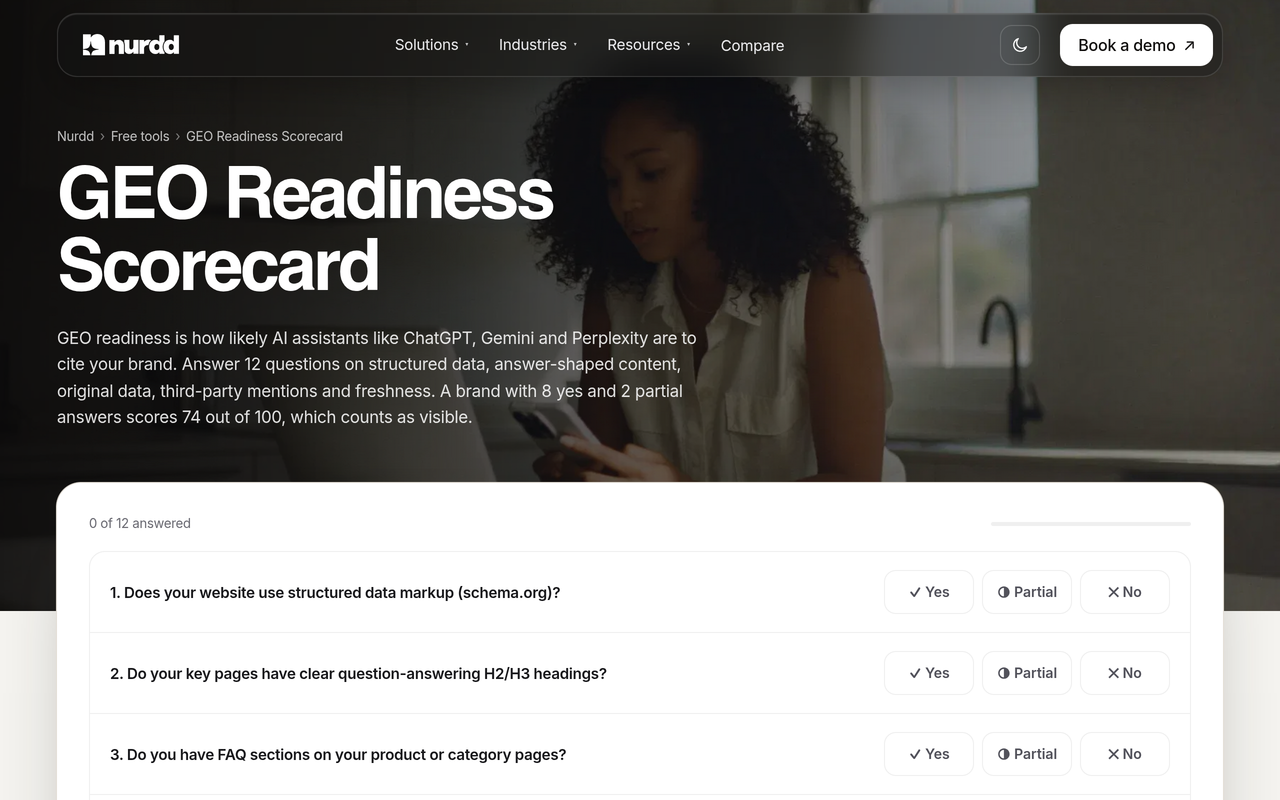
Three guides help with the follow-through: tracking your AI search visibility score week over week, measuring AI search share of voice and why your brand isn't showing up in ChatGPT answers. For a quick self-check before buying anything, use the free GEO readiness scorecard, and see the full set of Nurdd free tools.
If you sell online, the ecommerce GEO tools guide adds fit questions for catalogue-heavy brands, and AI search tracking tool reviews shows what to test first.
How we researched this
We reviewed published research and industry coverage on AI answer variability and citation differences between engines, vendor-published comparison articles, and Nurdd's own product information. Sources were checked on the publication date of this post. Where we could not verify a rival's current features or prices on its own page, we have said so and left the cell for you to fill in. We did not run hands-on tests of competitor tools, and we have no customer data to report. The worked examples use round illustrative numbers and are labelled as such.
Compare Noma with: Noma vs AirOps, Noma vs Clearscope, Noma vs seoClarity and Noma vs Conductor.
Frequently asked questions
What should I look for in an AI visibility tracking tool?
Look for engine coverage, repeated prompt sampling, citation source reporting, exports and clear trial terms. Those five decide whether the data can be trusted and acted on. Use the weighted scorecard in this article to score each vendor on the same basis.
How do I choose between AI visibility tracking tools in 2026?
Set your scorecard before demos, build one shared list of about 20 prompts, then trial your shortlist at the same time. Compare mention rates and cited sources for a week. Score each tool and record the date you checked pricing and trial terms.
How many AI engines should a tool track?
As many as your buyers realistically use, shown separately. Noma by Nurdd tracks 13 AI engines, including ChatGPT, Gemini, Perplexity and Claude. Research on citation overlap suggests engines often cite different sources, so narrow coverage can leave blind spots.
Why do AI visibility scores change from day to day?
AI answers are generated, so the same prompt produces different brand lists across runs. Search Engine Journal, reporting on SparkToro research, said lists differed more than 99% of the time across repeated runs. Daily polling and trend views reduce the noise.
Does Noma have a free trial?
Yes. Noma has a 3-day free trial. A card is taken at signup and billing starts on day 3, so you are not charged if you cancel before then. Prices are in USD.
Is an SEO suite add-on enough for AI visibility tracking?
It can be a start if you already pay for the suite, but test it on the same scorecard. Check engine count, sampling, source URLs and exports. Our Noma vs traditional SEO tools guide covers the differences.
What is a good first test of a tool?
Pick one prompt where you know your brand should appear and ask the vendor to show results per engine, the number of runs behind them and the cited source URLs. If they cannot show all three, score that row low.
Ready to see your own results?
A scorecard tells you what to ask; a demo shows you the answers. Book a Noma demo and you will see where your brand appears across 13 AI engines, which sources those answers cite, how you compare with the competitors you name, and what to change first. You can also read about the product at nomahq.app, or browse the Nurdd comparison pages.