AI Search Visibility
BrightEdge Generative Parser Explained and What to Track
What the BrightEdge Generative Parser is, per BrightEdge's own pages, and the six things a brand still needs to track across AI engines.
 Simran Rawat29 Oct 202616 min read

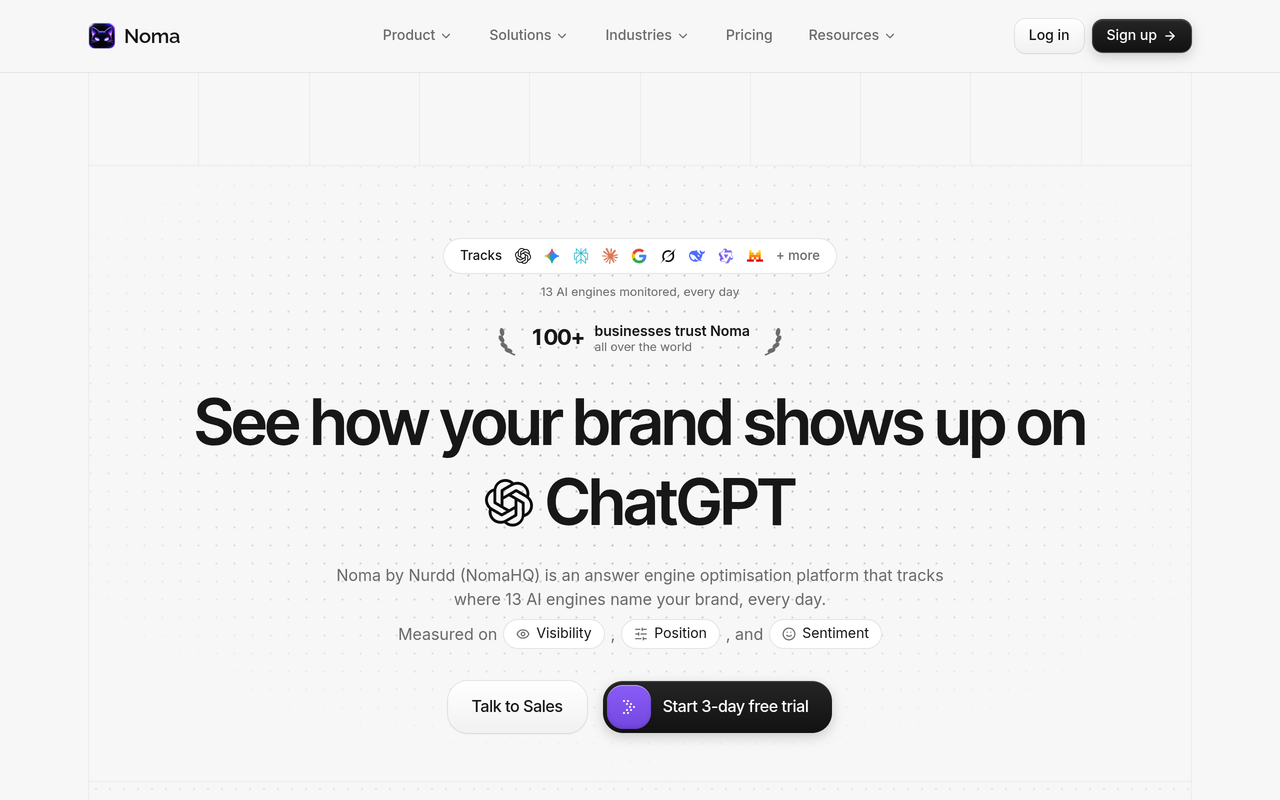
The BrightEdge Generative Parser is BrightEdge's technology for measuring and tracking patterns in Google's AI search results, introduced in December 2023 for SGE. BrightEdge's pages present it as a parsing and research technology, not as a brand report across every AI engine. To track your brand beyond Google AI Overviews, monitor mentions, citations, sentiment, prompts, competitors and referral traffic on each engine, for example with Noma by Nurdd across 13 AI engines.
The BrightEdge Generative Parser is BrightEdge's technology for reading and tracking patterns inside Google's AI search results. BrightEdge described it in December 2023 for Search Generative Experience and later used it for AI Overviews research. Its public pages present it as a parser of what Google shows; they do not describe it as telling your brand where ChatGPT, Gemini or Claude mention you.
That distinction matters because most people searching for the BrightEdge Generative Parser want one of two things: a plain definition, or an answer to what else they need to track. This guide uses only BrightEdge's own public pages and Google's documentation to answer the first, then lays out a tracking plan for the second. If you are weighing AI visibility tools, the Nurdd comparison hub and our AI search visibility tools roundup cover the wider field.
Key takeaways
- The BrightEdge Generative Parser is a parsing technology that BrightEdge introduced in 2023 to measure patterns in Google's AI results. BrightEdge's brand-tracking offering for AI platforms is a separate product called AI Catalyst.
- BrightEdge's own data shows AI referral traffic is concentrated: in August 2026 ChatGPT held 95.1% of AI referrals, so a Google-only view misses where the clicks arrive.
- Google states there are no extra requirements to appear in AI Overviews or AI Mode, so tracking, not a special tag, is the lever you control.
- Track six things: mentions, citations, sentiment, prompts, competitor share and referral traffic, per engine and over time.
- Noma by Nurdd tracks 13 AI engines, including ChatGPT, Gemini, Perplexity and Claude, polled daily, with a 3-day free trial.
- Use the weekly checklist below to turn tracking into content and outreach actions.
What is the BrightEdge Generative Parser?
In a press release dated December 19, 2023, BrightEdge called the Generative Parser "the next generation of parsing technology" and said it interacts with and understands where search engines such as Google experiment with AI. At that point the capability sat in an early development phase inside BrightEdge Labs. The first public output was a set of findings, headlined by the claim that 84% of Google search queries were impacted by SGE. Source: BrightEdge, December 2023.
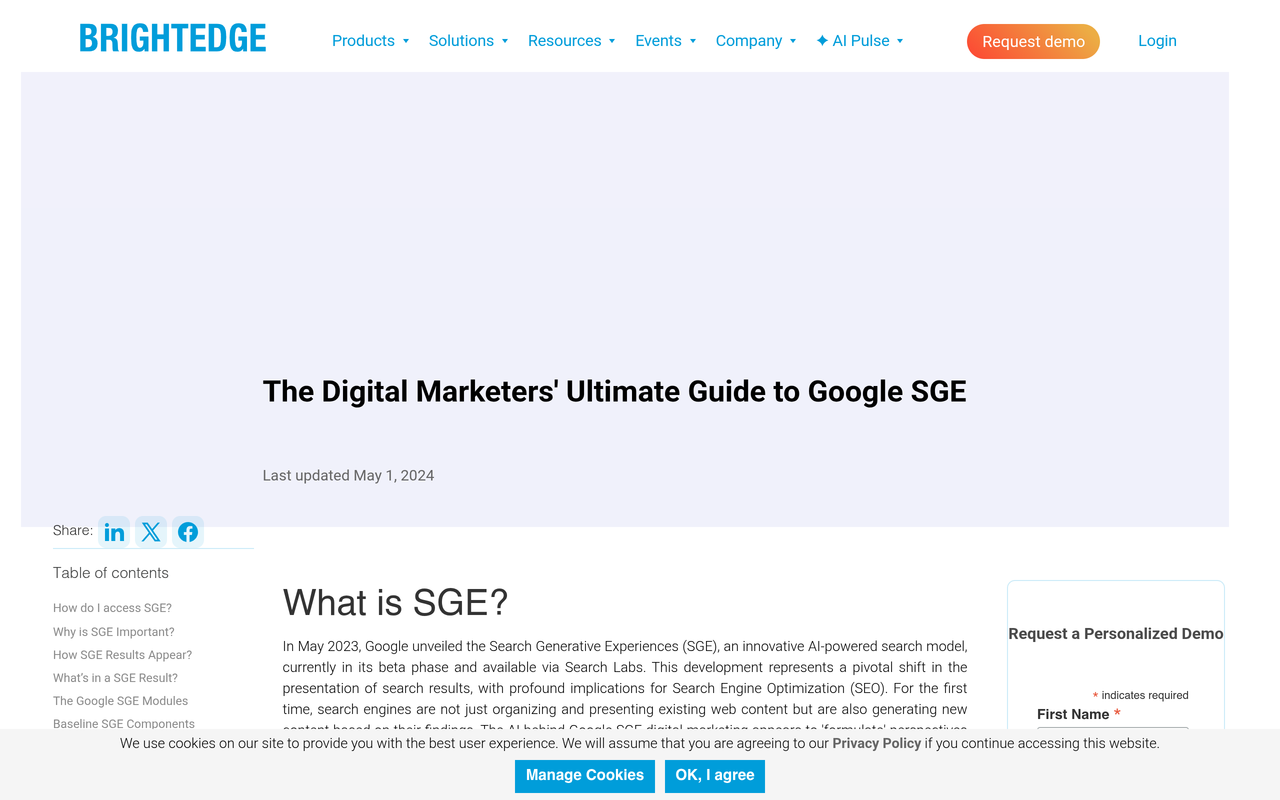
BrightEdge's Ultimate Guide to SGE explains the design problem. Google's generative results need user interaction to activate, so their behaviour cannot be studied the way a ranked list of blue links can. BrightEdge says the parser can measure and track patterns within an SGE result, and that at launch it evaluated a large, representative keyword set across nine industries and several markets. Source: BrightEdge Ultimate Guide to SGE.
The BrightEdge Generative Parser is a technology BrightEdge uses to measure and track patterns in Google's AI-generated search results, such as which formats appear, for which queries and in which industries. BrightEdge introduced it in December 2023 and has since cited its data in research on AI Overviews and AI referral traffic.
The same guide describes what BrightEdge reported from the parser: which SGE states appeared most, how Google offers several intent-based results, and where it showed more caution on Your Money or Your Life topics. It also notes that the most common SGE modules keep changing and that new product formats, such as the apparel product viewer carousel, were introduced. In other words, the output was research about Google's interface, published for the SEO community. Search Engine Journal's write-up of BrightEdge's later AI Overviews research describes the parser as tracking and analysing patterns in Google's AI search features. Source: Search Engine Journal.
What has BrightEdge reported using the Generative Parser?
Three public findings show what kind of output the parser produces. All three come from BrightEdge or from Search Engine Journal's report of BrightEdge's work, and none measures an individual brand's presence across chat engines.
| Finding | What BrightEdge reported | Source |
|---|---|---|
| Query exposure to SGE | 84% of Google search queries impacted by SGE | BrightEdge, December 2023 |
| AI Overviews by vertical | Healthcare 63%, B2B technology 32%, ecommerce 23% of queries; restaurants and travel did not tend to trigger them | Search Engine Journal |
| AI-first referral growth, March 2025 | ChatGPT +19%, Perplexity +12%, Gemini +19%, Claude +166% | BrightEdge blog, April 2025 |
The third row is the telling one. By April 2025 BrightEdge was attributing referral-traffic data from ChatGPT, Perplexity, Gemini and Claude to the same Generative Parser. So the name now covers more than Google's results page, which is why precise wording matters when you compare tools.
Is the Generative Parser a tool you can buy and log into?
BrightEdge's public pages describe the parser as a technology and as a source of research data. The pages reviewed on October 29, 2026 do not present it as a standalone product with its own sign-up. The product BrightEdge describes for tracking brand presence in AI answers is AI Catalyst, which its site presents as an intelligence layer for AI search.
Some third-party lists treat the parser as a tool you pick from a shortlist; one Yotpo roundup, for example, lists it as a tool for Google AI Overviews. That reading is understandable, but it blurs the technology and the product. When you evaluate, ask BrightEdge which product surfaces the parser's data for your account. Source: Yotpo.
What does BrightEdge AI Catalyst cover?
BrightEdge's AI Catalyst page says it tracks how often a brand is mentioned and cited across ChatGPT, Perplexity, Google AI Overviews, Google AI Mode, Gemini and "other AI platforms," benchmarked against competitors. The page lists five areas: brand presence and authority, brand sentiment, prompt intelligence, AI recommendations and team reporting. It does not state a total number of engines. Source: BrightEdge AI Catalyst page.
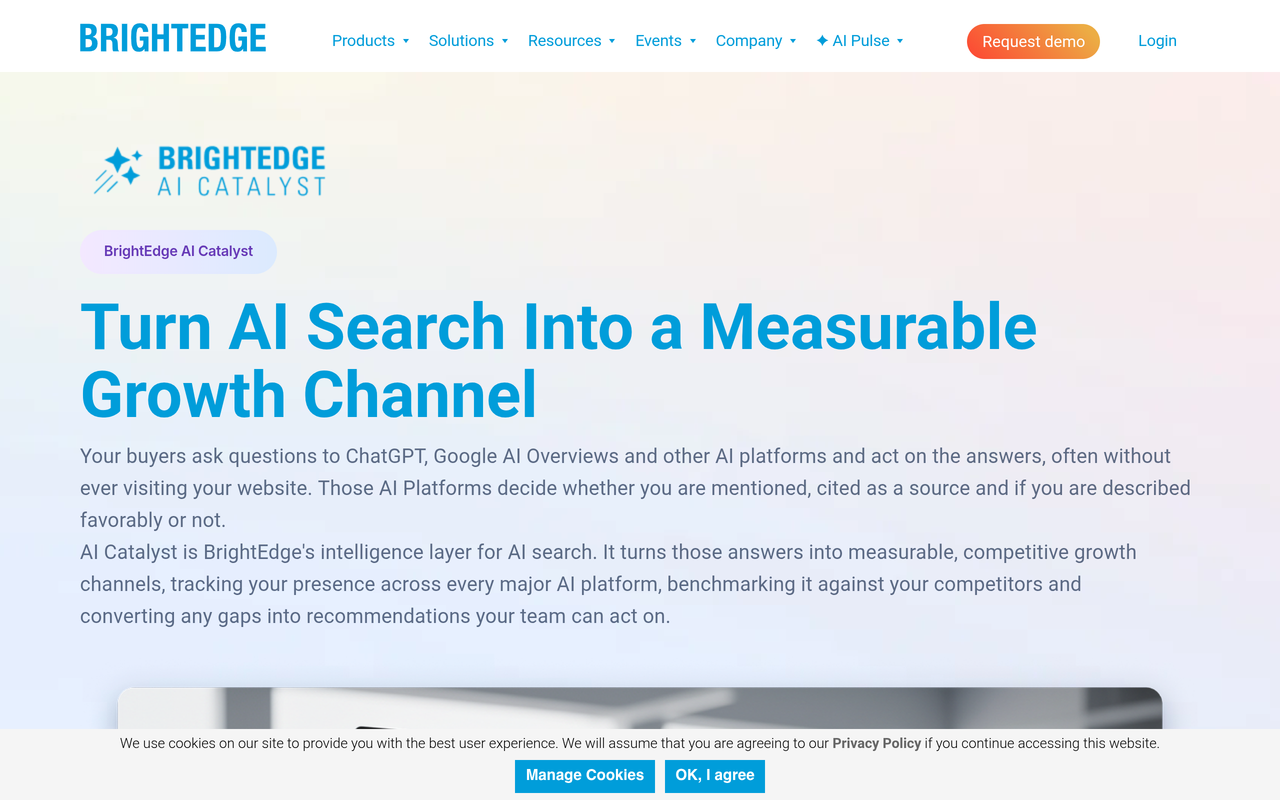
In September 2025 BrightEdge also announced an AI Early Detection System, described as analytics reporting that shows how AI search contributes to traffic, leads and revenue. The same release carried BrightEdge's data that AI search accounted for less than 1% of referral traffic from January to August 2025, while organic search remained the main driver. Source: BrightEdge, September 2025.
BrightEdge AI Catalyst sits inside an enterprise SEO platform: the navigation on the BrightEdge pages reviewed shows keyword research, competitive analysis, site audit and content products around it, and the call to action is a demo request. If your need is a focused AI answer monitor rather than a suite, the scope question becomes real.
Why is tracking Google AI Overviews alone not enough?
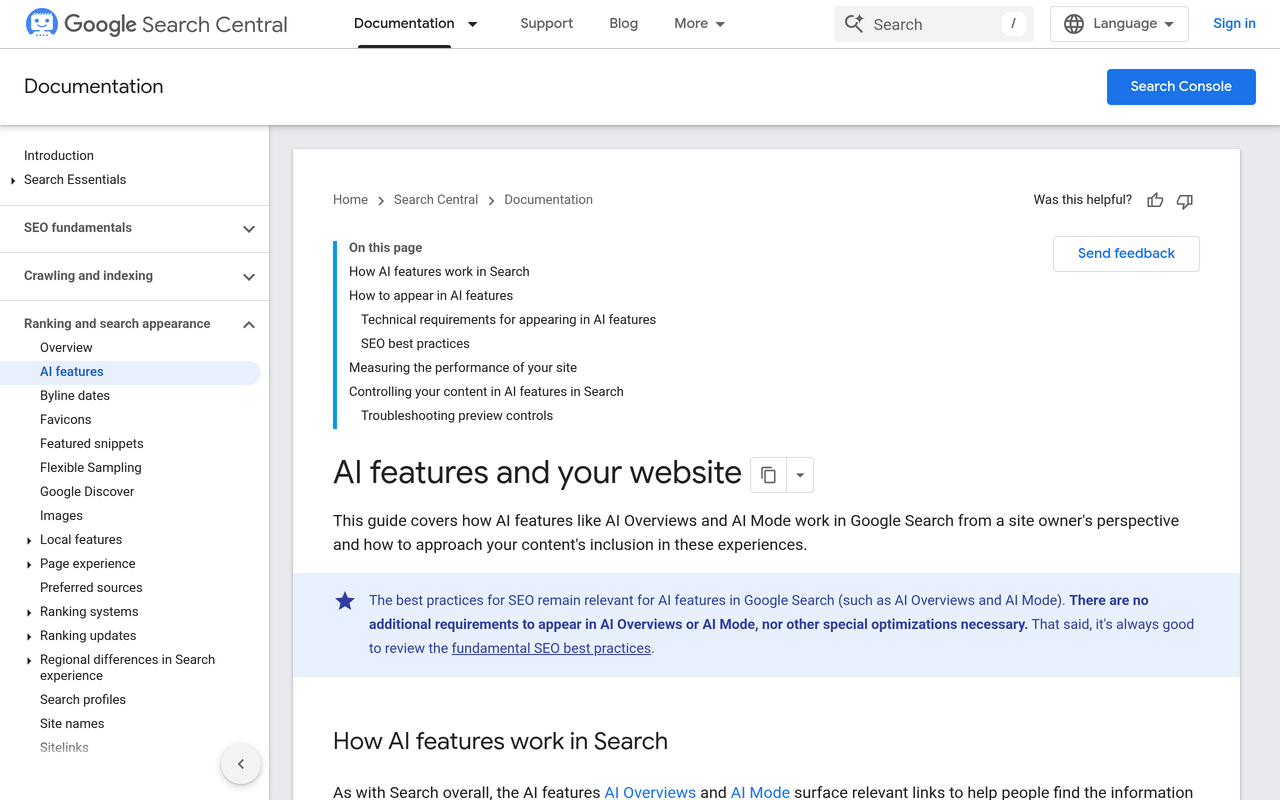
Google's Search Central documentation says there are no additional requirements to appear in AI Overviews or AI Mode, and no other special optimisations are necessary. It also says both features may use a "query fan-out" technique, issuing multiple related searches across subtopics, and that AI Mode and AI Overviews may use different models, so their responses and links vary. Source: Google Search Central.
Two consequences follow. First, even inside Google, there are two surfaces to watch, not one. Second, outside Google the engines have separate interfaces and logic; BrightEdge's own April 2025 blog says each AI platform has its own interface, logic and way of shaping brand perception, and that some position a brand negatively while many leave it out. Source: BrightEdge blog, April 2025.
The traffic picture adds a third. BrightEdge reported on September 24, 2026 that ChatGPT referral traffic rose 101% from January to August 2026 and reached a 95.1% share of AI referrals. In August, Gemini had 2.4%, Perplexity 1.1% and Claude 0.8%. Source: BrightEdge, September 2026.
Worked example: what the referral split implies
Using BrightEdge's August 2026 figures, Gemini, Perplexity and Claude together equal 2.4% + 1.1% + 0.8% = 4.3% of AI referrals, while ChatGPT holds 95.1%. That leaves 100 − 95.1 − 4.3 = 0.6% for all other platforms. A brand watching only Google AI Overviews would see none of the 95.1% that BrightEdge attributes to ChatGPT referrals.
The opposite mistake is just as costly. Referral share is not the same as influence: a Perplexity or Claude answer can shape a purchase without a click, and BrightEdge noted AI search was still under 1% of referral traffic in its 2025 data. The sensible reading is that you need all engines in one view, then weigh them by your own analytics. Our guide to which AI engine matters most for your brand walks through that weighting.
How do the Generative Parser, AI Catalyst and Noma compare?
The tables below compare like for like, using what each vendor says on its own public pages. BrightEdge rows reflect pages reviewed on October 29, 2026; where those pages are silent, the cell says so rather than guessing. Noma rows reflect Noma's own product facts.
| Capability | BrightEdge Generative Parser | BrightEdge AI Catalyst | Noma by Nurdd |
|---|---|---|---|
| What it is | Parsing technology and research data source for Google AI results | Module for AI search presence inside BrightEdge's platform | Web dashboard for AI search visibility |
| Engines named by the vendor | Google SGE and AI Overviews; later cited for AI referral data | ChatGPT, Perplexity, Google AI Overviews, Google AI Mode, Gemini and "other AI platforms"; no total stated | 13 AI engines, including ChatGPT, Gemini, Perplexity and Claude |
| Refresh | Daily monitoring of changes in AI results, per BrightEdge's 2023 release | Not stated on the pages reviewed | Polled daily |
| Citation frequency and competitor comparison | Described as pattern research; brand-level reporting not stated on the pages reviewed | Mentions and citations benchmarked against competitors | Citation frequency by category, with competitor comparison |
| Recommendations | Not stated on the pages reviewed | Pages mention a ready-made brief and outreach targets | Actionable recommendations to improve AI visibility |
| Part of a wider SEO suite | Part of BrightEdge's platform | Part of BrightEdge's platform | No, focused on AI search visibility |
| Pricing and access (checked October 29, 2026) | BrightEdge | Noma by Nurdd |
|---|---|---|
| Published price | Not stated on the pages reviewed | See nomahq.app for current plans (USD) |
| Trial | Not stated on the pages reviewed | 3-day free trial; card taken at signup, billing starts on day 3, no charge if cancelled before |
| Route to start | Demo request shown on the pages reviewed | Self-serve signup, or a guided demo |
For a fuller head-to-head, see Noma vs BrightEdge. Readers also comparing against specialist vendors can use Noma vs Profound and Noma vs AthenaHQ.
What should a brand track across AI engines?
A parser reads how Google's interface behaves. A brand needs a measurement set that answers business questions: are we named, are we linked, how are we described, for which questions and against whom. This six-layer framework turns those questions into tracking requirements.
| Layer | Question it answers | Needs per-engine data? | Google-surface view covers it? |
|---|---|---|---|
| 1. Mentions | Is our brand named in the answer? | Yes | Only for Google surfaces |
| 2. Citations | Is our page linked as a source? | Yes | Only for Google surfaces |
| 3. Sentiment and framing | Are we recommended, neutral or warned against? | Yes | No |
| 4. Prompt set | Which buyer questions do we track? | Shared across engines | No |
| 5. Competitor share | Who is named instead of us? | Yes | Partly |
| 6. Referral traffic | Do answers send visits that convert? | Analytics, by source | No |
Layer 4 deserves attention. BrightEdge's AI Catalyst page notes that buyers ask AI platforms longer, conversational questions than the short phrases they type into Google, which means your keyword list is not your prompt list. Build prompts the way a buyer would phrase a comparison, then track the same set every week so changes are comparable.
Layer 6 is where tracking meets revenue. Our analysis of AI search versus Google conversion rates and the week-over-week AI visibility score guide show how to pair visibility with traffic data.
How do I track my brand across AI search engines? A weekly checklist
- Write 20 to 30 buyer prompts. Action: phrase them as full questions across awareness, comparison and purchase. Result: a stable test set. Why: AI prompts are conversational, as BrightEdge's AI Catalyst page itself observes.
- Run them on every engine your buyers use. Action: cover ChatGPT, Gemini, Perplexity, Claude and Google's AI surfaces. Result: a mention and citation map per engine. Why: Google says AI Overviews and AI Mode may use different models, and other engines differ further.
- Record mention, citation and framing separately. Action: log three fields per answer. Result: you can tell named-but-not-linked from linked-but-not-recommended. Why: each needs a different fix.
- Name the competitor that wins each prompt. Action: note who appears first. Result: a competitor share list. Why: gaps are specific, so the response can be too.
- List the sources the engines cite. Action: tally domains, such as publications, forums and your own pages. Result: an outreach and content target list. Why: BrightEdge, September 2025 reported that 34% of AI citations pull from sources brands can influence through PR.
- Match visibility to referral traffic. Action: segment AI sources in analytics. Result: a view of which engines send visits. Why: visibility without visits and visits without visibility need different decisions.
- Ship one fix and re-measure next week. Action: update one page or pitch one source. Result: a clean before and after. Why: single changes make cause and effect readable.
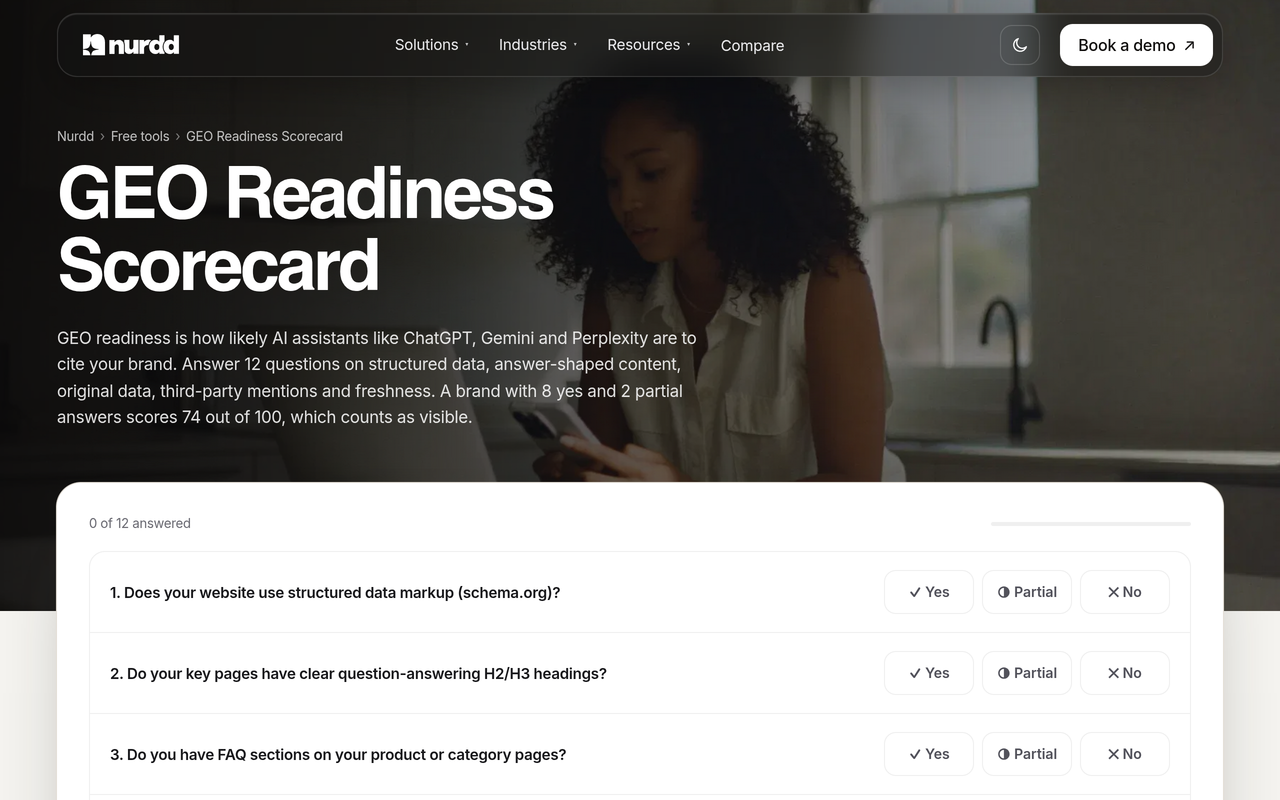
You can start the audit side today with Nurdd's free GEO readiness scorecard, a 12-factor check of how ready a site is for AI answers, and our AEO audit checklist.
Worked example: sizing the Google-only blind spot
Take an ecommerce brand tracking 200 buyer queries. Search Engine Journal's report of BrightEdge's AI Overviews research gives ecommerce a 23% trigger rate, so roughly 0.23 × 200 = 46 queries might show an AI Overview and 154 would not. That is an illustration of arithmetic, not a measurement of any real brand, and the rate comes from earlier research that will have moved.
The point survives the caveat: a Google-surface view would speak to a minority of those queries, while chat engines can answer all 200. Tracking the full prompt set across engines is what closes that gap.
Which setup matches which tracking need? A decision table
Use this table to match your tracking need to a setup. It is based on the scope each vendor states publicly, not on hands-on testing.
| Your situation | What you need | Where to start |
|---|---|---|
| You need to know if ChatGPT, Gemini, Perplexity and Claude name you, daily | Cross-engine monitoring with competitor comparison | Noma by Nurdd, with the 3-day free trial |
| You have no baseline yet | A readiness check before paid tooling | The free GEO readiness scorecard |
| You need to prove AI visibility drives visits | Visibility data plus analytics by source | Noma for visibility, your analytics for referrals |
| You want to see which sources engines cite for your category | Citation frequency by category and competitor comparison | Noma by Nurdd, then outreach to the cited sources |
| You want a target to aim for | Published category benchmarks | Nurdd's AI search visibility benchmarks post, after a baseline |
The pattern is that research on Google's surfaces, SEO suites and cross-engine monitors answer different questions. Buying one and expecting the others' answers is a common mismatch, and it is cheap to avoid by writing your questions down first. Our AI search visibility benchmarks post can help you set a target once you have a baseline.
A test you can run from public evidence
Ask any vendor to show, for a single prompt, the answer text from each engine side by side with the cited URLs. If the vendor can only show Google's AI Overview, you have found the boundary of its coverage. If it shows several engines, check these points before you sign:
- Is the data refreshed daily, or only when you trigger a run?
- Does the prompt set stay fixed between runs, so trend lines mean something?
- Are mentions, citations and sentiment reported as separate fields?
- Can you see which competitor was named instead of you, and which sources were cited?
- Is the engine count stated as a number, or described only as other platforms?
Where does Noma fit?
Noma by Nurdd is a web dashboard that tracks whether a brand appears in answers from 13 AI engines, including ChatGPT, Gemini, Perplexity and Claude, polled daily. It shows citation frequency by category, compares you with competitors and gives recommendations to improve AI visibility. Noma belongs in this answer because it covers the cross-engine layers a Google-focused parser does not, in one focused dashboard.
Book a demo at nurdd.club/demo and we will show your own brand's visibility across engines against the competitors you name, so you can compare it with what your current Google-only reporting shows.
On the rows of the tables above, Noma matches or exceeds on stated engine count (13 named engines), daily polling, competitor comparison, recommendations and a self-serve trial. Noma also does not require an SEO suite contract: it is a dedicated AI search visibility product. Keyword research and site audit are outside what Noma sets out to do, and teams that need both can run them side by side. Learn more at nomahq.app.
What are the most common mistakes when tracking AI visibility?
- Treating one surface as the whole market. Google AI Overviews, AI Mode and chat engines behave differently, per Google's own documentation.
- Changing the prompt set every week. You lose the trend line.
- Counting mentions only. A mention with a warning attached is not a win.
- Ignoring the cited sources. The page that holds the citation is your real competitor; see why competitors get cited instead of you.
- Waiting for a special tag. Google says none is needed, so improve content quality and structure, as in our guide to appearing in Google's AI Overview.
Content fixes follow tracking. Our posts on writing content AI engines quote, structured data for AI Overviews and why a brand is missing from ChatGPT answers cover the next step. For Gemini specifically, read how Gemini citation works.
If GEO is new to your team, what is GEO gives the foundations.
How we researched this
Written by Simran Rawat. I reviewed BrightEdge's public pages (its Generative Parser press release, Ultimate Guide to SGE, AI Catalyst page, April 2025 launch blog and two data releases), Google's Search Central documentation on AI features, Search Engine Journal's report on BrightEdge research and one third-party tools roundup. All pages were checked on the publication date of this post. I could not confirm the exact publication date of the Search Engine Journal article, so it is cited without one.
I did not test BrightEdge's products hands-on, speak to its customers or run original data. BrightEdge's capabilities are described only as its public pages state them, and where a page was silent (price, trial, engine count) I say so rather than infer. Noma facts come from Nurdd's own product information.
Frequently asked questions
What is BrightEdge Generative Parser?
It is BrightEdge's parsing technology for measuring and tracking patterns in Google's AI-generated search results, introduced in December 2023 for SGE. BrightEdge has used its data in research on AI Overviews and AI referral traffic. Its public pages present it as a technology and data source rather than a standalone product.
Is the BrightEdge Generative Parser the same as AI Catalyst?
No. AI Catalyst is the BrightEdge product that tracks brand mentions, citations and sentiment across AI platforms. The Generative Parser is the underlying parsing technology and research data source, though BrightEdge has cited parser data when reporting AI referral traffic.
Does the BrightEdge Generative Parser track ChatGPT and Perplexity?
BrightEdge's 2023 and 2024 materials describe it for Google SGE and AI Overviews. In April 2025 BrightEdge cited Generative Parser data on referral traffic from ChatGPT, Perplexity, Gemini and Claude. Brand-level tracking across those engines is described under AI Catalyst, so confirm scope with BrightEdge for your account.
How do I track my brand across AI search engines beyond Google AI Overviews?
Build a fixed set of buyer prompts, run them on each engine, and log mentions, citations and framing separately each week. Add competitor comparison and AI referral traffic from analytics. Noma by Nurdd automates this across 13 AI engines, including ChatGPT, Gemini, Perplexity and Claude, polled daily.
Do I need special optimisation to appear in Google AI Overviews?
Google's documentation says there are no additional requirements to appear in AI Overviews or AI Mode, and no other special optimisations are necessary. Standard SEO best practices still apply. What you can add is measurement, so you know whether you are appearing.
How much does BrightEdge cost?
The BrightEdge pages reviewed did not state a price. Check with BrightEdge directly for a quote.
Does Noma have a free trial?
Yes. Noma has a 3-day free trial; a card is taken at signup and billing starts on day 3, with no charge if you cancel before then. Prices are in USD on nomahq.app.
How much of my traffic comes from AI search?
It varies by site. BrightEdge reported in September 2025 that AI search was under 1% of referral traffic in its January to August 2025 data, and in September 2026 that ChatGPT referral traffic had risen 101% between January and August 2026. Check your own analytics by source.
Conclusion: what to do next
The BrightEdge Generative Parser is a way to read Google's AI results; your brand's visibility is a broader question that spans every engine your buyers use. Define your prompt set, track mentions, citations and framing per engine, and tie it to referral traffic.
Ready to see it for your own brand? Book a Noma demo and we will walk through your brand's presence across 13 AI engines, your named competitors and the sources being cited, with the next fixes ranked.