Influencer Marketing
Influencer Marketing Platform: How to Pick the Right One
Choose an influencer marketing platform with a five-job scorecard covering discovery, vetting, briefs, payments and attribution, plus a demo checklist.
 Simran Rawat31 Oct 202616 min read

To choose an influencer marketing platform, score each option on five jobs: discovery, vetting, briefs, payments and attribution. Then check whether it also covers creative production. Nia by Nurdd is an AI-native creative studio with influencer marketing built in, priced below comparable plans, so it suits teams that want creative and creators in one app.
To pick an influencer marketing platform, score each option on five jobs: finding creators, vetting their audiences, writing and approving briefs, paying creators, and proving sales. Then ask whether the platform also helps you make the creative. A platform that leaves most of those jobs to spreadsheets is the wrong one. This guide gives you a scorecard, a demo checklist, a pilot plan and a worked example.
Key takeaways
- Judge every influencer marketing platform on five jobs, not a feature list: discovery, vetting, briefs, payments and attribution.
- Weight the jobs by where your campaigns currently break. A brand burned by fake followers should weight vetting highest.
- Ask each vendor to vet your own creator shortlist in the demo, not a prepared one.
- Add a sixth question: who makes the creative, and what does that cost on top of the platform?
- Get pricing in writing, including seats, campaigns, marketplace fees and payment fees, before you compare.
- Nia by Nurdd fits teams that want creative production and creators in one app, at a price below comparable plans.
What is an influencer marketing platform, and what does it do?
An influencer marketing platform is software that helps a brand find creators, run collaborations and measure results in one place. Shopify's guide to influencer marketing platforms describes the workflow as discovery, then outreach, contracts, content approvals and deadlines, then performance tracking of clicks, conversions and revenue, with payments and disclosure compliance built in.
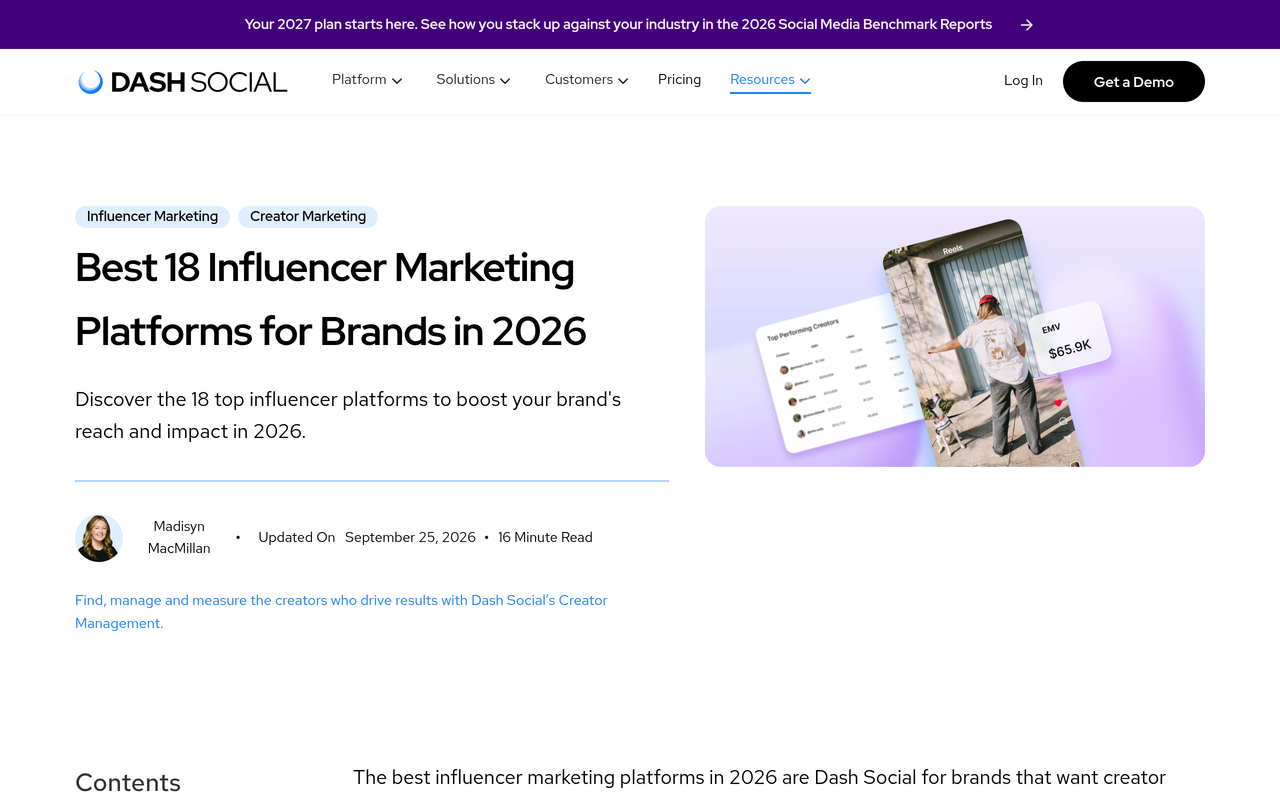
That description covers the category, but products inside it differ. Some are marketplaces where you book a creator at a listed price. Some are enterprise suites built for large teams. Dash Social, 2026 groups the platforms it reviews by use, such as enterprise programmes, ecommerce and affiliate programmes, small budgets and managed campaigns. Others make the content itself.
The cost of choosing badly is real, because a platform sits under every brief, payout and report your team produces. Switching mid-year means re-vetting creators, rebuilding templates and losing history. That is why the selection process below puts as much weight on your own test as on any vendor claim.
How do I choose an influencer marketing platform?
Choose by job, not by brand name. Write down the five jobs below, mark where your last campaign lost time or money, and score every vendor against those jobs using your own data in the demo. This is the Nurdd five-job scorecard, an original framework built from the stages the sources in this article describe.
| Job | Question to ask the vendor | Red flag |
|---|---|---|
| 1. Discovery | How many creator profiles can I search, on which platforms, and by which filters? | Search only by follower count and hashtag |
| 2. Vetting | How do you flag fake followers and low-quality audiences, and can I see the method? | A single authenticity score with no explanation |
| 3. Briefs | Can I write, send, approve and revise a brief and the content inside the product? | Briefs live in email, approvals in a shared drive |
| 4. Payments | How are creators paid, in which currencies, and what are the fees and timing? | Payouts handled outside the platform with no record |
| 5. Attribution | Can I see sales per creator and per product, not only clicks and likes? | Reports stop at reach and engagement |
Add a sixth question that buyers often skip: who makes the creative? If your team briefs a creator, waits, reviews and re-edits, the platform is only managing the slowest step. A tool that also produces films and ads shortens that step.
Step 1: Rank the five jobs by where you lose money
Action: list your last three campaigns and mark the job that cost the most time or budget. Result: a weighted list such as vetting first, attribution second. Why: a generic feature checklist treats all jobs as equal, and they are not.
Step 2: Fix your constraints before the demos
Action: write down the platforms you post on, the number of creators you work with per quarter, the countries you pay in and the people who need seats. Result: a one-page brief you can send to every vendor. Why: vendors answer the questions you ask, and a vague brief gets a vague quote.
Step 3: Build a shortlist of three to four
Action: pick one marketplace, one suite and one creative-and-creator tool so you see the range. Result: a shortlist that tests different models, not three versions of the same one. Why: comparing like with like hides the trade-off you really face, which is between managing creators and making content.
Step 4: Run the same live test in every demo
Action: bring five real creators from your own list and ask each vendor to vet them on screen. Result: you see how each product handles an audience you already know. Why: a prepared demo always shows the creators who look best.
Step 5: Price the full workflow
Action: ask for a written quote that includes seats, campaigns, marketplace fees, payment fees and any onboarding charge. Result: a total cost for one quarter of your real activity. Why: a low subscription can sit beside a percentage fee on every hire.
Step 6: Score and decide
Action: score each job from 0 to 5, multiply by your weight and total the result. Result: a ranked list you can defend to finance. Why: a written score stops the loudest demo winning.
What features should an influencer marketing platform have?
An influencer marketing platform should cover creator search, audience vetting, campaign and brief management, secure payments, content monitoring and sales-level reporting. Bazaarvoice's complete guide lists features such as finding on-brand creators, fake follower detection, campaign management, content monitoring, sales tracking and creator payments.
The table groups those features by the five jobs and adds the creative layer that common lists leave out. The Nia column uses only what Nurdd publishes about Nia.
| Feature | Why it matters | Job | Nia by Nurdd |
|---|---|---|---|
| Searchable creator database | Cuts hours of manual scouting | Discovery | 10M+ profiles across Instagram and other platforms |
| Filters by niche, audience quality, engagement authenticity and brand match | Finds fit, not just reach | Discovery | Yes |
| Fake follower detection | Stops payment for inflated audiences | Vetting | TruAI, Nurdd's fake follower detection technology |
| Pre-spend ROI forecast | Sets expectations before briefing | Vetting | Yes |
| Campaign workflow management | Keeps the collaboration in one place | Briefs | Full campaign workflow without needing an agency |
| Creator payments | Removes invoice chasing | Payments | Not listed in Nia's published description |
| Product-level sales attribution | Shows which creator sold which product | Attribution | Yes, to specific creators after campaigns close |
| Creative production: films, micro dramas, product and UGC ads | Gives you content to brief against or run as ads | Creative | Yes, with real and AI creators in the same production |
If payouts matter to you, ask any vendor, including Nurdd, to confirm in writing which payment steps sit inside the product.
Why do influencer platforms fail brands in practice?
Platforms fail brands when they solve discovery, the most visible job, and leave the harder jobs to the team. Finding a creator is fast. Proving that a creator sold something is slow, and so is getting a clean brief approved.
The pattern shows up in a brand's own work. A beauty brand might find twenty good creators in an afternoon, then spend weeks on contracts, content revisions and a spreadsheet of payouts. A beauty brand feels this because content volume is high and audience trust is the product. This is an illustration, not a measured case.
Three failure modes recur:
- Vanity vetting. The platform shows a follower count and an engagement rate, but not whether the audience is real. Our Instagram fake followers checker guide explains the signals to look for.
- Orphaned briefs. The brief is a document, not a workflow, so revisions arrive late and nobody can see the approved version.
- Reports that stop at likes. Without sales per creator, the next budget conversation is a guess. See how to pick influencers based on predicted sales.

What do the leading platform guides say?
Three published guides are useful starting points. Shopify's guide describes the workflow from discovery to payments and disclosure. Dash Social's guide groups platforms by use. Bazaarvoice's guide lists the features a platform should have.
This article builds on them with a weighted scorecard, a live demo test using your own creators, a 30-day pilot, and a view on whether the creative should come from the same product as the creator management.
Which type of influencer marketing platform fits which team?
Match the platform type to the main constraint on your team. The table separates common models by how you use them and what to check carefully.
| Platform type | How you use it | Check carefully | Fits when |
|---|---|---|---|
| Creator marketplace | Browse creators with listed packages and book them | Depth of vetting, attribution, who makes the content | You need a few one-off pieces fast |
| Enterprise suite | Manage large rosters, contracts, reporting and compliance | Setup time, contract length, creative production | You have a dedicated influencer team and a procurement process |
| Ecommerce-native tool | Run affiliate-style programmes tied to a storefront | Coverage beyond one commerce platform | Your sales happen mostly on one commerce platform |
| Creative studio with influencer marketing built in | Make the content and run creators from the same app | Which payment steps happen inside the product | You want creative and creators together on one budget |
Nurdd's own head-to-head pages show how Nia compares with specific names: Nia vs Collabstr, Nia vs CreatorIQ, Nia vs Grin and Nia vs Upfluence. Browse the full comparison index for more.
How do the pricing models compare?
Pricing is where influencer platform comparisons usually go wrong, because the models are not the same. A marketplace may charge a fee on each hire, a suite may charge an annual contract, and a studio may charge a plan. We did not collect rival price pages for this article, so the table compares models and the questions to ask, not rival numbers.
| Pricing model | What to ask for in writing | Cost to check | Nia by Nurdd |
|---|---|---|---|
| Marketplace fee per hire | The percentage, who pays it and on what base | Fees on both brand and creator side | Priced below comparable plans |
| Annual platform contract | Seats, campaigns, creators, term and renewal | Onboarding charge, lock-in | Priced below comparable plans |
| Quote-only pricing | A written total for your quarter of activity | Add-on modules priced separately | Priced below comparable plans |
| Separate creative tools | What video, ad and UGC production costs on top | A second subscription for content | Creative studio and influencer marketing in one app |
Nurdd does not publish Nia plan prices on this page. Nia is a paid product, and the only claim we make is that it is priced below comparable plans. Check which currency each vendor quotes in.
What does the legal side of influencer marketing require from a platform?
A platform should make disclosure easy to request and easy to check. The Federal Register notice, July 2023 carries the FTC's Guides Concerning the Use of Endorsements and Testimonials in Advertising. The duty sits with brands as well as creators.
In practice, look for briefs that include disclosure instructions and a way to review posts after they go live. If you run ads on creator content, check how the platform handles partnership ad permissions. Later has a guide to Instagram branded content ads that covers how creators grant these permissions.
Some platforms build this into the brief step. Aspire's help centre says it automatically requests a Branded Content label from creators when briefs are sent through the platform. Archive's help centre describes a creator workflow for providing ads codes for partnership ads. Use both as examples of what to ask any vendor for: label requests in the brief and an ads-code or permission step before you boost. This is general information, not legal advice.
How should I run the demo?
Run the demo as a test, not a presentation. This checklist works for any vendor, including Nurdd.
- Send the vendor a list of five creators you already know, two strong and three doubtful, before the call.
- Ask them to vet all five on screen and explain every flag in plain language.
- Ask for a brief to be written and sent to one creator, then revised once, inside the product.
- Ask how that creator would be paid, in which currency, on which date and with what fee.
- Ask to see a finished campaign report that shows sales per creator, not only reach.
- Ask who produces the creative, and what a product ad or UGC ad costs inside or outside the tool.
- Ask for the full written quote for one quarter of your real activity.
A vendor that will not run steps 2 and 5 on your data is showing you how its reporting will feel after you sign.
How do I run a 30-day pilot before committing?
A pilot turns the scorecard from opinion into evidence. Keep it small, so a failed pilot costs little and a good one gives you real numbers.
- Week 1: pick one product and one budget cap, then agree the success measure, such as sales per creator, before anyone is briefed.
- Week 1: tag every link with a consistent structure, following our UTM structure guide.
- Week 2: brief three to five creators inside the product and record how many revisions each brief needs.
- Week 3: review live posts for disclosure and, if you plan to boost them, collect partnership ad permissions.
- Week 4: pull the report, compare sales per creator with the forecast, and score the platform against the five jobs.
Record how long each step took your team, not just the outcome. Hours saved on briefs and reporting are often the clearest difference between two products with similar features.
Worked example: scoring three platform types
This is illustrative arithmetic to show the method, not market data, and the scores are invented for the exercise. Suppose a skincare brand weights the five jobs after reviewing its last campaigns: vetting 30%, attribution 25%, briefs 20%, discovery 15%, payments 10%. It scores each shortlisted platform type out of 5 in the demo.
| Job (weight) | Marketplace score | Suite score | Studio score |
|---|---|---|---|
| Vetting (30%) | 2 | 4 | 4 |
| Attribution (25%) | 2 | 4 | 4 |
| Briefs (20%) | 3 | 4 | 4 |
| Discovery (15%) | 4 | 4 | 4 |
| Payments (10%) | 4 | 4 | 3 |
| Weighted total | 2.7 | 4.0 | 3.9 |
The marketplace total is 0.6 + 0.5 + 0.6 + 0.6 + 0.4, which is 2.7. The suite is 1.2 + 1.0 + 0.8 + 0.6 + 0.4, which is 4.0. The studio is 1.2 + 1.0 + 0.8 + 0.6 + 0.3, which is 3.9.
The totals for suite and studio are close, so the brand adds a sixth line, creative production, weighted at 20%, and scales the other weights down proportionally to 80% of their original values. A product that also produces ads can gain points on that line, and that can decide a near tie. The value of the exercise is that a written score forces you to state why you chose.
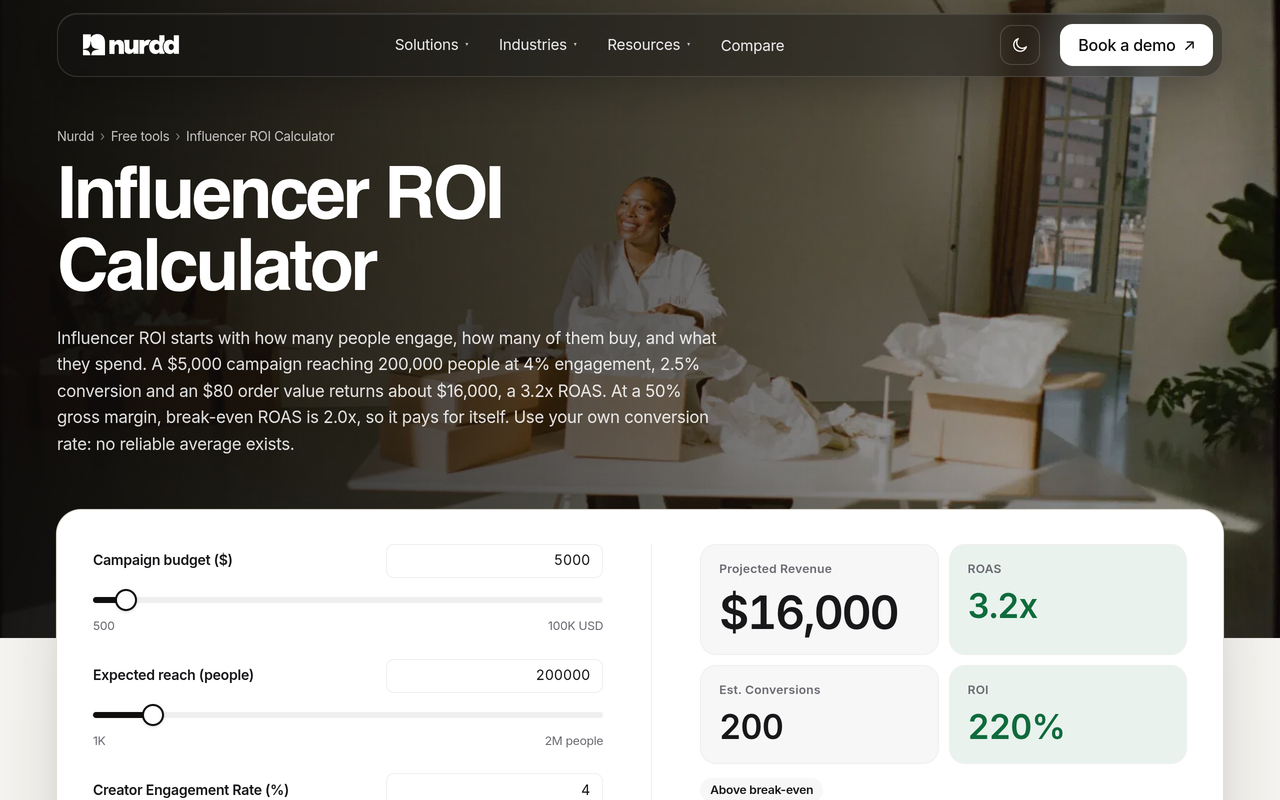
To put numbers behind the attribution weight, test it with the influencer ROI calculator, which projects revenue and ROAS from a creator budget.
How does Nia by Nurdd help?
Nia by Nurdd is an AI-native creative studio with influencer marketing built in, available at getnia.studio and on iOS and Android. Brands use it to make short films, micro dramas and commercials from an idea, and product and UGC ads from a link, with real creators and AI creators cast in the same production. Nia covers discovery, fake follower detection, ROI forecasting, campaign management and sales attribution, and it is priced below comparable plans.
Want to see this on your own brand? Book a demo with Nurdd and see Nia discover, vet and forecast creators for your category.
Discovery and vetting
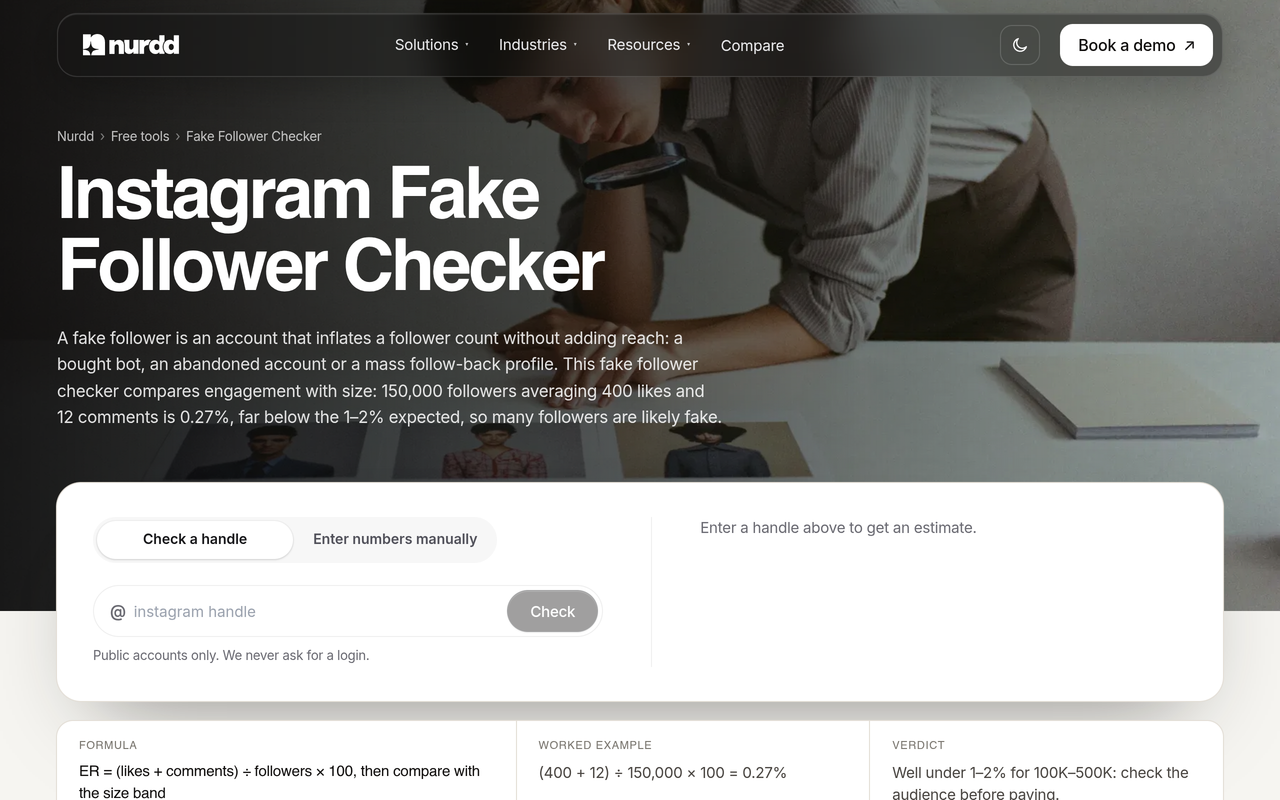
Nia discovers influencers from a database of 10M+ profiles across Instagram and other platforms. You filter by niche, audience quality, engagement authenticity and brand match score. TruAI, Nurdd's proprietary fake follower detection technology, flags inflated audiences. You can sanity-check a creator before any call with Nurdd's fake follower checker or the engagement rate calculator.
Forecasting, workflow and attribution
Nia generates pre-spend ROI forecasts so brands know the expected return before briefing any creator. It manages the full campaign workflow without needing an agency, and it attributes product-level sales to specific creators after a campaign closes.
The creative layer
Nia also makes the production, so a brief can start from a product link and end with a UGC ad or a short film that features both real and AI creators. For brands that need volume across products, that closes the gap between managing creators and shipping creative. Read more on the Nia overview page.
Where does Nia by Nurdd fit best?
Nia by Nurdd fits teams that want creative production and creator work in one app, that are worried about fake followers, and that want a forecast before they spend. The table lists what Nia offers on each row, using only what Nurdd publishes.
| Row | Nia by Nurdd |
|---|---|
| Creator discovery | 10M+ profiles, filters by niche, audience quality, authenticity and brand match |
| Fake follower detection | TruAI, Nurdd's proprietary technology |
| Pre-spend ROI forecast | Built in, before any creator is briefed |
| Campaign management | Full campaign workflow without needing an agency |
| Sales attribution | Product-level, per creator, after campaigns close |
| Creative production | Films, micro dramas, product and UGC ads, real and AI creators |
| Price | Priced below comparable plans |
Nia covers discovery, vetting, campaign workflow, ROI forecasting and sales attribution, plus creative production. Creator payments are not part of its published description, so confirm that step in the demo.
What common mistakes do brands make when choosing a platform?
- Choosing on database size. A bigger database is only better if the filters surface creators who suit you. Test with your own shortlist.
- Skipping the quote. Fees, seats and add-ons change the real cost. Use the marketing budget planner to see how a platform fee fits against creator and ad spend.
- Ignoring rates. A platform cannot fix an overpaid deal. Check creators against a published rate card and read what a good rate card includes.
- Measuring clicks only. Last-touch numbers undercount creator influence. See last-touch vs multi-touch attribution and how to calculate incrementality.
- Leaving UTMs to chance. Whatever the platform, a consistent tagging structure keeps your data clean.
- No plan for failure. Even with good vetting, a creator can miss a deadline. Keep a playbook for when an influencer does not deliver.
How we researched this
We searched the primary keyword and reviewed platform guides from Shopify, Dash Social and Bazaarvoice. We also reviewed the Federal Register notice carrying the FTC's Endorsement Guides, Later's branded content guide, and help pages from Aspire and Archive. All sources were checked on the publication date. We did not hands-on test any rival product, so rival coverage is limited to publicly stated workflows and the questions to ask. Nia facts come from Nurdd's own product information. The scoring example is illustrative arithmetic, not survey data.
Frequently asked questions
How do I choose an influencer marketing platform?
Score each option on discovery, vetting, briefs, payments and attribution, weighted by where your last campaigns lost money. Run the same live test in every demo, using five of your own creators. Then compare the written quote for one quarter of real activity.
What features should an influencer marketing platform have?
At minimum, it needs creator search with useful filters, fake follower detection, campaign and brief management, creator payments, and sales-level reporting. Content monitoring is also commonly listed. Check whether the product helps you make creative too.
Do I need an influencer marketing platform at all?
Not for one or two creators per quarter. Spreadsheets and a rate card can cope. Once you work with several creators across campaigns, the time spent on briefs, approvals, payouts and reporting makes a platform worth testing.
Are marketplaces or enterprise suites better?
Neither is better in general. A marketplace suits quick one-off bookings with listed prices, while a suite suits a dedicated team with complex approvals. A creative studio with influencer marketing built in suits brands that want content and creators together.
How do I check whether a creator's followers are real?
Compare engagement with follower count, look at comment quality and check audience location against your market. A platform's detection tool saves time, and Nia by Nurdd uses TruAI for this. You can also start with Nurdd's fake follower checker and our guide on vetting an influencer's audience.
How much does Nia by Nurdd cost?
Nia is a paid product, and it is priced below comparable plans. Nurdd does not publish Nia plan prices on this page, so book a demo to ask about your team.
What do the FTC Endorsement Guides mean for brands using influencers?
The FTC's Guides Concerning the Use of Endorsements and Testimonials in Advertising, carried in the Federal Register in July 2023, cover advertising that uses endorsements. Brands should brief creators on disclosure and check posts after they go live. Your platform should make both steps easy.
Can one app handle creative and influencer marketing?
Yes, in some cases. Nia by Nurdd makes short films, micro dramas, and product and UGC ads, and also covers influencer discovery, vetting, forecasting, campaign workflow and sales attribution.
Ready to test a platform on your own brand?
Book a demo of Nia by Nurdd and see creator discovery, TruAI vetting and a pre-spend ROI forecast for your own category. You can also explore the creator side of Nurdd or browse the Nurdd tools first.