Brand & Content Strategy
AI Brand Perception Tracking: What to Measure and Why
Learn what AI engines say about your brand, which descriptors and sources to measure, and how to correct wrong answers on your site and third-party pages.
 Sheetal Shakshi6 Nov 202617 min read

AI brand perception tracking records how AI engines describe your brand: the sentiment, the descriptors, the claims and the sources behind them. Measure it by running a fixed prompt set across engines, logging each descriptor, and tracing wrong ones to the pages the engines cite. Fix them by correcting your own pages first, then the third-party sources.
AI brand perception tracking is the practice of recording how AI engines such as ChatGPT, Gemini, Perplexity and Claude describe your brand: the tone they use, the words they attach to you, the facts they state and the pages they take those facts from. It matters because an engine can name your brand and still describe it wrongly. This guide covers what to measure, how to read it and what to change.
Key takeaways
- Visibility tells you whether an AI engine names your brand; perception tells you what it says once it does. Track both, because a mention with the wrong descriptor can cost you a sale.
- Measure four things: sentiment, descriptors, factual accuracy and the sources behind each claim.
- Run the same prompt set on a schedule, across several engines, and log answers in a perception log so you can see change over time.
- Trace every wrong descriptor to a source page. Fix your own pages first, then the third-party pages the engines cite.
- Judge any fix over weeks, not days, and compare against a baseline you recorded before you changed anything.
What is AI brand perception tracking?
AI brand perception tracking is the repeated measurement of what AI engines say about a brand when users ask about it or its category. It covers the sentiment of the wording, the descriptors the engine attaches (for example 'affordable', 'premium', 'beginner-friendly' or 'outdated'), the factual claims it makes and the sources it cites for them.
It sits next to, but is not the same as, visibility tracking. Visibility asks whether you appear. Perception asks how you appear. Our guide to AI search share of voice covers the first question, and the AI search glossary defines the terms used here.
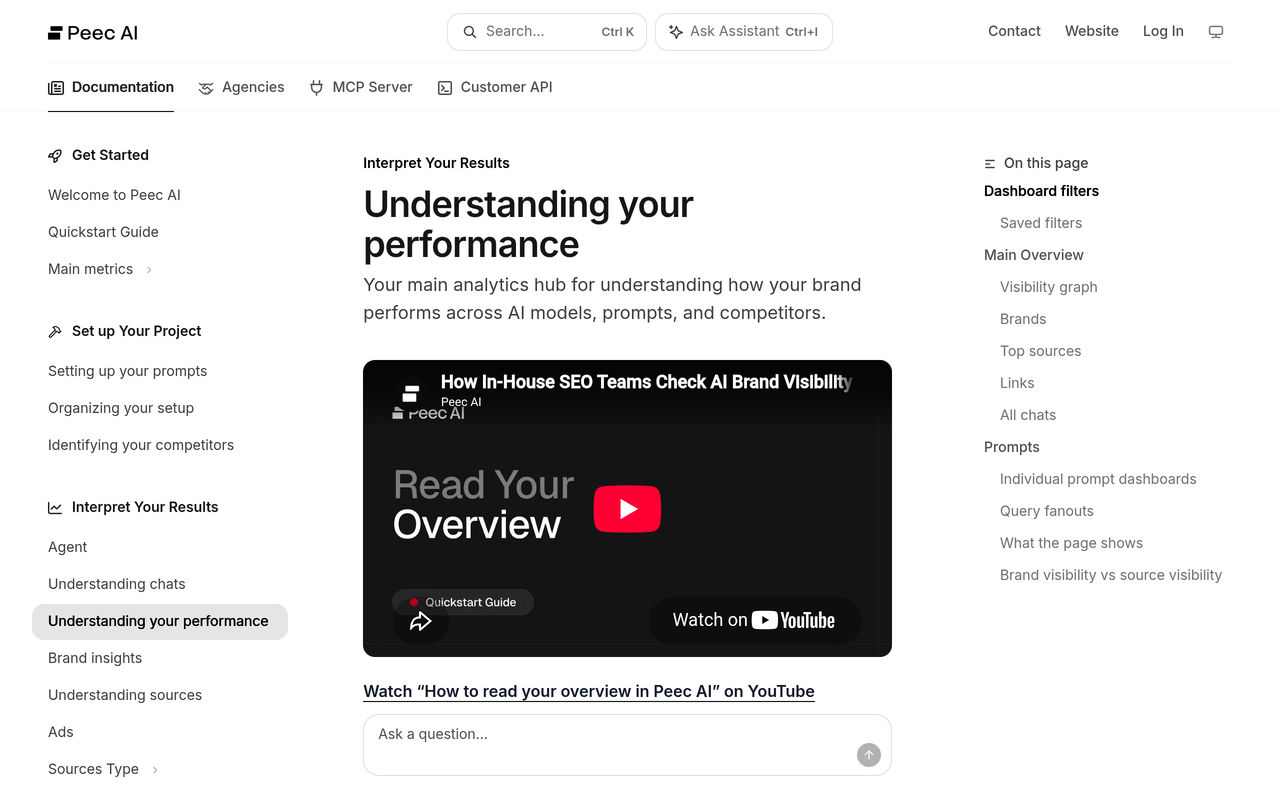
The tools in this space define the metric in slightly different ways. Peec AI's documentation describes sentiment as a 0 to 100 score based on the language and context around brand mentions. Semrush's brand sentiment page says it classifies the sentiment of brand mentions in LLM responses as either positive or general and tracks that ratio over time. Both are useful, and neither tells you which exact words an engine used or which page they came from. That is the part you have to read yourself.
Why does AI brand perception matter more than a mention?
A mention is binary; a description is a pitch. When an engine answers 'what is the best option for a small team?', the sentence it writes about your brand does the work a salesperson used to do. If that sentence says you are expensive, discontinued or aimed at enterprises when you are none of those, the buyer moves on without ever visiting your site.
There is also an asymmetry that LLM Pulse's glossary entry on brand sentiment in AI points to: high visibility paired with poor sentiment can be more damaging than low visibility. A brand mentioned often but framed badly is spreading the wrong message at scale.
Perception problems are also harder to notice than visibility problems. Nobody on your team sees an AI answer unless they ask for it, and answers vary by engine, by prompt wording and, to a degree, by user. Our post on whether personalization changes AI answers explains why one screenshot proves very little.
How do AI engines decide what to say about your brand?
Engines draw on two layers: what the underlying model learned in training, and what a search step retrieves at the moment of the question. For answers that cite web pages, the second layer dominates, and that is the layer you can change fastest.
Google describes the retrieval layer in its own documentation. Google Search Central's guide to optimizing for generative AI features says its generative features are rooted in core Search ranking and quality systems, and it names retrieval-augmented generation, which relies on retrieved pages from the Search index, as one technique. It also names query fan-out, where the model issues several related searches to gather more information. Both matter for perception: your brand can be described using pages retrieved for queries you never thought to track.
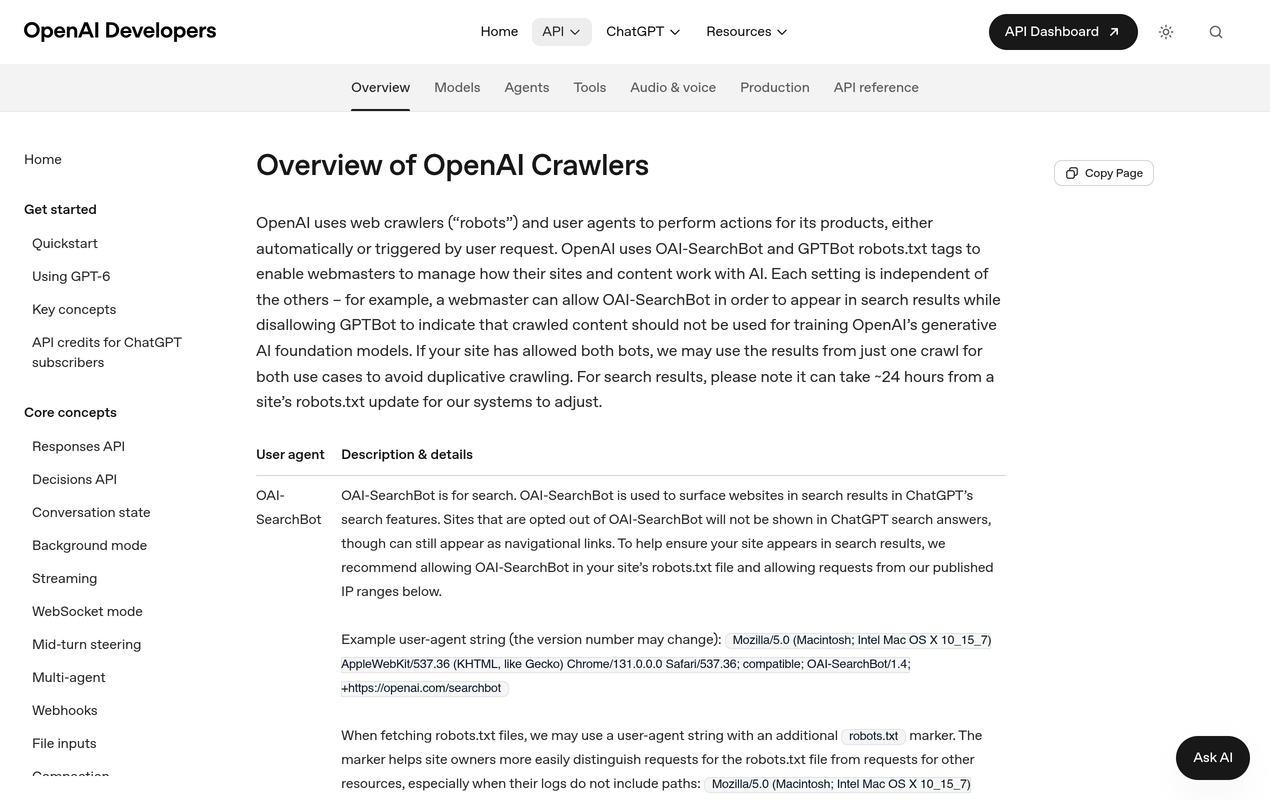
OpenAI documents the crawling side. OpenAI's overview of its crawlers says OAI-SearchBot is used to surface websites in ChatGPT's search features, and that sites opted out of it will not be shown in ChatGPT search answers, though they can still appear as navigational links. If you block it, ChatGPT can still talk about you, but it cannot read your own pages to do so, so its wording comes from other people's. Our AI crawler user agents list explains what to allow and what to block.
The practical consequence is a rule you can test: an AI engine's description of your brand is usually traceable to a small set of source pages. Find those pages and you find the lever.
What should you measure? The four layers of perception
Most dashboards collapse perception into one sentiment number. A single score hides the cause. Split it into four layers, each with its own fix.
| Layer | What you record | Example finding | Where the fix usually lives |
|---|---|---|---|
| 1. Sentiment | Overall tone: positive, neutral, negative, hedged | Answers are neutral with 'some users report' caveats | Review sites, forums, comparison pages |
| 2. Descriptors | The adjectives and category labels attached to the brand | Described as 'budget' when you position as premium | Your homepage, about page, brand description |
| 3. Factual accuracy | Claims about pricing, features, location, founding, ownership | A discontinued plan is still quoted | Pricing and help pages, structured data, third-party listings |
| 4. Source attribution | Which URL each claim is drawn from | An old comparison article supplies the pricing claim | The cited page itself or the content that should outrank it |
Layer 4 is the one most competitor guides skip, and it is the most useful. A wrong descriptor with no source is a model-memory problem and moves slowly. A wrong descriptor with a cited source is a page problem, and pages can be edited, replaced or out-ranked.
Sentiment
Record tone per answer, not per brand. A brand can be described warmly on one engine and coolly on another. Listen Labs' 2026 guide to AI brand perception analysis frames the work around visibility, sentiment and entity associations, and it uses discovery, evaluation and sentiment-probe prompts across ChatGPT, Gemini, Perplexity, Claude and Google AI Overviews. That prompt typology is a sensible starting point, and we use it below.
Descriptors
Descriptors are the highest-value layer because they travel. Once an engine decides you are 'a budget option', it repeats that framing in every category answer. Count the descriptors per engine and mark each as intended, neutral or unwanted. The intended list should come from your own positioning, written down before you look at any answers.
Factual accuracy
List the facts that a buyer could act on: price range, who the product is for, markets served, key features, integrations, founding year, legal name. Check each against your own site. Our piece on writing a brand description AI engines can use shows how a vague description produces inconsistent answers.
Source attribution
For every unwanted descriptor or wrong fact, write down the cited URL. If the engine cites no URL, mark it as 'uncited' and test again with a differently worded prompt, because uncited answers are the least stable.
How do I see what ChatGPT says about my brand?
You can do it by hand in ten minutes, and the manual method is worth running once even if you later use software, because it shows you what the output looks like. The method below produces a baseline you can compare against later.
- Write your intended positioning in three sentences. Result: a reference you will judge answers against. Why: without it, every answer looks acceptable.
- Build a prompt set of 12 to 20 questions in four groups. Use direct brand questions ('What is [brand]?'), category questions ('Best [category] for [use case]'), comparison questions ('[Brand] vs [competitor]') and objection questions ('Is [brand] worth it?', 'Problems with [brand]'). Result: a set that covers discovery and evaluation. Why: perception shifts by stage, and objection prompts surface negatives that friendly prompts hide. Our guide on which prompts to track goes deeper.
- Run every prompt in a fresh, logged-out session on each engine. Result: comparable raw answers. Why: stored memory and past chats can colour answers.
- Paste each answer into a perception log. Columns: date, engine, prompt, brand named (yes or no), sentiment, descriptors, wrong facts, cited URLs. Result: a table you can sort. Why: patterns only show up when answers sit side by side.
- Tag every descriptor intended, neutral or unwanted. Result: a count of unwanted descriptors by engine. Why: this is the number you will try to reduce.
- Repeat weekly with the same prompts. Result: a trend line instead of a snapshot. Why: engines refresh retrieval and models update, so a single run can mislead. Our four-week ChatGPT test plan sets this out.
The weakness of the manual method is scale. Twelve prompts across four engines is 48 answers per run, and answers change from run to run. That is the point at which monitoring software earns its place.
How does Noma surface what engines say about your brand?
Noma by Nurdd is an AI search visibility dashboard at nomahq.app that tracks 13 AI engines, including ChatGPT, Gemini, Perplexity and Claude, polled daily. It records whether your brand is named in each answer and which page each citation comes from, and it shows citation frequency by category, a competitor comparison and recommendations for improving AI visibility.
For perception work, that gives you the two inputs the manual method struggles to collect at scale: the answers engines give to your tracked prompts, and the source pages behind them. You then read the wording against your intended positioning and run the descriptor tagging from the section above on real daily data instead of a one-off sample.

Noma is a separate product from Nia by Nurdd (the creative studio) and Pulse by Nurdd (ad intelligence). Noma is the one to use for this job. It has a 3-day free trial; a card is taken at signup, billing starts on day 3, and you are not charged if you cancel before then.
Noma by Nurdd belongs in this answer because perception work needs the same prompts, run daily, across many engines, with the cited source recorded next to each answer. Noma does that tracking, so a marketing team can spend its time reading answers and fixing pages rather than copying screenshots into a spreadsheet.
If you want to see this for your own brand, book a demo and we will show you what 13 engines say about your brand, which pages they cite, and where your category competitors are described differently.
How does perception tracking differ from adjacent practices?
Teams often assume an existing tool already covers this. It usually covers a neighbouring problem.
| Practice | What it observes | What it misses for AI perception |
|---|---|---|
| Social listening | What people post about the brand on social platforms | What an AI engine synthesises from many sources into one answer |
| Traditional SEO rank tracking | Your position for keywords in search results | The sentence an engine writes about you in a generated answer |
| AI visibility tracking | Whether and how often the brand is named or cited | The quality of the description unless answers are read and tagged |
| Brand tracker surveys | What consumers say they think of the brand | What the engines tell those consumers when they ask |
| AI brand perception tracking | Sentiment, descriptors, facts and sources in generated answers | Whether people believe the answer, which needs separate research |
That last cell matters. Perception tracking tells you what the engine says, not what customers conclude. Pairing the two is reasonable: Listen Labs, for example, recommends validating LLM outputs against interviews with real consumers. You do not need interviews to start, but you should not treat an engine's wording as proof of customer opinion.
For the metrics side, our AI search metrics reporting guide shows how to report perception next to visibility, and AI search metrics versus SEO metrics covers what to put in the same deck.
How do I change how AI engines describe my company?
You cannot edit an engine's answer directly. You can change the pages the engine reads, and you can change how consistently the web describes you. Work from the source outward.

Step 1: Fix your own pages first
Your site is the one source you control completely. Check that the homepage, about page, product pages and pricing page all describe the brand in the same plain terms, because inconsistent wording gives an engine room to choose the wrong one. State what you are, who you serve and what you cost in the first paragraph of each page, naming the brand in full rather than saying 'we'.
Google's guide says the most durable influence comes from content with a unique point of view that is not simply a summary of what others have said. For perception, that means publishing first-hand specifics (how the product works, who it is for, what it does not do) rather than slogans. Our post on writing content AI engines quote has before-and-after examples.
Step 2: Make sure engines can read it
If your robots.txt blocks search crawlers, the engine falls back on third-party descriptions. Review your rules against the OpenAI documentation above and the equivalents for other engines. Keep a clear author, date and update signal on pages that carry facts; see adding author and dateModified signals.
Step 3: Correct the third-party sources
This is where most stubborn descriptors live. Look at the cited URLs in your perception log and sort them: your own site, review and directory pages, comparison articles, forum threads, encyclopaedic profiles. Then act per type.
- Directories and profiles: edit your listing directly. This is the quickest win.
- Comparison and listicle articles: contact the author with the corrected fact and a link to the page that proves it. Offer an updated source rather than asking for a rewrite.
- Forums and reviews: respond factually where the platform allows it. Do not astroturf.
- Knowledge bases: keep entity data consistent. See Wikidata and sameAs for brands.
Why the order works: an engine that retrieves five pages and finds your corrected one agreeing with the updated third-party ones is less likely to repeat the old claim than one finding a single correct page among four stale ones. Our post on why AI engines trust some sites more explains how source choice works.
Step 4: Re-measure on the same prompts
Do not change the prompt set after the fix. Hold it fixed so the comparison is fair, and apply one change group at a time where you can. Our GEO experiment design guide shows how to separate a real shift from run-to-run noise.
Which fix matches which perception problem?
Use this decision table after you have tagged your log. Match the symptom to the likely cause, then to the first action.
| Symptom in the answer | Likely cause | First action | Where to re-check |
|---|---|---|---|
| Brand not named at all | Visibility gap, not perception | Work on coverage and citations; see why your brand isn't showing up in ChatGPT answers | Category prompts |
| Wrong category label | Vague or inconsistent brand description | Rewrite the first paragraph of the homepage and about page | Direct brand prompts |
| Outdated price or feature | Stale third-party page cited | Update the source or publish a dated, authoritative replacement | Objection and comparison prompts |
| Negative caveat with no source | Model memory or a thin, widely repeated claim | Publish a clear factual page that addresses it and earn corroborating mentions | Objection prompts, weekly |
| Different tone on one engine only | Different retrieval sources on that engine | Compare cited URLs by engine and fix the divergent source | That engine's prompts |
| Competitor described more warmly | Stronger third-party coverage | Audit which pages cite them and not you | Comparison prompts |
What does a worked example look like?
This example is illustrative, with invented names and no statistics, to show the reasoning rather than a result. A fictional skincare brand, Northfield Skin, positions itself as dermatologist-formulated and mid-priced. The perception log from a weekly run shows ChatGPT calling it 'a budget option' in category answers, while Perplexity calls it 'mid-range'.
- The log shows the 'budget' descriptor is cited to one roundup article published two years ago, which lists an old promotional price.
- The brand's own pricing page already shows current prices, but its first paragraph never says 'mid-priced', so nothing on the site contradicts the roundup's framing.
- The team adds a plain positioning sentence and a dated pricing summary to the pricing page, and sends the roundup's author the current price with a link.
- The same prompts are re-run weekly. The team watches whether the 'budget' descriptor falls and whether the cited URL changes, and records the date of each change.
The point is the sequence: descriptor, source, page edit, outside correction, re-measure. Nothing here depends on guessing why the engine behaved as it did.
What should be on your AI perception checklist?
Run through this ordered list monthly. It works with a spreadsheet or with Noma's daily data.
- Confirm the intended positioning statement is still current and agreed by marketing, sales and product.
- Review the prompt set: add any new competitor, product or market question the sales team is hearing.
- Collect answers from each tracked engine and note the date.
- Tag each answer for sentiment and each descriptor as intended, neutral or unwanted.
- List every wrong fact with the cited URL, or mark it 'uncited'.
- Group the cited URLs by type: own site, directory, article, forum, knowledge base.
- Assign one owner and one action per source, ordered by how many answers cite it.
- Record what changed and when, then compare unwanted-descriptor counts to the previous month.
For a quick self-check on your site's side of the equation, the free GEO readiness scorecard runs a 12-factor check of how ready your pages are for AI answers.
What mistakes make perception data misleading?
- Trusting one answer. Answers vary between runs. Look for repeated descriptors across several runs and engines.
- Tracking only friendly prompts. If every prompt contains your brand name and 'best', you will miss the objection prompts where negatives appear.
- Using one blended sentiment score. A score tells you something moved, not why. Keep descriptors and sources alongside it.
- Fixing without a baseline. Without a dated log from before the change, you cannot say whether the change worked.
- Treating the model as the only cause. Many wrong answers trace to a retrievable page. Check the source before assuming the model is wrong.
- Over-producing pages. Google's guide warns that creating content for every query variation mainly to manipulate AI responses violates its scaled content abuse policy. Fix the pages that matter; do not flood the web.
Do you need a tool, or is a spreadsheet enough?
A spreadsheet is enough for a first baseline and for a brand with a small prompt set. A tool becomes necessary when you track several engines, several markets or several competitors on a daily or weekly cadence, because the copying work crowds out the analysis.
Tools differ in what they emphasise. The Peec AI and Semrush pages cited above both centre on a sentiment metric; Noma centres on answers and citations across 13 engines. For side-by-side detail, see our comparisons of Noma vs Peec AI and Noma vs Profound. If you would rather hand the fixing to a team, Nurdd also offers generative engine optimization services, measured in Noma.
Whatever you choose, ask one question of any tool: can I see the exact answer text and the exact cited URL behind every score? If not, you can measure a change but not fix it.
How we researched this
We reviewed platform documentation from Google Search Central and OpenAI, the public documentation and feature pages of Peec AI and Semrush, and published guides on AI brand perception and sentiment from vendors and trade publishers. We read the top-ranking guides for the keyword to check coverage and gaps. All sources were checked in November 2026. We did not run hands-on tests of competitor products, and the Northfield Skin example is illustrative, not a customer case. Facts about Noma come from Nurdd's own product information.
Frequently asked questions
How do I see what ChatGPT says about my brand?
Ask it directly and through category, comparison and objection prompts, in a fresh session, and log each answer with its cited URLs. Repeat on the same prompts weekly. For daily coverage across many engines, Noma tracks 13 AI engines, including ChatGPT, Gemini, Perplexity and Claude.
How do I change how AI engines describe my company?
Find the pages the engine cites, then correct them. Start with your own site so every page describes the brand the same way, then fix directory listings and ask authors of third-party articles to update outdated facts. Re-measure on an unchanged prompt set.
What is the difference between AI brand sentiment and AI brand perception?
Sentiment is the tone of the wording, often scored as one number. Perception is broader: it includes sentiment, the descriptors attached to the brand, the factual claims and the sources behind them. Peec AI, for instance, documents sentiment on a 0 to 100 scale, while perception work also needs the actual words.
Can I ask an AI engine to remove a wrong statement about my brand?
There is no single route that guarantees it. Engines that cite web pages rely on retrieved sources, so the dependable approach is to correct or out-rank the source. Check each engine's own feedback channel too, but do not count on it as your plan.
Why do different AI engines describe my brand differently?
Engines retrieve from different sources, use different models and handle prompts differently, so the descriptors can differ. Compare the cited URLs by engine; a divergence in tone usually points to a divergent source. Our post on Perplexity vs ChatGPT vs Gemini covers the differences.
How often should I check what AI says about my brand?
Weekly is a workable cadence for most brands, with a deeper monthly review using the checklist above. Run daily if you are in the middle of a fix or a launch. Keep the prompt set constant so the results compare.
Is AI brand perception tracking different from GEO?
It is one part of it. Generative engine optimization is the wider work of being found and cited; perception tracking checks the quality of what gets said once you are. Read what generative engine optimization is for the full picture.
Conclusion
Perception is where AI visibility turns into buying decisions. Record sentiment, descriptors, facts and sources, trace every wrong claim to a page, fix your own pages first and the third-party ones second, and measure against a baseline.
To see what 13 AI engines say about your brand today, which pages they cite and which descriptors are working against you, book a Noma demo. You can also look at Noma directly or browse our free tools first.