Influencer Marketing
How to Find Travel Influencers for Hotels and Tours
A step-by-step guide for hotels and tour operators: where to search, how to vet creators, what to pay by tier and what the disclosure rules say.
 Sheetal Shakshi12 Nov 202616 min read
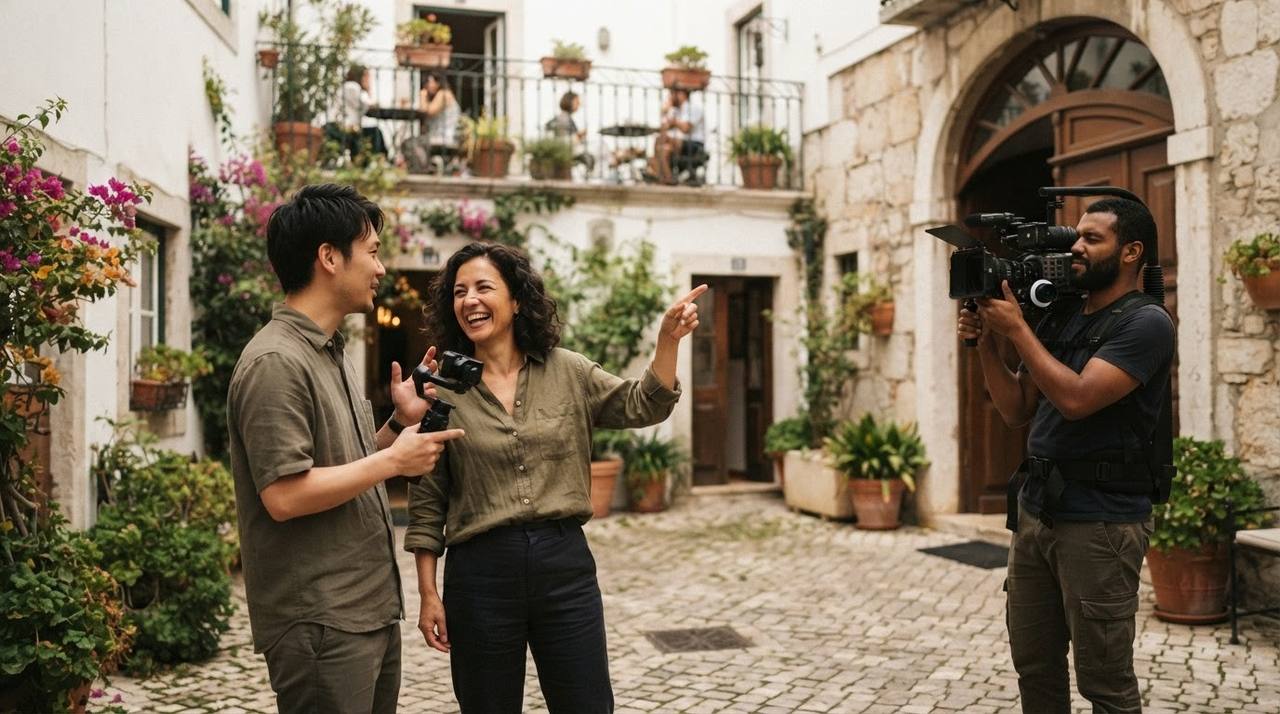
To find travel influencers, search destination and stay hashtags and location tags on Instagram, TikTok and YouTube, review who tags your competitors, and meet creators at press trips and travel events. Shortlist creators whose audience lives in your source markets, vet each one with a fake follower check and a comment review, and price the deal by tier plus the cost of the stay or tour you host.
To find travel influencers, start with the places your guests already post from: search destination and stay hashtags on Instagram, TikTok and YouTube, read who tags your competitors, and check who attends press trips. Then shortlist creators whose audience lives in your source markets, vet each one, and price the deal by tier. This guide walks through every step for hotels, resorts and tour operators.
Key takeaways
- Search where travellers post: destination and stay hashtags, location tags, your competitors' tagged photos, and the suggested-accounts panels on each platform.
- Audience location matters more than follower count. A creator whose followers live in the wrong country cannot fill your rooms or tours.
- Run every shortlisted account through the free fake follower checker, then read the comments yourself.
- A free stay, tour or meal counts as payment in the eyes of regulators, so it needs a clear label and should be written into the contract.
- Published rates are by tier and platform, not by niche, so benchmark by tier and then adjust for travel costs, usage rights and exclusivity.
- Hotel and tour teams that want the whole workflow in one place can see how Nurdd works for hotels and for tour operators.
Why is finding travel influencers different from other niches?
Travel is the one niche where the product has a location. A skincare brand can ship to any follower; a boutique hotel in Lisbon or a snorkelling tour in Cairns can only convert people who can plausibly get there. That single fact changes the search. You are looking for creators whose followers are in your source markets, whose content shows the kind of trip you sell, and who will travel to you or already live nearby.
It also changes how you pay. Most travel collaborations include something with a real cost to you: a room, a seat on a boat, a table at the restaurant. That cost counts as payment for disclosure purposes, and it sits on top of any fee. Planning for both from the start avoids a second negotiation later.
The rest of this guide follows the order a hotel or tour marketer would work in: define the brief, search by hand, shortlist, vet, price, check the rules, and measure. If you want the underlying framework for scoring creators, our influencer discovery and qualification scorecard covers it in more depth.
How do you define the brief before you search?
Write three sentences before opening any app. Who is the guest you want, which market do they live in, and what do you want them to do after seeing the content: book direct, save the post, visit a booking page? Everything downstream, from which platform to search to which tier to pay, depends on those answers.
A short brief for a hotel might read: "Couples in their thirties flying in from two nearby countries, shoulder-season weekends, direct bookings." A tour operator's might read: "Small groups of friends already in the destination, same-week bookings, one half-day tour." Notice how different the creators are. The first brief points to city-break and design-led storytellers abroad. The second points to local creators and visiting travellers already on the ground.
Hotels and tours need different creators
| Question | Hotel or resort | Tour or experience operator |
|---|---|---|
| Where is the guest when they book? | At home, weeks or months ahead | Often already in the destination, days or hours ahead |
| Which creators fit? | Trip-planning and city-break creators in your source markets | Local creators, visiting travellers and activity specialists |
| What do you host? | Room nights, meals, spa or pool access | Seats on a tour, guide time, equipment |
| Best proof of fit | Content that shows the room type and price level you sell | Content that shows the activity, group size and pace you run |
| Main metric | Direct bookings and booking-page visits | Same-week bookings and saves |
How do you find travel influencers by hand?
Manual search costs time, not money, and it surfaces creators that databases miss, especially small and local ones. CBI, in tourism guidance last updated in January 2024, recommends searching Instagram, TikTok and YouTube with travel hashtags and keywords such as "travel blogger", then checking the suggested profiles and the commenters on influencer posts. The steps below build on that approach.
Platform search, step by step
- Start with your own tags. Open the location tag for your property or your meeting point on Instagram and TikTok. Everyone who has posted from there is a creator who has already chosen you. Sort by recent and by popular and list every account with a travel focus.
- Search the destination, then the trip type. Combine the place with the kind of trip: the city name with "weekend", "food", "hiking", "family" or "solo". Read what real travellers post rather than chasing the biggest tag, since a small tag with the right audience beats a huge one full of unrelated content.
- Use each platform's own search for keywords. TikTok and YouTube search bars show what people type. Try "things to do in" plus the destination, "where to stay in" plus the neighbourhood, and "itinerary". Watch which creators keep appearing.
- Open the suggested accounts. Once you find one good fit, open the suggestions Instagram and TikTok show beneath the profile. Each good creator leads to several similar ones.
- Read the commenters. Engaged commenters on a strong post are often small travel creators themselves. Add them to the list.
- Log everything in one sheet. Record handle, platform, audience country if visible, last three destinations covered, and whether they have worked with a hotel or tour brand.
Which platform suits which travel brand?
Each platform surfaces a different kind of creator, so search all three before choosing where to spend. The table is a working guide drawn from how each platform presents content, not a ranking.
| Platform | Search entry points | Strongest for | Watch out for |
|---|---|---|---|
| Location tags, hashtags, tagged-photos tab, suggested accounts | Hotels and resorts that sell on visuals | Heavy reuse of the same viewpoints, so check originality | |
| TikTok | Keyword search, location pages, creators' comment sections | Tours, food and quick-decision trips | Audience mix is wide, so confirm country |
| YouTube | Itinerary and "where to stay" searches | Trip planners who watch long reviews | Slower to produce, with longer lead times |
| Blogs through Google | "Best [destination] travel blogs", itinerary searches | Planning-stage readers | Smaller social reach, so ask for site traffic by country |
Competitor tags and press-trip circuits
Your rivals have already done part of the research. Look at the tagged-photos tab of three or four comparable hotels or operators and note who posts repeatedly, who posts once and vanishes, and who disclosed the relationship. A creator who has visited five similar properties may be a professional guest rather than a fan, which matters for authenticity. A creator who returned to the same property twice is worth a conversation.
CBI also points to tourist board familiarisation trips, trade fairs and blogging conferences such as TBEX as places to meet creators in person, and to business contacts and local networks for local recommendations. For tours, local guides, hostel staff and café owners often know which creators regularly film in town.
Communities, search engines and your own guests
- Google and YouTube. Search "best [destination] travel blogs" and "[destination] itinerary". Bloggers who rank for those searches own audiences that plan trips, which is different from an audience that scrolls for inspiration.
- Your guest list. Check who tagged you last season. Guests who already posted unprompted are the lowest-risk collaborators.
- Tourism boards and local partners. Boards often keep lists of creators they host. Ask for introductions rather than copying the list.
- Databases and marketplaces. CBI names Heepsy, Influence.co and Collabstr as databases, some with free access. Use them to fill gaps after the manual pass, not instead of it.
How many creators should you shortlist?
Shortlist more than you need, because many will not reply or will be unavailable. Our guide on how many influencers you need explains how to size a campaign from the outcome you want. A practical rule for travel is to shortlist three times the number of creators you can host, since hosting is the real constraint: every creator needs a room, a seat or a guide's time.
How do you vet a travel influencer before you host them?
Vetting protects the most expensive thing you give away, which is inventory. Work through this checklist in order and stop when a creator fails a step.
- Confirm audience location. Ask for the audience country and city breakdown from the creator's own analytics, and compare it with your source markets. One vendor guide, influencermarketing.ai, treats an audience where 80% of followers live outside the target market as a red flag. Use your own threshold, but write it down before you look.
- Run the free checker. Paste the handle into the fake follower estimator for a fast first read on how many followers are likely fake or inactive, based on engagement.
- Read the comments. CBI notes that short, generic or emoji-only comments can indicate fake followers. Look for comments that mention the place, ask a question about the trip or tag a friend. Our guide to fake follower red flags in comments and growth shows what to look for.
- Check follower growth. Scroll the account's growth in a public analytics view or compare early posts with recent ones. Sudden jumps with no matching viral post deserve a question.
- Calculate engagement yourself. Use the Instagram engagement rate calculator on the last ten to twenty posts, not the best one. CBI says engagement rates of 6% or more are not uncommon in the travel sector, so treat that as context rather than a pass mark.
- Review past hotel and tour work. Look for tagged brands, a clear disclosure on each, and whether the content showed the product honestly. A creator who only posts glowing reviews of every free stay is a weaker signal than one who shows tradeoffs.
- Check fit with your property. Do their photos match the room types, price level and guests you actually have? A luxury shooter at a hostel creates the wrong expectation.
- Request a media kit and one reference. Ask a previous hotel or tour partner how the creator communicated, delivered and handled issues.
For the full method behind steps 2 to 4, read how to vet an influencer's audience before paying and the fake follower audit checklist.
A simple scoring table
Score each shortlisted creator from 1 to 5 on four criteria and weight them to match your goal. The weights below are illustrative, set for a hotel that wants direct bookings from one source market. Change them for your own brief.
| Criterion | Illustrative weight | What to check |
|---|---|---|
| Audience location | 35% | Share of followers in your source markets, from creator analytics |
| Destination and trip fit | 25% | Content shows the type of stay or tour you sell |
| Audience quality | 25% | Fake follower check, comment quality, follower growth |
| Content quality | 15% | Photography, video, storytelling, consistency |
To use it, multiply each 1 to 5 score by its weight and add the four results. A creator who scores 5 on audience location but 2 on audience quality is not automatically a pass: set a minimum on audience quality, because a high score elsewhere cannot make up for followers who are not real.
What do travel influencers cost?
Published rate research is organised by tier and platform, not by niche. We have not found a source that publishes a travel-specific rate with a transparent sample, so use tier benchmarks as the starting point and add the costs unique to travel. Our influencer rates by tier guide collects the sources in one place, and the influencer rate card estimator lets you test a quote.
OpenSponsorship's July 2026 analysis of 1,527 paid deliverables puts the median paid cost per deliverable at the following levels.
| Tier | Followers | Median paid cost per deliverable | Median cost per engagement |
|---|---|---|---|
| Nano | Under 10K | $134 | $3.11 |
| Micro | 10K to 50K | $150 | $3.05 |
| Mid-tier | 50K to 250K | $417 | $7.07 |
| Macro | 250K to 1M | $517 | $4.39 |
| Mega | 1M+ | $2,727 | $5.00 |
Source: OpenSponsorship, July 2026. The publisher says the mega row is a small sample, so treat it as directional.
These are cash figures for the post itself. In travel, the full cost of a collaboration also includes the stay, the tour seat or the meal. Add it to the fee when you compare a travel quote with the table above. A creator quoting well above the median for their tier is worth a conversation about what is included, such as usage rights and exclusivity. Our guide to what to include in an influencer rate card lists the lines to ask about, and the TikTok influencer rates guide covers that platform.
Worked example: the same budget at three tiers (illustrative)
This example uses OpenSponsorship's median cost per engagement from the table above and a hypothetical $1,000 spend. It is illustrative arithmetic, not a forecast, and it ignores the cost of hosting.
| Tier | Median cost per engagement | Engagements for $1,000 (illustrative) |
|---|---|---|
| Micro | $3.05 | About 328 |
| Mega | $5.00 | About 200 |
| Mid-tier | $7.07 | About 141 |
Now add the hosting cost for a hypothetical boutique hotel. Suppose a micro creator quotes the $150 median and you host two nights at an illustrative $200 a night. The all-in cost is $150 plus $400, or $550. The same two nights for a mid-tier creator at the $417 median costs $817. Whichever you choose, the figure to compare is cost per engagement and per booking, not the creator's headline fee.
A cautionary note from the same dataset: OpenSponsorship found creators with 50K to 250K followers had the worst cost per engagement of any tier it measured, and said creators booked inside the subject they already talk about performed better. For a hotel, that argues for creators whose feed is already about travel in your region.
What are the rules for free stays and tours?
This section is general information, not legal advice. Rules differ by country, so ask a lawyer who knows the markets where your creators and guests live.
Both major regulators treat a free trip as a connection that must be disclosed. In the United States, the Federal Trade Commission's Endorsement Guides FAQ says of a blogger on a free trip, "You should disclose that you received free travel and accommodations." The same page says a disclosure "should be placed where it easily catches consumers' attention and is difficult to miss," and that for video, it has the best chance of being clear if it is in the video itself. It also says that tagging a brand is an endorsement but is not a disclosure of a connection to the brand.
In the United Kingdom, the government's guidance for creators, updated on 3 September 2025, says any form of incentive or reward counts as payment, including gifts of any products, and that free products or invitations to events count even when nothing is requested in return. It recommends labels such as "ad" or "advert", says to avoid terms like "#gift" or "#collab", and says labels should not be buried among other hashtags. For videos, it says the disclosure should come at the start. The government's business guidance was last updated on 28 August 2025 following the Digital Markets, Competition and Consumers Act 2024.
On platforms, YouTube's help page tells creators with sponsorships or endorsements to select the paid promotion setting in the video details and says creators and brand partners share responsibility for complying with applicable law. Read YouTube's paid product placements and endorsements help page before you brief a YouTube creator. Platform tools do not replace legal disclosure: the FTC page says the ultimate responsibility for disclosing a material connection rests with the influencer.
Contract points for hotels and tours
- State that the stay or tour is part of the compensation and that posts must be labelled.
- Specify the platform label and where it appears, based on the rules for the creator's country.
- Set out dates, the room or experience, cancellation, and what happens if the creator has an issue with the stay.
- Agree usage rights and duration separately from the fee, and any exclusivity with competitors in the same destination.
- Do not script positive reviews. Brief on what to show, not what to conclude.
CBI makes the same point from the tourism side: the business is responsible for making sure influencers disclose relationships, and disclosure requirements belong in the contract.
How do you contact and brief creators?
Engage before you pitch. CBI suggests following, commenting and sharing a creator's work before a formal approach by email. Keep the first message short: who you are, why this creator, what you can offer, and one specific question. Mention a recent post by name. Offer dates, not a vague invitation.
Then send a brief with the deliverables, the dates, the disclosure requirement, the usage terms and the tracking link. Add a unique link or code per creator so bookings can be matched to the right person. Our UTM structure guide for influencer campaigns shows a naming scheme that keeps reports clean.
How do you measure whether it worked?
Decide on three numbers before the creator arrives: bookings attributed through the creator's link or code, direct visits to your booking page, and saves and shares on the content. Likes alone do not fill rooms. Our guide to influencer performance attribution explains how to connect content to outcomes, and the influencer marketing measurement hub links each step of the process. Use the influencer ROI calculator to project revenue before you commit.
How does Nia by Nurdd help you find travel influencers?
Nia by Nurdd is an AI-native creative studio, on iOS and Android, with influencer marketing built in. Its discovery searches 10M+ creator profiles on Instagram and other platforms by niche, audience quality, engagement authenticity and brand match. TruAI, Nia's fake follower detection, scores each shortlisted creator, and Nia forecasts return before spend and attributes product-level sales to each creator through the Nurdd SDK. Learn more on the Nia overview page.
Book a demo at nurdd.club/demo and we will show you a creator shortlist, audience scoring and a return forecast for your own hotel or tour brand.
What mistakes do travel brands make most often?
- Choosing by follower count. A large following in the wrong country books nothing.
- Treating the stay as free. It has a cost to you and counts as payment for disclosure.
- Skipping the contract. A verbal agreement does not cover labels, usage rights or timing.
- Hosting before vetting. Run the checks first; inventory is the expensive part.
- Not tracking. Without a unique link or code, you cannot tell which creator drove a booking.
How we researched this
We searched the primary keyword and read three top-ranking guides on 11 November 2026 to see what they cover and what they leave out: JoinBrands, July 2026, the Modash travel guide and influencermarketing.ai. We then read the Endorsement Guides FAQ from the US Federal Trade Commission, the UK government's creator and business guidance, YouTube's help page, CBI's tourism guidance and OpenSponsorship's July 2026 pricing analysis. Figures come from those pages as stated. Everything marked illustrative is our arithmetic. We did not interview creators, run campaigns or test tools for this article, and Instagram's help pages could not be retrieved for review.
Frequently asked questions
Where is the best place to find travel influencers?
Start with Instagram, TikTok and YouTube search using destination and trip-type terms, then check the accounts tagged at your own location and your competitors'. CBI also lists tourism board press trips, trade fairs and blogging conferences such as TBEX. Fill any gaps with a database after the manual pass.
Are micro creators better for hotels and tours?
Often, because they cost less per deliverable and can sit closer to your destination. OpenSponsorship's July 2026 data shows micro creators with a median of $150 per deliverable and $3.05 per engagement. Better depends on your goal, as mega creators had a cheaper cost per view in the same data.
Do I have to disclose a free hotel stay?
Yes, in the US and UK regulators treat free travel as a connection that needs a clear disclosure. The creator is responsible for posting it, and you should require it in the contract. This is not legal advice, so check the rules in your own markets.
How do I know if a travel influencer's followers are real?
Combine a checker with your own reading. Run the handle through the fake follower estimator, then read the comments for specific, relevant replies, and check follower growth for sudden jumps. Ask for the creator's own audience analytics as a final check.
How much should I pay a travel influencer?
Published rates are by tier and platform, not by niche. Use the tier median as a starting point, then add the stay, tour or meal, and price usage rights and exclusivity separately. Test any quote with the rate card estimator.
How many travel creators should I work with at once?
Match the number to the rooms or seats you can host and to what you can track. Start with a small group, give each a unique link or code, and compare results before you scale.
Can I find travel influencers without paying for a tool?
Yes. Location tags, hashtags, platform search, suggested accounts, competitor tags and events cost only time. Tools help when you need to filter by audience country and engagement authenticity at scale.