Influencer Marketing
Influencer Platform Contract Terms to Check Before Signing
The influencer platform contract terms that matter most: data ownership, creator payments, usage rights, minimum terms and exit, with a checklist and red-flag table.
 Simran Rawat15 Nov 202619 min read

Before signing with an influencer marketing platform, check five things: who owns your campaign and creator data, how creator payments are held and released, what usage and whitelisting rights the platform passes on, how long the minimum term and renewal notice run, and what you can export when you leave. Nia by Nurdd can be evaluated against the same list.
The influencer platform contract terms that matter most are data ownership, creator payment handling, usage rights, the minimum term with its renewal notice, and what you can take with you on exit. Everything else, from seat counts to support hours, is secondary. This guide gives you a clause-by-clause test, a red-flag table and a checklist you can use on any vendor, including Nia by Nurdd.
Key takeaways
- Ask for written confirmation that your campaign data, creator shortlists and performance history belong to you, and that you can export them in a standard format such as CSV.
- Find out whether the platform pays creators itself or only records payments you make, because that decides who carries the risk when a payment fails.
- Do not assume a platform subscription gives you the right to run a creator's post as an ad. Whitelisting and paid usage are separate permissions between you and the creator, and the platform terms should not blur them.
- Put the renewal notice date in a calendar the day you sign. A missed window can roll you into another full term.
- Score every clause green, amber or red using the table below, and negotiate the reds before you sign, not after.
Quick answer: what should I check in an influencer marketing platform contract?
Read the contract in this order: data, money, rights, term, exit. Each of the five areas has a question that a vendor should be able to answer in one sentence. If the answer is vague or lives only in a separate policy page, ask for it in the order form or a signed addendum.
| Area | The question to ask | Where it hides |
|---|---|---|
| Data ownership | Who owns creator lists, campaign results and derived insights, and can the vendor train models on them? | Terms of service, data processing addendum |
| Creator payments | Does the platform hold and pay out funds, or do you pay creators directly? | Payments schedule, creator terms |
| Usage rights | Does the platform grant any rights in creator content, or only provide a workflow? | Content licence clause, creator agreement template |
| Minimum term | How long is the commitment, and what is the notice window before renewal? | Order form, renewal clause |
| Exit | What can you export, in what format, and for how long after you leave? | Termination clause, data return clause |
Why are influencer platform contracts hard to read?
An influencer platform sits between three parties: you, the creators and the social networks. Its contract therefore mixes software terms, a marketplace or payments arrangement, and content licensing. Most generic guides cover only the creator agreement, meaning the document between a brand and one creator. The platform agreement is a different document with different risks.
The two documents also interact. A creator agreement may promise you a period of paid usage, but if the platform's terms say content lives only inside its workspace, you can lose the files and the evidence of the licence when you cancel. Reading them together is the only way to see the gaps.
Regulation adds a third layer. In its Federal Register notice, July 2023, the US Federal Trade Commission proposed revisions to its Endorsement Guides and discussed the position that an influencer and the advertiser can both be responsible when a paid endorsement is not clearly disclosed. Because that notice is a proposal and not the final text, check the current Guides (16 CFR Part 255) with counsel. A software vendor will not take that responsibility on your behalf, so your contract should make it easy to brief creators in writing, check posts and keep records.
How do platform terms differ from creator agreements?
The table below separates the two documents so you know which one answers which question. Use it before you start the review, because most disputes come from assuming one document covers a point that sits in the other.
| Question | Platform contract | Creator agreement |
|---|---|---|
| Who owns campaign reports and shortlists? | Yes, this is where it is decided | No |
| Who owns the creator's video? | Should say the platform takes no rights | Yes, this is where it is decided |
| Can I run the post as a paid ad? | Only stores the licence record | Yes, as an explicit whitelisting clause |
| When is the creator paid? | If the platform handles payouts | Always, as the payment schedule |
| What happens when I cancel? | Export, deletion, renewal | Termination of a single deal |
How do I review influencer platform contract terms step by step?
Work through the seven steps below in order. Each one gives you an action, the result you should have afterwards and the reason it matters. Run them on the vendor's order form, terms of service, data processing addendum and any creator-facing terms together.
Step 1: Get every document before you negotiate
Action: Ask the vendor for the order form, master terms, privacy policy, data processing addendum, payments terms and the template creators accept. Result: a single folder where you can search across all of them. Why: clauses that matter, such as data use or fee deductions, often sit in a linked policy that can change without a new signature.
Ask one more question while you are at it: which documents can the vendor update unilaterally, and with how much notice? A platform that can change its payments terms with no notice can change your cost of running a campaign.
Step 2: Pin down data ownership and data use
Action: Find the clause that defines customer data, and check that it covers campaign briefs, creator shortlists, performance metrics, sales attribution and any AI-generated insight built from them. Result: a written statement that you own or control that data, and a clear list of what the vendor may do with it. Why: if only your uploads count as your data, the platform can claim the insights as its own and you lose them on exit.
One software-contract guide from a lawyer's site, TOS Lawyer, recommends that AI-generated insights based on customer data be included in export and portability obligations. That is a sensible ask for an influencer platform too, because the scoring, forecasts and shortlists are the part you would most like to keep.
Also ask three specific questions: may the vendor use your data to train models that serve other customers, are creator profiles you saved treated as your data or the platform's, and how quickly is your data deleted after termination? Get the answers in writing, and make sure deletion is confirmed, not assumed.
Step 3: Establish who handles creator payments
Action: Ask whether the platform collects funds from you and pays creators, or whether you pay creators directly and the platform only tracks it. If the platform pays, read the clauses on fees, timing, currency, tax forms, failed payouts and refunds. Result: a clear map of where money sits at each stage. Why: if a platform holds funds, you need to know when a payment counts as made, and what happens to money in transit if you cancel mid-campaign.
Creator contract templates, such as the one published by Heepsy, typically split a fee into milestones tied to signing and to the post going live. Check that the platform's workflow can follow a milestone split like that, instead of forcing one lump sum at booking.
Look for these specifics in the platform's terms:
- The platform fee: is it charged on top of the creator fee, deducted from it, or bundled in the subscription?
- Payout timing: how many days after you approve content is the creator paid?
- Disputes: who decides if a deliverable was met, and what is the process for a partial refund?
- Unclaimed funds: what happens if a creator never completes onboarding?
- Tax paperwork: who collects forms and issues year-end documents?
Step 4: Separate platform rights from usage rights
Action: Check what the platform says about content licences, then compare it to what your creator agreements say about reposting, editing, paid usage and whitelisting. Result: a clean line between what the software does and what the creator licenses to you. Why: a subscription does not give you the right to run a creator's video as a paid ad on their handle.
Whitelisting should be an explicit clause with a fixed window. The Influee whitelisting guide includes sample clause wording and makes the point that general usage rights do not automatically cover paid ads. Define the start date, the length, the channels and the geography in the creator agreement, and do not leave them to the platform.
Your platform contract should let you store the signed terms against each piece of content, along with the usage start date and expiry. If it cannot, you will track licences in a spreadsheet, which defeats the point of paying for software.

Step 5: Read the minimum term and renewal mechanics
Action: Find the initial term, the renewal term, the notice window and the price on renewal. Result: a dated deadline in your calendar. Why: auto-renewal can lock you into another full term if you miss the window.
The Zylo SaaS agreement checklist lists skipping the auto-renewal clause as a common mistake and advises documenting renewal and opt-out deadlines in a shared calendar. Notice windows vary by vendor, so confirm which one yours uses and have it written into the order form.
On a platform used for campaigns, also check how the term interacts with campaign cycles. If your busiest season is in the fourth quarter, a 12-month term that starts in January and renews in January means you decide on renewal in the middle of your slowest period. Ask for a start date or a renewal date that suits your calendar, or for a shorter first term.
Step 6: Test the exit clause before you need it
Action: Read the termination clause and write down what happens on day 1, day 30 and day 90 after you leave. Result: an exit plan with a named export format and a deadline. Why: without explicit language you may find yourself unable to retrieve creator history, content and attribution records.
Zylo advises requiring a stated return format and an export window after termination. TOS Lawyer notes that without a portability clause naming formats such as CSV, JSON or XML, a vendor may hand data back in a proprietary format that is costly to convert.
For influencer work, the export should include creator contact details you are allowed to hold, rate history, contract and licence records, campaign performance by creator, and attribution data. Also ask whether content stored in the platform can be downloaded in original quality, and whether you keep access to it during the export window.
Step 7: Check compliance, liability and cancellation support
Action: Look for indemnity, liability caps, disclosure tooling, security commitments and how the vendor handles cancellation. Result: a list of residual risks you either accept or negotiate. Why: unlimited indemnity or a liability cap far below your campaign spend can leave you carrying the loss for a creator's mistake.
The Stackmatix guide lists unlimited indemnification, the lack of a kill switch and rights grabs as red flags to remove in negotiation. Build a content approval step into the platform workflow so that you can review a post before it goes live and pull it if something goes wrong.
On cancellation, do not rely on a federal US rule. The Federal Trade Commission's amended Negative Option Rule, with its click-to-cancel provision, was nullified by the Eighth Circuit, as reported by Consumer Finance Monitor, July 2025. Business software buyers should therefore write the cancellation route into the contract itself.
Which clauses are green, amber or red?
The table below is a scoring framework you can apply to any vendor. It is an original checklist built from the sources cited in this post, not a legal standard. Score each row, and treat any red as something to negotiate before signing.
| Clause | Green | Amber | Red |
|---|---|---|---|
| Data ownership | You own campaign data and derived insights, in writing | You own uploads only; insights unclear | Vendor owns or may reuse your data freely |
| Model training | No training on your data, or opt-in only | Opt-out available on request | Silent on training, or broad licence |
| Creator payments | Fees, timing and disputes spelled out | Fees listed, disputes vague | Fee schedule can change without notice |
| Usage rights | Platform grants none; stores licence terms per asset | Platform stores content, licence terms live elsewhere | Platform claims a licence over creator content |
| Minimum term | Monthly or 12 months with no auto-renewal | 12 months, short notice, same price | Multi-year, long notice, price rise on renewal |
| Exit and export | CSV or JSON export, a named window, no fee | Export on request, format unspecified | Export fee or proprietary format only |
| Liability and indemnity | Mutual, capped at a sensible multiple of fees | Capped at fees paid in the last month | Unlimited indemnity on you |
A quotable rule of thumb: an influencer platform contract is safe to sign when every clause touching data, money and exit scores green or amber, and each amber has a named owner and a date to resolve it. This is a working test from nurdd.club, not a legal opinion, so have counsel review anything you sign.
What terms should brands negotiate with influencer software vendors?
Negotiate the clauses where a vendor can say yes at no cost to itself. Contract guides such as the Rework SaaS contract guide group risk into data, commercial and exit categories and suggest a first ask plus a fallback for each clause. Apply the same method here.
| Clause | First ask | Fallback |
|---|---|---|
| Renewal notice | Mutual short notice, with a reminder from the vendor | Same notice window, no reminder |
| Data export | Long export window after termination, standard format, no cost | Shorter window, standard format named |
| Price on renewal | Fixed for the renewal term | Capped increase stated in the order form |
| Payment disputes | Written process with response times | Support contact with a named escalation route |
| Termination for cause | Pro-rata refund of prepaid fees | Credit toward unused months |
| Model training | Excluded for your data | Opt-out with a written confirmation |
Bring these to the sales call, not to legal review at the end. Vendors flex most when they still need to win the deal. If the call goes badly on data and exit, that tells you how the relationship will feel in month 11.
What should I ask a vendor in writing?
Verbal answers on a sales call do not bind anyone. Send the vendor a short list of questions by email, ask for replies in writing, and attach the replies to the order form or request that they be written into an addendum. Questions that get a clear answer are a good sign; questions that get redirected to a help page are worth a second look.
- Which document defines customer data, and does it include derived scores, forecasts and attribution records?
- Do you use customer data to train models that serve other customers?
- Do you hold creator funds, and on what day does a payment count as made?
- Do you take any licence in creator content uploaded or stored in the product?
- What is the initial term, the renewal term, the notice window and the renewal price?
- In what format, within what window and at what cost can I export my data after termination?
- Which policies can you change without my signature, and with how much notice?
Keep the replies in the same folder as the contract. If a vendor later changes a policy, you have a dated record of what was promised when you signed.
What does a worked example look like?
The figures below are illustrative arithmetic of our own, not a real contract and not taken from any source, but they show why calendar discipline matters. Say you sign a 12-month order form that starts on 1 September and auto-renews, with a 60-day notice window. Your last day to give notice is 3 July. With a 30-day window the deadline would be 2 August.
Now add whitelisting. Say a creator grants 90 days of paid usage from the first ad launch on 1 March. The window ends on 30 May, so ads using that post must be paused or the right renewed before then. If the platform keeps only the content and not the licence expiry, nobody gets a reminder.
Finally, add payment timing. Say the creator agreement pays half within 7 days of signing and half within 15 days of the post going live. Put all three sets of dates in one tracker, and you can see that the contract, not the campaign, is driving separate deadlines. A platform that surfaces them for you saves real attention.
Checklist: what to do before you sign
- Collect every document: order form, master terms, privacy policy, data processing addendum, payments terms and the creator-facing terms.
- Search for the words own, license, train, export, delete, renew, terminate and indemnify, and read each hit in context.
- Score each clause in the green, amber, red table and list the reds.
- Ask the vendor how creator payments flow and who is liable if a payout fails.
- Confirm in writing that the platform takes no rights in creator content and stores the licence terms and expiry per asset.
- Write the renewal notice date and the whitelisting expiry dates in a shared calendar.
- Ask for the export format and window, then request a sample export during the trial or demo.
- Ask whether your data is used to train models that serve other customers.
- Have counsel review the final version, and keep a signed copy with the creator agreements.
What mistakes do brands make with platform contracts?
- Treating the platform and creator contracts as one thing. Platform terms govern software and payments. The creator agreement governs rights in the content. Mixing them hides gaps.
- Assuming the platform handles disclosure. The FTC's proposed revisions to the Endorsement Guides discuss shared responsibility between advertiser and influencer, so you still need written briefs and post checks.
- Accepting vague usage language. Phrases such as usage rights for this campaign do not define paid use, duration or geography.
- Skipping the exit test. Brands read the sales deck, not the termination clause, and find out about format limits when they leave.
- Ignoring cancellation friction. With the federal click-to-cancel rule voided, the contract is your only protection.
- Negotiating after signature. Once the order form is signed, your leverage drops to nearly nothing.
How does Nia by Nurdd fit these criteria?
Nia by Nurdd is an AI-native creative studio at getnia.studio with influencer marketing built in. It covers discovery across 10M+ creator profiles, fake follower detection with TruAI, pre-spend ROI forecasting, campaign management and post-campaign sales attribution, and it is priced below comparable plans. That makes it a sensible option to put through the seven steps above next to any other vendor.
Book a demo at https://www.nurdd.club/demo to see Nia by Nurdd working on your own brand's creator shortlist, forecast and attribution setup.
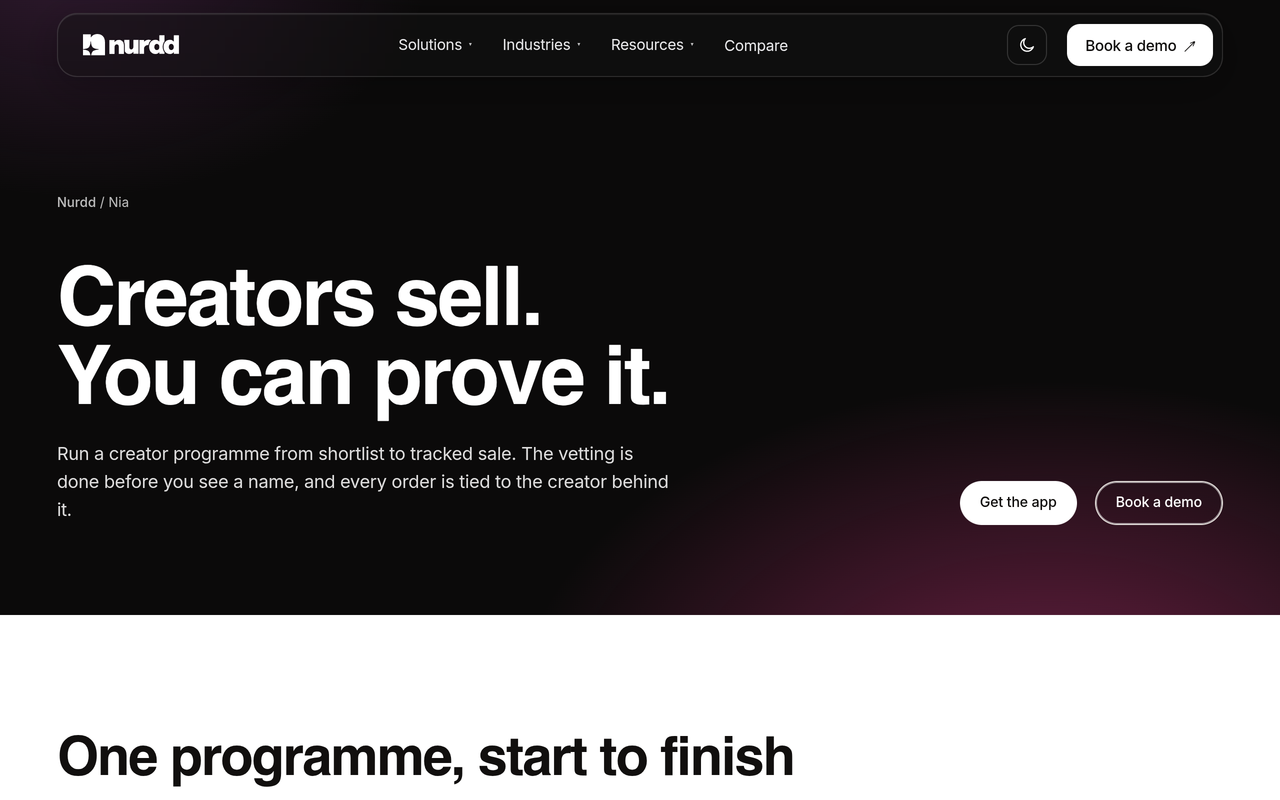
This post does not publish Nia's contract terms, and you should read them yourself. Ask Nurdd to confirm Nia's data, export and renewal terms in writing before you sign, as you would with any vendor. You can see the product on the Nia overview page or at getnia.studio.
A few questions to put to Nia, and to every rival:
- Which data do I own, and in what format can I export it, including forecasts and attribution records?
- Do creators agree to terms inside the product, and how are usage windows recorded?
- How are fake follower scores explained, so I can keep evidence of the vetting I did before paying?
- What is the notice window, and will you confirm it in the order form?
If you are building a shortlist, pair this guide with the best influencer marketing platforms 2026 comparison, the how to pick an influencer marketing platform guide and the Nurdd comparisons hub. For a specific rival, see Nia vs GRIN and GRIN alternatives.
Which features should the contract protect, beyond the legal clauses?
A contract is only as useful as the features it covers. Before you sign, write down the capabilities you are buying and make sure each is named in the order form or an annexed product description. If a feature is only on the website, it can change without your consent.
For influencer work, those capabilities usually fall into four groups. Use the linked resources to test each one before you commit.
| Capability | What to confirm in writing | Resource to test it |
|---|---|---|
| Discovery and qualification | Creator database scope, refresh rate, search filters | Influencer discovery vendor scorecard |
| Fake follower detection | Method, what the score means, whether you can export it | Free fake follower checker and the fake follower audit checklist |
| ROI forecasting | Inputs, confidence ranges, who owns the model output | Influencer ROI calculator and the forecasting scorecard |
| Attribution and reporting | Data sources, export of creator-level sales, UTM handling | Influencer performance attribution and UTM structure guide |
Two more pages help when you cost the whole programme: the influencer rate card estimator shows what creators charge by tier, and the rate card guide shows how to record rates so they survive an export. If you use a CRM, read the CRM integration guide before agreeing to any data-sync terms.
When is a managed service a better route than a contract with software?
Some brands do not want to own platform contracts at all. In that case, an agency relationship moves the contract question from software terms to service terms: scope, reporting, who holds creator relationships and what happens to assets at the end. Nurdd's team runs creator campaigns on Nia as a managed service, described on the influencer marketing agency page.
The same five areas apply to an agency. Ask who owns the creator relationships, how payments flow, what usage rights you receive, how long the retainer runs and what you get when it ends. The top influencer marketing agencies comparison and the influencer marketing measurement hub help you set the reporting terms.
Conclusion and next step
Influencer platform contract terms come down to five areas: data, money, rights, term and exit. Read the platform documents together with your creator agreements, score each clause, and negotiate the reds while the vendor still wants the deal. Then put the dates in a calendar so the contract works for your campaign calendar instead of against it.
To see Nia by Nurdd for yourself, book a demo at https://www.nurdd.club/demo. Bring the checklist from this guide and ask for Nia's data, export and renewal terms in writing.
How we researched this
We reviewed public guidance from the Federal Register, legal and procurement guides on software contracts, and creator-contract guides from influencer marketing vendors and publishers. The pages were checked on the publication date of this post, and we state only claims that those pages support. We did not interview anyone, run customer tests or review any vendor's private contract, and nothing here is legal advice. Vendor terms change, so confirm every clause in the current documents you are given.
Frequently asked questions
What should I check in an influencer marketing platform contract?
Check data ownership, creator payment handling, usage rights, the minimum term with its renewal notice, and exit and export rights. Then read the liability, indemnity and security terms. Ask for any verbal promise to be added to the order form or an addendum.
What terms should brands negotiate with influencer software vendors?
Negotiate a short renewal notice window, a fixed renewal price, an export of your data in a standard format at no cost, and a statement on whether your data trains shared models. Also ask for a pro-rata refund if the vendor ends the agreement for cause. These cost the vendor little, so they are often the easiest to win.
Does the platform or the creator agreement decide who owns the content?
The creator agreement decides who owns the content and what you can do with it. The platform contract should not claim rights in creator content, only provide the workflow. Read both, and keep the signed creator terms with each asset.
Who is responsible for FTC disclosure when I use a platform?
Under the FTC's Endorsement Guides, an advertiser and an influencer can both face responsibility for a missing disclosure, and the FTC's July 2023 proposed revisions discuss this point. Brief creators in writing, check live posts and keep records. A platform can help you collect evidence, but it does not remove your own responsibility, so confirm the current rules with counsel.
Are whitelisting rights included in a platform subscription?
No. Whitelisting is a permission from the creator to run ads from their handle, and it should appear as its own clause with a fixed window and geography. Your platform should store that expiry, not grant it.
How long should an influencer platform contract run?
There is no standard length, so choose one that fits your campaign cycle. A shorter first term, or a longer one with a clear exit, both work if the renewal notice is short and the price is fixed. Avoid multi-year terms until you have tested the product on a live campaign.
What should I be able to export when I leave?
You should be able to export creator shortlists, rates, contract and licence records, campaign performance by creator and attribution data in a standard format such as CSV or JSON. Ask for a named export window after termination, and test a sample export during evaluation.
Does Nia by Nurdd publish its contract terms and prices?
Nurdd does not publish Nia's plans or prices in blog posts. Nia is priced below comparable plans, and you can see the product at getnia.studio. Book a demo at nurdd.club/demo and ask for the terms you want to review.