Influencer Marketing
Influencer Pricing Calculator: Estimate a Fair Rate
A step-by-step influencer pricing calculator method: base fee, usage rights, whitelisting and exclusivity, with a worked example and a quote test.
 Sheetal Shakshi12 Nov 202617 min read

An influencer pricing calculator estimates a fair fee by taking the creator's base rate for one deliverable and adding separate lines for usage rights, whitelisting, exclusivity and extras. The result is a range, not a single price, and you can check it against cost per 1,000 views and against published brackets.
An influencer pricing calculator estimates a fair creator fee by starting from the creator's base rate for one deliverable, then adding separate lines for usage rights, paid amplification, exclusivity and extras. The output is a range, not a single price. This guide gives you the formula, a worked example with labelled assumptions and a test you can run on any quote.
Key takeaways
- Price a creator deal as a stack of lines: base fee, usage rights, whitelisting or paid amplification, exclusivity and extras. Never compare headline fees alone.
- Tier labels differ by source, so match a creator to a range by audience size and real views, not by the label.
- Ask which window, which channels and whether the creator's handle is used before you accept any rights fee.
- Cross-check every quote with cost per 1,000 views from the creator's recent insights, then ask for a line-by-line breakdown if it falls outside your range.
- Buy rights in short blocks and agree extension pricing in the first contract instead of paying for perpetual rights you may not use.
- No calculator replaces a view of the creator's real audience. Check fake followers and engagement before you fix the fee.
What is the quick answer to how much to pay an influencer?
Use this formula: total fee = base fee + usage rights + whitelisting + exclusivity + extras. Each term has its own benchmark, and each can be negotiated on its own.
The base fee is the price for creating and posting the agreed content on the creator's own account. Influencer Marketing Hub describes its figures as planning benchmarks rather than fixed rate cards, and says actual quotes move with performance, niche, format, production, usage rights, exclusivity and scope. That is the right way to treat any calculator output, including ours.
Rule of thumb: get the base fee from reach and format, then price every right you want as its own line. If a quote has one number and no lines, you cannot tell what you are buying.
Why is influencer pricing so hard to estimate?
Creators do not publish a standard price list, and the unit being sold changes from deal to deal. One quote covers a single Reel on the creator's feed. Another covers the same Reel plus a window of paid use, access to the creator's handle for ads and a ban on working with competitors. The headline numbers can look similar while the deals are not.
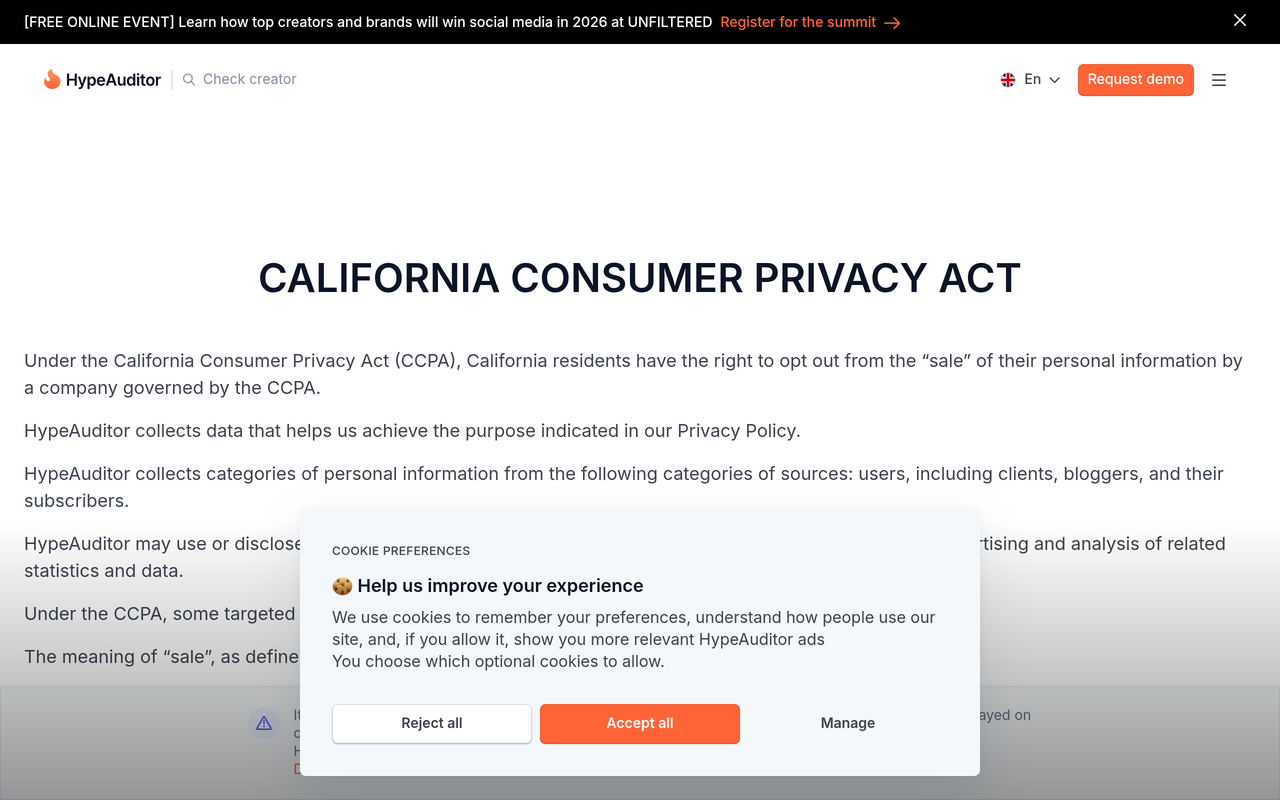
Tier labels add confusion. The table below shows how two sources draw the lines, which is why a creator with 12,000 followers can be nano in one report and micro in another.
| Source | Nano | Micro | Larger tiers |
|---|---|---|---|
| Influencer Marketing Hub, Instagram rates page | Under 10,000 | 10,000 to 100,000 | Mid-tier between micro and macro; macro 500,000 to 1 million |
| impact.com, usage rights guide | Under 15k | 15k to 75k | Mid-tier 75k to 250k; macro 250k to 1m; celebrity 1m+ |
The practical consequence: never paste a creator's tier name into a calculator and trust the answer. Enter the audience size, the format and the typical views of recent posts, and treat tier as a rough bucket.
What do published influencer rates look like by tier?
Published ranges give you a starting bracket before you look at a single creator. The Influencer Marketing Hub Instagram rates page lists these typical rates for one sponsored Instagram post.
| Instagram tier | Followers | Typical rate per post |
|---|---|---|
| Nano | Under 10,000 | $10 to $100+ |
| Micro | 10,000 to 100,000 | $100 to $500+ |
| Macro | 500,000 to 1 million | $5,000 to $10,000+ |
The page places mid-tier creators, who sit between micro and macro, in their own section, so a flat bracket is only a starting point. Format, production effort and recent performance explain much of the spread. The main Influencer Marketing Hub rates guide notes that Reels generally command higher fees than static posts.
A second data point comes from campaign outcomes rather than rate cards. OpenSponsorship, July 2026 analysed 1,527 paid creator deliverables that ran between January 2025 and June 2026 and reports a median of $134 for a nano campaign. It also reports that mega creators delivered views at roughly 7 cents each against 13 cents for nano creators, while nano and micro creators win on cost per engagement at about $3.05 to $3.11 against $5.00 for mega.
The lesson for your calculator is that the cheapest fee and the cheapest outcome are different things. Decide first whether you are buying reach (views), engagement or sales, because the fair price changes with the goal. Nurdd's own influencer pricing benchmarks by tier and the marketing benchmarks hub list each headline figure with its source and period.
How do I calculate what to pay an influencer? Seven steps
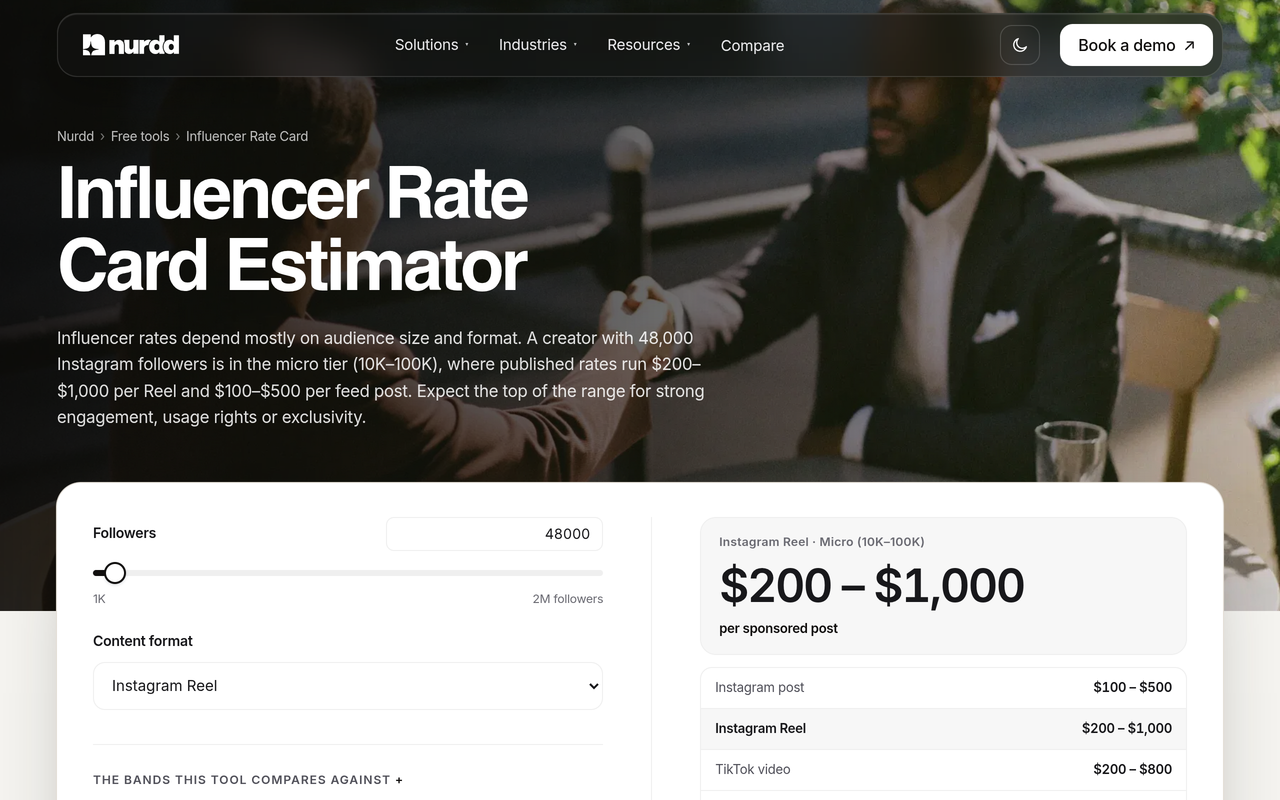
These steps turn the formula into a repeatable calculation. Each one gives you a number you can write into a spreadsheet or a brief, and you can run the first lines with the free influencer rate card estimator.
Step 1: Verify the audience before you price it
Action: check the creator's engagement and the share of followers likely to be fake or inactive. Run the Instagram engagement rate calculator and the fake follower checker, and follow the fake follower audit checklist for borderline accounts.
Result: a follower count you can trust, or a reason to discount the quote. Why: every percentage and every tier range in this guide scales from reach. A fee computed from inflated followers is inflated at every later step.
Step 2: Fix the deliverable and format
Action: write down exactly what you are buying: platform, format (Reel, static post, Story set, long-form video), number of pieces, number of revision rounds and posting date. Result: a defined unit to price. Why: Influencer Marketing Hub notes that Reels generally cost more than static posts, so an undefined deliverable makes two quotes impossible to compare.
Step 3: Find the base fee from two angles
Action: take the published bracket for the creator's platform and size (the table above), then cross-check it with cost per 1,000 views. JEM gives the formula: CPM equals total cost divided by impressions, multiplied by 1,000. Use the creator's typical views on the same format from recent insights screenshots as the denominator.
Result: a base fee range and a CPM for the quote on the table. Why: a bracket tells you what the market charges, while CPM tells you what you are paying for the audience you will actually reach. If the two disagree, trust the CPM and the creator's real views.
Step 4: Price usage rights as a separate line
Action: choose the rights you need: organic repost, paid use on your own ad account, website and email, or perpetual use. Then ask the creator to price each one for a stated window. Result: a rights line with a low and a high figure. Why: a creator's base fee usually covers organic posting on their own account, and Influencer Marketing Hub says paid ads, websites, email, retail media and broader reuse commonly need extra licensing.
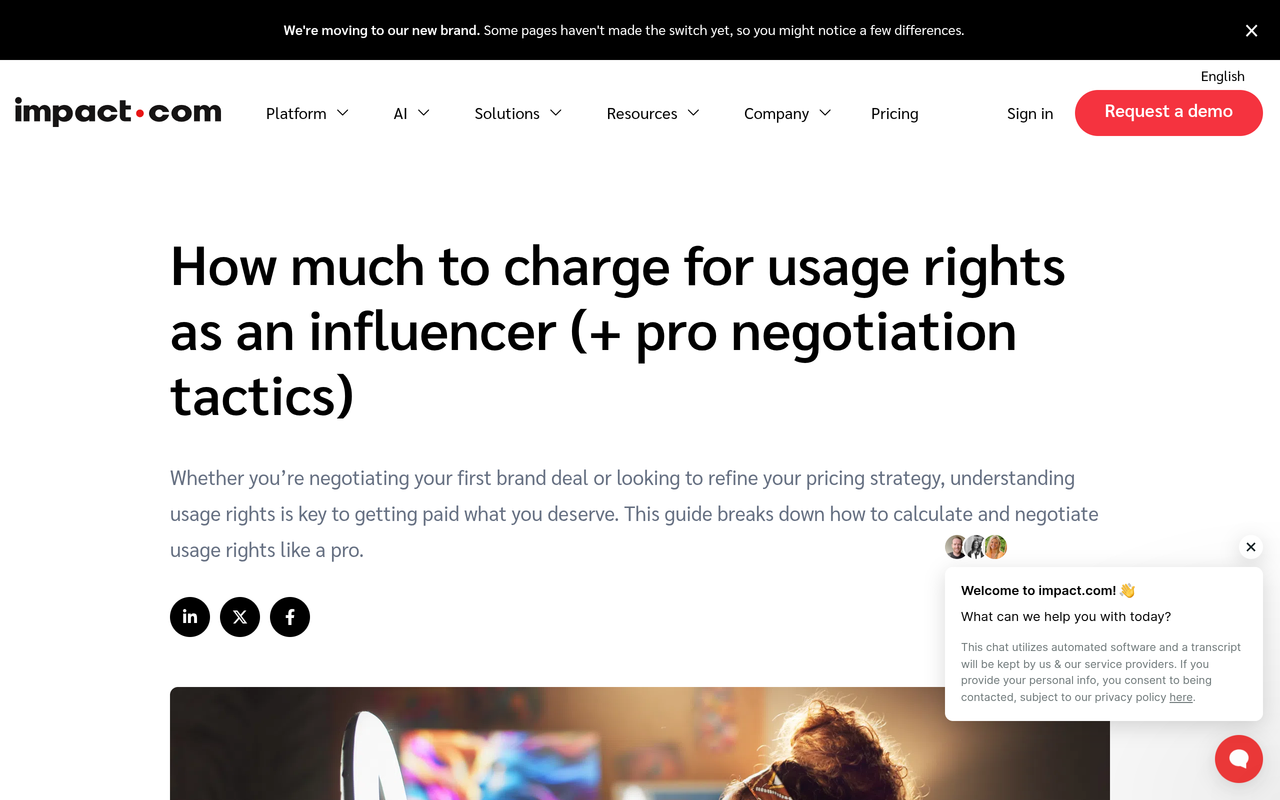
Creator-side guidance, such as the impact.com usage rights guide for creators, gives monthly usage rights fees as a percentage of the base fee: 0 to 50% for nano creators (under 15k followers), 25 to 75% for micro (15k to 75k) and 40 to 100% for mid-tier (75k to 250k). Gigapay's usage rights and whitelisting guide, citing InfluencerFee's 2026 platform data, gives a separate figure: a whitelisting premium of +50 to 100% over base rate on Instagram. The two measure different things, general usage rights versus ads run from the creator's handle, so price them as separate lines.
Step 5: Decide on whitelisting and the duration
Action: if the ad will run from the creator's handle (Instagram Partnership Ads or TikTok Spark Ads), price whitelisting separately and choose a short window. Result: an access fee with an end date. Why: Gigapay reports that ad creative fatigues, and cites a worked example in which a perpetual buyout only beats 90-day pricing if the asset stays in use for roughly 338 days.
Gigapay also reports the whitelisting access premium over base rate as +50 to 100% for Instagram Partnership Ads and +30 to 60% for TikTok Spark Ads. For high-spend campaigns, it describes a percentage-of-ad-spend model that typically takes 3 to 5% of ad spend. Agree the price of an extension in the first contract, because extensions negotiated mid-flight are negotiated from a weak position.
Step 6: Add exclusivity and extras
Action: define the competitor category and the exclusivity period before asking for a price, then list extras such as raw footage, extra revisions and cross-platform rights. Result: priced add-ons rather than a vague uplift. Why: Gigapay reports category exclusivity at 15 to 30% of total deal value for 30 days and 25 to 50% for 90 days, and separately cites a typical exclusivity uplift of +20 to 40% on the base rate.
The two exclusivity figures use different bases (total deal value versus base rate), so state which one you mean when you negotiate. If an agency or manager is involved, ask what the creator receives and what the management fee is, so you can see the full structure.
Step 7: Add the lines and write down a range
Action: sum the low figures and the high figures separately. Result: an opening offer near the low end and a walk-away price near the high end. Why: a range gives you room to trade rights for money, which is usually more productive than haggling over the base fee.
What does a worked example look like with real numbers?
The example below is an illustration, not a quote. The base fee, the views and the ad spend are assumptions chosen for the arithmetic. The percentages are the Gigapay figures stated above.
Assumptions: one Instagram Reel from a micro creator, an assumed base fee of $500 (the top of the $100 to $500+ micro range on the Influencer Marketing Hub Instagram page), 12,000 typical views, paid use through the creator's handle (whitelisting) and category exclusivity. The whitelisting line uses Gigapay's +50 to 100% Instagram premium over base rate. The exclusivity line uses the separate +20 to 40% uplift on base rate, not the share-of-deal-value figures, which would give a different result.
| Line | Calculation | Low | High |
|---|---|---|---|
| Base fee | Assumed | $500 | $500 |
| Whitelisting via the creator's handle | +50% to +100% of $500 | $250 | $500 |
| Category exclusivity | +20% to +40% of $500 | $100 | $200 |
| Total, including the base fee | Sum of the three lines | $850 | $1,200 |
Now the cross-check. At 12,000 views, the $500 base fee is about $41.67 per 1,000 views using the JEM formula, which is roughly 4 cents per view. That figure only describes the base fee. The OpenSponsorship figures cover whole paid campaigns, so they are not a like-for-like comparison and are best used to see how cost per view and cost per engagement vary by tier, not to judge this fee.
Suppose the creator then quotes $1,800 all-in, including the base fee. That is $600 above the top of the $1,200 range, or 50% higher than the high end. The right response is a request for a line-by-line breakdown, not a flat counter-offer. The gap might be perpetual use, a longer window or a bundled extra, and each of those can be removed or priced.
If instead the quote were $1,000 all-in, it would sit inside the range, and the useful question becomes which lines are included. Do not stack a paid-use line and a whitelisting line for the same ad without checking the quote, because they describe two ways of running the same creative and a quote that adds both may be charging twice for one thing.
For the ad-spend model, the arithmetic is simple. If you assumed $10,000 of ad spend behind the post, a 3 to 5% share is $300 to $500, which is why it is attractive for small budgets and grows quickly on large ones.
Which deal structure should I choose?
The fee you calculate depends on how you intend to use the content. This decision table maps the common goals to the lines you need to price.
| Your goal | Lines to price | Lines to leave out | Check before signing |
|---|---|---|---|
| Organic awareness on the creator's feed | Base fee, revisions | Whitelisting, paid use | Cost per 1,000 views against the creator's recent views |
| Reuse the video on your own channels | Base fee, usage rights for owned channels | Whitelisting | Which channels, which window, whether the handle appears |
| Run ads from the creator's handle | Base fee, whitelisting, window, extension price | Perpetual buyout | Whether the fee is a flat access fee or a share of ad spend |
| Lock out a competitor | Base fee, exclusivity | Extras you do not need | Competitor list, markets, dates |
| Drive trackable sales | Base fee plus commission or code | Long exclusivity | Tagged links so sales can be attributed |
Influencer Marketing Hub lists flat fee, affiliate commission, hybrid, gifted product and retainer models. A hybrid shares risk, but only works if you can attribute sales to the creator, which the UTM structure guide for influencer campaigns explains how to set up.
How do I sanity-check an influencer quote?
Run three tests in order: structure, range and cost per view. A quote that passes all three is probably fair. A quote that fails one tells you exactly what to ask.
| What you see in the quote | What to ask | Why it matters |
|---|---|---|
| One lump price, no lines | Please split this into content, usage, whitelisting and exclusivity. | Influencer Marketing Hub says to compare the full compensation structure, not the headline fee. |
| Perpetual or unlimited rights | Can we license a short window with a priced extension? | Gigapay's worked example puts the buyout break-even at roughly 338 days of use. |
| Whitelisting quoted as a share of ad spend | What is the percentage and the monthly spend cap? | Gigapay describes a typical 3 to 5% of ad spend, which grows with budget. |
| Exclusivity with no definition | Which competitors, which countries and for how long? | Gigapay's ranges depend on the window: 15 to 30% of deal value for 30 days, 25 to 50% for 90 days. |
| Fee far above the bracket for the tier | Can you share recent views and a past brand result? | Strong recent performance can justify a premium; follower count alone cannot. |
The three tests are structure (are the lines separated?), range (does each line fall inside a published bracket?) and cost per view (does the base fee make sense for the creator's real reach?). Failing the structure test is the most common problem and the easiest to fix, because you only need to ask.
Also put disclosure into the brief. The US Federal Trade Commission publishes guidance titled Disclosures 101 for Social Media Influencers for creators who work with brands, and it is worth reading before you write the contract, because disclosure is your risk as well as the creator's. Check the rules in each market where the content will run.
Can I trust an influencer pricing calculator?
Trust a calculator as a first estimate, not as a verdict. Most free calculators, including HypeAuditor's Instagram pricing calculator, estimate the cost of sponsored posts, Stories and Reels, which covers the base fee line only. They do not know your usage rights, exclusivity terms or paid amplification plans, so those lines stay your job.
Use this short test before relying on any calculator, including the Nurdd influencer rate card estimator.
| Question | Good sign | Warning sign |
|---|---|---|
| Does it separate the base fee from rights? | Rights and add-ons shown as separate lines or noted as excluded | One all-in number with no assumptions |
| Does it say where the ranges come from? | Sources and a date are named | No source, no date |
| Does it ask for format? | Post, Reel, Story and video are priced differently | Follower count is the only input |
| Does it ask for engagement or views? | Adjusts for audience quality | Ignores performance entirely |
| Does it return a range? | Low and high figures | A single precise figure that implies false certainty |
A calculator that fails two or more rows is a lead-capture form, not a pricing tool. Compare its output with at least one published bracket from this guide before you use it in a negotiation.
Which checklist should I follow before I agree a fee?
- Confirm the audience with engagement and fake follower checks.
- Write the deliverable: platform, format, count, revisions and date.
- Pull the creator's views from the last several posts in the same format.
- Look up the published bracket for the platform and size, then calculate CPM from your assumed base fee.
- List the rights you need: organic repost, paid use, whitelisting, website, email.
- Choose a short window and price the extension now.
- Define exclusivity: competitor set, markets and dates.
- List extras: raw footage, revisions, extra platforms.
- Ask for a quote with separate lines, then compare each line with its range.
- Put the disclosure requirement, the usage scope and the payment terms into the contract.
- Tag the links so you can read results by creator.
If you also need a one-page price sheet to share with creators, the influencer rate card guide covers what to include.
How do I budget a whole programme, not one creator?
The same logic scales. Build one line per creator, then add a rights and access line for the creators whose content you will put behind ads. Gigapay's compilation makes the point that rights and access fees can become a large share of a creator budget, so plan them at the start rather than finding them in the invoices.
Use the marketing budget planner to split money between creators and paid media, and the influencer ROI calculator to project revenue from a creator budget before you commit. The guide to how many influencers you need shows the maths behind the number of creators.
What are the most common pricing mistakes?
- Comparing headline fees. A flat post and a smaller post with commission, paid use and a retainer are different deals, as Influencer Marketing Hub points out. Compare totals and structures.
- Buying perpetual rights by default. Most creator ads are retired well before a buyout pays back.
- Skipping the audience check. Paying a tier rate for an inflated audience is the most expensive mistake. Read how to vet an influencer's audience before paying.
- Pricing only for reach. OpenSponsorship's data shows that cost per view and cost per engagement favour different tiers.
- Negotiating extensions after launch. Agree the extension price up front.
- Forgetting measurement. A fair fee that never ties to sales is still a guess. See influencer performance attribution and how to calculate incrementality.

How does Nia by Nurdd help you run creator work?
Nia by Nurdd is an AI-native creative studio with influencer marketing built in, so the fee you calculate sits inside the workflow that finds, vets and measures the creator. Nia searches 10M+ creator profiles, scores each shortlisted creator with TruAI fake follower detection, forecasts the expected return before anyone is briefed and attributes product-level sales to creators afterwards. It is priced below comparable plans.
Book a demo to see, for your own brand, how Nia shortlists creators, scores their audiences, forecasts return from your budget and attributes sales.
That order mirrors the steps above: verify the audience, fix the deliverable, price the fee, then measure it. Nia is at getnia.studio, with more on the Nia overview page.

If you would rather hand the work over, Nurdd's team also runs creator campaigns on Nia through its influencer marketing agency service. To compare platform options, see best influencer marketing platforms in 2026 and how to pick influencers based on predicted sales.
What should you do next?
Start with one creator you are already considering. Pull their recent views, write the deliverable, apply the seven steps and put the result next to their quote. If the structure, the range and the cost per view all line up, agree the fee and write the rights into the contract.
If you want that calculation tied to audience checks, an ROI forecast and sales attribution, book a Nia demo and see how the workflow runs from creator discovery to attributed sales for your brand.
How we researched this
Written by Sheetal Shakshi. We reviewed published rate benchmarks, usage rights guides, an analysis of paid creator deliverables, a CPM method article and a free calculator page, and checked them on the publication date of this post. Figures are quoted as the sources state them and attributed where a source compiles other sources. We did not run hands-on tests of the calculators, interview creators or use customer data, and the worked example uses assumed inputs that are labelled as such.
Frequently asked questions
How do I calculate what to pay an influencer?
Add a base fee for the deliverable to separate lines for usage rights, whitelisting, exclusivity and extras. Take the base fee from a published bracket and cross-check it with cost per 1,000 views. Then price each right as its own line and sum the low and high figures into a range.
Is there an influencer pricing calculator I can trust?
Trust a calculator for the base fee only, and only if it names its sources, asks for format and returns a range. It will not know your rights, exclusivity or ad plans. Verify the result against a published bracket such as the Influencer Marketing Hub Instagram rates and the creator's actual views.
How much should usage rights cost?
It depends on the channel, the window and whether the ad runs from the creator's handle. Gigapay, citing InfluencerFee's 2026 platform data, reports a whitelisting premium of +50 to 100% over base rate on Instagram and +30 to 60% on TikTok. For general usage rights, impact.com's guide for creators gives monthly fees of 0 to 50% of the base fee for nano creators, 25 to 75% for micro and 40 to 100% for mid-tier. Treat whitelisting and usage rights as separate lines.
Is it better to pay a flat fee or a commission?
It depends on the goal and on how well you can track sales. Influencer Marketing Hub lists flat fee, affiliate commission, hybrid, gifted product and retainer models. A hybrid shares risk, but only works if you can attribute sales to the creator with tagged links or codes.
Do nano influencers cost less per result?
Not always. OpenSponsorship, July 2026 reports that nano and micro creators win on cost per engagement, while mega creators deliver views at about 7 cents against 13 cents for nano creators. Choose the tier by the outcome you want to buy.
How long should I license creator content for?
Match the licence to the time the ad will actually run. Gigapay cites a worked example in which a perpetual buyout only pays back after roughly 338 days of use. Most brands are better served by short blocks with a pre-agreed extension price.
Do I have to tell creators to disclose a paid partnership?
Yes, build it into the brief and the contract. The US Federal Trade Commission's Disclosures 101 for Social Media Influencers is a good place to start for US rules. Check the rules in each market where the content will run.
Can I estimate a fair rate without asking the creator?
You can estimate a range from reach, format, views and the rights you need. The creator's own quote will still carry factors you cannot see, such as a booked-out calendar and past ad performance. Use the estimate to open the conversation, not to replace it.